What's the difference?
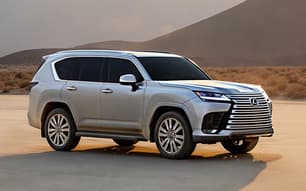
With the hugely anticipated Toyota LandCruiser 300 Series now in showrooms, the time has come for Lexus to show off its own riff on the LC300 theme. But don’t be fooled by the LandCruiser connection, the new Lexus LX models, while perfectly equipped to tackle bush tracks, are aimed at the cashed-up urbanite who appreciates an SUV with the absolute lot.
It's been almost a decade-and-a-half since the last new Lexus LX model, and in that time, the global demand for the SUV concept has gone from strength to strength, playing into Lexus’ hands somewhat. But that doesn’t mean this clean-sheet design has ignored some innovative technologies or creative design and packaging.
The new LX range covers plenty of price territory, and can be configured to handle a huge range of user profiles. And while it remains an expensive vehicle by Australian standards, there’s no doubt that it will be taken seriously by those with the means and the need for a huge SUV with the potential for serious off-road use.
In fact, the ability to cover rough terrain in supreme comfort and without sacrificing anything in the way of creature comforts, suggests that Australia (and its hordes of recreational four-wheel drivers) was never the market Lexus had in mind for the new LX. Instead, think Middle East and North America and you’re probably getting closer to the well-head of LX inspiration.
As well as a new mechanical platform, this LX also introduces a pair of new trim levels; the F-Sport and the Ultra Luxury specification.
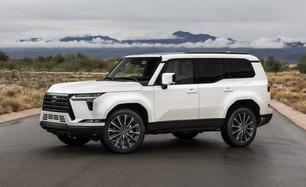
The new Lexus GX 550 showcases a brand new design for its third-generation iteration but the model is new to the Australian market.
And while it hasn't been as hotly anticipated as its cousin, the Toyota Prado, it's still one that should excite. It's a capable full-time four-wheel drive that manages to look good on- and off-road! It feels like a breath of fresh air.
Will it find itself more likely adorning the garage of a city slicker? Perhaps, but you can't deny it has some star power now with its design and it couldn't have come soon enough. Especially when you compare the flagship Sports Luxury grade my family and I have on test to its European luxury rivals, the BMW X7 and Land Rover Defender.
There's absolutely no doubting the new LX's off-road credentials, nor the fact that it takes luxury SUVs to new heights in the four-seat Ultra Luxury model. Do you need a massaging chair and a foot-stool to get to your camping site? Probably not, but globally, there's a distinct market for that sort of decadence.
Closer to the other end of the LX line-up, however, there's a fair bit of cross-over in price and luxury terms with the Lexus' close cousin, the Toyota LandCruiser 300 Series. That suggests there might be a LandCruiser that will do the same job for a little less money and, if that's the case, then the LX loses a little relevance, particularly the petrol-engined version here in Australia. Until, that is, you take into account buyers for whom the Lexus badge infers the bank-vault solidity and prestige that the brand has worked so hard to establish. Which is another way of saying; it all comes down to where you stand on the politics of envy.
Note: CarsGuide attended this event as a guest of the manufacturer, with travel, accommodation and meals provided.
The new Lexus GX 550 Sports Luxury looks fantastic and has enough mod cons to satisfy a family but it’s not as luxurious as you’d expect from a premium brand and the fuel economy and driving range will turn off some. But if you’re still interested, there’s a lot here that will make you happy and it’s one of the smoothest 4WDs I’ve driven.
Perhaps the most left-field design element is the way the LX can, depending on trim level, be configured in terms of its seating. In the past, we’ve seen plenty of SUVs available with a choice of five- or seven-seat layouts, but the LX is the first time we’ve seen seating choices range from seven- to five- to four-seat layouts. If nothing else, it illustrates the breadth of applications a modern luxury SUV is expected to cover.
Those who use their four-wheel drive SUVs off-road will also note the shift back to six-stud wheel hubs. Toyota’s (and Lexus’) move to five-stud wheels a few years ago suddenly made the vehicle’s wheels incompatible with owner’s existing caravans and trailers.
The new LX has also become a committed subscriber to the engine-downsizing theory of modern vehicle design. While the previous model was available with a 4.5-litre turbo-diesel and a massive 5.7-litre petrol, the new engine capacities of 3.3 litres for the diesel and 3.5 litres for the petrol represent major philosophy changes. Both the new engines are now V6s, rather than the previous V8 layouts.
And to give the new car a James Bond moment, all models bar the entry-level version feature a fingerprint sensor to control the starter button function. Q would be pleased.
The new GX 550 looks massive and while it shares the same platform as the Toyota LandCruiser 300 series, it doesn't share all of its bulk. They both stand at 1980mm wide but differ on length (5015mm vs 4980mm) and height (1670mm vs 1950mm), respectively.
The new design is fabulously rugged but each body panel looks meticulously crafted and is just the right size. This just means the proportions look right and your eye sort of glides over the big body rather than stopping on any one feature.
But having said that, there are a lot of nice features to focus on, like the long LED headlights and rear strip light, auto-folding side steps, 22-inch alloy wheels and sharply styled rectangular side mirrors.
The tailgate window can also be opened if you need to pop something into the boot but don't want, or have the space, to open the tailgate itself.
The styling takes a minor nose dive once you hit the cabin, though, because it doesn't look as sumptuous as you'd expect in a premium SUV.
I love the utilitarian and military vibe of the vertical dashboard, chunky air vents and relatively small windscreen. It looks great but some trims are plasticky and the touchpoints, while soft, are not Lexus-plush.
However, the technology looks gorgeous with an integrated 14-inch multimedia display and a 12.3-inch digital instrument cluster. The fixed sunroof with its two settings (clear or opaque) is also a lovely feature.
But on a whole, the GX 550's European rivals outclass it with their flashier cabins.
The practicality of each variant of the new LX is dependent entirely on how many people you need to move. The base-model version has seven seats with a two-three-two layout, while the Sport Luxury and F Sport feature five conventional seats in two rows.
The Ultra Luxury’s four individual seats obviously make it the variant of choice for the buyer who doesn’t need the extra seats, but clearly limit its appeal for families. But if luxury is your aim, the rear passenger seat in particular is the one to be in as it can be configured to offer up to a metre of legroom and even features a footrest when the front passenger’s seat is moved all the way forward. Both rear seats are also heated and cooled and reclinable to an angle that NASA has calculated offers the maximum support for the human body.
Vents in the rear seat area allow for an air-shower (of cool air over the passengers) or an air-curtain (a blanket of warm air at shoulder height).
The seven-seat versions have a third row of seats that folds flat into the floor (a major improvement over the old fold-up third row) and the second row folds and tumbles into the footwell. There’s a 220-volt outlet in the luggage compartment, too.
Cargo space is slightly less than the old model, but with second and third row seats folded, the LX has cargo space of up to 1871L.
The single-piece tailgate of the new Lexus won’t win as many friends as the old, split tailgate design which formed an impromptu kitchen bench or covered picnic seat. But the single rubber seal of the new design may be an advantage in keeping dust out on outback roads.
The cabin of the new GX 550 is fairly practical with plenty of head- and legroom in each row (yep, even the third!). When you first hop in, it can feel a big snug on elbow-room but this feeling quickly dissipates.
Despite a 215mm ground clearance, access is pretty good for the front and middle rows due to the wide door apertures and side-steps. Third row access is a bit awkward for an adult but my eight-year old loved scampering back there this week.
The electric front seats are comfortable with their extra functions and I like the way the massage feature extends to the seat cushion as it limits fatigue on longer journeys. However, you sit on top of them rather sink into them which makes it feel a little trucky at times.
The wide middle row has a bench seat that will be comfortable for kids but an adult might get a sore behind on a long trip. The transmission tunnel also compromises foot room for adults but the seat is wide enough to make use of all three top-tether anchor points (there are ISOFIX mounts too).
It was a little bit of an effort to lift my big booster seat into the back because the GX 550 sits so tall but otherwise, there's plenty of room around a child seat for them not to feel like a sardine.
Individual storage is made up of a glove box that fits an owner's manual, a small shelf in the dashboard and a middle console that doubles as a cool box (mini fridge) and can fit up to four cans or bottles in it.
Each row gets four drinkholders and two USB-C ports but the front also enjoys a 12-volt socket and wireless charging pad. There's a 220V domestic plug port in the boot for larger appliances, too.
It's sometimes awkward to use the wireless charging pad because it's easy for your phone to slide around on it and it quite often disengaged from charging.
My son enjoyed all of the other amenities in the middle row, like the reading lights, climate control, two USB-C ports and retractable sunblinds and I applaud carmakers when they position rear directional air vents in the pillars and/or roof. It just makes it so much easier to cool down sweaty kids!
The 14-inch multimedia display has clear graphics and a responsive touchscreen. The layout is easy enough to get used to after spending some time with it and the sat nav is simple to use.
I like that the sat nav directions can be pulled into the 12.3-inch digital instrument cluster and head-up display.
There is a Lexus connected services app, which you get a three-year subscription to. It's easy to connect to the wireless Apple CarPlay and there is also wireless Android Auto.
The system also has Bluetooth and digital radio, which is a delight to use through the 21-speaker Mark Levinson sound system.
The cabin is rounded out by the well-shaped boot which has a massive 1063L of capacity when the third-row is folded. That's been more than enough for my family's needs this week and my German Shepherd was pretty comfy back there, too. The powered tailgate has a kick-function and there is a full-size spare wheel underneath the car.
Much has been made of the Toyota LandCruiser’s $90K starting price in LC300 form, so it will come as no surprise to learn the new LX is likewise bold when it comes to the sticker on the windscreen.
The range kicks off in seven-seat form with the entry level LX600 (petrol) and LX500d (diesel) priced at $152,300 and $148,800 respectively. Of course, at these price points, entry-level is a relative term, and the list of standard features is a long one, indeed.
Lexus has gone for a tech-heavy look and feel here, with a 12.3-inch main display, a 7.0-inch lower screen as well as 8.0-inch multi-function display screen and even a colour head-up display for the driver. Lexus’ latest generation multi-media system is used, but may require some familiarisation for some owners.
The entry-level car also gets 20-inch alloy wheels, heated and powered front seats, leather-accented upholstery, a premium 25-speaker stereo system, LED headlights and active height control of the suspension via hydraulically-adjustable dampers.
Lexus has also fitted 'Multi-Terrain Select' and 'Multi-Terrain Monitor 2' to allow for different types of terrain and grip conditions as well as giving the driver a 360-dgeree camera’s-eye view of the track and the vehicle crossing it.
If that’s not enough, Lexus also offers what it calls an 'Enhancement Pack' which adds 22-inch alloy wheels, a sunroof and a kick-sensor tailgate for an extra $5500.
The next step up the LX ladder is the Sports Luxury model with a price-tag of $165,800.
For the extra money, you get a premium leather covering for the seats, and the front seats become heated and ventilated. There’s also a heated steering wheel, a cool box (much appreciated in Australia) a split rear-seat entertainment system and specific trim including timber veneer.
The new F Sport is next and adds not just more equipment but more capacity to the car’s off-road aspirations. That’s down to a Torsen rear differential which is torque-sensing in the way it distributes drive to each rear tyre, as well as performance dampers at each corner.
Dark exterior accents and a mesh grille help justify the F sport’s sticker of $171,800, as do interior touches such as seats with extra bolstering and some aluminium trim accents.
Which brings us to the headline act, the Ultra Luxury, which represents a huge price jump to $210,800. As well as extra equipment such as a rear touchscreen for climate control, wireless device charging, the Ultra Luxury is designed as a vehicle where the owner is more likely to be in the rear seat rather than the driver’s seat.
A strict four-seater, the vehicle has a pair of plush rear bucket seats (Lexus calls them captain’s chairs) which recline a full 48 degrees and feature a massage function. The passenger’s rear seat even runs to an ottoman and the entire cabin is trimmed in plush, quilted leather. Surely, with this layout, Lexus has achieved peak oligarch.
The Lexus GX 550 shares the same platform as the recently introduced Toyota Prado but both models are now based on the same 'body-on-frame' platform shared by the beastie Toyota LandCruiser 300 Series. So it's bigger and features a more rigid chassis than before.
Surprisingly, that hasn't translated to a massive price tag for the GX 550 and you can pick up the flagship grade on test for this review for $128,200, MSRP.
Which sounds inexpensive when you compare it to the BMW X7 xDrive 40i M Sport which is priced from $171,300 MSRP but the Land Rover Defender 110 P400 X-Dynamic HSE is a lot closer at $128,815 MSRP.
The only issue here is that shared platform, because while they don't share the same powertrain, the flagship Toyota Prado Kakadu ($99,990 MSRP) is still almost $30K more affordable and boasts a similar equipment list. So, ask yourself, is it the brand and engine you're after or the new good looks?
The standard equipment is well-rounded with a 14-inch touchscreen media display with satellite navigation and wireless Apple CarPlay and Android Auto.
A fully digital 12.3-inch instrument cluster, colour head-up display, three-zone climate control and a 21-speaker Mark Levinson sound system round out multimedia requirements.
Other technology includes a digital rear view mirror, two USB-C ports in each row, a 12-volt socket, a 220-volt domestic outlet and a wireless charging pad.
There are two particularly handy features for families, the 'cool box' (basically a mini fridge) middle console and rear retractable sun-blinds.
The fixed panoramic sunroof features two settings allowing you to make it clear or opaque. The electric front seats feature heat, ventilation and massage functions and the rear outboard seats are heated as well. The third row electrically adjusts and there are multiple buttons throughout the car to access this feature.
Upgraded leather-accented upholstery is standard in the flagship grade and is available in three combinations. The Sports Luxury also features 22-inch alloy wheels, a full-size spare wheel and a powered tailgate with kick-function.
While the Toyota LandCruiser 300 Series is a diesel-only proposition, the Lexus LX takes a broader view of what its buyers will want in such a vehicle.
As a result, there’s a choice of petrol or diesel power for the LX range, with both engines covering all variants apart from one. To add weight to the theory that the Ultra Luxury model is for people for whom fuel costs really don’t matter, it’s available only as a petrol vehicle.
The turbo-diesel engine is the 3.3-litre V6 twin-turbo unit we see in the 300 Series. It’s unusual in that it uses hot-side-in technology where the exhaust system and turbochargers live inside the vee of the engine, rather than hanging off each side as is much more common. Lexus claims greater efficiency from this layout with less plumbing between the cylinder head and turbo units as well as a more compact design.
Outputs for the turbo-diesel are 227kW of power, with an impressive 700Nm of torque produced anywhere between 1600 and 2600rpm, which is where the engine will spend most of its operating life.
The petrol engine is also a V6 and also twin-turbocharged. It measures 3.5 litres and, again, features a design that allows a smaller capacity engine to exceed the outputs of the physically larger, previous model. To that extent, it makes 305kW of power and 650Nm of torque; both impressive figures.
There’s only one transmission available on the LX, and that’s a 10-speed conventional automatic. To compliment that rugged, ladder-chassis design, the LX also has a transfer-case with proper off-road gear ratios. This is what gives the vehicle its rock-crawling and river-crossing abilities, while permanent four-wheel drive and the Multi-Terrain Select system mean no-fuss operation.
All GX 550 grades share the same 3.5L V6 twin turbo-petrol engine which produces up to 260kW of power and 650Nm of torque.
This 4WD has high- and low-gearing, as well as a bunch of driving modes to suit most occasions, like 'Eco', 'Comfort', 'Sport' and 'Sport+'.
The 10-speed automatic transmission shifts through its gears smoothly and it always feels like it's engaged in the right gear. Which isn't always the case for a big SUV!
The Sports Luxury is fitted with a towing hitch and cover but unlike the base Sports grade which has a 3.5-tonne braked towing capacity, this model only has a 3130kg capacity which might not appeal to families with big toys to tow.
Much has been made of the new LandCruiser’s fuel-tank reduction to its new total of 110 litres. The LX follows suit with an 80-litre main tank and 30-litre auxiliary tank, but it’s worth remembering the improved efficiency of the new drivelines will maintain the range to a useful total. The base-model diesel version also misses out of the second tank for an 80-litre total.
Toyota claims a combined figure of 8.9 litres per 100km for the diesel and 12.1 litres for the petrol. On the open road, both variants will get pretty close to those targets (even though they’re a combined urban-highway figure) so the touring range remains useful and better than 1000km for the turbo-diesel with the twin tanks.
I didn’t have high hopes for fuel economy because the official combined (urban/extra-urban cycle figure is a hefty 12.3L/100km but after mostly open-road driving, with some urban stuff mixed in, my real-world average came in at 11.8L.100km! This figure is based on my actual km travelled (358km) and litres of fuel used (42.41L).
While I’m surprised by the fuel usage result, I wouldn’t say this car has good fuel economy compared to its diesel-powered counterparts but it’s not terrible!
The GX 550 has a relatively small fuel tank compared to its Toyota cousins at 80L and based on the combined fuel cycle, you’ll get a theoretical driving range of up to 650km.
Not all that great. Not for a big family mover and not if you’re typically driving in the city, where fuel usage will be a lot higher.
The GX 550 only accepts premium unleaded petrol (95 RON), too.
Lexus surprised us a bit with its choice of test roads for the LX’s launch. As well as some twisty bitumen which might not, on the surface, have seemed the most LX-friendly terrain, the launch also threw in some steep if not otherwise too taxing off-road work.
The steep downhill section highlighted the fact that the LX has probably the best hill-descent control we’ve sampled. Not only is it simple to use with speed variation via the rotary knob that otherwise controls the drive modes, it’s also consistent and doesn’t stumble or lock-up wheels and bang brake calipers intermittently.
The second surprise was how well 2.6 tonnes of luxury off-road SUV handled the winding blacktop. It’s no performance-oriented SUV with its live rear axle and off-road-worthy suspension settings, but it can be hustled along in a pretty tidy manner if you concentrate and keep it flowing.
Beyond that, it was pretty civilised at everything else, too, and although it’s not a compact vehicle by any means, the cameras and sensors ensure that it’s not too much of a brain-teaser to park.
The LX seems to have slightly better noise suppression than the LandCruiser on which it’s based and the diesel version doesn’t seem quite as vocal under load. That said, it’s still very quiet and when rolling along at highway speeds and low engine revs, even the diesel is tomb-like in its silence.
But the petrol is next-level refined. There’s a small degree of engine raspiness when you rev the petrol V6 hard (and you won’t mistake it for a V8) but it’s a sophisticated soundtrack and, at a steady throttle, the petrol LX is even more silent.
The two engines have vastly different torque curves, but the 10-speed transmission is so on top of things that it can tailor its shift-pattern to make the absolute most of whatever torque and power are being produced. You can just feel the transmission holding a gear a little longer when the driver dials up max thrust, but in the interests of getting a heavy vehicle moving swiftly, using a clever transmission is the smart, modern way to do it.
Steering is a fraction light to be completely tactile, but that’s a function of the off-road abilities, and we’re pleased to report that the turning circle is very good given the exterior dimensions and makes tight city work much easier.
The shift paddles are, ironically, likely to be of most benefit when off-road and it’s here that the LX lays the SUV pretenders to waste. With low-ratio gears in the transfer case and that clever 10-speed, the LX will climb up some amazing places. It’s fair to say that, like all good off-roaders, you’ll run out of brave pills before the LX runs out of talent.
And while the suspension does a good job off-road, the live rear-axle and independent front suspension also combine pretty well on the blacktop. There’s some initial thump on pattery bumps that are felt more than heard. But as the bumps get bigger, the LX gets even better at dispatching them.
The variable ride height feels like air-suspension but is actually a clever hydraulic adjustment to the dampers to increase their length and, therefore jack the vehicle up for off-roading. Strangely, the ride seems to become a fraction firmer (and we mean a fraction) as the height cranks up, but most owners will never notice it.
What they will notice is the composure that the LX has in most settings. No, it’s not the fastest or tidiest handling SUV out there, but it’s well beyond good enough. And off-road? Very, very little is likely to touch it.
Oh my goodness the Sports Luxury is a masterclass on 4WD refinement! You never feel the bulk or weight of this massive SUV when you’re driving it. The power delivery is effortless and there’s lots of grunt available when you hit hills.
The handling is also very good with responsive steering and enough road feedback as a driver to make you feel comfortable with what the car is doing. There is some roll in corners but it can tackle more corners at speed than I thought it would.
The high driving position makes me feel like I can see a long way ahead yet while visibility is mostly good, it can be compromised when you have the side window shades and the third row headrests up. Which is why I love the digital rear view mirror.
Overall, ride comfort is good with forgiving suspension and low cabin noise, even at higher speeds. It’s pretty easy to chat with all rows and there’s not a lot of engine noise which adds to the refinement. I do like hearing a V6 rumble but that’s just a personal preference.
I was a little worried about hitting my local Westfield car park but this is a nimble SUV to manoeuvre and parking it is a breeze with the 360-degree camera system and parking sensors.
Lexus’ latest safety innovations have made it on to the new LX, and as well as the now-usual driver aids and passive safety gear, there are fitments such as an autonomous braking system that can identify cyclists in daylight hours and pedestrians any time of the day or night.
There’s also intersection turn-assist which minimizes the chances of a crash when turning across oncoming traffic, as well as emergency steering-assist to help with fast inputs in a crash-avoidance situation.
The adaptive cruise-control now also features curve-speed reduction if the car thinks a corner is being tackled at too high a velocity. Along with that is road-sign recognition, blind-spot monitoring, tyre-pressure monitoring, 10 airbags (12 in the Ultra Luxury) and Multi-Terrain Monitoring which allows for a transparent on-screen outline of the car, allowing the driver to see what’s around and even underneath the vehicle.
The new GX 550 hasn’t been tested by ANCAP and is unrated but its cousin, the Toyota Prado, which shares the same platform just achieved a maximum five-star rating from assessment in 2024. It's fair to expect a good result for this model.
Overall, the Sports Luxury has a long list of standard safety equipment and features nine airbags which is good for a family SUV.
Safety equipment includes adaptive cruise control, lane departure alert, lane keeping aid, traffic sign recognition, emergency steering assist, driver monitoring, safe exit assist, emergency call functionality, blind-spot monitoring, rear cross-traffic alert and tyre pressure monitoring.
The GX 550 has autonomous emergency braking (AEB) with pedestrian, cyclist, motorcyclist and junction turning assist.
Lexus Australia recently upgraded its factory warranty to five years/unlimited kilometres (up from three years). That’s better, but by no means a real advantage over most of its competition.
Capped price servicing is available at $595 per service for the first three years. The catch there is that servicing is every six months or 10,000km, an area in which Lexus trails its main competitors.
Lexus offers the GX 550 with a five-year/unlimited km warranty, which is fairly standard compared to its Euro rivals.
You get five years capped-priced servicing which costs $5950 but the servicing schedule is a bit of a bear at every six months or 10,000km, whichever occurs first.