What's the difference?
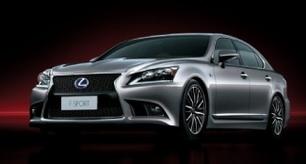
Almost 30 years after Lexus launched its original LS flagship sedan, the fifth generation of the car has arrived in Australia in what appears to be the brand’s never-ending battle to hunt down and beat Mercedes-Benz, BMW and Audi at their own game.
In some markets it looks as though Lexus is making headway. In the United States last year Mercedes-Benz was the best-selling luxury brand, followed by BMW and then Lexus. To give you even more insight, 50 per cent of all Lexus sales globally are in the US.
The story is different in Australia, with Lexus hardly a threat to the big three Germans, selling about a third less each month.
The Lexus LS is the Japanese prestige brand’s flagship and comes with a price that nudges up against formidable rivals. There’s the Mercedes-Benz S-Class, BMW 7 Series and Audi’s A8. Only the best cars from a few of the best brands in the world – no pressure, Lexus.
This may even be a reason to buy one – in that it’s not one of the traditional three. You could see Lexus as the popular underdog that in some ways does a better job than the usual suspects. A people’s favourite perhaps?
Just look at how often it’s mentioned in songs. According to lyrics.com.au the word Lexus has been used in 873 songs. Meanwhile Mercedes Benz appears in 500, Audi in 402 and BMW in 307.
With all this in mind we headed to the Australian launch to drive the LS 500 and its hybrid twin the 500h.
It can be easy to dismiss electric cars as an imperfect solution to the world’s problems. But that would be missing one big point - they’re really, really fast.
Carmakers twigged that not everyone was enamoured with the environmental credentials of electric vehicles (EVs), especially luxury brands, and thus pivoted to the new sales tacit of performance and prestige.
Which is why Audi’s current performance flagship vehicle is not a mid-engined V10-powered replacement for the R8, but rather the all-electric RS e-tron GT. And for the new model year they have not only updated the range, bringing (you guessed it) more power, but also added a new hero model - the RS e-tron GT Performance.
It leads a new three-pronged line-up for the four rings brand, with the RS e-tron GT Performance sitting above the RS e-tron GT and the new S e-tron GT; the latter effectively replacing the previous ‘entry-grade’ model known only as the e-tron GT.
These arrive as part of a mid-life update for the model, with some minor styling tweaks (inside and out) along with enhancements to the battery and changes to the specifications.
The new range has just arrived in Australia and Audi will be hoping it can turn around the sales performance, which saw the outgoing e-tron GT and RS e-tron GT find just 84 customers in 2024. That was a decline of 75 per cent on 2023 sales, and nearly 200 less than the closely related Porsche Taycan.
The Lexus LS 500 and 500h are both exceptional cars. The ‘obnoxious’ styling especially to the grille makes the offerings from BMW, Benz and Audi look bland and overly corporate inside and out. It’s really in the dynamics department that the LS falls short of its rivals and only the LS 500 is enjoyable if you like to drive with a degree of conviction.
Both the LS500 and 500h, though, have wonderfully comfortable rides and this together with those sumptuous interiors makes these the perfect place to be if you’re in the back being swiftly and quietly taken to you next meeting.
For me the sweet-spot pick would be the LS 500 F Sport for its value and dynamic ability.
While it may be a very different beast to the R8 supercar, it’s hard to argue that the e-tron GT offers performance that isn’t equal to anything Audi has previously produced. The immense acceleration and power, coupled with the brilliant and clever handling make this updated range, especially the RS pair, feel like something special.The fact that it will save you visiting a petrol bowser and might help cut harmful emissions is just a bonus.
Note: CarsGuide attended this event as a guest of the manufacturer, with travel, accommodation and meals provided.