What's the difference?
Almost 30 years after Lexus launched its original LS flagship sedan, the fifth generation of the car has arrived in Australia in what appears to be the brand’s never-ending battle to hunt down and beat Mercedes-Benz, BMW and Audi at their own game.
In some markets it looks as though Lexus is making headway. In the United States last year Mercedes-Benz was the best-selling luxury brand, followed by BMW and then Lexus. To give you even more insight, 50 per cent of all Lexus sales globally are in the US.
The story is different in Australia, with Lexus hardly a threat to the big three Germans, selling about a third less each month.
The Lexus LS is the Japanese prestige brand’s flagship and comes with a price that nudges up against formidable rivals. There’s the Mercedes-Benz S-Class, BMW 7 Series and Audi’s A8. Only the best cars from a few of the best brands in the world – no pressure, Lexus.
This may even be a reason to buy one – in that it’s not one of the traditional three. You could see Lexus as the popular underdog that in some ways does a better job than the usual suspects. A people’s favourite perhaps?
Just look at how often it’s mentioned in songs. According to lyrics.com.au the word Lexus has been used in 873 songs. Meanwhile Mercedes Benz appears in 500, Audi in 402 and BMW in 307.
With all this in mind we headed to the Australian launch to drive the LS 500 and its hybrid twin the 500h.
Can a hatchback still be a fun and fashionable way to get around when the SUV has become such a status trend?
The facelifted Audi A3 certainly makes a case for it.
The refreshed 2025 A3 is, as Audi puts it, more competitive than before when it comes to not only value but also, you might agree, style.
Last year, before the update even arrived, the A3 sold almost as well as its Volkswagen Golf corporate sibling. In fact, it’s Audi’s third most popular model behind the Q3 and Q5 SUVs.
It’s also third in its segment of ‘Small cars under $40,000’, behind only the MG4 electric car and, you guessed it, the VW Golf.
As such, it also outsells its actual closest rivals the BMW 1 Series and Mercedes-Benz A-Class, both of which are close to the A3 on price.
Now that it’s been given a bit more razzle dazzle, let’s see if the A3 can keep that momentum going.
The Lexus LS 500 and 500h are both exceptional cars. The ‘obnoxious’ styling especially to the grille makes the offerings from BMW, Benz and Audi look bland and overly corporate inside and out. It’s really in the dynamics department that the LS falls short of its rivals and only the LS 500 is enjoyable if you like to drive with a degree of conviction.
Both the LS500 and 500h, though, have wonderfully comfortable rides and this together with those sumptuous interiors makes these the perfect place to be if you’re in the back being swiftly and quietly taken to you next meeting.
For me the sweet-spot pick would be the LS 500 F Sport for its value and dynamic ability.
Closing in on $60,000 for a small car isn’t cheap. Ask a car dealer and they might even say the hatchback is a good way to get someone into a showroom to eventually look at an SUV.
But I reckon you’d be doing the A3 a disservice to count it out. It’s always been one of those cars that does everything well, and with this current facelift manages to keep its practicality without becoming boring.
It looks good on the outside, it’s smart on the inside and it’s fun to drive while remaining sensible. Even if you get it in bright yellow.
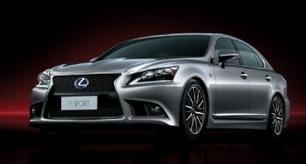
“You’re either going to love them or hate them.” You can bet that whenever you’re told this just before being introduced to somebody then that somebody is going to be downright obnoxious. The same goes for the LS, well it’s face anyway, because those are the kinds of statements made about that grille.
The thing is, the LS needs an obnoxious face because its up against The Establishment - the Mercedes-Benz S -Class, BMW 7 Series and Audi A8, and given there’s no way they’ll ever let Lexus into their little ‘club’ it’s good that the LS has steered clear of imitating them and is boldly different.
This was also the type of thinking which inspired the grille’s creator, Tokuo Fukuichi. The so called ‘spindle grille’ first appeared in 2010 on the CT200h before rolling out to the rest of the Lexus line-up. The look polarised the opinions of fans and even executives inside Lexus. But Fukuichi was adamant the key to the brand’s survival and success was to not to be boring.
That massive gaping mouth is anything but boring, and for this new-generation LS the spindle grille has been overhauled. Yes, some car companies might make a few tweaks to a grille, but not Lexus. Using a CAD computer program, it took designers six months to refine each of the 5032 surfaces on the F-Sport’s grille and the more than 7000 on the Sports Luxury’s. If only you didn’t have to slap a number plate on these exquisitely spun net-like structures.
New LED headlights and the ‘Zorro blade-slash’ LED running lights are equally obnoxious and therefore perfectly suited for the LS’s face. So too are the enormous air inlets below them in the bumper. If only the rest of the car’s exterior was as wild and not mild and milder the further you get from the grille. The rear looks stately, modern and sleek but could have done with something more adventurous (similar to IS’s taillights).
But the LS’s insides make up for that dullness, with a cabin that’s decadent and alien at the same time. A dash which sweeps from door to door features asymmetrical string-like design elements which are a theme carved through wood and glass and stitched into leather throughout the cabin. The quality is superb, while the fit and finish is better than I’ve seen on some of its competitors.
There are four no-cost interior packages on the Sports Luxury ranging from 'Moon White' trim with walnut decorative inlays to black trim with 'Crafted Latte' inserts. But it’s the $9800 optional 'Black with hand-pleating' and 'Kiriko' glass which is a stand out. It’s an intriguing look, the pleated fabric which cascades around the hand-cut Japanese glass.
The F Sport’s cabin is less decorative with seats that hold you tighter in three no-cost option leathers from 'Moon White' to 'Flare Red' with aluminium door and dash decorative elements.
Both cabins are sumptuous, although they fall a little short in gob-smacking tech like those amazing, expansive, floating dash screens and the virtual instrument cluster in the S-Class. Yes, there’s the large screen up front and the seat-back screens in the rear but the styling of the graphics and typeface reveal the Toyota DNA.
The LS has the presence a prestige brand’s flagship car should - imposing, long and wide. Look at the LS’s dimensions. At 5235mm end-to-end and 1900mm across, the LS is longer and wider than a Mercedes-Benz S-Class, but swoops in lower at 1450mm. The LS’s wheelbase is longer than a regular S-Class’s at 3125mm, too.
Apart from the grille you can tell an F Sport from a Sports Luxury by its black brake calipers and black elements in the front bumper, boot lid and sill.
To tell a 500 from a 500h, the difference is subtle. There are the badges, of course, but the 500's rear bumper also has a different design with chrome exhaust surrounds.
Eye of the beholder and all that, sure, but the A3 looks cool from the outside. It’s got this angular design but manages it without being too aggressive or busy with other design elements, so it still has a ‘premium Euro’ feel to it.
Shooting pics of the car for this review, the harsh light accentuated its sharp lines. It looks sculptural rather than just some little blob.
At the same time, thanks to the proliferation of sports design packs like the S Line, The A3 looks like it could be an S3, almost. Which makes sense, because the front bumper and rear diffuser as well as the roof spoiler are all partly inspired by RS models.
New for the A3 is the flat, 2D Audi badge, the model name on the B pillar and the new font for its name on the tailgate.
The lights in the cluster are able to look narrower than before thanks to their customisable settings, which allow you to choose the light signature, while the grille has a flatter appearance and the air intakes are bigger. Even the wheels look like they’re from a sports car.
Whether you’d have the A3 in the Python Yellow of our test car is another thing. I don’t mind a loud colour but I reckon a bit of 'District Green', 'Ascari Blue' or 'Progressive Red' would be the vibe.
Also, any colour that isn’t white is a cost-option on the A3, all of them coming in at $1350, except Ascari Blue which is an Audi Sport colour and costs $1850.
Speaking of the vibe, inside the A3 feels properly nice. It’s not just a spruced up Golf in there. There’s proper Audi character to the car, though that means plenty of piano black trim to get smudgy.
Audi’s done a good job making the layout look sleek without resorting to locating all the controls in the screen. There are design elements in the cabin that aren't strictly necessary but are worth doing for the way they look.
Things like the way the vents flank the driver display or the trim inlay on the passenger side of the dash.
Anything with a 3.1m wheelbase has to be practical right? Well, legroom in the back is excellent, but I can’t properly stretch out in that reclining rear seat with the ottoman without my feet hitting the seatback.
Headroom is also a bit a restricted in that rear row for me, too. That’s something to keep in mind for taller passengers (I'm 191cm tall).
A cargo capacity of 480 litres is 30 litres shy of the Mercedes-Benz S-Class, while the cooler box in the rear (that comes with the Sports Luxury trim) eats into the boot space and drops the total to 440 litres.
The LS is a five-seat sedan, but that centre rear seatback folds forward to become the armrest and houses the controls to the massage and reclining functions, plus two cupholders.
There’s another two cupholders up front and pockets in all the doors. While the storage area under the centre console armrest in the front and back is good – that’s about it for storage.
An access mode will raise the car by 30mm when getting in and lower it by 10mm when getting out. Those wide opening doors also make entry and exit easier.
Starting from what’s right in front of you as a driver, the steering wheel is the same as in bigger, more expensive Audis. That’s a good thing, because it’s nice to hold, has a good shape for the nine-and-three hand position and it’s not too thick.
As well as the nice, clear buttons on the wheel, you’ve got some physical controls for the climate control and some of the vehicle functions like parking assist and stop-start under the multimedia screen.
For a car this size, the 10.1-inch central touchscreen is plenty big enough, and the fact it doesn't sit up high over the dash is great. It's like a perfect arm's length for your standard-sized adult (like me). I can reach the other side of the screen without needing to lean.
The fact there’s no head-up display is a bit of a let-down, but the now-standard 12.3-inch driver display is very good. It’s configurable yet clear, and means you can get detailed navigation information in front of you rather than having to look to the multimedia screen.
The test A3 has genuine leather upholstery, which is $1100 extra. Not the most you’d pay for leather seats in a Euro, and the seats are comfortable. They're nicely bolstered, the drivers’ side is electrically adjustable and the leather doesn’t feel hard or rough to the touch.
Sitting behind my own seating position in the second row is a little tight, however. At 178cm, my knees almost touch the seat in front. There's also no sunroof, and even though there's just about enough light, that omission doesn’t help the cramped feeling.
There are, like the front, two USB-C ports and the air vents in the back, the latter separately adjustable to avoid arguments, though the cupholders in the armrest are in an awkwardly central position.
Behind that, under the 380-litre boot's floor is a space-saver spare tyre. That's better than some SUVs designed for family adventures that only offer up an inflator/repair kit. Keep that up, Audi. Good job. Well done.
If you fold the rear seats, you get 1200 litres of space. Interestingly, those luggage space figures are the same as the BMW 1 Series.
The line-up is simple. There are two powertrains: the turbo-petrol V6 LS 500, and the petrol-electric LS500h hybrid, and there's no price difference between them. Then, there are two trim levels: the F Sport for $190,500 and Sports Luxury for $195,500.
Coming standard on the F Sport are 'F Sport' seats with leather upholstery, heated front and rear seats, dual-zone climate control, 28-way power adjustable front seats and head-up display. The multimedia system comes with a 12.3-inch screen, sat nav, DVD player, DAB+ digital radio, Bluetooth connectivity and a 23-speaker Mark Levinson sound system.
There’s also LED headlights, 20-inch alloy wheels and a kick-open tailgate. While the F-Sport misses out on some of the plush features of the Sports Luxury it does get hardware for better on-road dynamics which you can read about in the driving section below.
The Sports Luxury has that large screen, those power adjustable front seats and the multimedia system with that Mark Levinson stereo, too, but adds much more. The front passenger seat slides and folds itself forward to allow the seat behind it to recline and extend its ottoman-style leg rest.
Both rear seats are 22-way power adjustable and heated. If you’re lucky enough to be lounging back there, you’ll also two 11.6-inch seat-back screens with a DVD player. Plus, there’s four-zone climate control, a rear cooler box and power sun shades.
The F-Sport and Sports Luxury have their own choice of no-cost interior options. The Sports Luxury also gives you the option to buy (for $9800) one of four special interior packs – you can read about the standout one with the hand-cut glass below.
There are 11 body colours to choose from: Sonic Quartz, Sonic Silver, Titanium, Liquid Metal, Onyx, Graphite Black, Vermillion, Scarlet Crimson (a dark red), Metallic Silk, Deep Metallic Bronze and Deep Blue.
For $54,800, before on-road costs, the A3 can be had as a hatchback - aka Sportback if you’re Audi - or for $57,800 as a sedan.
It’s a little over $4000 more expensive than the pre-facelift version, but Audi reckons there’s about $10,000 more value than before.
And value can be an important when you’ve got the BMW 118 ($57,600) and Mercedes A200 ($61,900) not sitting too far away in terms of price.
Part of the A3’s value equation comes thanks to the addition of the S Line package as standard, which not only makes the A3 look sportier but adds heated sports seats, aluminium interior trim elements and stainless steel on the pedals.
There’s also a larger 12.3-inch screen for the driver display as standard rather than an option. Audi has also reconfigured the air vents for the three-zone climate control, as well as adding a new style gear shifter.
Continued standard kit on the A3 is a wireless phone charger as well as a 10-speaker sound system, an ambient lighting package, a leather steering wheel and synthetic leather trim on the seats which all make for a sporty feel on the inside.
But on the outside there’s also customisable LED headlights and daytime running lights, as well as dynamic indicators and a set of 18-inch alloy wheels.
The car we tested also has a couple of options, its 'Python Yellow' paint is $1350 which I’ll come back to in the design section, but there’s also optional leather seats for $1100 and an electric tailgate for $660, the latter certainly worth it, I reckon.
All up, the car on test comes to $57,910, before on-roads, so even an optioned-up A3 comes in at either the same or less than its closest rivals from BMW and Mercedes-Benz.
Let's talk engine specifications .The LS 500 has a 3.5-litre twin-turbo petrol V6 making 310kW/600Nm, with drive being sent to the rear wheels via a 10-speed automatic transmission. That's impressive horsepower, but this car is heavy is a weight of about 2.3 tonnes.
The LS 500h has a 220kW/350Nm 3.5-litre V6 (a different engine to the 500’s) plus two electric motors driving the rear wheels. The total power output is 264kW. Shifting gears in the 500h is a continuously variable transmission (CVT). Just a reminder, too, the LS 500h is not a plug-in hybrid. Regenerative braking re-charges the lithium-ion batteries.
If you're looking for a diesel, you won't find one here. Same goes for a manual gearbox. And, while buyers can choose an all-wheel drive (awd) Lexus LS in other markets around the world, ours are all front-wheel drive.
The A3 is powered by a 1.5-litre, turbocharged four-cylinder petrol engine that makes 110kW and 250Nm.
It drives the front wheels via a seven-speed dual-clutch auto transmission and it can hit 100km/h in a claimed 8.1 seconds.
It’s also got a 48-volt mild hybrid system to help with efficiency, though you’d need to be told about it to notice. It also helps with the A3’s (smooth) stop-start system.
The LS 500 has an official fuel consumption of 9.5L/100km while the 500h’s is 6.6L/100km after open and urban road driving. We drove both cars on mainly country roads and saw an average of 10.1L/100km in the LS 500 and 9.1L/100km in the 500h.
The A3’s 50-litre fuel tank needs to be filled with RON 95 premium fuel and it’ll drink a claimed 5.3-litres per 100km on the combined (urban/extra-urban) cycle.
Theoretically you’re topping 900km a tank there, but given how fun this car is to drive you’d have to be well behaved to get even close.
For reference, whenever I was on a normal, day-to-day drive on test the A3's trip computer was returning figures in the mid to high sixes.
My first experience of the new LS was from the back seat of a 500 Sports Luxury being driven from the airport to the venue where Lexus Australia would deliver the presentation on its fifth generation of the car.
Seat reclined, I was whisked quietly and comfortably through the traffic, barely any road or wind noise, the ride was superb on that air suspension, a little floaty but still damped well enough for it not to become bouncy, with minimal head sway (the movement that makes you car sick).
Cocooned in leather with seat-back screens for audio and DVD the ride and environment was just right for a limousine chauffeuring important business types who need swift and tranquil transportation. Not for weirdos like me who were only interested in the way the front and back multi-link suspension kept a 2.3-tonne car with a 3.1m wheelbase so civilised, even through roundabouts. I wondered if this was actually the best way to experience the LS – from the back seats, being driven?
When I did drive the 500 and 500h in the two trims later it more or less confirmed that first impression. The 500 in F Sport trim was the best to drive, while the 500 in Sports Luxury was the best to be driven in. Why? I’ll explain.
The LS 500’s 3.5-litre twin-turbo V6 makes more power than the hybrid for starters, which is always a good thing when you need to move a car this heavy. Even then the LS 500’s acceleration isn’t super quick, and the engine needs to work hard when asked to get a wriggle on. That 10-speed automatic transmission is excellent though.
The same can’t be said for the CVT in the 500h which under harder acceleration does what CVTs do in that situation, make more noise without seeming to get the drive effectively to the wheels.
The 500h’s naturally aspirated V6 is a good thing, but it seems the weight of the car and the CVT work against it being exciting to drive. After a couple of hundred kilometres in a 500h blasting through the countryside steering it became tiresome rather than rewarding with the engine constantly kicking in and whining incessantly when asked for more beans, please.
This car is far better suited to slipping silently through city streets than it is galloping through the bush – that’s where the 500 is a lot more at home.
The 500 and 500h are rear-wheel drive cars, and this, along with an almost 50-50 balance, sets the ground work for good cars to pilot. The F-Sport trim adds an active rear stabiliser bar as standard equipment and brings a more sophisticated version of Lexus’s 'Vehicle Dynamic Integrated Management' (VDIM) – a stability system using data from suspension, ABS, traction control, electric power steering, the stabiliser bar and rear steering. The result is the control of longitudinal, vertical, yaw, roll and pitch movements for better ride and handling.
The F Sport trims adds bigger brakes, too with 400mm x 36mm discs on the front and 359mm x 30mm at the back, plus staggered tyres with 245mm rubber at the front and 275mm at the rear.
The electric steering is light, which makes it easy to manoeuvre in carparks, and an 11.2m turning circle is great for the class.
On the open road at speed the steering is pinky-finger light even in Sport+ mode, and while it’s smooth and accurate, I want to feel more connected to the wheels and where they’re pointed.
While the LS 500 is more the driver’s car than the 500h neither perform as well dynamically as Benz’s S-Class, but from the back seat the LS feels just as comfortable and even plusher.
First things first, the A3’s exterior and S Line pack are a clue to the way the car drives. It’s probably not the perfect car if you like a cushy, soft ride.
Its suspension errs towards the stiffer side of things, and certain bumps can feel more significant than they need to. But even on particularly bad roads or tram tracks in the city the dampers do a decent job of soaking up the harsh stuff.
It also means there’s more road noise than you’d like on some older highway surfaces, but only in a way that might get annoying if you’re on a road trip with the stereo off for some reason.
The upside of that is its steering feels well weighted and accurate. Plus, the way it handles and corners feels like a bit more grunt would make this a proper driver's car.
It’s not too intense, and there’s enough feedback to make it feel like the A3 shouldn't be a city-dweller only when it comes to driving.
Of course, it’s a hatchback, so you've got the advantages that come with less weight and a lower centre of gravity.
It doesn’t have enough weight to push into understeer more than you’d like on a tight corner. But it also doesn’t feel so light that you’re not sure how it’s going to behave under sharp braking.
The A3’s drivetrain, despite looking underwhelming on paper, feels practical on the road. Sure, 110kW isn't anything wicked, but its 250Nm feel like they’re working in the right places - that being between 1500 and 3500rpm.
It isn't blisteringly quick but even with the seven-speed transmission operating in default auto mode it usually feels like it's in the right place, let alone chipping in with 'manual' shifts via the paddles or shifting drive modes. The A3 has a choice of 'Normal' and 'Sport' shift settings.
You might be a little disappointed if you thought you’d be getting anything approaching a hot hatch, but for an entry-level model the A3 more than holds its own. It’s a solid platform that performs well without compromising too much when it comes to daily driving ability.
The Lexus LS has not been crash tested, but all the signs are there that this is an exceptionally safe vehicle, from the structure of the car to the advanced safety technology such as AEB (forward and reverse) with pedestrian detection, lane keeping assistance and adaptive cruise control.
For child seats there are three top tether anchor points and two ISOFIX mounts across the rear seats.
Both the 500 and 500h are fitted with run-flat tyres.
Tested in 2020, the A3’s been awarded a maximum five-star rating from ANCAP which applies to the facelifted version.
Six airbags and a suite of active safety tech helped contribute to this, though, whether it would pass with five stars under ANCAP’s current assessment protocols isn’t certain.
That’s likely only down to its relatively non-invasive safety warnings and mild assistance with things like lane-keep and speed warnings.
If you’re someone who’s likely to turn off most of the electronic assistance, the A3’s systems are at a pretty good level as standard.
It’s missing some modern kit like surround-view parking cameras but it does have front and rear proximity sensors and things like rear cross-traffic alert.
The Lexus LS is covered by a four-year/100,0000km warranty. Servicing is recommended every 15,000km or 12 months. There is no capped price servicing program. Being a Toyota family product the Lexus LS also comes backed by the same reputation for reliability and you may experience lower maintenance costs than perhaps its German rivals.
Audi offers a five-year/unlimited kilometre warranty, which is about par for a premium brand, but it also offers five years' free roadside assist and the ability to pay to extend the warranty.
Servicing is $2520 for a five year plan, but the extended two years of 'Audi Advantage' warranty is $3250 and comes with unlimited kilometres, roadside assist and covers two services.