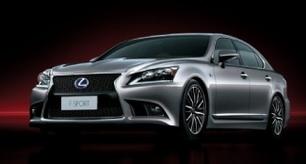
What's the difference?
Almost 30 years after Lexus launched its original LS flagship sedan, the fifth generation of the car has arrived in Australia in what appears to be the brand’s never-ending battle to hunt down and beat Mercedes-Benz, BMW and Audi at their own game.
In some markets it looks as though Lexus is making headway. In the United States last year Mercedes-Benz was the best-selling luxury brand, followed by BMW and then Lexus. To give you even more insight, 50 per cent of all Lexus sales globally are in the US.
The story is different in Australia, with Lexus hardly a threat to the big three Germans, selling about a third less each month.
The Lexus LS is the Japanese prestige brand’s flagship and comes with a price that nudges up against formidable rivals. There’s the Mercedes-Benz S-Class, BMW 7 Series and Audi’s A8. Only the best cars from a few of the best brands in the world – no pressure, Lexus.
This may even be a reason to buy one – in that it’s not one of the traditional three. You could see Lexus as the popular underdog that in some ways does a better job than the usual suspects. A people’s favourite perhaps?
Just look at how often it’s mentioned in songs. According to lyrics.com.au the word Lexus has been used in 873 songs. Meanwhile Mercedes Benz appears in 500, Audi in 402 and BMW in 307.
With all this in mind we headed to the Australian launch to drive the LS 500 and its hybrid twin the 500h.
The first-generation Volvo XC90 remained on sale for 12 years in Australia before being replaced by the handsome second-gen version that recently clocked up a decade of sales.
There’s a reason for the longevity. People love the Volvo XC90. It is a reliable seven-seat family-friendly SUV with a premium bent. You’ll spot loads of these at fancy private school drop off.
Volvo has extended the life of the second-gen XC90 with a significant late-life update. It adopts some features from its stablemate, the similarly sized and positioned EX90 electric SUV.
It doesn’t get a fully-electric powertrain but you have the choice of a mild-hybrid grade that acts as the range opener and the well-equipped T8 Plug-In Hybrid I’m testing.
Interestingly, a number of this car’s rivals have had their lives extended, too. As many carmakers pour billions into EVs, they’ve taken to delivering major updates to older internal combustion platforms rather than developing all-new underpinnings. The Audi Q7 and BMW X5 are other examples of this.
For the update, Volvo has ushered in a front-end design refresh, a fresh take on the interior, new multimedia and safety tech, a light tweak to suspension and new colours and wheels.
But is this enough to keep premium SUV buyers interested? Let’s find out…
The Lexus LS 500 and 500h are both exceptional cars. The ‘obnoxious’ styling especially to the grille makes the offerings from BMW, Benz and Audi look bland and overly corporate inside and out. It’s really in the dynamics department that the LS falls short of its rivals and only the LS 500 is enjoyable if you like to drive with a degree of conviction.
Both the LS500 and 500h, though, have wonderfully comfortable rides and this together with those sumptuous interiors makes these the perfect place to be if you’re in the back being swiftly and quietly taken to you next meeting.
For me the sweet-spot pick would be the LS 500 F Sport for its value and dynamic ability.
It’s a credit to Volvo that the XC90 feels like a new car, even with its older underpinnings. This latest update has successfully addressed areas that needed the most attention, namely the multimedia system, interior and exterior design. The electric driving range now feels somewhat old school compared to the numbers some manufacturers can achieve these days. A lot of PHEVs now exceed 100km EV range and buyers are starting to expect that. And setting up the third row takes way too much effort to want to do it regularly. The new Volvo XC90 is a comfortable, engaging and properly premium family SUV and the updates have only improved what was already a solid offering.