What's the difference?
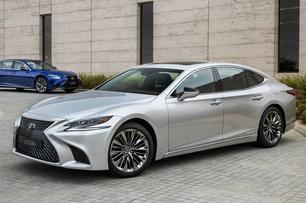
Lexus is returning to its roots and playing to traditional strengths with the 2021 LS update, as the Japanese luxury brand braces itself for the imminent release of an all-new Mercedes-Benz S-Class.
On sale now from $195,953 before on-road costs, the facelift ushers in a raft of comfort, refinement, driveability and technological upgrades, striving to deliver the quietest and most luxurious experience in the upper luxury sedan segment.
The blink-and-you'll-miss-it makeover runs to redesigned headlights, wheels, bumpers and tail-light lenses, as well as the inevitable multimedia screen update, improved seating revised trim and better safety.
Along with an all-in equipment list and unparalleled levels of ownership benefits, the goal is to emulate the dramatic differences that existed between the LS and its mostly German competition more than 30 years ago, which helped make Lexus a disruptor, decades before the term was even coined.
The MY21 range will continue offering two grades – the racier F Sport and opulent Sports Luxury – in either V6 twin-turbo petrol LS 500 or V6 petrol-electric hybrid LS 500h powertrain choices, as per the XF50-generation's Australian debut back in late 2017.
The question is: has Lexus gone far enough with its limousine flagship?
This idea hasn’t always worked out too well. Take a parcel-van (in this case the Ford Transit Custom) strip out the rubber matting and cargo barrier and bolt six or seven seats into what was the load area. Sure, the original vehicle to use this concept, the Volkswagen Kombi way back in the 1950s, got away with it, possibly because there wasn’t anything better around.
Ford has plenty of history with this notion, too. The first Transit of 1965 was also available as a mini-bus, but worked okay because the Transit itself was such a car-like departure from the commercial-vehicle norm.
Things didn’t go so well for Ford in the early 1980s, however, when the Econovan-badged parcel van it shared with Mazda (the E2200) was fitted with eight seats, given some fuzzy velour trim and dubbed the Spectron. And it was dreadful. In fact, so bad, that it made the contemporaneous Mitsubishi Nimbus and the even more forgettable Nissan Prairie seem like vastly superior alternatives to the job of moving people. Only because they were.
Early versions of the Spectron retained the Econovan’s crude suspension, wheezy (and fragile) little engines and even the tiny dual rear wheels that entirely deprived the vehicle of any traction. In fact, dreadful doesn’t even cover it.
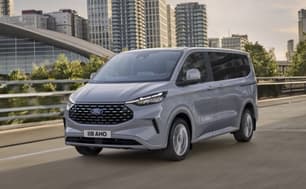
So you can see why Ford might be a bit antsy about me referring to the new Tourneo (a badge that has been around in Europe for decades) as a Transit Custom with extra seats and windows. Yet that kind of sums it up (up to a point, anyway). Luckily, the Transit Custom itself is a pretty sorted thing these days, so maybe Ford has nothing to worry about. Maybe…
One might be surprised to learn that, without having driven the latest S-Class, rival large luxury sedans have struggled to juggle comfort and refinement with agility and speed. Even in this modern age of adaptive dampers and air suspension. The Germans, in particular, seem to struggle at times.
The latest Lexus LS, however, walks the line with impressive confidence and poise, prioritising the former yet without dropping the ball with the latter. Just keep in mind that the 500h Sports Luxury manages the balance best.
The bar may just about be raised with the bestselling Stuttgart's arrival from March, but even then, with its extensive and complete specification, outstanding hybrid efficiency/performance combination and remarkable build quality and presentation, Japan's master luxury sedan deserves to find more buyers in this country.
Well done, Lexus.
There’s absolutely no doubt that the van-based people-mover has some distinct advantages over a three-row SUV. The rear seat is bigger, access to it is far better and there’s more luggage space even when all eight seats are occupied. But the Tourneo goes a step or two further with the sliding, swivelling seats that make it one of the most practical and flexible interiors on the market.
True, the driving experience is a bit alien at first, but it’s a case of different, rather than worse. Meantime, the ride is excellent and the performance and economy from the turbo-diesel driveline are both absolutely spot on for this vehicle’s intended purpose.
And perhaps that’s the metaphor for the whole thing: By not trying to be something it’s not, and concentrating on what it needs to do, the Tourneo emerges as a bit of a quiet achiever.
As we said earlier, this type of vehicle concept is never a sure-fire proposition. Parcel vans converted to passenger duties haven’t always worked out. This time, though, it’s different.