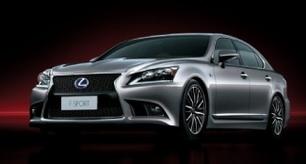
What's the difference?
Almost 30 years after Lexus launched its original LS flagship sedan, the fifth generation of the car has arrived in Australia in what appears to be the brand’s never-ending battle to hunt down and beat Mercedes-Benz, BMW and Audi at their own game.
In some markets it looks as though Lexus is making headway. In the United States last year Mercedes-Benz was the best-selling luxury brand, followed by BMW and then Lexus. To give you even more insight, 50 per cent of all Lexus sales globally are in the US.
The story is different in Australia, with Lexus hardly a threat to the big three Germans, selling about a third less each month.
The Lexus LS is the Japanese prestige brand’s flagship and comes with a price that nudges up against formidable rivals. There’s the Mercedes-Benz S-Class, BMW 7 Series and Audi’s A8. Only the best cars from a few of the best brands in the world – no pressure, Lexus.
This may even be a reason to buy one – in that it’s not one of the traditional three. You could see Lexus as the popular underdog that in some ways does a better job than the usual suspects. A people’s favourite perhaps?
Just look at how often it’s mentioned in songs. According to lyrics.com.au the word Lexus has been used in 873 songs. Meanwhile Mercedes Benz appears in 500, Audi in 402 and BMW in 307.
With all this in mind we headed to the Australian launch to drive the LS 500 and its hybrid twin the 500h.
Luxury vehicles are better because of the quality, reliability and care that Lexus has brought since 1990, upending the status quo like no other brand before.
The ES, however, has been an outlier.
Inexplicably inferior to the far-cheaper Toyota Camry on which it’s long been based on, the bloated mid-sized “Executive Sedan” series created especially for America ignored “The Relentless Pursuit of Perfection” ethos that Lexus originals like the LS, IS, LFA and even the most-recent NX have striven for.
The eighth-generation ES redesign, however, is different, despite remaining Camry -ased, with an extended, beefed-up body and platform, multi-link rear suspension featuring adaptive dampers, an advanced new operating system that drags connectivity into this decade and an electric option.
Suddenly, the ES is poised to lure Polestar 2, Tesla Model 3 and Mercedes-Benz CLA buyers with a high-quality electric vehicle (EV) from Japan brimming with technology, refinements, space and features, at a price that cannot be ignored.
Has the ES finally understood the Lexus memo?
The Lexus LS 500 and 500h are both exceptional cars. The ‘obnoxious’ styling especially to the grille makes the offerings from BMW, Benz and Audi look bland and overly corporate inside and out. It’s really in the dynamics department that the LS falls short of its rivals and only the LS 500 is enjoyable if you like to drive with a degree of conviction.
Both the LS500 and 500h, though, have wonderfully comfortable rides and this together with those sumptuous interiors makes these the perfect place to be if you’re in the back being swiftly and quietly taken to you next meeting.
For me the sweet-spot pick would be the LS 500 F Sport for its value and dynamic ability.
Since launching in Australia in 1992, the ES has always felt like what it clearly was: an overpriced and overblown Camry that never quite drove well enough to justify its premium positioning.
It felt sub-Lexus in most of the ways that mattered.
The ES350e, however, builds on the Camry basics with unique styling, packaging, steering, suspension and powertrain, while evolving the technology and luxury with the times.
A few ergonomic missteps aside, this is by far the best version ever, and an exceptional value proposition to boot.
In EV guise at least, four decades and eight generations in, the ES has finally come of age.