What's the difference?
For those merely gazing up to the lofty, ivory-tipped towers of high society, it would be easy to think that the mere ownership of a plush, premium vehicle, like the Lexus LC 500h for example, is a reward in and of itself.
The truth, though, is that Australia's premium manufacturers then sweeten the ownership pot even further, often inviting new owners into a secret club filled with tickets to exclusive events, seats at the fanciest of dining tables and concierge-style car maintenance, to name but a few of the perks on offer.
Lexus, though, sits atop the pile when it comes to offering ownership perks to its owners, and now more than ever, with the brand's existing Encore Club today welcoming a new and more-exclusive tier, called Encore Platinum.
We'll circle back to all of this under our 'Ownership' sub heading, but the short answer is that anyone who has bought a RC F, GS F, LX, LS or LC, like this 500h, since January 1 this year is automatically signed up, and is in line for some serious goodies.
Perhaps the most pressing question, though, is will it be the new ownership program that lures customers into a LC 500h? Or can the luxurious Lexus performance coupe stand on its own four wheels?
Let's find out.
Like most people in this day and age, I like to consider myself fairly green-minded. I recycle. I canvas bag. One time I even took public transport, despite having a perfectly good car at my disposal.
But most importantly, at least as far as our only planet is concerned, I’ve embraced electrification in the automotive world, confident in the knowledge that, 99 times out of 100, introducing a hybrid, plug-in hybrid or fully electric powertrain to the equation improves both the driving experience and your fuel bill.
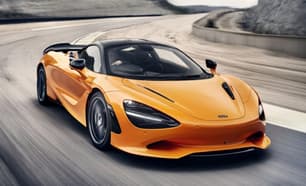
The one out of that 100? That would be the McLaren 750S — the British brand’s new apex predator, and a vehicle that might just be the marque's last non-electrified series-production supercar ever.
It’s powered by a spectacular twin-turbo V8 engine that contributes to a drive experience so raw, so pure, and so unfiltered, that to sully it with heavy batteries or silent electric motors would just about qualify as a crime against humanity, or at least against the parts of humanity fortunate enough to be able to afford one.
So, is this McLaren 750S the best of the current supercar bunch? Let's find out.
A truly fuel-efficient performance car, who’d have thought? There are some obvious trade-offs for trying to exist in two seperate worlds, but the Lexus LC 500h largely handles its dual roles with aplomb.
Not just a love letter to the intoxicating delights of the mighty V8 engine, the McLaren 750S is a genuine joy across the board.
Note: CarsGuide attended this event as a guest of the manufacturer, with travel, accommodation and meals provided.
It's a little curious, the LC 500h. For mine, it's stunning from a distance. All gleaming alloys and bulging rear arches and sharp snout angled downward like its caught the scent of its prey.
But weirdly, it can start to look a little less impressive the closer you get to it - a little swollen and vague in its lines. It's very likely it's eye-of-the-beholder stuff (fellow CarsGuide scribe Richard Berry adores it from every angle, for example).
Inside, the front of the cabin is a busy but stylish space, with multiple textures layered on top of each other to produce a premium-feeling, sporty space. The low-feeling dash juts out, giving the front passengers an ensconced, cockpit feel.
Everything is predictably leather-wrapped and lovely, and while it's not as streamlined as, say, an Audi interior, it's not without a genuine sense of Japanese charm in the cabin.
McLaren concedes the cosmetic updates for the 750S are “relatively subtle”, but there have been some key changes.
The front bumper and splitter are new, as is the rear bumper, while the rear wing is now bigger, with 20 per cent more surface area.
Also at the back, a new (and lighter, of course) stainless steel exhaust is now centre-exit, rather than off to either side.
Like the 720S before it, the 750S looks more like a statement of intent than a designer’s dream, with aerodynamic function over form the order of the day.
In the cabin, you’re looking at two sports seat, a grippy Alcantara steering wheel, and two relatively small screens by today’s sizeable standards.
You can have your cabin trim in full Nappa leather, or the leather mixed with Alcantara, and the audio is taken care of by Bowers & Wilkins.
Still, the 750S delivers everything you need and nothing you don’t in a car in this category.
It's not really. Especially in the backseats, which would make more sense if they were painted on. I'm no giant, but even my 175cm-tall head was pushed into the ceiling, and while there’s ample shoulder space for two adults, you’re unlikely to be able to convince two to get back there.
Lexus has included something called the "Easy Access" function for 2020, which sees the front seats slide forward automatically to help with accessing the rear seats, and they do lower the Cirque du Soleil antics required to get back there, but this realistically not a car for carrying more than two adults, save an emergency. There are two ISOFIX attachment points in the rear, so child seats can be locked in there.
That's not necessarily a drawback, though. This is a two-door sporty coupe, after all, and elsewhere, the sizeable dimensions (4770mm length x 1920mm width x 1345mm height) provide plenty of space for up-front riders.
You'll also find hidden cupholders, bottle holders in the doors, and all the power and connection points you need.
A word on the tech, though. The LC 500h is crying out for a touch screen, though the brand's traditional mousepad system is improving.
Next question, please. This is a stripped-back, lightweight, two-seat supercar designed to get you to, and then around, a corner in the least amount of time possible. So, no, you can’t fit much in the way of grocery shopping in the back.
You can, however fit a total 150 litres (front) and 210 litres (rear) in the 750S, and it gets bonus points for having deep cut-outs in the roof that make slipping in under those scissor doors far easier than you might expect.
Value is all about perspective, of course, and viewed the right way, the $195k sticker price of the Lexus LC 500h does provide a certain amount of value.
Yes, it's a lot of money. But Lexus' flagship coupe doesn't just get a performance-focused hybrid setup (pairing with a thumping V6 engine), but also just about every high-end feature the brand has in its deep bag of tricks.
It starts outside with giant 21-inch alloys, a glass roof with a sun blind, LED headlights with cornering lights, hidden door handles, keyless entry, and rain-sensing wipers.
Inside, you'll find leather-accented seats, a colour head-up display, a 10.3-inch multimedia screen with Apple CarPlay and Android Auto, another 8.0-inch screen in the driver's binnacle, a heated steering wheel, heated and cooled front seats, DAB+, satellite navigation system with live traffic, and a killer 13-speaker, 918-watt Mark Levinson stereo.
The McLaren 750S can be yours in hardtop ($585,800) or drop-top Spider ($654,600) guises, both of which have travelled north from the pricing applied to the 720S, which was $489,900 at launch, and its Spider equivalent, which was $556,000.
What you’re getting, though, is more — and less— of everything. More power, more performance, more downforce and more stiffness, combined with less weight, with McLaren having taken a forensic approach to stripping kilos from the 750S.
What you're not getting, though, is much in the way of niceties, with the McLaren 750S offering less interior tech and comforts than a mid-range hatchback (“it now has Apple CarPlay,” they exclaimed excitedly).
But for mine, that only enhances the drive experience, with the 750S offering a genuinely pure-feeling drive — a steering wheel free of buttons, a cabin largely free of distractions, no safety chimes bonging, and a nuclear reactor attached to your right foot. These are all good things.
Elsewhere, the McLaren 750S rides on ultra-lightweight forged alloy wheels (19-inch front / 20-inch rear) wrapped in Pirelli P Zero rubber as standard, and there are thinly cushioned carbon-fibre-shelled racing seats that hold you snuggly in place, and are every bit as comfortable on bumpier roads as cuddling a cactus.
In the cabin, McLaren has worked to up the tech, though its best to remember this is pared-back over plush.
A steering column-mounted driver display is new, and delivers all your key driving info, and it’s framed by all your go-to switches, like your 'Drive Mode' options.
In the centre, an 8.0-inch portrait-style screen now has Apple CarPlay as standard (but not Android Auto), and there are USB-C and USB-A connections for your devices, too.
The LC 500h is powered by a hybrid setup that combines a 3.5-litre V6 engine with a 650-volt "Lexus Hybrid Drive" system and a lithium-ion battery. That setup delivers 264kW of power, and somewhere north of 350Nm in torque when the engine and motor outputs combine.
That power is sent to the rear wheels via a CVT automatic, and will produce a sprint to 100km/h of around 5.0 seconds.
According to Lexus, 10 clear improvements were made the way the 2020 LC 500h drives, including a new transmission tune, more structural bracing added for rigidity, new suspension components and spring rates, and altered stabiliser bars.
Has it made a difference? Read on.
Ah, now we’re talking. In the huge-displacement world of supercars, a 4.0-litre twin-turbo V8 might sound a little on the small side when put up against V10s and V12s out of Italy.
But this mid-mounted, twin-turbo powertrain perfectly compliments the overall balance of the 750S, and when its 552kW and 800Nm (fed through a seven-speed automatic) meets the lightweight McLaren, the results are staggering.
The zero to 100km/h dash is dispatched in 2.8 seconds, while 200km/h flashes by in 7.2 seconds. Want to push to 300km/h? You’ll need just 19.8 seconds.
Lexus says the LC 500h will sip 6.8 litres per hundred kilometres on the combined cycle - very impressive for what is ostensibly a performance coupe - and emit 152g/km.
The LC 500h is equipped with an 82-litre fuel tank.
McLaren says you can expect 12.2L/100km on the combined cycle, with emissions pegged at 276g/km. But you can also expect to win the lottery. It doesn’t make it likely.
It’s hard to imagine how softly you’d have to treat the 750S to get anywhere near those numbers, but I know you almost certainly won’t. The temptation is simply too great.
There’s something very strange about hitting the start button in what is ostensibly a sports car, and being greeted not by the bark of an exhaust, but by the gentle whirring on the car’s electronics coming to life.
But then, the Lexus LC500h is not your average performance car.
It essentially trades the out-and-out grunt of its V8-powered sibling (which produces a monstrous 351kW and 540Nm) for a kind of best-of-both-worlds approach that pairs the punch of the V6 engine with the fuel efficiency of a hybrid powertrain.
If that sounds like an compromised approach to pure performance, you're right. But reframe the way you look at the LC 500h and it all starts to make a bit more sense.
Remember, this isn't a track-attack weapon, but a potent on-road bruiser, and the flow of power on offer always feels ample, and you never want for too much more off-the-line pace on public roads.
Among the biggest selling points of the LC 500h is the sheer distance between its various personalities. Engage Eco, or even Normal, drive modes, and it’s a quiet, mostly very comfortable (though it can be unsettled by bigger bumps) kilometre-eater, but engage Sport or Sport Plus and it rightly transforms into something significantly angrier.
It might not be the absolute sharpest tool in the performance car shed, but the LC 500h does bristle nicely when those modes are engaged, the hybrid factor seemingly replaced by a satisfyingly meaty exhaust note and an accelerator that’s suddenly far more sensitive to the touch.
The steering feel is nice and the inputs direct, but there is something about the car’s 1980kg weight that doesn’t inspire the deepest of confidence, at least not on the rain-slicked roads we were travelling along .
A pure performance coupe? Perhaps not. But a sporty, stylish and, when you want it to be, comfortable cruiser with the ability to turn the volume up when you come across a twisting road? Bingo.
Usually we wouldn’t be dedicating much space to the kilogram’s shaved here and there off the total weight of a vehicle, but it’s important in this case.
In the 750S, that starts with a bespoke carbon-fibre monocoque platform, which is not only light, but also so inherently stiff that even chopping the roof off for the Spider version required no extra bracing or supports, and only marginally impacts the performance figures.
Then, there are the lightest alloys ever fitted to a series McLaren, which reduce unsprung weight by up to 14 kilos.
That rear wing isn’t just bigger, but also lighter, saving another 1.6 kilos, the carbon-fibre-backed seats save a whopping 17.5kg, the new suspension springs shave another two-or-so kilograms. The list goes on and on.
All up, they've found 30 kilos between 720S and 750S, which is now 1389kg total.
The result is a vehicle that feels endlessly athletic — light, lithe and perfectly balanced — but also one that, when you’re feeding on that endless power, feels as though it might suddenly take flight.
Flat-footed acceleration is laugh-out-loud fun, the tyres scrabbling for grip with each donkey-kick gear shift, even past 100km/h, with the rear end shifting around slightly as the Pirelli rubber deals with the physics of what’s happening. It’s loud, visceral and intoxicating, and you absolutely never tire of it.
But the magic in this McLaren is that it's more than just brutally fast in a straight line, it's also one of the most engaging vehicles I've ever driven, and one that provides a near-telepathic connection to the car, its tyres, and the tarmac below.
The more time you spend behind the wheel, the more tameable it feels, and even at warp speeds (somewhere above 270km/h), you feel connected and in control, owing mostly the open lines of communication between the tyres, the steering and the driver.
Also ferocious is the McLaren's braking force, combining carbon ceramic discs with a rear wing that doubles as a jet-style air brake, and stamping on the brake pedal produces vision-blurring force that leaves you feeling like you're not just stopping, but hurtling backwards through time.
So, race track, tick. But away from it, the McLaren – with its 'Proactive Chassis Control' hydraulic suspension – is surprisingly compliant when you want it to be, with its 'Comfort' drive mode delivering exactly that, softening the important bits so you don’t rattle yourself to death on the freeway.
If the 720S was a benchmark, then this 750S is something else entirely, shifting the needle in every important way to create a vehicle that sparks pure, unadulterated joy from behind the wheel.
The Lexus LC 500h is yet to be ANCAP tested (the price would likely prove a sticking point), but the Japanese brand has fine form in attracting top marks, and there's certainly no shortage of safety features on offer here.
There's a total eight airbags and a reversing camera and parking sensors, as well as a host of high-tech kit like AEB, Lane Keep Assist, Blind Spot Monitoring, active cruiser control and a bonnet that will sense pedestrian and pop up before impact in an attempt to minimise injury.
Safety systems hardly abound here, and nor is McLaren or ANCAP likely to pony up for the 750S for crash testing.
You do get front and front-side airbags, front and rear parking sensors and a reversion camera, as well as a handy nose-lift function which should stop you scraping over steep speed bumps and the like.
So, to ownership. Let's start with the basics first, before we move onto the new Encore Platinum benefits.
The LC 500h is covered by a four-year/100,000km warranty, and servicing (capped for three years at $595 a pop) is required every 15,000km.
You will know already the Lexus's stellar Encore ownership program includes handy features like valet (pick-up and drop-off) servicing, but the new Encore Platinum level for owners of its more exclusive models unlocks some seriously cool stuff.
One is a new On Demand service, which allows owners to book a different style of car when heading off on a holiday or business trip. So, say you own the LC 500h, but want to take the family to the snow and need a seven-seat 4WD like the RX L, then Lexus will lend you one at no charge, which you can keep for eight days.
The loans are available in your state or somewhere else in Australia if you're travelling, with your car waiting for you at Qantas Valet for you when you arrive.
The One Demand service is available on four occasions over your first three years of ownership (which is also the length of the Encore Platinum membership).
The Platinum level also provides eight examples of free valet parking at select shopping centres, as well as hotel and restaurant benefits, and invitations to Lexus' drive days around the country.
The 750S is covered by a standard three-year, unlimited-kilometre warranty, which is fully transferable.
Owners can also spring for an extended warranty, which can cover the McLaren for up to 15 years.
Servicing is required every 12 months or 15,000km.