What's the difference?
Being a true Jack of all trades in the car world is rare.
Generally speaking, a vehicle is either capable or comfortable. Attractive or aerodynamic. Practical or performance orientated. And problems arise when cars try to do all those things well, all at the same time.
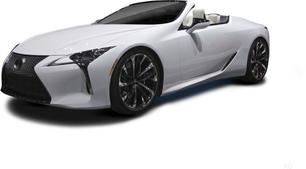
Which make the Lexus LC 500 Convertible such an interesting proposition. Because it is, without doubt, stylish, and lavishly equipped. It’s also rather large and rather heavy. All of which is perfect for cruising the Bondi foreshore.
But it’s also equipped with a thumping V8 engine and a throaty exhaust that sounds like bricks in a blender on the overrun. It’s stiffer than the LFA supercar, and plenty powerful, which should deliver one of Lexus’ sportiest-ever drives.
So can the LC 500 really do it all? Let’s find out.
KGM (formerly SsangYong) has revised its Musso range for 2026 with some new features and revised styling throughout the Australian line-up, as well as a name-change for this grade: the Advance which used to be the Adventure.
The updated Musso is a dual-cab 4WD ute with high and low-range gearing, an auto-locking rear differential and 3.5-tonne towing capacity, and all for under $50,000.
And with the optional XLV (extra long vehicle/version) pack, which our test vehicle has, it gets a longer wheelbase (110mm extra), a 300mm longer tub and 90kg of extra payload over the standard Musso (880kg rather than 790kg).
So, is the Musso an affordable alternative to the likes of Toyota HiLux and Ford Ranger?
Stunning to behold, and even more so to listen to, the LC 500 Convertible with no doubt turn as many heads as its owners surely want it to. It's not the final word in performance, but it's a lavishly equipped transporter none the less.
The KGM Musso Advance is a large 4WD ute offering a decent amount of appeal for the price and it makes a lot of sense in XLV form.
It’s generally nice to drive, it’s comfortable and capable for a ute and – as with the Rexton – the Musso is another clear sign that KGM continues to improve its vehicles, albeit incrementally in some cases, in terms of quality and functionality.
It’s eye-catching, the LC 500, if big, bolshy convertibles are your thing, and especially viewed front-on, where the aggressive nose design ends in a sharp crease in the mesh grille. I love the headlight design, too, which bleeds back into the body work, but also merges with the vertical light cluster that bookends the grille.
The side view is all shining alloys and sharp body creases, too, leading to an oversized boot that stores the fabric, aluminium and magnesium roof structure, which drops or raises in 15 seconds at speeds of up to 50km/h. The design fits into what Lexus calls an “impossibly small space behind the seats”.
Inside, it’s a snug but luxurious space, wrapped largely in leather and equipped with a wealth of technology. It’s a point we’ve made before, but why Lexus perseveres with its trackpad infotainment control technology is beyond us, but there’s no denying the cabin of the LC 500 is a wondrous place to spend time.
We particularly like the integration of the centre screen, which is recessed beneath the leather-wrapped edge of the dash. While some look like an afterthought, this appears to have been included in the broader design philosophy.
The Musso is based on its SUV stablemate, the Rexton. It’s a body-on-frame 4WD ute, available only as a dual-cab, and its appearance is inoffensively pleasant.
Styling changes to the Advance include a black grille, black 18-inch alloy wheels, HID headlights (on short and XLV grades), and rear privacy tint.
It also has a black leather-look interior with black leather-look seats.
The Musso’s interior offers plenty of space for the driver and passengers and is neat and well laid out.
Build quality and fit and finish are impressive with a mix of durable plastic and soft-touch surfaces throughout including a leather steering wheel and leather-look seats in the Advance.
It’s not, really. But then, what were you expecting?
As mentioned above, the interior feels snug for upfront riders, but not in a bad way. More that elements of the interior feel like they’re reaching out to greet you, leaving you with the impression of being tucked into the cabin.
Backseat riders are out of luck, though, with the seats really only reserved for emergencies. Legroom is tight, and while Lexus promises the roofline is about on-par with the Coupe, it’s not going to be a comfortable journey.
The LC 500 Convertible stretches 4770mm in length, 1920mm in width and 1350mm in height, and it rides on a 2870mm wheelbase. It will sit four at a pinch, and provide 149 litres of luggage space.
There are two ISOFIX attachment points in each of the rear seats, as well as top-tether points.
There is the expected array of storage spots (glove box, door pockets etc), cupholders (two to the rear of the auto shifter) and charge points (two USB-C ports and a 12-volt plug point for driver and front passenger).
The seats are comfortable and supportive and, in general, KGM has maximised space in the cabin, yielding plenty of shoulder and legroom for driver and passengers.
The 12.3-inch touchscreen multimedia system works reasonably well although you do have to cycle through numerous menus and sub-menus to change some settings and I did have to try several times to pair my phone to it, so overall functionality is clunky.
Rear-seat passengers have access to directional air vents, but there are smart-device charge points.
The tub size is as follows: 1600mm long in the XLV (1300mm in the standard Musso), 1570mm wide (1100mm between wheel-arches) and 570mm deep. The tub has a plastic tub liner and four tie-down points.
For a direct comparison of dimensions: the standard Musso is 5095mm long with a 3100mm wheelbase while the XLV is 5405mm with a 3210mm wheelbase; the standard Musso is 1950mm wide and 1870mm high (the XLV is 1885mm). For reference, the Ford Ranger XLT dual-cab ute is 5406mm long (including rear bumper and tow bar receiver) with a 3270mm wheelbase.
The difference in dimensions between a standard Musso and the XLV version also means a difference in off-road angles so approach is 22.8° / 25° (XLV), departure is 23.4° / 20° (XLV) and rampover is 23° / 20° (XLV).
Minimum ground clearance is 215mm in a standard Musso and 220mm in the XLV, so the Musso XLV does stand taller off the ground than its regular stablemate.
Kerb weight is listed as 2090kg for the standard Musso and 2100kg for the XLV. Turning circle is 11.8m for the standard Musso and 12.2m for the XLV.
It costs $214,000 - and that’s rather a lot of money - but unlike some premium and luxury cars, with Lexus, once you’ve handed over the cash, that’s it. There’s no tempting option list to lure you into parting with even more of your hard earned.
And I mean that literally - Lexus proudly proclaims that “there is no option list” for the LC 500 Convertible, so suffice it to say it arrives with plenty of gear.
Take a deep breath…
You get 21-inch two tone alloys, triple-stack LED headlights, keyless entry, retractable door handles and rain-sensing wipers outside, while inside, you’ll find dual-zone climate, leather-accented seats which are heated and ventilated, neck-level heating for when the roof is down, a heated steering wheel and sports pedals.
The tech stuff is handled by a 10.3-inch centre screen with Apple CarPlay, Android Auto and on-board navigation, both of which are controlled via Lexus’ impossible-to-kill touchpad. There’s a second, 8.0-inch screen for the driver, and the lot pairs with an impressive 13-speaker Mark Levinson stereo.
There’s also a heap of safety stuff, but we’ll come back to that in a moment.
If that’s not enough for you, you can spring for the Limited Edition, which is $234,000 for each of its 10 available examples. It arrives in a unique Structural Blue hue, with a white leather interior with blue highlights. It is designed to be the most blue of blues, too, with Lexus saying the paint colour was the result of a 15-year research project. Which sounds like a thrilling way to spend a decade and a half.
The KGM Musso is available in three grades - ELX, Advance, and the Ultimate. All three can be optioned up with an XLV Pack, which adds a 300mm longer tub giving you an additional 251L rear tub capacity, along with a 110mm longer wheelbase. XLV also increases maximum torque from 400Nm to 420Nm.
At the time of writing, our test vehicle, the Advance, has drive-away price of $48,700.
Standard features in the Advance include 12.3-inch touchscreen multimedia system (with wireless Apple CarPlay and Android Auto), 12.3-inch digital LCD instrument cluster, leather-accented heated and ventilated front seats with electric adjustment, 18-inch black alloy wheels, HID headlights, LED daytime running lights, and a suite of driver-assist tech, but more on that in the Safety section below.
Exterior paint choices include Grand White (no extra charge), Amazonian Green (metallic paint), Marble Grey (metallic paint), Pearl White (metallic paint) and Space Black (metallic paint). Metallic paint is available for $700.
It’s a lusty power plant, this one, and not something you immediately expect to find in a luxurious Lexus convertible.
The 5.0-litre V8 produces 351kW and 540Nm - 260kW of which arrives from 2000rpm - and it sounds like a God of Thunder as it’s doing it.
It pairs with a 10-speed automatic and sends all that grunt to the rear tyres, with Lexus’ Active Cornering Assist and a mechanical limited-slip differential helping you to not make a mess of things when tackling corners.
The KGM Musso Advance with the XLV Pack has a 2.2-litre four-cylinder turbo-diesel engine – producing 133kW at 4000rpm and 420Nm from at 1600-2600rpm – it gets an extra 20Nm over the shorter version's 400Nm from 1400 to 2800rpm.
It has a six-speed automatic transmission, part-time 4x4 with high and low range, and an auto-locking rear differential.
This is a sluggish combination producing a generally lacklustre performance and the powertrain is not particularly efficient but, having said that, the Aisin auto is a reliable, well-proven transmission and the Musso ultimately does reasonably well with what it has.
The 4WD mechanicals and driver-assist tech actually work better in this package than they do in the Musso’s stablemate, the Rexton.
Remember when I said it was lusty V8? When has that ever been good news for fuel use?
Lexus reckons you’ll get 12.7L/100km on the combined cycle, but the temptation of all that grunt will pretty much ensure that never happens. Emissions are pegged at 290g/km of C02.
The LC 500 Convertible’s 82-litre fuel tank only accepts 98RON fuel.
Official fuel consumption for the Musso Advance with the XLV treatment is 9.0L/100km.
On this test, I recorded 11L/100km, but on the test I spent a chunk of time in 4WD high and low range.
The Musso has a 75-litre fuel tank, so going by my on test fuel-consumption figures, from a full tank, you could reasonably expect a driving range of about 681km.
But it is worth noting that I didn't have a lot of weight on board during this test – it was just me and the vehicle recovery gear – and you will have a lot more weight on board: your family or your mates, pets, camping gear, surfboards, kayaks, the whole kit and caboodle.
It’s a tough nut to immediately crack, the LC 500 Convertible.
It feels like it really wants to be a super-accomplished performance car, and on longer, more sweeping bends it is, with that thick flow of power ensuring you simply surf through corners before rocketing out the other side, the air filled with that growling exhaust note as your right foot finds its way to the carpet.
But on the tighter stuff, there are some factors that play against it. The suspension feels sorted and that engine is always willing to deliver, but for mine, the steering and brakes felt a little disconnected from the experience, not inspiring much in the way of late-braking confidence. And then there’s the sheer two-tonne-plus weight of the thing, which can’t be totally hidden, even by Lexus’ best wizardry.
Don’t get me wrong, it’s very capable, even on surprisingly tight stuff. It’s just that there’s something of a disconnect between car and driver.
That’s not a bad thing, really. Are you really buying a premium convertible to attack a mountain pass? Probably not. And keep it flowing through corners and the LC 500 Convertible will keep a smile painted on your face, owing mostly to wave of torque you can ride to your destination.
Hovering your foot over the accelerator must surely be what the President feels like whenever he stands near the nuclear football, with that big V8 always ready to turn on the fireworks.
Away from the red mist, you’ll find the LC 500 Convertible positively flows from destination to destination, the 10-speed gearbox - which can feel flustered at pace - seamlessly flicking through its options, and the ride in its most comfortable settings disposing of most road imperfections before they enter the cabin.
The cabin is also very cleverly insulated, not just when the four-part roof is up, but also when it’s down, with the climate and ambience of the interior largely unaffected by what’s going on in the outside world.
On-road, the longer-wheelbase Musso is composed and comfortable with well-subdued NVH (noise, vibration and harshness) levels adding to an impressive overall sense of low-key refinement.
The engine and auto work reasonably well together, but as mentioned earlier this is a sluggish unit and it takes some urging to get it going. Pronounced lag from stand-still can be disconcerting, especially when you need plenty of zip to punch you into the traffic flow.
This ute’s suspension – double-wishbone, coil springs and stabiliser bar at the front, multi-link with coil springs at the rear – is firm, mostly controlled, but the Musso becomes jittery on irregular surfaces, such as lumpy back-roads bitumen and mildly corrugated dirt tracks.
One noteworthy annoyance: the Musso does not have adaptive cruise control.
Despite that, the Musso is actually quite reasonable for general driving duties.
As a 4WD, the Musso actually performs pretty well. It is a long wheelbase ute, so you have to drive it with consideration because you have to take into account its shallow off-road angles – approach, departure and ramp over – and it has quite a large overhang of tub behind the rear axle.
It has an auto locking rear diff, which is clunky in operation and I’d prefer a switchable diff-lock, which you could select whenever you want to, but otherwise it's effective in a workman-like kind of fashion.
Steering is not too shabby, it has a nice weight to it in all situations, whether you are on the bitumen or a dirt track. Turning circle on this long-wheelbase ute is 12.2m, but it feels nimble to steer around on the tracks.
The Musso has part-time four-wheel drive and high and low range 4WD gearing. It doesn't have a lot of power and torque in terms of the contemporary dual-cab ute market, but it does fine with what it does have; 420Nm in the XLV Musso gives it that little bit of extra punch over the standard Musso (400Nm) and that torque is available across a decent spread of revs.
If you intend to use your Musso as an off-road adventure vehicle or a weekend holiday machine, then it's handy to know that it's unbraked towing capacity is 750kg and its braked towing capacity is 3500kg and that's on par with the dual-cab ute market.
In terms of tyres, it’s the same story here as with most standard 4WDs – the Musso’s Nexen NPriz RH7 (255/60R18 108H) are not well-suited to anything other than light off-roading. The easy fix? Replace those tyres with some decent all-terrain tyres.
Payload is a listed 880kg (790kg in the standard Advance), GVM is 2980kg and GCM is 6480kg.
The Lexus LC 500 Convertible arrives with six airbags, a reversing camera with guide lines, parking sensors, and the usual suite of traction and braking aids, but there’s much more to the safety story, too.
The more high-tech stuff includes parking sensors, pre-collision assist with AEB, lane keep assist, blind-spot monitoring, rear cross-traffic alert and active cruise, as well as bespoke convertible safety gear, like active roll bars that deploy when the car is in danger of rolling over, protecting the occupants beneath that soft roof.
The Musso does not have an ANCAP rating because it has not been officially tested.
As standard, the XLV Advance has six airbags, auto emergency braking (AEB), lane departure warning, trailer sway control, blind-spot monitoring, rear cross-traffic alert, front/rear parking sensors plus reversing cameras and more.
Adaptive cruise control is not offered on Mussos in Australia, only old school cruise control.
Lexus vehicles are covered by a four-year, 100,000 kilometre warranty, and the LC 500 Convertible requires servicing every 15,000kms.
Lexus's Encore ownership program includes pick-up and drop-off servicing, but the new Encore Platinum level for owners of its more exclusive models unlocks even more stuff.
One is a new On Demand service, which allows owners to book a different style of car when heading off on a holiday or business trip. The loans are available in your state or somewhere else in Australia if you're travelling, with your car waiting for you at Qantas Valet for you when you arrive.
The On Demand service is available on four occasions over your first three years of ownership (which is also the length of the Encore Platinum membership).
The MY26 Musso range is covered by a seven-year/unlimited kilometre new-vehicle warranty, and five years of roadside assistance.
A service is required every 12 months or 15,000km, whichever occurs soonest with cost per service either $418 or $522.
Note, KGM considers off-roading as an example of a “severe driving condition” and so your Musso may require more frequent servicing.
KGM Australia has more than 50 dealerships across the country with a decent spread across metro and regional areas. Rextons can be serviced at those dealers or at approved workshops.