What's the difference?
CT, IS, GS, LS, RC, LC. Yes, that list of letters looks like something you’d read when getting your eyes tested at an optometrist, but they are actually all Lexus models.
Ok, you may have known that already, but did you know that those are just their initials? They actually have full names, too; Compact Touring, Intelligent Sport, Grand Sport, Luxury Saloon, Racing Coupe, Luxury Coupe.
And so this review isn’t just on the new-generation ES, but on the Elegant Sedan, which made it to Australia in 2018. And, as if hinting at things to come, it’s available in ES300h petrol-electric hybrid guise only.
This is the seventh-generation of a model that has been part of the Lexus line-up since the very beginning, way back when the luxury arm of Toyota first stepped onto the world stage in 1989.
So, does the ES300h live up to its Elegant Sedan name? Does being hybrid-only in Australia mean it loses its powerful presence? And is there any reason why you’d get one over a Mercedes-Benz E-Class or BMW 5 Series?
So many questions, but after living with the ES300h in top-of-the-range Sports Luxury guise for a week, we now have all the answers.
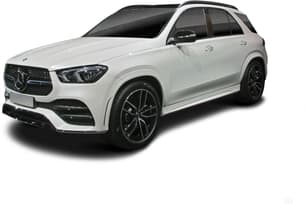
This is the first real Mercedes-Benz GLE. It's the second version of the SUV, but the last one was really just a big update of the old ML, and it never really soared to the heights it could have as a result of that.
But this new version - the 2020 GLE - is exactly that. It's new.
The exterior is new. The engines are new. The underpinnings are new. The interior - yep, you guessed it - new.
The big question is, though, is the GLE a competitor now? Can it stand up against the BMW X5, Maserati Levante, Porsche Cayenne, Range Rover Sport, Volvo XC90 and even the VW Touareg?
Let's find out.
The ES300h is outstanding in terms of ride comfort, refinement and value. If you’re looking for a true driver’s car then a Lexus RCF is probably a better tree to bark up, but if you’re looking to ferry passengers in a serene, prestigious and fuel-efficient way, then look no further.
All told, the Mercedes-Benz GLE 2020 model is an improvement in many ways over its predecessor. It's safer, more high-tech, considerably more luxurious and practical inside, and offers better value, too.
But, in 300d guise at least, it's let down by a slightly underdone engine, and suspension that just doesn't do a good enough job on rougher roads. It's close, but not close enough to be best in class.
Maybe that'll be a different case for the higher-grade versions with the most high-tech engines and the tricky optional suspension... we'll have to wait and see.
If you think all Lexus models look the same, then pop on over to the Audi, BMW or Benz websites and take a peek at their line-ups. Compared to the ranges from those prestige car makers, Lexus models look wildly different from each other.
Opinions on that ‘Spindle Grille’ are as polarising as views on politics or religion. Personally, I like how upfront and brave the grille design is, but what seems odd to me is that it’s almost as if this was the only place on the exterior where designers were allowed to be a bit adventurous. The rear, while cleanly styled is a bit plain. The bottom just doesn’t match the face.
The ES300h’s roofline in side profile is beautiful as it sweeps almost fastback-style to the boot lid. Again, not the most dramatic styling, but it’s still pleasing in the sense that the design flows well together. The same can be said for the fit and finish – the panel gaps are near-perfect.
This perfection continues into the cabin, where the materials and craftsmanship matches German prestige rivals in places (the door handles, leather and digital instrument cluster, for example), only to be let down in other areas which disclose its budget Toyota family connection (the air vents, steering wheel and display screen).
The ES300h’s interior design isn’t going to set everybody’s world on fire, but there will be those who adore its asymmetrical styling with different textured surfaces that fold, swoop and jut up against each other’s space. Have a look at the images, they’re of the Sports Luxury which sits above the Luxury in the two grade line-up.
The differences visually between the grades is minimal. The Luxury has 17-inch alloys, while the Sport Luxury has 18-inch.
New colours for this generation include Glacial Ecru (the sandy hue of our test car in the images) and Radiata Green. Both grades’ interiors come in a variety of colour schemes, including Black, Chateau, and Topaz. Exclusively for the Sport Luxury cabin is Rich Cream, too. The Sports Luxury steering wheel has wood trim.
One of the more peculiar design elements of the ES300h’s cabin design, and there are a few, are the controls for the drive modes and traction control. They sit like horns on the instrument cluster hood, as though these are things the driver will constantly be reaching for, when in reality most people will never touch the traction control button.
A new-generation car means new foundations, and the ES300h is built on the GA-K platform which underpins the Camry. The platform is part of the latest global architecture which Toyota and Lexus are now using to build its vehicles.
The dimensions of the ES300h, if you’re wondering if it will fit in your garage, are just under 5.0m long, 1.9m wide and 1.4m tall.
You can make your own mind up about the styling of the new GLE. It's certainly more aggressive than the model that came before it, and Benz claims that it's the most aerodynamic SUV in its class.
The models on test were all fitted with the AMG styling pack and the bigger 21-inch multi-spoke wheels, and from some angles it's a striking car. I particularly like the way the rear-end treatment has worked for the GLE: the triangulated tail-lights, the lower bumper and the rear glass all work together well.
In profile, the GLE is quite challenging to look at. The rounded window-line is a bit awkward, and somehow the wheels just don't fit with the bulky guards (though I do like the way the AMG 21s poke out a bit at the back).
The front sees the diamond-style treatment to the grille for the AMG Line versions, but there's a lot of black plastic on the bumper, and the headlight shape gives it a bit of a droopy-eyed look. Is it just me, or is it a bit of a Bassett Hound?
It is a bigger car than before - 111mm longer (now 4930mm - and on an 80mm longer wheelbase, now 2995mm), and it's 15mm wider but 31mm lower - and it looks more substantial as a result. I'm just not sure it's pulling off its bulk as well as it could.
So the outside is pretty, er, interesting. We had comments from passersby to that effect, too, and in our comparison test it was the consensus of our team of experienced testers that the GLE had some challenging exterior design elements.
But inside is where the best bits hide, with a lot of luxury finishes, materials and technology giving the GLE some wow factor that its exterior design arguably misses out on.
The Lexus ES300h is a five-seater sedan, but it’s really designed to sit two comfortably in the back, given there’s a large driveshaft hump in the floor and that the outboard seats are divided by a fold-down control panel/armrest.
Legroom in the second row is ample. I’m 191cm tall, and I had about 20mm of space between my knees and the seat back when it was in my driving position. Headroom gets tight with that sloping roofline, but there’s just enough space thanks to the low hip point of the rear seats.
Cabin storage is excellent. The fold-down armrest for the rear seats has a storage tray and two cup holders, while the large centre console bin has a lid which can open towards the driver and also to the front passenger (I spent way too long marvelling at how it worked). There are two cup holders up front and decent-sized door pockets, too. Those rear doors open wide for easy exit and entry.
Boot space in the ES300h is 454 litres (VDA), beating the 410-litre cargo capacity of the BMW 530e.
As far as power outlets, you’ll find two USB chargers in the centre console storage bin and a Qi wireless charging pad, which is awkwardly situated making it hard to place larger phones onto it.
The cabin presentation and pragmatism is excellent in the new-generation GLE. There was an existing version on site for us to compare, and to say it's like night-and-day would be generous to the old model.
A lot of that comes down to the MBUX twin 12.3-inch screens on top of the dash - one for all the driver instrumentation and controls, and the other for sat nav, media, car controls and other settings. They look great, and there are multiple ways to control them: the steering wheel controls, the touch pad between the front seats, the screen in the middle is touch-capacitive, and there's the much-bragged-about “Hey Mercedes” voice control system.
But it's more than just the screens: the finishes and materials used in the GLE are exceptional. The plastics are excellent, the brushed aluminium treatment that runs the width of the dash with ambient lighting, the surrounds on the vents (oh, so many vents!) - it all works so well together. But the open-pore wood finish is my favourite element, adding a touch of ruggedness that's also plush and luxurious.
The test cars all had the high-end leather treatment and optional bolster-heavy seats, and they're okay, but a little fiddly to adjust. I guess that's the beauty of driver profiles - the car will remember your favourite settings and make the adjustments as you get in or out by detecting the key.
There's also excellent storage throughout - the door pockets in all four doors are huge, there are cupholders front and rear, and loose item storage is decent, too. Plus there are heaps of USB-C (fast charging) ports up front and in the back.
Speaking of the back, the cars at launch all had the seven-seat package, which might appeal to you, or not. It's more than just a couple of seats in the back row, because it includes electric seat adjustment for the second row, with slide and recline functions allowing you to prioritise second- or third-row space.
The space in the second-row with the seats set as far back as they can go is excellent. There's heaps of room for someone my height (182cm) to sit behind a similar sized driver with ample knee room, headroom and shoulder room. You'll be able to fit three adults across the back, or if you have kids, there are three top-tether points and outboard ISOFIX child-seat anchors, too. No child seat restraints in the third row, though.
Whether you choose the five-seat or seven-seat option, the boot space remains the same at 825 litres with five seats in play. All models have an electric tailgate, too.
And if you're curious about the third row, it should be fine for anyone shorter than 175cm for shorter drives. It's not super spacious back there, and should be considered a 5+2 option. Really need a seven-seat Merc? You could get a GLS if you can afford it, or go for a V-Class luxury van. Go on. Do it!
Yes, and don’t let anybody tell you any differently. The Luxury lists for $59,888 and the Sports Luxury is $74,888. Both are bargains when you consider the quality and features.
If it was my money, I’d go for the Luxury which is almost indistinguishable visually but doesn’t come with as many tech and convenience features as the Sport Luxury.
Still, the Luxury gets the 12.3-inch screen with sat nav, a 10-speaker Pioneer stereo system with digital radio, a head-up display, dual-zone climate control, wireless charging, 10-way power adjustable front seats, privacy rear windows, a moonroof, proximity key and LED headlights.
The Sports Luxury takes all of that and adds a Mark Levinson 17-speaker sound system, leather seats, heated and ventilated 12-way power adjustable front seats, heated and power reclining rear seats, three-zone climate control, heated steering wheel, power rear sunshade and manual side rear window shades, gesture-open boot and cornering LED headlights.
The Sports Luxury also comes with noise reducing 18-inch wheels – they contain what’s called a Helmholtz resonator which cancels out the drone that can be produced when driving.
Is there anything missing? When I saw the rear fold-down armrest with the control panel I instantly thought the ES300h must have had seat-back screens, but nope. Also, it’s annoying that Lexus still doesn’t have Apple CarPlay and Android Auto as part of its package. This will change we hear, but it has been slow on the uptake.
The Lexus ES300h’s direct rival is the Infiniti Q70 Hybrid GT Premium for $82,900, but it also challenges the likes of Mercedes-Benz E-Class, which starts at $91,900, BMW’s 5 Series, which begins at $92,990, and the Audi A6, which kicks off at $81,900.
Given that the ES300h is hybrid-only, if you’re specifically looking for something with a petrol-electric powertrain, then there’s the BMW 530e or the Mercedes-Benz E350e.
One thing that's really neat about the new Mercedes GLE range is that the brand has decided to specify each of the models exactly the same - that makes it simple for consumers, because essentially you're just paying more for a better engine.
That means the extensive standard equipment list is the same whether you choose the 300d entry-level diesel model at $99,900 (plus on-road costs), the mid-range petrol 450 model at $111,341, or the current range-topping six-cylinder diesel 400d at $118,142.
That may seem like a pretty slim range, but you can expect Mercedes-AMG to offer two additional performance-oriented models - the GLE 53 and the GLE 63 S - in 2020. And, for context, the current BMW X5 ranges from $112,990 to $149,900, while the Porsche Cayenne lineup spans from $117,000 to $242,000.
Standard equipment includes the company's MBUX multimedia system with dual 12.3-inch screens, LED lighting with adaptive high beam headlights, 20-inch alloy wheels, a power tailgate, 360-degree parking camera, colour head-up display, the company's 'Artico' leatherette upholstery with heated front seats, DAB+ digital radio and Apple CarPlay and Android Auto.
There are multiple ways to personalise and customise your GLE, but one that's expected to attract a lot of custom is the “7 Seat Package” which adds third-row seats for people up to 180cm tall, and also incorporates electric second row seat adjustment (tilt and slide) and electric seat folding. The pack is $3900.
Other option boxes include the AMG Sport Package ($9900, comprising an AMG bodykit, panoramic roof, wireless phone charging and leather upholstery), the Night Package ($4800, adds black exterior accents), the Vision Package ($4200, including panoramic roof, wireless charging, 13-speaker Burmester sound system) and the Energising Package Plus ($6200, adding multi-contour front seats with massaging, heated armrests, air fragrances).
As mentioned at the start of this review, in Australia the Lexus ES is only available with one powertrain variant – a petrol-electric hybrid.
This combines a 2.5-litre four-cylinder petrol engine making 131kW and 221Nm, with an electric motor that has an output of 88kW and 202Nm. The 244.8V nickel-metal hydride battery has been moved from under the boot floor in the previous generation car to under the rear seats, so it no longer eats into the cargo space.
The ES300h isn’t a plug-in hybrid, so battery recharging is done through regenerative braking.
A continuously variable transmission means seamless and smooth low-speed driving using just the motor, but under heavy acceleration the engine activates and you’ll hear that drone associated with CVTs.
Powering the Mercedes-Benz GLE is a selection of engines, with petrol and diesel offered.
The entry-level power plant is the 300d, which uses a 2.0-litre four-cylinder turbo-diesel engine with 180kW of power (at 4200rpm) and 500Nm of torque (from 1600-2400rpm). It has a nine-speed automatic transmission and all-wheel drive as standard.
The range-topping diesel is a thumper. It's the 400d, which runs a 2.9-litre turbo-diesel six-cylinder with 243kW of power (at 4000rpm) and 700Nm of torque (from 1200-3000rpm). It also has a nine-speed auto and AWD standard.
The sole petrol model at launch is the 450, which employs a twin-turbocharged 3.0-litre in-line six-cylinder engine with 270kW of power (at 5500rpm) and 500Nm (at 1600-4500rpm). It uses a nine-speed automatic transmission with AWD, but this version is the only one with mild-hybrid tech, using 48-volt EQ Boost tech to help add 16kW and 250Nm for short stints of added performance (0-100km/h in just 5.7 seconds, apparently), and allowing the engine to shut off under light throttle or lift-off situations.
If you plan to tow, there's a factory-fit tow pack available that allows 750kg unbraked and 3500kg braked towing across all grades. This pack is the one from the factory - remember that - and it costs $1900. If you instead fit one as an aftermarket fit, the figures are 750kg/2700kg respectively.
This is the point of a hybrid, right? To save fuel? The electric motor can power the car at low speeds around car parks or in bumper-to-bumper traffic, and I found that after 104km of both urban and open road usage my fuel economy in the Sport Luxury was 5.4L/100km.
Lexus’ official combined fuel economy figure for both the Luxury and Sports Luxury is 4.6L/100km.
Fuel consumption varies between the models, as you'd expect.
The 300d is the most frugal of the mix, with an official combined cycle fuel use claim of 6.9 litres per 100 kilometres. The 400d, with its bigger six-cylinder diesel, is said to use 7.7L/100km. The 450 petrol model has the highest claimed fuel use, at 9.1L/100km, and that's despite the fact it's the only version of this trio to bring electrification into the mix with the EQ Boost 48-volt mild hybrid system.
On test at the launch of the GLE we saw a displayed return of 9.4L/100km for the 300d model, but there was a fair bit of country road and highway driving in the mix.
All versions of the GLE are fitted with an 85-litre fuel tank.
Two words: quiet and comfortable. Well that’s three words, but that sums up the ES300h on the road. Yes, rivals may have intelligent adaptive air suspension and leather made from free range cows, and they are supremely tranquil and sumptuous places, but challenging them is this ES300h.
Even with its regular shock absorbers and steel-spring suspension, the ride was outstanding for its comfort and composure on the worst roads Sydney could throw at it over the week we tested the car.
Front and rear seats were supportive and comfortable over long distances, too. From a driver’s perspective the experience was serene – this was an easy and relaxing car to pilot.
I’m not a huge fan of petrol-electric hybrid powertrains, but it suits the seamless personality of the ES perfectly, adding to the smoothness of the ride as it slipped silently through traffic.
Just don’t expect the ES300h to be rewarding from a dynamic driving perspective. The steering was heavy and a little numb, and while the handling was good, I felt disconnected from the road. And whenever I needed to move quickly the combustion engine would splutter to life and the CVT would begin to drone.
The launch drive was limited to the 300d variant, though I did get a chance to sample the version with air suspension, as well as the model with the standard steel suspension.
Now, before we get too nerdy, this is an important element for a luxury SUV. Ride comfort is arguably as vital as effortless power. And, sadly for the GLE, neither model sets any benchmarks for suspension control and comfort.
The steel-sprung model doesn't have adaptive suspension at all, meaning that it can be bouncy, wobbly, unsettled and stiff all at the same time. The country road I sampled it on showed that the standard suspension offered up a quite nervous experience, never feeling as settled as a luxury SUV really ought to.
The air suspension version is definitely better, but still not as good as a BMW X5, Audi Q7 or VW Touareg. It lacks the body control and comfort that a true luxury SUV ought to offer.
Now, that might matter to you, or it might not. You might think the look of the car - with 20s, 21s or 22s filling the guards - is more important than how it deals with lumps and bumps. But it's our job to tell you how the land lies, and the GLE simply can't match the better SUVs in this segment as a driver's tool.
There is another level of suspension which the CarsGuide team (myself included) hasn't yet had the chance to sample - the E-Active Body Control system, which includes curve-tilting so it can make the car feel level through corners, and a system that'll scan the road ahead to predict bumps and lumps and prime the suspension to deal with it. That system is $13,000... and, while I haven't sampled it yet, it's my hope that it makes all the difference to the GLE.
So, what about the other driving elements? Well the steering is light and accurate, and decently responsive at low speeds or highway pace, and you're never left guessing as to what'll happen.
The engine, too, is decent - a 2.0-litre with 180kW and 500Nm is nothing to be sneezed at - but in a vehicle this large, with a kerb weight of 2165kg, and with a nine-speed automatic taking care of forward progress, it can be a busy engine.
That's because the transmission will shuffle between ratios when you encounter a hill as it doesn't quite have the grunt to simply stick in a gear and tug you along. It's not that big of a deal, and the transmission is smooth enough and pretty hard to catch out, but it is a little less effortless than a six-cylinder would no doubt be.
All in all, I was left wanting more from the drive experience. Maybe the higher-grade models with the highest-grade suspension will prove a better flag waver for the new-generation GLE.
The Lexus ES300h was awarded the maximum five-star ANCAP rating when it was tested in September 2018. Coming standard on both the Luxury and Sports Luxury grades are 10 airbags, AEB with pedestrian detection, lane keeping assistance and adaptive cruise control.
By stepping up to the Sports Luxury you’ll also get adaptive high beams which is fair enough, but you’ll also gain equipment which really should be on the base grade, too, such as blind spot warning and rear cross-traffic alert - which come standard on a Camry SL for half the price.
While there’s absolutely no doubt the ES300h is safe, it lags behind in autonomous technology which is present in cars such as the E-Class.
You’ll find two ISOFIX mounts and three top-tether anchor points across the second row which we used for our four year old and his car seat.
As you'd expect, the Mercedes-Benz GLE has achieved the highest possible five-star ANCAP safety rating under the stricter 2019 criteria. Indeed, the GLE was given the best ever score for child occupant safety.
The GLE is loaded with the safety technology and equipment you would expect. There's auto emergency braking, lane departure warning, lane keeping assist (with active lane assist - it will merge into the next lane when you indicate), blind-spot monitoring, rear cross-traffic alert, front cross-traffic alert, adaptive cruise control, a 360-degree camera with reversing camera, front and rear parking sensors, semi-autonomous parking, and driver fatigue detection.
The GLE has nine airbags (dual front, front side, driver's knee, rear side, full-length curtain).
All GLE models have three top-tether restraints for child seats, and dual ISOFIX anchors in the second row. The seven-seat model has no third-row child restraints.
The ES300h is covered by Lexus’ four-year/100,000km warranty. Servicing is recommended every 15,000km or 12 months. There is no capped-price servicing scheme.
Mercedes-Benz stands by its three-year/unlimited kilometre warranty plan, stating at the launch it has no plans to extend it to match what most of the mainstream brands now offer (five years). But it's not alone in the luxury segment in that regard.
The big point the company's local reps made was that they're trying to lower the cost of ownership for customers through servicing packages. You can pre-pay them, or you can pay as you go (PAYG).
The GLE requires maintenance every 12 months or 25,000km. The pre-pay option is $2700 for the first three years/75,000km of maintenance or, if you decide to PAYG, the costs are $850, $1200 and $1250 (totalling $3300 over the same period). It makes sense to pre-pay then, and you can bundle the cost into your finance, too, so you'll notice it less.
There is three years roadside assist included at no cost if you buy the car brand new, as it coincides with the warranty period.