What's the difference?
CT, IS, GS, LS, RC, LC. Yes, that list of letters looks like something you’d read when getting your eyes tested at an optometrist, but they are actually all Lexus models.
Ok, you may have known that already, but did you know that those are just their initials? They actually have full names, too; Compact Touring, Intelligent Sport, Grand Sport, Luxury Saloon, Racing Coupe, Luxury Coupe.
And so this review isn’t just on the new-generation ES, but on the Elegant Sedan, which made it to Australia in 2018. And, as if hinting at things to come, it’s available in ES300h petrol-electric hybrid guise only.
This is the seventh-generation of a model that has been part of the Lexus line-up since the very beginning, way back when the luxury arm of Toyota first stepped onto the world stage in 1989.
So, does the ES300h live up to its Elegant Sedan name? Does being hybrid-only in Australia mean it loses its powerful presence? And is there any reason why you’d get one over a Mercedes-Benz E-Class or BMW 5 Series?
So many questions, but after living with the ES300h in top-of-the-range Sports Luxury guise for a week, we now have all the answers.
One of the great, unsung success stories over the last few years has been the Lexus NX.
Out since 2014, it turned Toyota's ailing luxury brand around, connecting with buyers gravitating towards luxury midsized SUVs like the BMW X3, Audi Q5, Mercedes GLC and Volvo XC60. Today, no school run is complete without them!
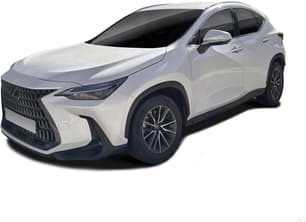
Now there's an all-new one. And, as Lexus' bestseller by far, any new NX is a big deal. The recipe is much the same – including petrol, turbo and hybrid versions – but with fresher and better ingredients. Plus, there's also a new plug-in hybrid flagship to really shake things up.
Is it time to cancel your order for that German, British or Swedish luxury midsized SUV? Keep reading to find out...
The ES300h is outstanding in terms of ride comfort, refinement and value. If you’re looking for a true driver’s car then a Lexus RCF is probably a better tree to bark up, but if you’re looking to ferry passengers in a serene, prestigious and fuel-efficient way, then look no further.
The all-new NX is a massive step forward over its popular predecessor.
In every way, it is an improvement, with better refinement, comfort, performance, efficiency, safety and choice.
Indeed, look out, Audi, BMW, Mercedes and Volvo: the NX has finally come of age. If we were in the market for a luxury medium-sized SUV, we'd definitely have the Lexus on our shortlist, especially the incredibly efficient hybrids.
Europe, you've been warned.
If you think all Lexus models look the same, then pop on over to the Audi, BMW or Benz websites and take a peek at their line-ups. Compared to the ranges from those prestige car makers, Lexus models look wildly different from each other.
Opinions on that ‘Spindle Grille’ are as polarising as views on politics or religion. Personally, I like how upfront and brave the grille design is, but what seems odd to me is that it’s almost as if this was the only place on the exterior where designers were allowed to be a bit adventurous. The rear, while cleanly styled is a bit plain. The bottom just doesn’t match the face.
The ES300h’s roofline in side profile is beautiful as it sweeps almost fastback-style to the boot lid. Again, not the most dramatic styling, but it’s still pleasing in the sense that the design flows well together. The same can be said for the fit and finish – the panel gaps are near-perfect.
This perfection continues into the cabin, where the materials and craftsmanship matches German prestige rivals in places (the door handles, leather and digital instrument cluster, for example), only to be let down in other areas which disclose its budget Toyota family connection (the air vents, steering wheel and display screen).
The ES300h’s interior design isn’t going to set everybody’s world on fire, but there will be those who adore its asymmetrical styling with different textured surfaces that fold, swoop and jut up against each other’s space. Have a look at the images, they’re of the Sports Luxury which sits above the Luxury in the two grade line-up.
The differences visually between the grades is minimal. The Luxury has 17-inch alloys, while the Sport Luxury has 18-inch.
New colours for this generation include Glacial Ecru (the sandy hue of our test car in the images) and Radiata Green. Both grades’ interiors come in a variety of colour schemes, including Black, Chateau, and Topaz. Exclusively for the Sport Luxury cabin is Rich Cream, too. The Sports Luxury steering wheel has wood trim.
One of the more peculiar design elements of the ES300h’s cabin design, and there are a few, are the controls for the drive modes and traction control. They sit like horns on the instrument cluster hood, as though these are things the driver will constantly be reaching for, when in reality most people will never touch the traction control button.
A new-generation car means new foundations, and the ES300h is built on the GA-K platform which underpins the Camry. The platform is part of the latest global architecture which Toyota and Lexus are now using to build its vehicles.
The dimensions of the ES300h, if you’re wondering if it will fit in your garage, are just under 5.0m long, 1.9m wide and 1.4m tall.
UX, NX, RX, LX, RZ... Lexus' nonsensical naming strategy can be quite flummoxing.
Just remember that the NX sits above the smaller UX but below the larger RX in the brand's burgeoning SUV stable. It's also closely related to the wildly-popular Toyota RAV4 – though you'd never know by looking at them side-by-side.
At first it may look much like the old model, but the new NX has switched to the latest RAV4's advanced Toyota New Global Architecture, known as GA-K in Lexus' lexicon.
Basically, it allows for a vehicle that's between 20 and 30 mm larger than before, to help improve overall proportions. And with this considerably bigger canvas to work on, it also means that Lexus's stylists have had more freedom to evolve the brand's design language. Albeit at a glacial pace from an exterior point of view.
Starting from the front, the controversial 'spindle' grille has been toned down a bit and the headlights have a neat Lexus 'lightning rod' tick motif, while – looking at the side profile – a startlingly cab-backward shape gives it a surprisingly sleek silhouette.
The extra length and stretched wheelbase let the design to breathe more than before, bringing with it a more graceful and elegant aesthetic.
Finally – and this is a brand first – the new NX's rather nondescript rear has 'LEXUS' spelled out in letters, with no sign of the company logo.
The Lexus ES300h is a five-seater sedan, but it’s really designed to sit two comfortably in the back, given there’s a large driveshaft hump in the floor and that the outboard seats are divided by a fold-down control panel/armrest.
Legroom in the second row is ample. I’m 191cm tall, and I had about 20mm of space between my knees and the seat back when it was in my driving position. Headroom gets tight with that sloping roofline, but there’s just enough space thanks to the low hip point of the rear seats.
Cabin storage is excellent. The fold-down armrest for the rear seats has a storage tray and two cup holders, while the large centre console bin has a lid which can open towards the driver and also to the front passenger (I spent way too long marvelling at how it worked). There are two cup holders up front and decent-sized door pockets, too. Those rear doors open wide for easy exit and entry.
Boot space in the ES300h is 454 litres (VDA), beating the 410-litre cargo capacity of the BMW 530e.
As far as power outlets, you’ll find two USB chargers in the centre console storage bin and a Qi wireless charging pad, which is awkwardly situated making it hard to place larger phones onto it.
For the really big design step-change, you'll need to step inside...
Hallelujah! Lexus has finally forsaken its weird, futuristic dash design elements for a simpler and far-more intuitive look that finally banishes unnecessary complication while still appearing progressive.
Somehow, there are now 33 fewer switches than before, aided by permanent virtual short-cut buttons on both of the touchscreens on offer.
Lexus has clearly been listening!
So, now, what we have here is an attractive, functional and superbly built interior (save for a couple of very-atypical Lexus rattles in these early production cars we drove), boasting quality materials that rate highly on all the important sensory metrics: lush to the touch, easy on the eyes and lovely to breathe in... and breathe out again!
Other plus points include a gorgeous steering wheel, attractive instrument dials, endless storage and climate control that's so effective it pretty much creates a microclimate within your personal space.
Brilliant seats, with ample adjustability, provide comfort and support even after hours ensconced within them, while the driving position is enhanced by thoughtful placement of most major controls - including the natty little gear lever and big old paddle shifters.
It's also worth pointing out a couple of surprise-and-delight features – starting with the 'e-latch' electric door handles, with sensors that delay opening if there are cyclists or pedestrians on approach to prevent striking them, as well as a manual override should the battery go flat.
There's more, like the wireless phone charger tray that also slides to reveal a hidden cubby area; centre-console lid that opens sideways FROM BOTH DIRECTIONS – what sort of sorcery is this?? – and optional digital rear-view mirror that works like X-ray vision in seeing through obstructions... handy for when back-seat passengers' beehives block the back view out.
However, after lavishing such intricate attention to detail, why does the instrument cluster's digital trip computer use the same cheap style and font as found in a lowly Yaris? It takes you completely out of the Lexus state-of-mind.
And, like me, you might lose your mind with the infuriatingly fiddly capacitive touch controls on models with the HUD. While it does provide a broad range of functionality that's displayed on the windscreen view, it's difficult to modulate accurately, and doesn't operate intuitively. Remnants of the fiddly old touchpad from the previous NX. Why can't Lexus just abandon such needless complexity? After a while I worked it out – but it's deeply distracting to use.
Oh well. At least the rear seat area is an improvement over the old NX, with more space, comfort and convenience features. Entry/egress is easy, with wide apertures that ought to make fitting in child seats less of a chore than before.
Most adults should find sufficient leg, knee, shoulder and head room back there, though a trio of adults might result in a very tight fit.
Rear facing air vents (with climate control functionality on higher grades), 12V power outlets, twin USB ports and a wide centre armrest with cupholders are included.
Further back, there's a handy (though not class-leading) 520 litres of luggage space regardless of powertrain, expanding to 1411L when the rear backrests are folded. Access is easy thanks to the wide door and flat floor, where a bit of extra storage and even space for the cargo blind are provided. Thanks, Lexus.
Note, though, that runflat tyres take the place of any spare wheel – a bummer if you're out on deserted country road late at night with no help in sight.
Yes, and don’t let anybody tell you any differently. The Luxury lists for $59,888 and the Sports Luxury is $74,888. Both are bargains when you consider the quality and features.
If it was my money, I’d go for the Luxury which is almost indistinguishable visually but doesn’t come with as many tech and convenience features as the Sport Luxury.
Still, the Luxury gets the 12.3-inch screen with sat nav, a 10-speaker Pioneer stereo system with digital radio, a head-up display, dual-zone climate control, wireless charging, 10-way power adjustable front seats, privacy rear windows, a moonroof, proximity key and LED headlights.
The Sports Luxury takes all of that and adds a Mark Levinson 17-speaker sound system, leather seats, heated and ventilated 12-way power adjustable front seats, heated and power reclining rear seats, three-zone climate control, heated steering wheel, power rear sunshade and manual side rear window shades, gesture-open boot and cornering LED headlights.
The Sports Luxury also comes with noise reducing 18-inch wheels – they contain what’s called a Helmholtz resonator which cancels out the drone that can be produced when driving.
Is there anything missing? When I saw the rear fold-down armrest with the control panel I instantly thought the ES300h must have had seat-back screens, but nope. Also, it’s annoying that Lexus still doesn’t have Apple CarPlay and Android Auto as part of its package. This will change we hear, but it has been slow on the uptake.
The Lexus ES300h’s direct rival is the Infiniti Q70 Hybrid GT Premium for $82,900, but it also challenges the likes of Mercedes-Benz E-Class, which starts at $91,900, BMW’s 5 Series, which begins at $92,990, and the Audi A6, which kicks off at $81,900.
Given that the ES300h is hybrid-only, if you’re specifically looking for something with a petrol-electric powertrain, then there’s the BMW 530e or the Mercedes-Benz E350e.
Like most Lexuses, this second-generation NX is spoiling us for choice, with four quite different models to choose from, ranging from just over $60,000 for the base four-cylinder NX 250 2WD (which means front-wheel drive in this instance), to $90,000 for the debuting NX 450h+ plug-in hybrid all-wheel drive (AWD)... and all before on-road costs, of course.
Within these are three grades: Luxury, Sports Luxury and F Sport, as well as a pair of equipment bundles. And, as always, the price you pay depends on how high-tech you want your NX to be.
Keep in mind that all feature a lofty level of standard safety equipment, including eight airbags (with a front centre item fitted as well), autonomous emergency braking (AEB) with intersection assist and pedestrian and daytime cyclist detection, lane-keep and steering assist, blind-spot monitoring, adaptive cruise control, road sign recognition, front/rear cross-traffic alert and Safe Exit Assist – which won't allow doors to open if passing cyclists or pedestrians are in danger of being struck.
Kicking things off is the Luxury grade in the entry-level NX 250 from $60,800 and NX 350h from $65,600.
It includes LED lights with auto high beams, keyless entry and start, a 9.8-inch touchscreen, 'Hey, Lexus!' always-on voice command, satellite navigation, Apple CarPlay/Android Auto support, digital radio, a power-adjustable steering column, electrically-actuated front seats with heating, dual-zone climate control, a powered tailgate and 18-inch alloy wheels running on runflat tyres.
Given that key competitors like the base BMW X3 sDrive2.0i and GLC 200 cost nearly $15,000 and $20,000 more respectively, you can see how serious Lexus is about dominating this segment.
Stepping up to the NX 350h Sports Luxury grade from $73,100 brings tri-beam LED adaptive headlights, leather upholstery, ritzier cabin materials, a 14.0-inch touchscreen, 20-inch alloys, head-up display, wireless smartphone charging, ventilated front seats, ambient lighting, surround-view cameras and a 17-speaker audio system upgrade.
For a racier look and feel, there's the F Sport grade, which scores most of the Sport Luxury fittings (minus the audio/speakers upgrade and digital rear-view mirror) and then adds adaptive dampers, sports suspension, extra configurable driving modes, a unique body kit and alloy wheel design, sports seats and blacked-out cabin trim.
The F Sport, too, begins from $73,100 in the NX 350h, and this also happens to be the price of the non-hybrid, performance-focused NX 350 F Sport with a turbo and AWD.
Speaking of which, the NX 350h hybrid is available with AWD as well, adding $4800 on all grades, brandishing two electric motors (one per axle) rather than having a mechanical drive shaft, as per the NX 350 F Sport turbo AWD. With this level of choice, little wonder, then, that Lexus expects around half of all buyers to go hybrid.
Finally, there's the NX 450h+ F Sport AWD plug-in hybrid electric vehicle (PHEV – the first Lexus or Toyota with this tech in Australia), starting from $89,900. This undercuts all of its European rivals, including the $95,700 Mercedes-Benz GLC 300e, $102,001 Range Rover Evoque R-Dynamic HSE PHEV and $104,900 BMW X3 30e PHEV.
Buyers seeking popular goodies like a panoramic sunroof, kick-motion powered tailgate, power-folding rear seats, heated rear seats, heated steering wheel, 17-speaker audio upgrade, digital rear-view mirror and parking assist can find some or all of these bundled up into varying 'Enhancement Packs' according to grade, offered across the range from between $3000 and $6000.
Since early 2021, Lexus has also matched Mercedes-Benz in lifting its warranty to five years/unlimited kilometres, and also offers capped-price servicing at $495. There's also the brand's 'Encore' aftersales subscription program offering myriad offers and services.
No NX is lacking in equipment or features compared to its direct, corresponding luxury medium SUV rival, and matches most for technology.
As mentioned at the start of this review, in Australia the Lexus ES is only available with one powertrain variant – a petrol-electric hybrid.
This combines a 2.5-litre four-cylinder petrol engine making 131kW and 221Nm, with an electric motor that has an output of 88kW and 202Nm. The 244.8V nickel-metal hydride battery has been moved from under the boot floor in the previous generation car to under the rear seats, so it no longer eats into the cargo space.
The ES300h isn’t a plug-in hybrid, so battery recharging is done through regenerative braking.
A continuously variable transmission means seamless and smooth low-speed driving using just the motor, but under heavy acceleration the engine activates and you’ll hear that drone associated with CVTs.
Here is where the NX shines, with clear options that provide very obvious benefits according to wants, needs and budgets. And there are even fundamental differences compared to the RAV4 powertrain, further justifying that premium 'L' badge experience.
Let's divide these into petrol and petrol-electric hybrid models, with petrols first.
The NX 250 is powered by a 2487cc 2.5-litre naturally aspirated direct-injection twin-cam four-cylinder engine, producing a healthy 152kW of power at a heady 6600rpm, and 243Nm of torque from 4000rpm to 5000rpm.
Drive is sent to the front wheels only, via an eight-speed torque-converter automatic. Tipping the scales at 1705kg, it's the lightest NX on offer, and thus delivers 89.1kW per tonne.
The NX 350 turbo version, meanwhile, uses a somewhat different four-cylinder engine as well as a variation of the eight-speed auto. A 2393cc 2.4-litre turbo unit, it pumps out 205kW at 6000rpm and 430Nm from a low 1700-3600rpm. It's also AWD only, which adds kilos. That said, coming in at 1860kg, its power-to-weight ratio is a stirring 110.2kW/tonne.
Moving to the series/parallel hybrids, both the expected-bestselling NX 350h and the intriguing new NX 450h+ PHEV are based on that 2487cc 2.5-litre four-cylinder atmo unit, tuned this time to offer 140kW and 136kW (at 6000rpm) and 239Nm/227Nm (from 4300-4500rpm and 3200-3700rpm) in the NX 350h and NX 450h+ respectively.
The NX 350h uses either a single synchronous permanent magnet 134kW/270Nm electric motor in the front-drive version, or two electric motors (adding a 40kW/121Nm generator on the rear, double wishbone axle) to create the AWD alternative. Their combined total power rating is 179kW. The NX 450h+ ups that to 227kW.
None are light, however. While the NX 350h 2WD weighs a reasonable 1810kg, the twin-motor AWD system bumps that up to 1870kg, while the NX 450h+ is a portly 2050kg. Result? The power-to-weight ratio for all three are 98.9kW/tonne, 95.7kW/tonne and 110.7kW/tonne – almost identical to that of the NX 350 turbo.
The hybrids' gearbox in question is an 'e-CVT' electronic continuously variable transmission, working with a lithium-ion high-voltage battery, while the NX 450h+'s EV drive's battery is an 18.1kWh unit.
So, no prizes for guessing which one is the most frugal...
This is the point of a hybrid, right? To save fuel? The electric motor can power the car at low speeds around car parks or in bumper-to-bumper traffic, and I found that after 104km of both urban and open road usage my fuel economy in the Sport Luxury was 5.4L/100km.
Lexus’ official combined fuel economy figure for both the Luxury and Sports Luxury is 4.6L/100km.
All NXs require 95 RON premium unleaded petrol, and are emissions rated at Euro6b.
Not surprisingly, on the official combined run, thirstiest of the lot is the NX 350 turbo at 8.1L/100km (for a carbon dioxide emissions rating of 185 grams per kilometre), followed by the NX 250 at 6.9L/100km (158g/km).
The NX 350h cut that down to 5.0L/100km (113g/km for the FWD and 114g/km for AWD), while the NX 450h+, naturally, is the most economical by far, slashing that down to just 1.3L/100km, or 29g/km.
While we can't tell you what the NX 450h+ managed on test, the others didn't quite match their official numbers. Over several hundred kilometres, the NX 350 ranged from 9.3-11.3L/100km, the NX 250 7.5-9.3L/100km and the NX 350h from 5.7-6.8L/100km.
Note that the NX 450h+'s 18.1kW battery can only be charged using an AC outlet, meaning it'll need about 2.5hr to get the job done. Its EV-only range is about 70km on the WLTP score, or 87km using the less-realistic NEDC method.
At 55 litres, the fuel tank will allow the following combined average range between refills: 679km (NX 350 turbo), 797km (NX 250), 1100km (NX 350h) and a barely believable 4231km (NX 450h+, naturally).
Two words: quiet and comfortable. Well that’s three words, but that sums up the ES300h on the road. Yes, rivals may have intelligent adaptive air suspension and leather made from free range cows, and they are supremely tranquil and sumptuous places, but challenging them is this ES300h.
Even with its regular shock absorbers and steel-spring suspension, the ride was outstanding for its comfort and composure on the worst roads Sydney could throw at it over the week we tested the car.
Front and rear seats were supportive and comfortable over long distances, too. From a driver’s perspective the experience was serene – this was an easy and relaxing car to pilot.
I’m not a huge fan of petrol-electric hybrid powertrains, but it suits the seamless personality of the ES perfectly, adding to the smoothness of the ride as it slipped silently through traffic.
Just don’t expect the ES300h to be rewarding from a dynamic driving perspective. The steering was heavy and a little numb, and while the handling was good, I felt disconnected from the road. And whenever I needed to move quickly the combustion engine would splutter to life and the CVT would begin to drone.
The previous NX looked better than it drove.
Based on the previous-gen RAV4, it failed to rise above such humble underpinnings, despite all the extra design, comfort and equipment features Lexus created to help it do just that.
Sure, there were some very appealing things going on, including attractive styling, an intriguing interior, sumptuous seats and lots of kit to play with, but the Toyota's noisy, fidgety and tiring DNA soon became apparent, especially compared to rival luxury midsizers. And some of the dashboard multimedia controls were just down-right madness.
Building on the latest RAV4's set of modern, competent components, however, has fundamentally changed the NX.
For starters, it's much quieter inside. Whether at idle, travelling at speed, or traversing some pretty rough patches of road, the NX at last rides like something you'd expect a Lexus should. And given how noisy and droney most of its European rivals also are on Aussie bitumen, it gives the Japanese contender a handy head-start.
The same applies to how enveloping the soft yet supportive seats are, how settled the suspension feels and how calm the experience is. No previous Lexus SUV has seemed so... refined. Even the really big, expensive ones.
From the driver's point of view, the steering is beautifully balanced, for precise yet reassuring control at speed. This varies according to which grade you're driving, but as a whole, while not sporty like a BMW's nor as fluid as, say, a Mazda CX-5's helm, the Lexus walks that line between easy and involving quite well.
Ditto the handling and roadholding. The lightest of the bunch – the petrol-powered NX 250 and NX 350 turbo – feel ripe and ready for a hustle along a curvy ribbon of road, coming across as taut enough for tight turns yet supple enough to soak up the many bumps and thumps thrown up at them.
Switching to the NX 350h hybrid, there's a greater sense of mass, whether driving the front-drive 2WD or even heavier AWD version. As such, it's still quite dynamic, but not as athletic as the petrol-only models.
In terms of performance, there are no duds – and that's no surprise, as the previous NX's powertrains were pretty sound as well.
Though simply a front-drive version of the RAV4 Edge's 2.5-litre unit, the NX 250 seems more muted than the Toyota's application, and yet is willing to rev hard to hit the power band necessary for it to feel alive. At higher speeds, sometimes the raspy engine can sound a tad noisy when extended, but it's never harsh or rough.
Moving on to the NX 350h, it feels like, well, a heavier and quieter RAV4, not unexpectedly. Silent at take-off speeds, the engine chimes in fairly unobtrusively, providing plenty of oomph along the way, while the CVT seamlessly slices through each (artificial) ratios. After the petrol versions, the steering does seem a little more remote, and you can feel the extra heft through turns, but – again – the basics underneath seem right.
Accelerating hard on the open road does reveal that typical Toyota hybrid engine roar and CVT flair, but only when the throttle is prodded hard. Driven normally, the NX 350h is as smooth, swift and sweet as you'd expect. And definitely in keeping with brand performance expectations.
Finally, there's the NX 450h+ F Sport. At over two tonnes, Toyota and Lexus' plug-in hybrid debutante is not a flyweight by any means, yet having all that extra low-down mass does result in a slightly different driving experience.
Take acceleration: having access to 227kW of power and torque together at very low revs equals lots of thrust right from the get-go. And while it's not sports-SUV rapid, there's certainly enough punch to justify the F Sport badge. Similarly, the low centre of gravity that the 18.1kWh battery pack provides seems to promote hunkered-down road-holding attitude through tight turns, with minimal body roll.
Regardless of which NX you're looking at, quibbles are few. Occasional road and tyre roar are still a little evident over some surfaces; the adaptive cruise control and lane-keep technologies could benefit from some local fine-tuning so they behave a little more nuanced in Australian conditions (and that applies to most luxury SUVs nowadays); and the optional head-up display's capacitive controls located on the steering wheel spokes are distracting, difficult to modulate and needlessly complicated. They're so annoying we'd even untick the Sport Luxury option box to avoid it.
If we had to choose a favourite among the new NXs, it would probably be the NX 350h F Sport, since its adaptive sports chassis provides the best compromise between agility and suppleness; the NX 350 turbo is probably the most fun to drive hard and fast, while the base NX 250 is thoroughly competent and sufficiently luxurious to scare most rivals.
Could this really be a medium-sized Lexus SUV we're talking about?
We're not saying that the latest NX is perfect, but it now provides a very compelling argument not to buy European.
The Lexus ES300h was awarded the maximum five-star ANCAP rating when it was tested in September 2018. Coming standard on both the Luxury and Sports Luxury grades are 10 airbags, AEB with pedestrian detection, lane keeping assistance and adaptive cruise control.
By stepping up to the Sports Luxury you’ll also get adaptive high beams which is fair enough, but you’ll also gain equipment which really should be on the base grade, too, such as blind spot warning and rear cross-traffic alert - which come standard on a Camry SL for half the price.
While there’s absolutely no doubt the ES300h is safe, it lags behind in autonomous technology which is present in cars such as the E-Class.
You’ll find two ISOFIX mounts and three top-tether anchor points across the second row which we used for our four year old and his car seat.
Being so new, there's no ANCAP rating for the latest NX range right now, but it is expected to score a five-star result just like its predecessor.
This is because there is plenty of safety for Lexus to crow about, including eight airbags (providing coverage to all outboard occupants, also taking in dual-front occupant knees and centre item to stop lateral head strikes), autonomous emergency braking (AEB) with intersection assist and pedestrian and daytime cyclist detection, lane-keep and steering assist, blind-spot monitoring, adaptive cruise control with stop/go functionality, auto high beams, road sign recognition, front/rear cross-traffic alert, reverse parking cameras, all-round parking sensors, tyre pressure monitors and Safe Exit Assist – which won't allow doors to open if passing cyclists or pedestrians are in danger of being struck.
There's also Intersection Turn Assist (ITA – providing early brake activation if required), Emergency Steering Assist (ESA – extra steering assistance to help keep the vehicle in its lane) and Emergency Driving Stop System as standard across the range – along with a digital rear-view mirror on some grades.
Anti-lock brakes with brake-assist and electronic brake-force distribution is also standard, along with stability and traction control systems. Lexus provides three rear-seat child-seat tether anchorages and two ISOFIX latches.
At the time of publication, there is no data on the NX's AEB operating range.
The ES300h is covered by Lexus’ four-year/100,000km warranty. Servicing is recommended every 15,000km or 12 months. There is no capped-price servicing scheme.
Lexus now offers a five-year, unlimited kilometre warranty with roadside assistance.
Furthermore, NX 350h hybrid and NX 450h+ plug-in hybrid models also feature a 10-year, unlimited kilometre battery warranty.
Service intervals are at 12 months or 15,000km, whichever comes first.
The NX also includes three years and 45,000km of capped-price servicing, with each one costing owners just $495 – and that's highly competitive pricing for a luxury brand.
Plus, there's also Lexus' 'Encore' aftersales subscription program offering myriad offers and services.