What's the difference?
Lamborghini's Aventador S is the last living link to supercars of old. Wild-looking bedroom-poster material, gigantic anti-socially loud V12 that actually spits flame and the kind of performance that will rustle the jimmies of even a seasoned supercar driver.
It harks back to a time when supercars actually sucked, but it didn't matter because they were proof you had both the money and patience to nurse it into life and then wring its neck, because that was the only way it made any sense. While the Huracan is a thoroughly modern supercar, the Aventador is an unashamed, unabashed, hairy-chested, head-banging, rock ape.
Like most people in this day and age, I like to consider myself fairly green-minded. I recycle. I canvas bag. One time I even took public transport, despite having a perfectly good car at my disposal.
But most importantly, at least as far as our only planet is concerned, I’ve embraced electrification in the automotive world, confident in the knowledge that, 99 times out of 100, introducing a hybrid, plug-in hybrid or fully electric powertrain to the equation improves both the driving experience and your fuel bill.
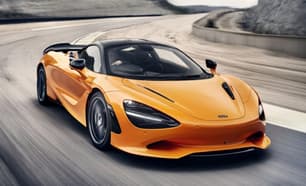
The one out of that 100? That would be the McLaren 750S — the British brand’s new apex predator, and a vehicle that might just be the marque's last non-electrified series-production supercar ever.
It’s powered by a spectacular twin-turbo V8 engine that contributes to a drive experience so raw, so pure, and so unfiltered, that to sully it with heavy batteries or silent electric motors would just about qualify as a crime against humanity, or at least against the parts of humanity fortunate enough to be able to afford one.
So, is this McLaren 750S the best of the current supercar bunch? Let's find out.
The Aventador isn't the best car you can buy for the money and truth be told, it isn't the best Lamborghini, which is a bit tough when you remember the only other car they make at the moment is the V10 Huracan. But it's all about the theatre as much as being a very capable supercar.
I'm not a Lamborghini fanboy, but I completely get the Aventador. It's a because-we-can car, just like the Murcielago, Diablo and Countach before it. But unlike those cars, it's thoroughly modern and with the upgrades introduced to the S, it's faster, harder and enormously entertaining.
As the last of a dying breed it delivers on everything a Lamborghini should - amazing looks, nutty price tag and an engine that excites not just driver and passenger but anyone with a heartbeat. It's by far the most charismatic car you can buy, no matter how many zeroes are on the cheque.
Not just a love letter to the intoxicating delights of the mighty V8 engine, the McLaren 750S is a genuine joy across the board.
Note: CarsGuide attended this event as a guest of the manufacturer, with travel, accommodation and meals provided.
Asking if there's anything interesting about a Lamborghini design is kind of like asking if the sun is warm.
While there are some geese out there in the corners of the internet who think Audi has ruined Lamborghini styling, there is absolutely nothing shy about the Aventador. It's an incredible looking machine and, if I may say so, shouldn't be had in black because you miss a lot of the madder details.
This car is all about the experience.
It might look close to the deck in the photos, but however low you think it is, it's lower. The roofline barely makes it to the bottom of a Mazda CX-5's windows - you need your wits about you in this car because people just don't see you.
It is absolutely spectacular - people stop and point, one chap sprinted an easy 200 metres to take a photo of it in the Sydney CBD. Hello, if you're reading.
Inside is pretty tight indeed. It's amazing to think that a car 4.8 metres long (a Hyundai Santa Fe is 4.7 metres) struggles to contain two people over six feet tall. My six foot two photographer's head left an impression in the headlining. It's a tiny cabin. It's not a bad one though, it even has a cupholder on the rear bulkhead behind the seats.
The centre console is covered in Audi-based switchgear and is all the better for it, even if it is starting to look a bit old (those bits are from a pre-facelift B8 A4). The alloy gearshift paddles are fixed to the column and are brilliant to look at and touch, while the digital dashboard - which changes with the driving mode - is fantastic even if the reversing camera is awful.
McLaren concedes the cosmetic updates for the 750S are “relatively subtle”, but there have been some key changes.
The front bumper and splitter are new, as is the rear bumper, while the rear wing is now bigger, with 20 per cent more surface area.
Also at the back, a new (and lighter, of course) stainless steel exhaust is now centre-exit, rather than off to either side.
Like the 720S before it, the 750S looks more like a statement of intent than a designer’s dream, with aerodynamic function over form the order of the day.
In the cabin, you’re looking at two sports seat, a grippy Alcantara steering wheel, and two relatively small screens by today’s sizeable standards.
You can have your cabin trim in full Nappa leather, or the leather mixed with Alcantara, and the audio is taken care of by Bowers & Wilkins.
Still, the 750S delivers everything you need and nothing you don’t in a car in this category.
Yes, well. There's not a lot of space because a V12 is not just big all on its own, all the ancillaries to support it rob a lot of the remaining space. Having said that, there's room in the front for soft bags with a 180-litre front boot, space for two people inside, a cupholder and a glove box.
And the doors open up into the sky rather than out like a normal car's. Who cares if it's impractical, it's hardly something that's going to stop someone buying one.
Next question, please. This is a stripped-back, lightweight, two-seat supercar designed to get you to, and then around, a corner in the least amount of time possible. So, no, you can’t fit much in the way of grocery shopping in the back.
You can, however fit a total 150 litres (front) and 210 litres (rear) in the 750S, and it gets bonus points for having deep cut-outs in the roof that make slipping in under those scissor doors far easier than you might expect.
As with any Italian supercar, the price-to-feature ratio is rather higher than your average humdrum hatchback. A 'naked' Aventador S starts at a horse-spooking $789,425 and basically has no direct competition. Ferrari's F12 is front-mid engined and any other V12 is either a decidedly different Rolls Royce-type machine or super-expensive niche manufacturer (yes, niche compared to Lamborghini) like Pagani. They're a rare very breed, Lambo knows it, and here we are a sneeze-on-the-spec sheet away from $800,000.
So you have to keep two things in mind when rating a car's value for money at this level. The first is that there isn't any real rival in a pure sense, and if there was, it would be the same price and have the same spec. That's not excusing it, by the way, it's an explanation.
Anyway.
For your eight hundy you get 20-inch front wheels and 21-inch rears, climate control, cruise control, 7.0-inch screen (backed by an older version of Audi's MMI), four-speaker stereo with Bluetooth and USB, car cover, bi-xenon headlights, carbon ceramic brakes, electric seats, windows and mirrors, leather trim, sat nav, keyless entry and start, four-wheel steering, leather trim, digital dashboard, power folding and heated mirrors, active rear wing and active suspension.
The number of out-of-the-box options is staggering and if you're keen to really get on it, you can commission your own options when it comes to trim and paint and wheels. Let's just say that as far as the interior went, our car had almost $29,000 of Alcantara, steering wheel and yellow. The telemetry system, heated seats, some extra branding and front and reversing camera (uh-huh) added up to $24,000, the cameras almost half that total.
With all the bits and bobs, the test car we had was a sobering $910,825 before on-roads.
The McLaren 750S can be yours in hardtop ($585,800) or drop-top Spider ($654,600) guises, both of which have travelled north from the pricing applied to the 720S, which was $489,900 at launch, and its Spider equivalent, which was $556,000.
What you’re getting, though, is more — and less— of everything. More power, more performance, more downforce and more stiffness, combined with less weight, with McLaren having taken a forensic approach to stripping kilos from the 750S.
What you're not getting, though, is much in the way of niceties, with the McLaren 750S offering less interior tech and comforts than a mid-range hatchback (“it now has Apple CarPlay,” they exclaimed excitedly).
But for mine, that only enhances the drive experience, with the 750S offering a genuinely pure-feeling drive — a steering wheel free of buttons, a cabin largely free of distractions, no safety chimes bonging, and a nuclear reactor attached to your right foot. These are all good things.
Elsewhere, the McLaren 750S rides on ultra-lightweight forged alloy wheels (19-inch front / 20-inch rear) wrapped in Pirelli P Zero rubber as standard, and there are thinly cushioned carbon-fibre-shelled racing seats that hold you snuggly in place, and are every bit as comfortable on bumpier roads as cuddling a cactus.
In the cabin, McLaren has worked to up the tech, though its best to remember this is pared-back over plush.
A steering column-mounted driver display is new, and delivers all your key driving info, and it’s framed by all your go-to switches, like your 'Drive Mode' options.
In the centre, an 8.0-inch portrait-style screen now has Apple CarPlay as standard (but not Android Auto), and there are USB-C and USB-A connections for your devices, too.
The Aventador S is powered by Automobili Lamborghini's 6.5-litre V12. You know it's a V12 because there's a plate on top of the engine (which you can see through the optional glass cover) that says so, and handily, tells you the cylinder firing order. That's a neat touch.
Buried deep in the middle of the car, this monster engine develops an astonishing 544kW (30kW up on the standard Aventador) and 690Nm. Its dry sump means the engine sits lower in the car. The gearbox is slung across the back between the rear wheels - the rear pushrod suspension actually sits on top of and across the gearbox - and is apparently brand new.
The transmission is known as an ISR (Independent Shift Rod) and has seven forward speeds and still just the one clutch. Power goes through all four wheels to the road, but it's clear the rears get the lion's share.
The 0-100km/h time is the same as the standard car, which kind of tells you that 2.9 seconds is about as quick as you can go on road tyres when you don't have four electric motors with torque from zero rpm.
Ah, now we’re talking. In the huge-displacement world of supercars, a 4.0-litre twin-turbo V8 might sound a little on the small side when put up against V10s and V12s out of Italy.
But this mid-mounted, twin-turbo powertrain perfectly compliments the overall balance of the 750S, and when its 552kW and 800Nm (fed through a seven-speed automatic) meets the lightweight McLaren, the results are staggering.
The zero to 100km/h dash is dispatched in 2.8 seconds, while 200km/h flashes by in 7.2 seconds. Want to push to 300km/h? You’ll need just 19.8 seconds.
Hilariously, the official figure is 16.9L/100km. I doubled it without trying. Simple as that. If you're buying this car thinking it will be easy on the juice, you're insane.
Cheeringly, Lambo has at least tried, the V12 going silent when you sit at the lights, the best thing being the way it bursts back into life when you lift off the brake.
If you have the time available, it takes 90 litres of premium unleaded to fill the tank.
McLaren says you can expect 12.2L/100km on the combined cycle, with emissions pegged at 276g/km. But you can also expect to win the lottery. It doesn’t make it likely.
It’s hard to imagine how softly you’d have to treat the 750S to get anywhere near those numbers, but I know you almost certainly won’t. The temptation is simply too great.
In Strada or Street mode, awful. Everything is slow and doughy, particularly the gearshift which goes looking for a gear like dog looking for a stick you didn't throw, but instead hid behind your back. The low-speed ride is nothing less than terrible, fidgeting over every single lump and bump and is only slightly more appealing than being dragged along behind.
The gearbox is really the worst bit about it. Automotive history is littered with cars that laboured along with a single clutch semi-auto: Alfa Romeo 156, BMW's E60 M5 and today the Citroen Cactus is stuck with just such a dud transmission.
Like that old M5, however, there's a trick to making the gearbox work for you - show absolutely no mercy.
Switch the selector up to Sport, get off the highway or major arterial road and head for the hills. Or better still, a clear race track. Then the Aventador goes from a pain in the rear to a glorious, roaring, completely unhinged and unhinging battle cruiser. This car is all about the experience, from the second you lay eyes on it to the moment you put it to bed.
This isn't an everyday supercar and it's absurd to think Lamborghini thinks it is.
First up, there's the obvious entry point with those wacky doors. While it's tricky to get in, if you're under six feet and reasonably mobile, stick your backside in, keep your head down and you're in. If you've been clever, you've specified the glass engine cover so you can see out the back but the huge wing mirrors are surprisingly effective.
Has someone thoughtlessly parked the car in a tight spot? No trouble, the four wheel steer makes the car absurdly manoeuvrable given its extravagant length and width.
As we've already established, it's not much fun at low speeds, waiting until about 70km/h before things start to make a bit more sense. This isn't an everyday supercar and it's absurd to think Lamborghini thinks it is. It just isn't.
The old Aventador was not the most capable of machines but made up for it with its overall belligerence. The new S takes that aggro and dials it up. When you move the drive mode to Sport you are basically unleashing hell. You can pretend to be super-masculine and switch to Corsa (race) mode, but it's all about getting the car straight and getting you around the track in the most efficient way possible. Sport is where it's at if you want to have fun.
The Aventador is about being seen, but not before you've been heard - from two postcodes away. It really is utterly glorious when you have a stretch of road to yourself. The V12 revs furiously to its 8400rpm redline and the wallop of the upshift is accompanied with a fantastic bark and a burst of blue flame. And these aren't the best bits.
Approach a corner, stomp on the colossal carbon ceramic brakes and the exhaust erupts in a combination of bangs and pops and growls that puts a smile on even the most hardened car-hater's face. The fact it steers into corners with just a demure roll of the wrist, aided and abetted by that funky four-wheel steering system. It's just brilliant, addictive and truth be told, it gets under your skin.
Usually we wouldn’t be dedicating much space to the kilogram’s shaved here and there off the total weight of a vehicle, but it’s important in this case.
In the 750S, that starts with a bespoke carbon-fibre monocoque platform, which is not only light, but also so inherently stiff that even chopping the roof off for the Spider version required no extra bracing or supports, and only marginally impacts the performance figures.
Then, there are the lightest alloys ever fitted to a series McLaren, which reduce unsprung weight by up to 14 kilos.
That rear wing isn’t just bigger, but also lighter, saving another 1.6 kilos, the carbon-fibre-backed seats save a whopping 17.5kg, the new suspension springs shave another two-or-so kilograms. The list goes on and on.
All up, they've found 30 kilos between 720S and 750S, which is now 1389kg total.
The result is a vehicle that feels endlessly athletic — light, lithe and perfectly balanced — but also one that, when you’re feeding on that endless power, feels as though it might suddenly take flight.
Flat-footed acceleration is laugh-out-loud fun, the tyres scrabbling for grip with each donkey-kick gear shift, even past 100km/h, with the rear end shifting around slightly as the Pirelli rubber deals with the physics of what’s happening. It’s loud, visceral and intoxicating, and you absolutely never tire of it.
But the magic in this McLaren is that it's more than just brutally fast in a straight line, it's also one of the most engaging vehicles I've ever driven, and one that provides a near-telepathic connection to the car, its tyres, and the tarmac below.
The more time you spend behind the wheel, the more tameable it feels, and even at warp speeds (somewhere above 270km/h), you feel connected and in control, owing mostly the open lines of communication between the tyres, the steering and the driver.
Also ferocious is the McLaren's braking force, combining carbon ceramic discs with a rear wing that doubles as a jet-style air brake, and stamping on the brake pedal produces vision-blurring force that leaves you feeling like you're not just stopping, but hurtling backwards through time.
So, race track, tick. But away from it, the McLaren – with its 'Proactive Chassis Control' hydraulic suspension – is surprisingly compliant when you want it to be, with its 'Comfort' drive mode delivering exactly that, softening the important bits so you don’t rattle yourself to death on the freeway.
If the 720S was a benchmark, then this 750S is something else entirely, shifting the needle in every important way to create a vehicle that sparks pure, unadulterated joy from behind the wheel.
The Aventador doesn't have an ANCAP safety rating but the carbon chassis also comes with four airbags, ABS, stability and traction controls.
Safety systems hardly abound here, and nor is McLaren or ANCAP likely to pony up for the 750S for crash testing.
You do get front and front-side airbags, front and rear parking sensors and a reversion camera, as well as a handy nose-lift function which should stop you scraping over steep speed bumps and the like.
In an unexpected twist, you'll get a three-year/100,000km warranty and the option to increase to four years ($11,600!) or five years ($22,200!)(!). Having recovered from typing that, given the cost of something going wrong, that's probably money well-spent.
The 750S is covered by a standard three-year, unlimited-kilometre warranty, which is fully transferable.
Owners can also spring for an extended warranty, which can cover the McLaren for up to 15 years.
Servicing is required every 12 months or 15,000km.