What's the difference?
If you're feeling the cost of living sting, there's a good chance you've scaled back your ambitions for your next new car. You may have even looked at some of Australia's most affordable brand-new vehicles and the Kia Picanto is one of them.
It's one of the few brand-new options left with a before-on-roads starting price of under $20,000 and it's one of the few non-performance models left which can still be chosen as a manual.
It's one thing to be affordable, though, and quite another to be good value - so does the freshly updated 2024 Picanto have what it takes to stack up against more expensive options? Let's take a look.
Being a true Jack of all trades in the car world is rare.
Generally speaking, a vehicle is either capable or comfortable. Attractive or aerodynamic. Practical or performance orientated. And problems arise when cars try to do all those things well, all at the same time.
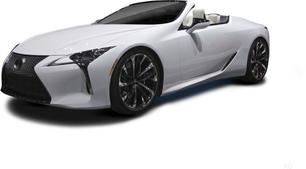
Which make the Lexus LC 500 Convertible such an interesting proposition. Because it is, without doubt, stylish, and lavishly equipped. It’s also rather large and rather heavy. All of which is perfect for cruising the Bondi foreshore.
But it’s also equipped with a thumping V8 engine and a throaty exhaust that sounds like bricks in a blender on the overrun. It’s stiffer than the LFA supercar, and plenty powerful, which should deliver one of Lexus’ sportiest-ever drives.
So can the LC 500 really do it all? Let’s find out.
Australians are moving into ever-larger vehicles when really we should be embracing the small car now more than ever. It's great Kia is still here, with its Picanto showing what can be offered in such a compact form-factor.
While it's not as affordable as it once was, it looks like it won't be long before Kia is the last torchbearer of sub-$20k starter cars. Even so, this is a great choice for buyers on strict budgets.
Stunning to behold, and even more so to listen to, the LC 500 Convertible with no doubt turn as many heads as its owners surely want it to. It's not the final word in performance, but it's a lavishly equipped transporter none the less.
You wouldn't know it in Australia, where our collective tastes are orienting toward larger and larger vehicles, but city cars are experiencing something of a golden age overseas.
Cars like the Nissan Sakura, Honda N One, and Hyundai Casper join a long list of others which are design leaders in the city-car segment, and this is why the Picanto needs to look sharper than ever to compete.
Particularly in the GT-Line form we tested for this review, the 2024 car has adopted a dramatic facelift which complies to Kia's incoming and much more science-fiction look, complete with an extremely angular design and frowny LED light fittings.
Around the rear, there's a reworked set of tail-lights with a contemporary strip which almost reaches the whole way across the boot lid, and the new alloy wheels round out the whole aesthetic.
Given this, it's a little disappointing to see how few elements have changed on the interior. From the inside, this Picanto feels basically the same as the pre-update version.
I like the D-shaped steering wheel the GT now gets, and the multimedia screen is great for such a small and affordable car, but all the other switchgear, including the steering wheel is from previous-generation Kia products, and not the shiny new design-led stuff which appears in cars like the Sportage, Sorento, or Niro.
Also, while it's feature-laden all things considered, the interior plastics are mainly the harsh, hollow, scratchy kind. The new digital instrument cluster isn't one big screen, instead it's constructed of a few basic sectors which aren't customisable outside of the background colour. At least the central portion shows some useful information.
It’s eye-catching, the LC 500, if big, bolshy convertibles are your thing, and especially viewed front-on, where the aggressive nose design ends in a sharp crease in the mesh grille. I love the headlight design, too, which bleeds back into the body work, but also merges with the vertical light cluster that bookends the grille.
The side view is all shining alloys and sharp body creases, too, leading to an oversized boot that stores the fabric, aluminium and magnesium roof structure, which drops or raises in 15 seconds at speeds of up to 50km/h. The design fits into what Lexus calls an “impossibly small space behind the seats”.
Inside, it’s a snug but luxurious space, wrapped largely in leather and equipped with a wealth of technology. It’s a point we’ve made before, but why Lexus perseveres with its trackpad infotainment control technology is beyond us, but there’s no denying the cabin of the LC 500 is a wondrous place to spend time.
We particularly like the integration of the centre screen, which is recessed beneath the leather-wrapped edge of the dash. While some look like an afterthought, this appears to have been included in the broader design philosophy.
Feeling a little old or not, the Picanto has a clever interior which makes the most of its limited dimensions.
There are huge bottle holders in the front doors, a further two with little flip-out sectors which sit below the air-con controls. These holders can be folded away to turn this space into a tray for the storage of large objects. There's even a centre armrest console box, but it's tiny.
On the topic of air-conditioning controls, these are, refreshingly, physical dials, which are increasingly going missing as manufacturers move such functions to touchscreens. The Picanto keeps things manual though, even including a volume and tuning knob for the touchscreen, with physical shortcut buttons adorning the bottom section of the frame.
Physical controls is something Hyundai Group has committed to, and it's not until you use a vehicle without them you realise how essential they can be.
Despite its tiny footprint, there's also plenty of room in the cabin for an adult my size (I'm 182cm tall). I felt as though there was massive airspace between my head and the roof, as the Picanto's seats let you sit nice and low to the ground, and while it's limited in its width, it feels like I had enough room and adjustability for my legs.
Only one area brought me discomfort and it was the elbow-rest in the door. Sounds silly, but while the GT-Line has a little synthetic leather strip here, for some reason it has no padding, so it's seemingly for aesthetic purposes only and is still an uncomfortable place to rest your elbow on longer journeys.
It sounds unlikely, but I fit behind my own driving position in the back seat, with my knees almost up against the back of the front seat. Thankfully, the seat backings are softly-clad so even if you were slightly taller than me it might be ok.
Again, headroom is sufficient, and the seats are reasonably comfortable in the outer two positions. There are no amenities in the back seat. Rear passengers don't get air vents, door pockets, or a drop-down armrest in the centre position. There is only a small pocket on the back of the passenger seat. Can't say it would be the best space for longer journeys, but it fits adults for short city trips.
The boot measures 255 litres. It's small enough it may rule the Picanto out for some family buyers who need to wrestle with a pram or some such. The boot is large enough to fit either the largest CarsGuide luggage case on its own, or the two smaller ones, but absolutely not all three. It may surprise you to learn there is enough room under the floor for a space-saver spare wheel.
It’s not, really. But then, what were you expecting?
As mentioned above, the interior feels snug for upfront riders, but not in a bad way. More that elements of the interior feel like they’re reaching out to greet you, leaving you with the impression of being tucked into the cabin.
Backseat riders are out of luck, though, with the seats really only reserved for emergencies. Legroom is tight, and while Lexus promises the roofline is about on-par with the Coupe, it’s not going to be a comfortable journey.
The LC 500 Convertible stretches 4770mm in length, 1920mm in width and 1350mm in height, and it rides on a 2870mm wheelbase. It will sit four at a pinch, and provide 149 litres of luggage space.
There are two ISOFIX attachment points in each of the rear seats, as well as top-tether points.
Every dollar counts here, which is why it is disappointing to see the Picanto continue to claw up the price-scale for this update, but it's not in a major way, and it's still one of few options left in this price-bracket at all.
In fact, it is the only option aside from the MG3 Core, which can be had in automatic form at $19,990 drive-away and even then this car is set to be replaced later this year with a bigger and more expensive new-generation, so the Picanto may well be the last bastion of sub-$20k affordability in Australia.
Now keep in mind, these are before-on-road costs, so it's likely if you can have any Picanto under $20k by the time you get it on the road, it's probably going to be the base model Sport Manual, which starts from $17,890.
From there, you can add an automatic gearbox, pushing it to $19,490, or you can upgrade to the GT-Line which is the car we have for this review, which costs from $19,690 for the manual as-tested, or $21,290 for the automatic.
A small spread of relatively affordable prices in this market then, but what's in the box? As it happens, more than you might expect.
Standard stuff in 2024 has increased on the base Sport grade to include 14-inch alloy wheels (in place of the previous steel wheels with hubcaps), as well as a leatherbound steering wheel and shifter (up from the previous plastic-clad ones), and a 4.2-inch digital instrument cluster replaces the analogue dials.
Meanwhile, the GT-Line scores a D-shaped steering wheel and new 16-inch alloy wheel designs, and the updated and more aggressive face is highlighted by LED light clusters. In addition, the GT-Line scores USB-C outlets on the inside, synthetic leather seat trim, and both grades maintain the 8.0-inch multimedia touchscreen with wireless Apple CarPlay connectivity.
Feels like a lot more car than it appears from the inside, especially since it comes with most of today's expected active safety tech, too, which its main rivals, the MG3 and Suzuki Ignis, have never been able to claim.
It costs $214,000 - and that’s rather a lot of money - but unlike some premium and luxury cars, with Lexus, once you’ve handed over the cash, that’s it. There’s no tempting option list to lure you into parting with even more of your hard earned.
And I mean that literally - Lexus proudly proclaims that “there is no option list” for the LC 500 Convertible, so suffice it to say it arrives with plenty of gear.
Take a deep breath…
You get 21-inch two tone alloys, triple-stack LED headlights, keyless entry, retractable door handles and rain-sensing wipers outside, while inside, you’ll find dual-zone climate, leather-accented seats which are heated and ventilated, neck-level heating for when the roof is down, a heated steering wheel and sports pedals.
The tech stuff is handled by a 10.3-inch centre screen with Apple CarPlay, Android Auto and on-board navigation, both of which are controlled via Lexus’ impossible-to-kill touchpad. There’s a second, 8.0-inch screen for the driver, and the lot pairs with an impressive 13-speaker Mark Levinson stereo.
There’s also a heap of safety stuff, but we’ll come back to that in a moment.
If that’s not enough for you, you can spring for the Limited Edition, which is $234,000 for each of its 10 available examples. It arrives in a unique Structural Blue hue, with a white leather interior with blue highlights. It is designed to be the most blue of blues, too, with Lexus saying the paint colour was the result of a 15-year research project. Which sounds like a thrilling way to spend a decade and a half.
This is another area where the Picanto is feeling in need of a little innovation. It has the same very dated 1.2-litre four-cylinder petrol engine as the previous car, producing a sufficient but not exciting 62kW/122Nm.
It drives the front wheels via an equally old four-speed automatic transmission, or as tested, a five-speed manual transmission.
It's better with the manual if you can drive one, and a bit of a win for first time or young buyers who will still have the option to learn to drive one, so points there.
It’s a lusty power plant, this one, and not something you immediately expect to find in a luxurious Lexus convertible.
The 5.0-litre V8 produces 351kW and 540Nm - 260kW of which arrives from 2000rpm - and it sounds like a God of Thunder as it’s doing it.
It pairs with a 10-speed automatic and sends all that grunt to the rear tyres, with Lexus’ Active Cornering Assist and a mechanical limited-slip differential helping you to not make a mess of things when tackling corners.
An older engine and transmission combination makes for a less than impressive fuel consumption figure in today's market, but then the Picanto is a very light car, so it has lower fuel consumption than most of its contemporaries regardless.
The official fuel consumption on the combined-cycle test of the five-speed manual we tested is 5.4L/100km, and in our week of what I would consider fairly combined usage our GT-Line drank 6.0L/100km. Not great when you consider a much larger hybrid Corolla can use less fuel, but pretty close to the claim nonetheless.
The Picanto has a 35-litre fuel tank – enabling a theoretical driving range of 648km – and happily drinks base-grade 91RON unleaded fuel.
Remember when I said it was lusty V8? When has that ever been good news for fuel use?
Lexus reckons you’ll get 12.7L/100km on the combined cycle, but the temptation of all that grunt will pretty much ensure that never happens. Emissions are pegged at 290g/km of C02.
The LC 500 Convertible’s 82-litre fuel tank only accepts 98RON fuel.
You've got low power, a pretty low-tech engine and transmission, but this little Kia is still great fun to drive.
For a start, you can have it as a manual that lets you wring the best out of the little engine, which is easygoing but lacklustre with the four-speed auto.
To be clear, it's not a great manual - usually when you get a brand new manual in 2024 it's one of those fancy performance ones with nice damping and notchy gates, but as simple as it is, it also gives the car a raw mechanical nature which keeps it engaging to drive. There are real consequences for choosing the wrong gear and it takes a touch of skill to get used to, a lost art of the all-encompassing drive which is a welcome change of pace compared to a lot of cars today.
The Picanto also has keen steering helping the organic feel, and it has a firm ride, too, which makes it surprisingly sporty in the corners, but it's lightweight nature and firm suspension gave it a crashy and bouncy feel on some of the inconsistent Sydney streets I exposed it to.
It's also a bit noisy in the cabin, both in terms of engine noise (you have to rev the thing to get it going) and tyre roar on anything but the finest tarmac. This issue increases with your speed, and reminds you of its city-car intention when you're on the freeway.
Still, the city is where it's best suited to, and it's a joy to easily dart down alleyways which take a degree of caution in the usual mid-size SUVs you see around the place, and the fact you can park it anywhere can be a real blessing.
The visibility is great, too, which means multi-lane situations aren't a nightmare, and the full suite of manual adjustment for the stereo and air conditioning are super easy to use when you're on the go (who has time to adjust a touchscreen when you have a manual transmission to worry about?)
In conclusion then, the Picanto isn't to be underestimated. This is a spritely fun little thing which makes the most of its limited hardware, but it truly is best suited for the confines of a city, and gets less impressive as you get it out on the open road.
It’s a tough nut to immediately crack, the LC 500 Convertible.
It feels like it really wants to be a super-accomplished performance car, and on longer, more sweeping bends it is, with that thick flow of power ensuring you simply surf through corners before rocketing out the other side, the air filled with that growling exhaust note as your right foot finds its way to the carpet.
But on the tighter stuff, there are some factors that play against it. The suspension feels sorted and that engine is always willing to deliver, but for mine, the steering and brakes felt a little disconnected from the experience, not inspiring much in the way of late-braking confidence. And then there’s the sheer two-tonne-plus weight of the thing, which can’t be totally hidden, even by Lexus’ best wizardry.
Don’t get me wrong, it’s very capable, even on surprisingly tight stuff. It’s just that there’s something of a disconnect between car and driver.
That’s not a bad thing, really. Are you really buying a premium convertible to attack a mountain pass? Probably not. And keep it flowing through corners and the LC 500 Convertible will keep a smile painted on your face, owing mostly to wave of torque you can ride to your destination.
Hovering your foot over the accelerator must surely be what the President feels like whenever he stands near the nuclear football, with that big V8 always ready to turn on the fireworks.
Away from the red mist, you’ll find the LC 500 Convertible positively flows from destination to destination, the 10-speed gearbox - which can feel flustered at pace - seamlessly flicking through its options, and the ride in its most comfortable settings disposing of most road imperfections before they enter the cabin.
The cabin is also very cleverly insulated, not just when the four-part roof is up, but also when it’s down, with the climate and ambience of the interior largely unaffected by what’s going on in the outside world.
The other great thing about this Picanto is its surprisingly thorough suite of active safety items. It gets auto emergency braking, lane-keep assist and lane departure warning, as well as blind-spot monitoring and rear cross-traffic alert.
Again, its limited array of rivals like the MG3 and Suzuki Ignis can't compare.
The Picanto has an array of six airbags (dual front, side, and curtain), although it is not currently rated by ANCAP.
The Lexus LC 500 Convertible arrives with six airbags, a reversing camera with guide lines, parking sensors, and the usual suite of traction and braking aids, but there’s much more to the safety story, too.
The more high-tech stuff includes parking sensors, pre-collision assist with AEB, lane keep assist, blind-spot monitoring, rear cross-traffic alert and active cruise, as well as bespoke convertible safety gear, like active roll bars that deploy when the car is in danger of rolling over, protecting the occupants beneath that soft roof.
Kia's stand-out seven-year/unlimited-kilometre warranty isn't as stand-out as it once was, but is still the standard to beat for this segment, and is especially impressive considering the up-front cost of the Picanto.
You also get seven years of roadside assist included and a seven-year capped-price servicing program.
Over those seven years the price averages out to $438 annually, which is not as cheap as it could be, especially considering many Toyotas cost about $250 a year to keep on the road for their (shorter) warranty period.
The Picanto needs to visit a workshop once every 12 months or 15,000km, whichever occurs first.
Lexus vehicles are covered by a four-year, 100,000 kilometre warranty, and the LC 500 Convertible requires servicing every 15,000kms.
Lexus's Encore ownership program includes pick-up and drop-off servicing, but the new Encore Platinum level for owners of its more exclusive models unlocks even more stuff.
One is a new On Demand service, which allows owners to book a different style of car when heading off on a holiday or business trip. The loans are available in your state or somewhere else in Australia if you're travelling, with your car waiting for you at Qantas Valet for you when you arrive.
The On Demand service is available on four occasions over your first three years of ownership (which is also the length of the Encore Platinum membership).