What's the difference?
If you're feeling the cost of living sting, there's a good chance you've scaled back your ambitions for your next new car. You may have even looked at some of Australia's most affordable brand-new vehicles and the Kia Picanto is one of them.
It's one of the few brand-new options left with a before-on-roads starting price of under $20,000 and it's one of the few non-performance models left which can still be chosen as a manual.
It's one thing to be affordable, though, and quite another to be good value - so does the freshly updated 2024 Picanto have what it takes to stack up against more expensive options? Let's take a look.
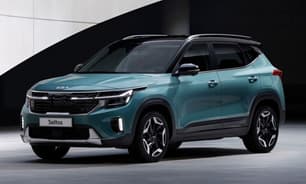
Looking for a small SUV that’s not tiny? The Kia Seltos could be that SUV, and it’s been updated for 2023.
This review covers the entire Seltos range and reviews this small SUV based on its safety, practicality, price and features, plus ownership costs, its fuel economy and what it’s like to drive.
So, if you’re thinking about a Honda HR-V, a Toyota Corolla Cross or something even as large as a Hyundai Tucson or Kia Sportage then you need to be thinking about a Kia Seltos, too.
Australians are moving into ever-larger vehicles when really we should be embracing the small car now more than ever. It's great Kia is still here, with its Picanto showing what can be offered in such a compact form-factor.
While it's not as affordable as it once was, it looks like it won't be long before Kia is the last torchbearer of sub-$20k starter cars. Even so, this is a great choice for buyers on strict budgets.
Kia’s updated Seltos is more expensive than the previous version but it's better as well.
The entry grade no longer has hubcaps and gets alloy wheels, all grades have directional air vents in the second row, the jerky dual-clutch auto is gone and an excellent regular eight-speed auto has arrived, plus there’s more safety tech and modern displays screens.
What hasn’t changed is the Seltos’s size. It’s a big, small SUV, that’s easy to park in tight spaces but roomy inside even for tall, awkward humans like me.
The sweet spot in the range is the Sport+ with the 1.6-litre engine, if only it had the LED headlights that only come on the GT-Line.
Note: CarsGuide attended this event as a guest of the manufacturer, with meals provided.
You wouldn't know it in Australia, where our collective tastes are orienting toward larger and larger vehicles, but city cars are experiencing something of a golden age overseas.
Cars like the Nissan Sakura, Honda N One, and Hyundai Casper join a long list of others which are design leaders in the city-car segment, and this is why the Picanto needs to look sharper than ever to compete.
Particularly in the GT-Line form we tested for this review, the 2024 car has adopted a dramatic facelift which complies to Kia's incoming and much more science-fiction look, complete with an extremely angular design and frowny LED light fittings.
Around the rear, there's a reworked set of tail-lights with a contemporary strip which almost reaches the whole way across the boot lid, and the new alloy wheels round out the whole aesthetic.
Given this, it's a little disappointing to see how few elements have changed on the interior. From the inside, this Picanto feels basically the same as the pre-update version.
I like the D-shaped steering wheel the GT now gets, and the multimedia screen is great for such a small and affordable car, but all the other switchgear, including the steering wheel is from previous-generation Kia products, and not the shiny new design-led stuff which appears in cars like the Sportage, Sorento, or Niro.
Also, while it's feature-laden all things considered, the interior plastics are mainly the harsh, hollow, scratchy kind. The new digital instrument cluster isn't one big screen, instead it's constructed of a few basic sectors which aren't customisable outside of the background colour. At least the central portion shows some useful information.
This updated Seltos has had a few styling tweaks, too. The grille is taller and there’s a new headlight design which on the GT-Line is stunning with its LED running lights.
The rear of the Seltos has been restyled as well, with a new tail-light design and again on the GT-Line there’s an LED strip which runs between them.
The Seltos is pretty big for a small SUV. At 4.4m long it’s bigger than a Hyundai Kona and a Honda HR-V and about the same size as a Nissan Qashqai and Corolla Cross.
What’s good about that is you’re getting more space inside with a package that’s still smallish on the outside.
If you think the Seltos’ look is familiar, then I agree. The Honda HR-V and Haval Jolion have very similar tail-light designs and the profile follows many of the same styling cues of the Toyota Corolla Cross.
To my eyes, though, I think the Seltos is the more refined looking of its peers with a more modern and interesting interior.
Speaking of which, keep in mind that the top-of-the-range GT-Line’s cabin is far more fancy than the interior of the entry grade S. The GT-line’s large double digital displays are impressive and the buttons around the shifter for seat heating and ventilation are replaced with blank plastic panels in the S.
Hard plastic armrests were another of my gripes about the previous entry grade Seltos, too.
Still all cabins have a premium look even if the feel isn’t luxurious throughout on all grades.
Feeling a little old or not, the Picanto has a clever interior which makes the most of its limited dimensions.
There are huge bottle holders in the front doors, a further two with little flip-out sectors which sit below the air-con controls. These holders can be folded away to turn this space into a tray for the storage of large objects. There's even a centre armrest console box, but it's tiny.
On the topic of air-conditioning controls, these are, refreshingly, physical dials, which are increasingly going missing as manufacturers move such functions to touchscreens. The Picanto keeps things manual though, even including a volume and tuning knob for the touchscreen, with physical shortcut buttons adorning the bottom section of the frame.
Physical controls is something Hyundai Group has committed to, and it's not until you use a vehicle without them you realise how essential they can be.
Despite its tiny footprint, there's also plenty of room in the cabin for an adult my size (I'm 182cm tall). I felt as though there was massive airspace between my head and the roof, as the Picanto's seats let you sit nice and low to the ground, and while it's limited in its width, it feels like I had enough room and adjustability for my legs.
Only one area brought me discomfort and it was the elbow-rest in the door. Sounds silly, but while the GT-Line has a little synthetic leather strip here, for some reason it has no padding, so it's seemingly for aesthetic purposes only and is still an uncomfortable place to rest your elbow on longer journeys.
It sounds unlikely, but I fit behind my own driving position in the back seat, with my knees almost up against the back of the front seat. Thankfully, the seat backings are softly-clad so even if you were slightly taller than me it might be ok.
Again, headroom is sufficient, and the seats are reasonably comfortable in the outer two positions. There are no amenities in the back seat. Rear passengers don't get air vents, door pockets, or a drop-down armrest in the centre position. There is only a small pocket on the back of the passenger seat. Can't say it would be the best space for longer journeys, but it fits adults for short city trips.
The boot measures 255 litres. It's small enough it may rule the Picanto out for some family buyers who need to wrestle with a pram or some such. The boot is large enough to fit either the largest CarsGuide luggage case on its own, or the two smaller ones, but absolutely not all three. It may surprise you to learn there is enough room under the floor for a space-saver spare wheel.
Some small SUVs are seriously small, which might be fine for some, but if you’re hoping to also have enough space for passengers in the back seats, and a boot which can carry plenty of luggage then the Seltos is a good choice.
Even at 191cm tall I had more than enough room to sit behind my driving position with good headroom back there, too.
Cabin storage is also good with door pockets front and rear, and a deep centre console box. As for cupholders there are two up front on all grades, while the Sport+ and GT-Line get two more in the second row fold-down armrest.
Boot capacity depends on if you’ve requested a full-sized spare wheel or the space-saver spare. With the space-saver you’ll have more room at 469 litres, while the full-sized wheel under the boot floor will leave you with 433 litres. That’s still decent for the class.
The new Seltos has directional air vents for back seat passengers which is a win (motoring journalists had been complaining about the lack of them for years) and there are also two USB ports (Type-C) for the second row along with another two for those in the front, plus a 12V outlet.
Every dollar counts here, which is why it is disappointing to see the Picanto continue to claw up the price-scale for this update, but it's not in a major way, and it's still one of few options left in this price-bracket at all.
In fact, it is the only option aside from the MG3 Core, which can be had in automatic form at $19,990 drive-away and even then this car is set to be replaced later this year with a bigger and more expensive new-generation, so the Picanto may well be the last bastion of sub-$20k affordability in Australia.
Now keep in mind, these are before-on-road costs, so it's likely if you can have any Picanto under $20k by the time you get it on the road, it's probably going to be the base model Sport Manual, which starts from $17,890.
From there, you can add an automatic gearbox, pushing it to $19,490, or you can upgrade to the GT-Line which is the car we have for this review, which costs from $19,690 for the manual as-tested, or $21,290 for the automatic.
A small spread of relatively affordable prices in this market then, but what's in the box? As it happens, more than you might expect.
Standard stuff in 2024 has increased on the base Sport grade to include 14-inch alloy wheels (in place of the previous steel wheels with hubcaps), as well as a leatherbound steering wheel and shifter (up from the previous plastic-clad ones), and a 4.2-inch digital instrument cluster replaces the analogue dials.
Meanwhile, the GT-Line scores a D-shaped steering wheel and new 16-inch alloy wheel designs, and the updated and more aggressive face is highlighted by LED light clusters. In addition, the GT-Line scores USB-C outlets on the inside, synthetic leather seat trim, and both grades maintain the 8.0-inch multimedia touchscreen with wireless Apple CarPlay connectivity.
Feels like a lot more car than it appears from the inside, especially since it comes with most of today's expected active safety tech, too, which its main rivals, the MG3 and Suzuki Ignis, have never been able to claim.
The price of the Kia Seltos has increased by about $2000 across the range, but you are getting more in the way of features. Let me take you through the model line-up.
There are four grades: the entry grade S, then the Sport, Sport+ and GT-Line. Those are all available with the 2.0-litre petrol engine and front-wheel drive.
The Sport+ and GT-Line can also be had with a more powerful engine which is a 1.6-litre turbo-petrol with all-wheel drive.
So, the list prices for the 2.0-litre engine start at $29,500 for the S, then step up to $32,700 for the Sport, $35,800 for the Sport+, and $41,500 for the GT-Line.
The 1.6-litre turbo engine is a more expensive proposition and in the Sport+ you’ll pay $39,300, and to pair it with the GT-Line grade you’ll need to hand over $44,900, before on-road costs.
Kia was also doing drive-away pricing at the launch of the new Seltos. So check with your dealership to ensure that the offer is still available.
Coming standard on the S grade for the first time are alloy wheels, they’re small at 16-inches but better than hubcaps, and there’s also roof rails.
Inside, there are cloth seats, an 8.0-inch media display, digital driver’s display, air-conditioning, wireless Apple CarPlay and wireless Android Auto.
The Sport grade adds 17-inch alloy wheels, auto headlights, a 10.25-inch media screen and matching 10.25-inch driver display, digital radio, sat nav, climate control, plus Apple CarPlay and Android Auto.
The Sport+ has all the Sport’s features but brings a proximity key with push-button start, privacy glass, power driver’s seat, synthetic leather upholstery and extra safety tech which we’ll get to soon.
The top-of-the-range GT-Line has all the Sport+ features but adds a power front passenger seat, heated and ventilated front seats, sunroof and a power tailgate.
The GT-Line also comes with the option of two-tone body paint - that is a black roof with 'Clear White' or 'Pluton Blue' body colours. Be advised that this combination is not available with the sun roof.
The value is good, but I don’t agree with Kia’s decision to keep the LED headlights for the GT-Line only and leaving all other grades stuck with dim Halogen headlights.
Being able to seem clearly on dark Australian country roads at night shouldn’t be a luxury. Toyota offers LED headlights across the Corolla Cross range from the entry grade up.
This is another area where the Picanto is feeling in need of a little innovation. It has the same very dated 1.2-litre four-cylinder petrol engine as the previous car, producing a sufficient but not exciting 62kW/122Nm.
It drives the front wheels via an equally old four-speed automatic transmission, or as tested, a five-speed manual transmission.
It's better with the manual if you can drive one, and a bit of a win for first time or young buyers who will still have the option to learn to drive one, so points there.
The Seltos range has two engines to choose from: a 2.0-litre four-cylinder petrol engine making 110kW/180Nm and a 1.6-litre turbo-petrol engine producing even more grunt at 146kW/265Nm.
The 2.0-litre engine comes with a CVT which is a type of automatic transmission and the 1.6-litre engine has an eight-speed auto.
CVT stands for Continuously Variable Transmission and some people (me included) find the droning they cause the engine to make to be annoying. They also come with a feeling of less acceleration.
The good news is the eight-speed auto that comes with the 1.6-litre is a great transmission with smooth shifts and a sporty nature that matches the punchy engine.
This eight-speed auto is welcome because it also replaces the jerky dual-clutch transmission that had been paired with the 1.6-litre engine in the previous Seltos.
All-wheel drive is only available with the 1.6-litre engine while front-wheel drive comes solely with the 2.0-litre.
So, if you’re after great acceleration and better traction then the 1.6-litre is the way to go. If you’re not after a sporty driving experience then the 2.0-litre engine will suit you, and it costs less.
An older engine and transmission combination makes for a less than impressive fuel consumption figure in today's market, but then the Picanto is a very light car, so it has lower fuel consumption than most of its contemporaries regardless.
The official fuel consumption on the combined-cycle test of the five-speed manual we tested is 5.4L/100km, and in our week of what I would consider fairly combined usage our GT-Line drank 6.0L/100km. Not great when you consider a much larger hybrid Corolla can use less fuel, but pretty close to the claim nonetheless.
The Picanto has a 35-litre fuel tank – enabling a theoretical driving range of 648km – and happily drinks base-grade 91RON unleaded fuel.
The smaller engine actually uses more fuel, but not a great deal more. Kia says the 1.6-litre engine with all-wheel drive uses 7.4L/100km after a combination of open and urban roads. The 2.0-litre engine according to Kia will use half a litre less at 6.9L/100km.
Both engines only need 'standard' 91 RON petrol, too - that’s the cheap one.
Where is the hybrid variant? Good question. The answer is, there isn’t one. And neither is one coming, I’ve asked. That’s disappointing considering the Corolla Cross comes with a hybrid version of each grade in its line-up.
It’s for this reason the Seltos range scores a lower mark for fuel efficiency.
You've got low power, a pretty low-tech engine and transmission, but this little Kia is still great fun to drive.
For a start, you can have it as a manual that lets you wring the best out of the little engine, which is easygoing but lacklustre with the four-speed auto.
To be clear, it's not a great manual - usually when you get a brand new manual in 2024 it's one of those fancy performance ones with nice damping and notchy gates, but as simple as it is, it also gives the car a raw mechanical nature which keeps it engaging to drive. There are real consequences for choosing the wrong gear and it takes a touch of skill to get used to, a lost art of the all-encompassing drive which is a welcome change of pace compared to a lot of cars today.
The Picanto also has keen steering helping the organic feel, and it has a firm ride, too, which makes it surprisingly sporty in the corners, but it's lightweight nature and firm suspension gave it a crashy and bouncy feel on some of the inconsistent Sydney streets I exposed it to.
It's also a bit noisy in the cabin, both in terms of engine noise (you have to rev the thing to get it going) and tyre roar on anything but the finest tarmac. This issue increases with your speed, and reminds you of its city-car intention when you're on the freeway.
Still, the city is where it's best suited to, and it's a joy to easily dart down alleyways which take a degree of caution in the usual mid-size SUVs you see around the place, and the fact you can park it anywhere can be a real blessing.
The visibility is great, too, which means multi-lane situations aren't a nightmare, and the full suite of manual adjustment for the stereo and air conditioning are super easy to use when you're on the go (who has time to adjust a touchscreen when you have a manual transmission to worry about?)
In conclusion then, the Picanto isn't to be underestimated. This is a spritely fun little thing which makes the most of its limited hardware, but it truly is best suited for the confines of a city, and gets less impressive as you get it out on the open road.
The Kia Seltos has two personalities. The laid back Seltos with a 2.0-litre engine and the enthusiastic sporty Seltos with the 1.6-litre engine.
Regardless of which Seltos you pick, the ride is comfortable, the handling is good, and the steering is excellent.
Kia says it's worked to make the Seltos’s cabin more insulated from road noise, but having driven it on country roads for hours I think it could do with more sound dampening.
If you’re considering the Sport+ grade and are not sure if the $3500 premium for the 1.6-litre engine is worth it, my answer would be absolutely, if you can afford it.
That 1.6-litre turbo petrol is a great engine and the new eight-speed transmission is excellent. Even as a daily driver I think anybody would enjoy driving this version of the Seltos more, and for those who like sporty driving then it’s definitely the powerplant for you.
The other great thing about this Picanto is its surprisingly thorough suite of active safety items. It gets auto emergency braking, lane-keep assist and lane departure warning, as well as blind-spot monitoring and rear cross-traffic alert.
Again, its limited array of rivals like the MG3 and Suzuki Ignis can't compare.
The Picanto has an array of six airbags (dual front, side, and curtain), although it is not currently rated by ANCAP.
The Seltos has the maximum five-star ANCAP safety rating but that’s from 2019. Still, the advanced safety tech is excellent. All grades come with AEB, blind spot warning, lane keeping assistance and rear cross-traffic alert.
All grades also come with the rear occupant alert, which is great for sleep-deprived parents, and there’s also the safe exit feature which will let you and the kids know if a car or cyclist is approaching before you open the door and ruin everybody’s day.
The Sport+ and GT-Line both come with AEB that works at intersections.
It’s good to see front and rear parking sensors standard across the range.
Kia's stand-out seven-year/unlimited-kilometre warranty isn't as stand-out as it once was, but is still the standard to beat for this segment, and is especially impressive considering the up-front cost of the Picanto.
You also get seven years of roadside assist included and a seven-year capped-price servicing program.
Over those seven years the price averages out to $438 annually, which is not as cheap as it could be, especially considering many Toyotas cost about $250 a year to keep on the road for their (shorter) warranty period.
The Picanto needs to visit a workshop once every 12 months or 15,000km, whichever occurs first.
The Seltos is covered by Kia’s seven-year, unlimited-kilometre warranty.
Servicing differs between the two engines.
A Seltos with a 1.6-litre engine needs to be serviced every 12 months or 10,000km and over seven years the average service cost comes to $497 per year.
A Seltos with the 2.0-litre engine needs to be serviced every 12 months or 15,000km and over seven years the average service costs comes to $434 per year.
Capped price servicing is good, but the prices can get higher than $600 for some visits.