What's the difference?
Jayco is Australia’s most prolific builder of camper-trailers, caravans and motorhomes. Many of its models are the cheapest options in their class and represent decent value for money.
The company’s cheapest little camper-trailer – the Swift – is the perfect example of that: functional, versatile, packed with features and it costs less than $20,000.
Think of a Mercedes-AMG and the first words that spring to mind are probably not - understated, efficient and restrained. And yet those are probably the best words to describe the all-new C 43.
Of course, before we go any further it’s important to note that the C 43, even in its previous six-cylinder guise, was never meant to be as wild, raucous or powerful as the C63 flagship - that’s simply not its role in the AMG line-up.
But even so, this new model is a dive into fresh territory for the brand and puts a very different spin on the AMG sports sedan as we know it.
This is a four-cylinder model, complete with a Formula One-derived electric turbocharger, so it lacks the sound and fury you expect from something carrying the ‘AMG’ badge - but that doesn’t mean it’s a bad car, as we’ll explain.
Overall, the Swift is pretty good value. It’s got a sensible layout, a clever process to set up and offers quite a lot of comfort within a cosy package.
Given the price and the layout, it’s worth considering if you’re also shopping for a forward-fold camper-trailer, which likewise offers an internal living area.
The new AMG C 43 may lack the drama and excitement we’ve come to expect from the German performance brand, but that doesn’t mean it’s a bad car. Yes, it could be more extroverted and the ride could be improved, but this is still a sharp-looking sports sedan with loads of punch.
This is a car that speaks to its times, with ever-stricter emissions regulations making it harder and harder for car companies to produce loud, wild and charismatic cars. So Mercedes-AMG has worked within those boundaries and come up with a car that retains at least some of those core elements that has made the brand so desirable over the years.
Note: CarsGuide attended this event as a guest of the manufacturer, with accommodation and meals provided.
The camper’s interior is quite cosy, but there’s room to move around or to relax in the dinette, and the beds will become de-facto play areas for young children.
The dinette converts into a small bed, but if you’re thinking about using it as a full-time bed for a child, opt for one of Jayco’s larger campers.
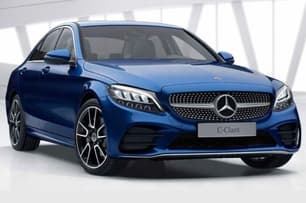
The new C-Class has grown slightly in size compared to the model it replaces, most notably with a 26mm increase in the wheelbase which you can feel in the cabin.
The front seat space is good, with excellent adjustability for the power-adjustable seats and steering column. I had no trouble finding my ideal seating position which makes for a more enjoyable and uncompromised driving experience.
Rear space is a bit tighter (which is typical for this segment/size of vehicle), but thankfully the standard seats do have very deep sculpting in the backs which allow for more knee space and foot room.
However, at approximately 180cm (six-foot), I wouldn’t like to sit behind my seating position for long periods as my knees were touching the seat back, and headroom is compromised with the panoramic glass roof.
In terms of small item storage there’s a lidded console box in between the front seats as well as a pair of cupholders and a small tray where you can place your mobile phone.
It’s worth noting, though, that early examples of the C 43 in Australia do not have a wireless smartphone charging pad, with that reportedly being introduced from February production.
While that’s good news, it’s not really competitive in this day and age to offer a car costing six-figures without such technology.
There’s also only a single USB-C power outlet in the front, which is another disappointment, but there is a pair in the back.
Mercedes does win some points back for a respectable 455-litre boot, which has a nice wide load opening that will make packing luggage easier.
Because the Swift Touring is so small and light, modern utes and SUVs are able to tow it pretty comfortably. With the Ford Ranger, for instance, as a tow vehicle I can see over the top of this camper-trailer to the traffic behind, and because it is so narrow, vision back along the side is quite generous, too.
The Swift’s weight has little impact on a dual-cab’s performance, and there’s only a slight rise in fuel consumption as the Swift doesn’t have similar aerodynamics to a large caravan.
Also, as its ball weight is so light, the Swift doesn't cause too much rear-end sag in the tow vehicle, even if it’s behind a passenger car.
Another advantage of the Swift’s slightness is that it’s easy to move around at camp, or drag onto the tow-ball if you have to hitch solo or don’t have a reversing camera.
Let’s start with the good news. The new Mercedes-AMG C 43 is a quick car. The engine may be small in size but the electric turbocharger does its thing and provides plenty of punch.
You can get a performance boost, too, thanks to the belt-driven starter generator, which acts as a mild hybrid and gives you a surge of 10kW for a brief period if you need a sudden burst of extra speed.
The chassis is well-sorted, too, at least from a dynamic point-of-view. The rear-wheel steering can provide up to 2.5 degrees of turning, which improves handling at speed and manoeuvrability when parking.
However, there are some less-impressive elements to the C 43, too. The obvious one is the drama, or rather the lack thereof.
As I said at the beginning, the C 43 has never been as wild or raucous as the V8-powered C 63, but when you buy an AMG there’s a rightful expectation that it will provide some thrills.
The C 43 simply doesn’t have that character about it. Yes, it’s fast, but it produces that speed with efficiency rather than excitement.
And it’s not an engine size problem, because even the 2.0-litre four-cylinder A 35 and CLA 35 offer more ‘wow factor’ than the C 43.
Yes, the engine makes noise under acceleration (and it can be altered between discreet and sporty) but even at its best it sounds muted and lacks the evocative tone of a V8 or six-cylinder engine.
Another disappointment is the transmission calibration, with the gearbox awkwardly shifting out of first gear on multiple occasions during our test drive.
In the taller gears it felt smooth enough cruising along, but given its low speed shifts we’d like to spend more time in the urban environment before passing final judgement.
The other notable element of the driving experience we struggled with was the ride quality. While fine on the smoother motorways, our test drive included time on some patchy country back roads and the C 43, even in the ‘Comfort’ suspension setting, was simply too firm.
Riding on low profile tyres, the adaptive dampers struggled to isolate the cabin from the imperfections in the road, leading to a fussy ride at times.
Overall the C 43 is a good car, but it feels like there are still some areas where Mercedes could improve it to make it really live up to the AMG badge.