What's the difference?
The Infiniti Q50 Red Sport sedan really wants you to love it, and this latest version is doing its best to impress the heck out of you with its looks and features.
So much so that you'll take it home... and live with it, forever. And then there's that engine – armed with a formidable twin-turbo petrol V6, the Q50 Red Sport's outpowers all its rivals.
But then there's the BMW 340i which is not that much more expensive... and it's a BMW. And what about the Lexus IS 350? That's more like the Infiniti, but also more popular.
Oh, and don't forget that we when first met the Q50 Red Sport last year we didn't exactly get off on the right foot. The engine's formidable grunt seemed too much for the car to handle. Then there was the jiggly ride, and the steering wasn't great either unless you were in Sport + mode. It's all coming back now...
Perhaps the Q50 Red Sport had changed. This is the new one, and Infiniti had assured us it's a different car now.
Do we give it another chance? Of course, and we do, in a quick 48-hour test. So, has it changed? Is it better? Would we live with it forever?
Tim Robson road tests and reviews the BMW 4 Series with specs, fuel consumption and verdict at its Australian launch.
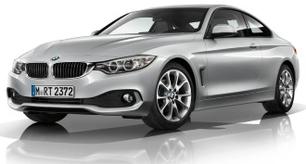
Following on from the mid-life tweaks to BMW's mainstay 3 Series in December 2015, the spin-off 4 Series line has now been updated along the same powertrain and equipment lines.
Based on the same mechanicals as the 3 Series, the three-year-old 4 Series was ostensibly formed to give BMW's nomenclature some sense of logic by designating its two-door machines as 'evens' (2 Series, 4 Series and 6 Series) and its four-door cars as 'odds'.
Three variants currently make up the 4 Series range, including a two-door Coupe, a two-door Convertible and – oddly, given the naming regime – a four-door Gran Coupe that also sports a hatch-like tailgate.
The Q50 Red Sport is a premium sedan that's great value, with a cracker of an engine. While Infiniti has improved the ride and steering, it still feels to me that the engine is too powerful for the wheels and chassis to handle. But if you're looking for something of an untamed beast, this car could be for you. Just don't say we didn't warn you.
The 4 Series line offers three distinct points of difference from the more traditional 3 Series, each with their own attraction. The sharpening of the sticker prices and the additional spec helps their cause as well, with the 430i Coupe probably our pick of the range. The 440i is the firecracker of the group, while the 420d is also worth a look, thanks to its value and prodigious torque output.
The Q50 Red Sport looks cranky from front on, which I like in a car. Yes, the grille is simplistic and gaping, the nose is a bit bulbous, and sure, side on the car looks like a Lexus IS 350, but those rear haunches and the aggro body kit with its front splitter and boot lid spoiler make for an impressive looking four-door sedan.
The update brought restyled front and rear bumpers, those red brake calipers and the dark chrome 20-inch rims and new LED tail-lights.
Inside, the cabin is an asymmetrical paradise (or hell, if you're a bit OCD like me) full of sweeping lines, angles, as well as different textures and materials.
The red stitched quilted leather seats are an addition that came with the update, so is the new steering wheel and the ambient lighting.
The 'Sunstone Red' colour of our test car is also a new hue which looks a bit like Mazda's Soul Red. If red is not you, there are other colours – hope you like blue or white or black or grey because there's 'Iridium Blue', 'Midnight Black', 'Liquid Platinum', 'Graphite Shadow', 'Black Obsidian', 'Majestic White' and 'Pure White'.
The Q50 has similar dimensions to the IS 350: both are 1430mm tall, the Infiniti is 10mm wider at 1820mm, 120mm longer at 4800mm, and has a wheelbase that's 50mm longer at 2850mm.
No external changes to the 4 Series' bodywork have been affected for this midlife refresh, but there have been plenty of tweaks to the standard equipment offerings right across the board.
The Q50 Red Sport is a five-seat four-door sedan and is vastly more practical than its two-door Q60 Red Sport sister, in that I can actually sit in the back seat. The Q60's coupe styling looks amazing, but the sloping roofline means headroom is so severely limited that it reduces the rear seats to a place to throw your jacket.
True, I'm tall at 191cm, but in the Q50 Red Sport I can sit behind my driving position with legroom to spare and more than enough headroom.
Boot space is good at 500 litres, which is 20 litres more than the luggage capacity of the IS 350.
Storage throughout the cabin is good with two cup holders in the rear centre fold-down armrest, two more up front and bottle holders in all doors. A large centre console storage bin and another big storage area in front of the shifter are great for keeping junk under control and your valuables covered.
Two-doors are never the most practical devices, but the 4 Series Coupe and Convertible duo make a decent fist of it for front-seat passengers. There are bottle holders in both doors and a pair of cupholders in the centre console, along with a large lockable glovebox.
The centre bin is, however, quite shallow, and houses the car's single USB port inside it. There is covered storage under the dash for smaller items, and a small rubber-lined tray that the current crop of phones has outgrown.
The rear seating in the Coupe is reduced to almost a formality, especially if the front seat passengers are tall and the front seats are set back, while the sloping roofline reduces head space quite considerably. A centre armrest contains a pair of cupholders, and there are small side pockets.
Rainy conditions precluded us from trying the Convertible's metal folding roof, but the rear seat space restrictions also apply here. Its 370 litres of boot space is roomy enough for a drop-top, while a clever lifting function raises the folding roof structure up by about 300mm to allow luggage to be stowed under the panels when the roof is down. Capacity drops, though, to just 230 litres.
The Gran Coupe, on the other hand, is the most practical car in the entire 3 and 4 Series line-up outside of the 3 Series Touring wagon. With a large, flat load area, and a hatch-like tailgate, the Gran Coupe can swallow 480 litres of gear with the seats up and an impressive 1300 litres with the seats lowered.
Face-level rear vents, more head and backseat legroom – not to mention the fact you don't have to squeeze into the rear past the front seat – makes the Gran Coupe a most useful device, and it's little wonder it's the most popular variant of the three.
Maybe sit down for this next bit. The Q50 Red Sport lists for $79,900. Are you okay? Do you want a moment? Remember, though that only seems like a lot because it's not a Benz or a BMW. Truth is the value is pretty good – better than a German car of the equivalent size and grunt.
Look at the standard features list: 8.0-inch and 7.0-inch stacked touchscreens, the 16-speaker Bose 'Performance Series' stereo system, digital radio, road noise cancellation, sat nav, 360-degree camera, leather seats, power adjustable from sports seats, dual-zone climate control, proximity key, sunroof, auto wipers and adaptive LED headlights.
The 2017 update brought new standard features to the Red Sport including, red stitching on the seats and dash, quilted leather seats, new 19-inch alloy wheels and red brake calipers.
Don't forget that the bang-for-buck factor is strong with the Red Sport, too. In that nose is a twin-turbo V6 that makes almost as much grunt as the BMW M3 for about $100K less. Even the 340i, which Infiniti says is a Red Sport rival, is $10K more. Truth is though, the Lexus IS 350 is the real rival to the Q50 Red Sport.
Entry into the 4 Series world now stands at $68,900 plus on-roads for the petrol 420i Coupe and Gran Coupe, and tops out at almost $118,000 for the 440i Convertible.
Both the 420i and 420d have been boosted by the addition of adaptive M dampers, a heads-up display, powered folding rear-view mirrors, lane-change warning, driving assistant and BMW's surround view camera with top and side views.
BMW claims the extra kit is worth just over $8000. Leather seats, sat nav, BMW's ConnectedDrive Emergency call system, bi-Xenon headlights and reversing camera are also featured. An eight-speed automatic transmission is offered as stock, but a six-speed manual can be optioned at no cost.
The diesel version costs an additional $2200 over the petrol powerplant.
Stepping into the 430i, the M Sport Package is offered as standard, with the Luxury line, which includes a leather-trimmed dash, a no-cost option.
Additional standard equipment over the outgoing 428i includes 19-inch M rims, heads-up display, lane change warning, driving assistant and surround view camera. The 430i also gains electric lumbar support for driver and front passenger seats and a nine-speaker stereo system over the base 420i.
Finally, the range-topping 440i scores a heads-up display, lane change warning, driving assistant, surround view camera, adaptive LED headlights, leather dash, front seat heating, high beam assist, active cruise control with stop and go function and parking assistant over the outgoing 435i.
Over the 430i, the 440i also gets variable sport steering, a Harman/Kardon surround sound system with 16 speakers, a leather instrument panel (with M Sport Package), ConnectedDrive internet and concierge service, and air collar neck-warming ducts for the 440i Convertible.
Inside the Q50 Red Sport's nose is a 3.0-litre twin-turbo V6 petrol engine and it is a beautiful thing. To me this car is piece of technologically sophisticated jewellery that cradles a precious gem that pumps out 298kW/475Nm.
But I have my concerns... you can read about those in the driving section.
Shifting gears is a seven-speed automatic which delivers drive to the rear wheels.
There are two new petrol engines, two new badges and prices cuts of up to $10,000 right across the board for the line-up, along with additional standard equipment that improves the value equation even further.
The line kicks off with the 420, which can be had in either diesel or petrol guise. The 420i gains BMW's new B48 2.0-litre four-cylinder turbo petrol engine, which gains 5kW over the old motor to produce 135kW and 270Nm.
It also benefits from slightly improved fuel economy, with a drop of 0.3 litres per 100km for the Coupe and 0.5 for the Gran Coupe to 5.8L/100km, and a fall of 0.2L for the Convertible to 6.2L/100km.
The 420d retains its 140kW, 400Nm 2.0-litre four-cylinder turbo diesel engine, which returns 4.3L/100km in the fixed roof cars and 4.7L/100km for the Convertible.
The 430i – formerly known as the 428i – also receives the new 2.0-litre petrol engine, albeit in a 185kW/350Nm tune. Its fuel economy drops a healthy 0.6L for the Coupe and Gran Coupe and 0.4L for the Convertible, posting figures of 5.8 and 6.3L/100km respectively.
The top-spec 435i has been transformed into the 440i with the addition of BMW's new Twinpower 3.0-litre straight six petrol motor. Its output jumps 15kW to 240kW and by 50Nm to 450Nm, and its consumption falls by more than half a litre to 6.8 litres per 100km for the closed-roof pair and 7.2L/100km for the Convertible.
All cars come standard with a 'traditional' ZF eight-speed torque converter automatic transmission with steering wheel paddles as standard fitment, while a six-speed manual gearbox is a no-cost option across the line.
Infiniti says the V6 petrol engine in the Q50 Red Sport should use 9.3L/100km if you're using it on a mix of highways, urban streets and country roads. We only had the Q60 Red Sport for 48 hours and after a couple of days of Sydney city commutes and a trip to the Royal National Park our trip computer was reporting 11.1L/100km.
Our brief test loop on a rainy, blustery Melbourne winter's day in all three model types (but no diesel) netted varying fuel consumption readings across the line; we recorded 8.4L/100km in a 420i sedan against a claimed figure of 5.8, 9.8L/100km for the 430i Gran Coupe against a claimed figure of 5.8L/100km, and 8.4L/100km against the 440i Gran Coupe's 6.8L/100km.
Perhaps the biggest complaint we had about the previous Q50 Red Sport, which launched in 2016, was that it felt as though the chassis wasn't up to the amount of grunt running through it, and those rear wheels struggled to transfer the oomph to the road without losing traction.
We experienced the same issue again in this new car. I was breaking traction, not just in 'Sport+' and 'Sport' modes, but in 'Standard' and 'Eco', too. That was happening without pushing it hard and with all electronic traction and stability aids on.
If I was 18 I'd declare to the world I'd found my dream car - something that always wants to 'light 'em up' given half a chance. But like that one mate who always gets into trouble on a night out it's only funny when you're young.
A truly great performance car is planted, balanced and able to deliver the grunt to the road effectively. The Nissan R35 GT-R is the perfect example – a brilliant piece of machinery, a weapon of a performance car and with a chassis matched perfectly to its engine.
And that could be the issue with Q50 Red Sport - that engine feels overpowered for the chassis, and wheel and tyre package.
We also felt the previous Q50 Red Sport's ride, with its constantly adapting 'Dynamic Digital Suspension', was overly busy. Infiniti says it has developed the suspension system further and it does feel as though the ride is more comfortable and composed.
Steering was another area that we weren't overly impressed with when we drove the previous car. Infiniti's 'Direct Adaptive Steering' (DAS) system is super sophisticated and was the first in the world not to have any mechanical connection between the steering wheel and the wheels – it's all electronic.
The new Q50 Red Sport uses the upgraded 'DAS 2' and while it feels better than before, it's only in Sport+ mode that it seems most natural and accurate.
BMW introduced a raft of tweaks to the 3 Series platform late last year, which have translated over to the 4 Series. The key addition across the line is BMW's two-stage adaptive dampers that feature a Sport and a Comfort circuit, fitted as part of the M Sport pack that comes standard on the 430 and 440, and is a $2600 option on the 420.
Larger 19-inch rims are fitted to the 430i and 440i cars, while the 420 gets 18s out of the box. It's possible to fit 18s on the more expensive cars, as part of the no-cost Luxury option pack that supplants the standard M Sport pack.
While our test was brief and held in less than ideal road conditions, the large-wheeled 4 Series really didn't enamour themselves to this author. There's a distinct lack of communication from the tyres and chassis through the steering wheel and your backside, while the combination of firm Sport shocks and large 19-inch wheels with narrow-section tyres made for an uncomfortable ride over country roads.
Sampling a 420i with the Luxury 18-inch rims, however, improved things immensely, with much better feedback and comfort that didn't come at the expense of handling.
One of BMW's strong points should be its steering, given all the 3 and 4 Series cars are still rear-wheel-drive… but it's not, unfortunately. The electrically assisted set up is far from perfectly calibrated, feeling too dull and digital underhand, no matter what the setting.
The pick of the bunch performance wise is – logically – the six-cylinder 440i. The turbo powerplant is potent from right down the rev range, with a muted yet still pleasing engine note permeating the cabin. The self-shifting mode on the eight-speed auto does a good job of keeping up as well.
The updated 2.0-litre four is a sprightly performer, too.
The Q50 was given the maximum five-star ANCAP rating in 2014 and the amount of advanced safety equipment which comes standard on the Red Sport is impressive. There's AEB, that works forwards and when you're reversing, forward collision and blind spot warning, lane keeping assistance and moving object detection.
There are two ISOFIX points and two top tether anchor points in the back row, for child seats.
The Q60 Red Sport doesn't come with a spare tyre because the 245/40 R19 tyres are run flats, which means even after a puncture you should be able to keep driving for about 80km. Not ideal in Australia where distances are seriously vast.
six airbags, lane departure warning, pre-collision safety pack, parking sensors, active cruise control with collision warning, AEB and pedestrian warning, along with reversing camera and surround-view cameras across the line.
The Q50 Red Sport is covered by Infiniti's four year/unlimited kilometre warranty with servicing recommended every 12 months or 15,000km.
Infiniti has a scheduled servicing program which will cost $1283 (in total) for three years.
BMW offers a Service Inclusive program at the time of purchase, which for $1340 covers everything – including items like spark plugs, brake fluids and other fluids - for five years or 80,000 km scheduled. The cars are also covered by a three-year free roadside servicing program, in addition to BMW's two year, unlimited kilometre warranty.