What's the difference?
A big welcome to one of the first turbo-petrol four-cylinder versions of the new-generation Hyundai Santa Fe, a model that launched locally with only its hybrid variants available to our market.
While it might not satisfy the fans of the previous-gen's V6 petrol engine, it might be enough for those who have been on the fence about going the hybrid route.
This is my third time in the new Santa Fe, and each tested variant has managed to offer something different and the base petrol grade, in FWD, is no different – but does it offer enough?
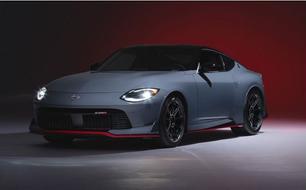
The Nissan Z is a real blueblood.
With Datsun, Nissan introduced the world to Japanese cars via a gruelling round-Australia rally in 1958 that had the country captivated. Within 10 years the 1600 made them respectable, but it was the 240Z of 1970 that also made them desirable.
Seven generations later, today’s RZ34-series Z – along with the Toyota/Subaru GR86/BRZ and Mazda MX-5 – embodies that nation’s tradition of affordable yet charismatic sports cars.
They’ve always been ripe for modifying as well, with Nissan leaning on its performance arm Nismo for 40 years. Which is exactly what the Z Nismo is all about, stepping up to take on the Toyota GR Supra, BMW M240i and Ford Mustang GT.
The old 370Z Nismo was a true corker. Let’s find out if this one does the family proud.
So I asked at the beginning if the Hyundai Santa Fe FWD petrol offered enough for families looking for a large seven-seat SUV and the answer is: YES!
It's practical, has people-mover space and storage and is downright comfortable to drive. There's so much to like here.
The Nismo turns up the wick just enough to justify its $20K premium over the brilliant regular Z.
Visual changes inside and out are one thing, but with tangible boosts in performance, handling and braking – with no detriment to ride quality or comfort – as a result of properly engineered upgrades, the RZ34 version deserves its place in Nissan’s sports car hall of fame.
Note, though, that good as it is, the Nismo is also a potent reminder of how solid a foundation the standard Z also is… especially in manual gearbox guise.
It's boxy and bold and you certainly won't mistake it for anything else on the road. That's both good and bad.
The front works beautifully; pairing a chunky and square aesthetic with cool H-shaped LED headlights (a running motif throughout the car). The front and sides look like the chiseled face of a Greek hero or the latest Romantasy crush, but the rear is just awkward. It's essentially just a big blank body panel and the only interesting thing about the back are the H-shaped tail lights.
Head inside and the interior is exactly the same as the base FWD hybrid variant - you get an interesting black and grey tartan fabric upholstery across the seats, and enough soft touchpoints scattered throughout to stop you looking too hard at the heavy use of plastics.
The dashboard shares similar chunky proportions with the exterior and you can see lots of H shapes in the air vents and panelling, so it flows pretty well inside.
The highlight is 100 per cent the large curved panel on the dash that houses the dual 12.3-inch displays. They look high-end and instantly lift the cabin from feeling 'basic'.
Joinery is flush, nothing rattles and there's an overwhelming sense of high-build quality inside. It's a cabin you'll be able to spend a lot of time in.
Reinterpreting a classic via retro styling isn’t always successful – hello, 2001 Ford Thunderbird – but what Nissan has achieved with the RZ34, given it’s a pastiche of several Z greatest hits from the ‘70s, ‘80s, ‘90s and today, is truly masterful design.
Take the cab-backward silhouette, long nose and short wheelbase; it somehow manages to deftly capture the spirit of previous Z generations, without looking like a bad caricature.
Points especially go to the stunning nose and tail treatments that evoke both the ‘70s 240/260/280 as well as the sadly long-forgotten Mid-4 II concept car of 1987.
Slightly longer than the regular model, the Nismo’s nose is meant to evoke the early ‘70s Japan domestic market Fairlady ZG, with the G denoting “Grand Nose”. Fun fact: Fairlady first appeared on the 1960 Datsun roadster as deference to the Broadway musical (and later Audrey Hepburn film, presumably) ‘My Fair Lady’.
Anyway, besides scraping speed humps and driveways, the Nismo’s elongated front bumper promotes improved engine cooling and better aero flow, as do the side sills, larger wraparound three-piece spoiler and redesigned rear bumper/diffuser. The wider-yet-lighter back wheels are 10mm wider. And a glossy red stripe runs along the underside like Anna Nicole Smith’s lipstick.
Does it all look better than the simpler, purer regular Z? No. But they perform better. And isn’t that the point of a Nismo?
I've said it before but I'll say it again. The cabin offers similar, if not the same, level of practicality of a people mover with passenger space and storage solutions.
In fact, Hyundai may have shot their other three-row SUV, the Palisade, in the foot here because I'm not sure why you'd now bother forking out an extra $13,800 on the base Elite grade over out test model. Not when each row will be comfortable for an adult and feature decent amenities.
With seats that don't sit too high and a 177mm ground clearance, the Santa Fe is an easy SUV to get in and out of, even for kids.
The front- and middle-row seats are the most comfortable when it comes to padding and under-thigh support. The powered drivers seat also offers adjustable lumbar support on top of the heat functions that both front seats get.
Storage is top-notch with lots of cubbies to choose from up front with dual gloveboxes, one that can fit a manual and one that will hold smaller items like a wallet, wet wipes etc.
The middle console is huge and has a removable shelf but is also shared with the middle row as the bottom pulls out into a storage drawer for them. This means you can cut out the middle man (AKA the parent) and have a handy place to put any roadie snacks.
The centre console features two phone cradles and a large shelf underneath that easily holds a handbag or Saturday night's takeaway.
There are a total of 12 cupholders (2/6/4) and four drink holders (one in each door storage bin) plus a sunglasses holder and map pockets on the back of the front seats. So, definitely spoiled for choice when it comes to individual storage.
The technology is easy to use and high-quality with display screens that feature crisp graphics and a responsive multimedia touchscreen. The system features wireless phone mirroring for Apple CarPlay and Android Auto, as well as Bluetooth connectivity.
Charging options are good throughout the car with six USB-C ports (2/2/2), and a 12-volt socket and wireless charging pad up front.
Rounding out the cabin is the large boot which offers 642L when the third row is stowed, and up to 1963L when just the front seats are in use.
The loading space is level but you still get a handy under-floor compartment for small items. And the full-size spare tyre and powered tailgate are always practical to have!
So, just as the exterior is an anthology of past Z car stylings, the same also applies inside.
A mishmash of new and old as well, they also marry together harmoniously – after you’ve bent and contorted yourself inside nice and snug, on the racy yet not-too-unforgiving set of Recaro bucket seats.
The Z’s signature sloping roof and rising window line; a trio of dials that have been a hallmark of the series since the 240Z, a thin three-spoke steering wheel; a physical hand brake and a pair of old-school seat base angle adjuster knobs just like in sports cars from 20 years ago betray the Nissan’s ageing DNA.
But they set the mood, like hearing a favourite old track, though one remixed by a contemporary DJ to a modern beat.
Which means that you’ll be able to view whichever artist you like through the 8.0-inch touchscreen, either via Bluetooth audio streaming, Spotify or some such app.
Easy to decipher and simple to navigate (though no imbedded GPS is fitted), the Z’s dashboard also offers the essential surround-view parking camera (given how limited vision is as you’re sat so low with not much glass to peer out through), amongst a host of vehicle functions. You’re also privy to extremely useful blind-spot alert thoughtfully placed inside the car by the mirror mounts, four cupholders if you count the door-sited ones and surprisingly generous storage. Practicality, thy name is Fairlady.
For lightness and sensible packaging, we understand why Nissan’s sports coupe is strictly a two-seater proposition – and certainly a roomy enough one for the lucky pair at that.
However, it’s a shame Nissan doesn’t offer a 2+2-seater option in the form of a pair of occasional jump seats behind, as per the old Datsun days, as there seems to be just enough space for smaller folk – though as a pair of shelves, that area did prove very useful during our week with the Nismo.
Issues? Along with a sheer lack of grace entering and exiting the Z, poor overall vision and 350Z-era switchgear that are now old enough to drive themselves, finding the right driving position eluded this particular 178cm tester. The seats do a great job keeping you firmly fixed in place, and of course the wheel tilts and telescopes, but those pair of knobs were forever being twirled and fiddled with.
Oh, and simultaneously unlocking and opening the doors was also confounding, due to exterior door handles and pressure sensor not designed for Homo Sapien hands.
Further back, and as in the two previous generations Zeds, a brace bisects the luggage area. Rated at 241 litres VDA, it is wide and flat but a wee bit shallow. At least it adds another level of practicality and is big enough for those weekends away.
There’s no cover (though seeing what’s inside isn’t easy) and no spare wheel of any size is fitted.
Meanwhile, on the other side of the Nismo…
The Hyundai Santa Fe is offered in three grades, with the base- and mid-spec options now having the option of having a turbo-petrol engine or a self-charging hybrid powertrain.
Our test model is the front-wheel-drive base-petrol grade, which is priced from $53,000 before on-road costs. That makes it the most affordable variant in the Santa Fe line-up, being $2500 more affordable than the base FWD hybrid model.
This positions it in between its three-row large SUV rivals, the Kia Sorento S ($50,680) and even larger Nissan Pathfinder ST-L ($60,220). But the Sorento is still offered with a choice between V6 petrol engine and a four-cylinder turbo-diesel engine, which will entice some.
Our test model is incredibly well-equipped for a base variant and includes features like heated front seats, a powered driver's seat (with adjustable lumbar support), rear privacy glass and LED external lights.
There are great practical items like a full-size spare wheel, a powered tailgate, keyless entry/start, a 360-degree camera system, dual-zone climate control and tyre pressure monitoring.
Technology is also a standout with dual 12.3-inch displays taking centre stage, FM/AM and digital radio, wireless Apple CarPlay/ Android Auto, Hyundai 'Bluelink' app, over-the-air updates, Bluetooth connectivity, a wireless charging pad, six USB-C ports and two 12-volt sockets.
Bluelink connected car services brings features like ‘Automatic Collision Notification’ an emergency call (SOS) function, geo-fencing, valet, speed and time alerts and more.
Nismo is short for Nissan Motorsport. It’s like what AMG means to Mercedes or HSV was to Holden. Which means, of course, that Australians love this sort of thing.
Last year, as limited editions, the first 100 Z Nismos sold out in under an hour, according to Nissan. Now it’s back more permanently, still from $94,000 before on-road costs, but without quite the exclusivity.
But, don’t worry. You still get the Nismo body kit and leather/Alcantara-clad cabin treatments, stronger performance and track-focused chassis upgrades, which include extra bracing, sharper steering, beefier suspension, bigger brakes and GT-R-spec wider wheels, compared to the regular Z. More on the engineering changes later on.
There are also Recaro sports seats, Nismo-branded digital instrumentation and steering wheel, additional drive modes and red trim highlights.
These come above the regular Z items like keyless entry/start, an 8.0-inch touchscreen, surround-view reverse camera, (wired-only) Apple CarPlay/Android Auto, Bluetooth connectivity, an eight-speaker Bose premium audio, active noise cancellation tech, dual-zone climate control, artificially amplified exhaust note and wider-yet-lighter 19-inch alloy wheels.
Note, however, that going Recaros means ditching the regular Z’s seat heating and electric adjustment including lumbar support. And there’s no spare wheel in either grade… just a tyre-repair kit. Boo.
For your $100K-driveaway, from an equipment perspective anyway, the Nismo does stretch the value argument almost to breaking point, so it’s a good thing that the Z still looks so good. And there’s lots of beautiful engineering underneath that pretty skin too.
Our Santa Fe is the front-wheel-drive base variant, which features an eight-speed dual-clutch auto transmission and a 2.5-litre four-cylinder turbo-petrol engine that produces up to 206kW of power and 422Nm of torque.
Our model has a braked towing capacity of 2000kg, which is up from its hybrid siblings which can only tow up to 1650kg.
Nissan sure knows how to make a great six-cylinder engine.
The Nismo’s internal combustion engine in question is the VR30DDTT – a twin-turbo V6 making four per cent more power and around 10 per cent more torque compared to the one found in the regular Z.
Power jumps 11kW and torque a handier 45Nm to 309kW @ 6400rpm and 520Nm between 2000rpm and 5200rpm respectively, providing extra punch as well as a slightly superior power-to-weight ratio of around 184kW per tonne.
That’s up 2kW/tonne, despite the Nismo gaining around 50 kilos, to 1680kg.
This has been possible thanks to extra turbo boost, revised ignition timing, improved cooling systems and updated engine management software.
Driving the rear wheels is a Mercedes-Benz based nine-speed torque-converter auto. Upgraded and retuned for track use, it includes a Sport+ mode providing speedier shift responses. Aided by the new launch control function, we managed a tidy 4.5 seconds from standstill to 100km/h.
Sadly, though, there’s no manual option as per the regular Z.
What else is unique here? Underneath, the platform might date all the way back to the 350Z of 2003, but Nismo has really worked some of its magic.
Along with the retuned dampers, everything else has been stiffened up – including the anti-roll bars, springs, bushes and even the steering rack mounts – to help deliver more controlled and linear steering. There’s extra underfloor bracing at the front, centre and rear of the car, thicker brake rotors and model-specific Dunlop SP Sport Maxx GT600 tyres that are wider at the back, on gloss-black RAYS alloys.
Continuing to use a double-wishbone front and multi-link rear suspension set-up, the Z’s front/rear weight distribution is 56/44 front/rear.
Now, the Nismo was our favourite version of the previous 370Z by some margin. How does it all square up in RZ34 guise?
The base petrol Santa Fe has an official combined fuel cycle usage of 9.3L/100km and 67L fuel tank, giving it a theoretical driving range of 740km, which isn’t as good as its hybrid siblings but still sufficient for the odd road trip.
After doing lots of open-roading this week and a good three days of city dwelling, my real-world usage has popped out at 8.7L/100km, which is a solid result for such a large SUV.
Not surprisingly, the Z Nismo needs to drink from the 98 RON premium unleaded petrol fountain.
Nissan reckons owners should expect to average 10.4L/100km (for 242 grams per kilometre of carbon dioxide emissions) on the combined cycle (and 15.0 and 7.7 L/100km for the urban and extra-urban ratings respectively.
This figure is almost half a litre worse than the non-Nismo Z’s 9.8L/100km result, but still substantially better than the six-speed manual base grade’s 10.8L, despite the latter being some 33kg lighter.
With a sizeable 62L tank, you might be able to average just under 600km between refills.
For the record, we achieved 11.9 litres per 100km in a mix of urban, freeway and performance driving which is not too bad at all given how often we fanged this thing.
The petrol engine definitely has more pep to it than the hybrid variants I've sampled. The power is responsive and you still feel like there’s heaps leftover when you have to overtake or get up a hill without any annoying engine whines.
The steering isn’t too heavy, despite the size of this car but turning off the lane-keeping aid will keep the on-road experience feeling smooth. Otherwise, you sort of ping-pong in your lane as the aid readjusts strongly.
All Santa Fes feel way more nimble than they have any right to in corners. You do get some roll, but our test model is sure-footed, even in heavy wet weather.
The eight-speed dual-clutch auto transmission is smooth enough and you don’t get any annoying lags when you accelerate from a full stop, which is unusual for such a unit.
Ride comfort is pretty high as well, with suspension that feels forgiving over the worst of the bumps and a cabin that remains quiet, even at higher speeds.
You have really great visibility in this model because of how big the windows are and the taller driving position helps as well. None of the pillars hindered my vision either from my driving position.
The Santa Fe well and truly fills out a car space and it was easy to see it in a car park because the butt hangs out a bit, but it’s still easy to park with its very clear 360-degree camera system and parking sensors at the front, side and rear. So while it is big, it doesn't feel big to park.
Overall, the petrol Santa Fe is an simple SUV to drive and will be a forgiving choice for lots of different driving styles.
Nissan does plenty of things really well, and the Nismo is no exception.
Firing up the VR30DDTT 3.0-litre twin-turbo V6 is also a reminder of how brilliant the brand’s six-cylinder engines are. They tingle all the right sensory areas, starting with the baritone rumble at idle.
What a portent of what’s to come!
Nismo’s massaging of the engine, combined with upgraded clutch packs and a retune of the nine-speed auto’s software, results in stronger, hungrier and angrier acceleration, no matter which of the three driving modes you’ve selected. Even in Normal, the Nissan leaps off the line. In Sport, its appetite for speed is palpable. In Sport+, this thing is eating up the tarmac. Somehow, in an EV era where 4.5s to 100 is ho-hum, the (electronically enhanced but who cares) guttural exhaust bellow seems to amplify the action and thrills.
And spills. For five of our seven days together, the heavens poured. Now, in Normal mode, the Nismo was as benign and controlled as you’d hope in wet conditions, the driver-assist tech metering out just enough torque and braking to seamlessly keep the car humming along. Ever-present but always nuanced, they’ll help make your commute a safer and more relaxing one.
Selecting Sport loosened things up markedly, with the driver needing to be ready to counteract with steering, seating and throttle, though still with a safety net to keep the car from going totally out of whack; Sport+, meanwhile, is not for amateurs or the distracted. This is serious, tail-wagging waywardness that should only be fully explored with experience and care.
Later in the week, Launch Mode in Sport+ on cold but dry bitumen also requires super concentration, as we discovered attempting to extract the fastest acceleration time. Sideways in a straight line at 100km/h-plus is not for the faint hearted.
Beyond all-out performance and drama, the Nismo soars with weighty yet linear and precise steering, resulting in satisfying, hunkered-down handling that is the hallmark of a great sports car. Really tight turns can be taken at impressive speeds, but there’s about 1.7 tonne of muscle to manipulate, so the real fun can be found blasting along a snaking set of more open corners, where the Z’s inherent thrust, poise and grip come into play, all to the symphony of that bi-turbo V6.
That the suspension can feel both firm and supple at the same time is another arrow in the Nismo’s bow.
Nissan isn’t pretending this is anything but a rousing and rapid grand tourer with track aspirations, so the fact there’s also comfort and sophistication to be enjoyed just shows the sheer bandwidth of this particular Z.
Downsides? There’s always a wall of sound, be it mechanical or noise intrusion from the rubber and/or bitumen. The Nismo is rarely quiet. The extended front spoiler seems to summon up speed humps and bumps you never knew existed. The adaptive cruise control’s inability to resume in heavy stop/start traffic betrays this car’s 350Z-era tech. And the lack of a manual transmission, we reckon, is a missed opportunity for an even greater degree of interactive sports car driving.
Still, the Nismo delivers exactly what the brand promises, and continues to improve a firm favourite for speed and drama.
But the gap between Nismo and regular model is smaller than the one that existed in the preceding 370Z, which means that – if $100K driveaway is too steep – you’re already driving something elevated in the standard Z. Particularly if you yearn for a manual.
It’s all good.
All hybrid Hyundai Santa Fe variants are covered by a maximum five-star ANCAP safety rating from testing done in 2024, but the petrol variants are not, so our test model is currently unrated. It does feature 10 airbags, though, which is excellent for a family SUV and the curtain airbags extend to the third row.
The standard safety equipment includes blind-spot monitoring, LED daytime running lights, driver attention alert, leading vehicle departure alert, safe exit assist, rear occupant alert (first two rows only), rear collision warning, forward collision warning, rear cross-traffic alert, lane departure alert and a lane-keeping aid.
There's also lane following assist, traffic sign recognition, an intelligent seatbelt warning (first two rows only), adaptive cruise control (with start/stop), the 360-degree camera system and front, side, and rear parking sensors.
It's also nice to see the blind-spot monitor on the base model, which is a system that pops a video feed of your blind spot onto your dashboard.
However, some of the safety features, like the driver attention monitor and traffic sign recognition, can be intrusive to daily driving. If you could permanently disable the sound alert, it would be a lot more enjoyable to drive long term.
There is no Euro NCAP or ANCAP crash-test rating for the Nissan Z Nismo
Standard safety features include AEB with pedestrian detection (though no operating parameters could be found about this system), 'Predictive Forward Collision Warning', lane departure warning, blind spot warning, rear cross-traffic alert, high beam assist, tyre pressure monitoring sensor, traffic sign recognition and adaptive cruise control with full-stop (but no resume) functionality.
What’s missing? There is no active lane-keep assist tech to nudge you into line, and you won't find parking sensors nor a front-centre airbag.
But the Z does have dual frontal, side chest and head-protecting airbags, a surround-view camera, anti-lock brakes with electronic brake-force distribution and brake assist, stability control, traction control, hill-start assist, front and rear parking sensors, LED headlights with light sensitivity and rain-detecting wipers.
There is also a child seat tether point on the passenger seat, but the Nismo ditches the other Z’s ISOFIX alternative.
The Santa Fe comes with a five-year/unlimited-kilometre warranty, which isn’t as good as some of its rivals, especially with Nissan now offering a 10-year warranty on its models, albeit conditional.
The pre-paid servicing plans are competitive, though, and the five-year plan averages just $481 per service.
Servicing intervals could get a bit annoying if you do a lot of kays every year as they're at every 12 months or 10,000km, whichever occurs first.
The Santa Fe petrol is a simple gal and enjoys 91RON unleaded petrol and is even E10 suitable.
Your wallet’s pretty secure as well.
Like all Zs, the Nismo is subject to a warranty period of five years with unlimited kilometres, while service intervals are fixed at every 12 months or 10,000km – whichever occurs first. There is also five years of roadside assistance.
Nissan also provides pre-paid maintenance plans that can save up to $245 over three years, as well as capped-price servicing. At the time of publishing, the capped-price service appointments cost between $347 and $950 depending on the year of ownership.