What's the difference?
What is it about single letters and performance cars?
BMW has M, Volkswagen has R, Lexus has F, and with only 23 choices left Hyundai opted for N - which stands for Namyang, site of the brand’s sprawling proving ground and development centre in South Korea, and Nurburgring, the famous German racing circuit where its performance cars are fine-tuned.
And like BMW M Sport, VW R-Line and Lexus F Sport, the Korean giant has N Line as a ‘lite’ option. Sporty models that add a little more punch and visual flair without crossing the line into hardcore hot-rod territory.
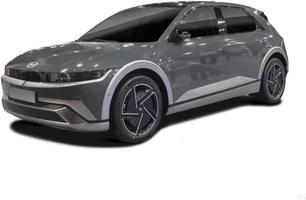
And this is one its latest examples, the pure-electric Ioniq 5 SUV in top-spec Epiq AWD trim and equipped with the N Line Option Pack as well as the tricky Digital Mirror Pack.
In this configuration it slots into the $90K price band, which means it has a lot to live up to in terms of performance, safety, driving dynamics, value and more.
So, stay with us to see if this premium five-seater is the kind of sporty EV SUV that gets your heart racing.
Sometimes, a vehicle facelift doesn’t amount to much. Maybe a nip here, a tuck there, but to be sure you’re looking at the new version, you need to check the badges.
To be honest, the revised Polestar 3 SUV is a bit of that, with very little to visually distinguish the facelift from the previous car. But underneath there are some serious upgrades which, in that oh-so-Swedish understated way, serve to make the Polestar 3 an even more tantalising prospect.
The Polestar 3 has now moved to 800-volt technology which not only allows for faster charging, it also opens up the prospect of even more performance. A new generation of lithium-ion batteries also means greater range potential.
But it’s nice to see that Polestar hasn’t limited its attention to the drivetrain; there’s now a revised anti-roll-bar system and a recalibration of the power steering assistance. Which just goes to show that even though brands like Polestar trade on being an all-electric solution, there are still some engineers in Sweden who know how the rest of a car should work.
Meantime, the medium-large SUV space is a very crowded one right now, so the question is whether the new tech – invisible as it is – is enough to keep the Polestar 3 carving out its slice of that market.
The Hyundai Ioniq 5 Epiq N-Line AWD leverages an electric powertrain’s best attributes brilliantly well.
It’s ultra smooth and comfortable with ample performance and great dynamics thanks in part to this car’s N Line spec.
Its price tag pits it against formidable competition from the German Big Three, Tesla and others. But it has what it takes in terms of quality and value to fight that battle. It’s an impressive machine.
There’s some clever design work here and some gorgeous detailing that gives the Polestar 3 a bit of an edge compared with some of its less inspired opposition. It features a truly spacious interior and it’s more than just decent to drive with, frankly, astonishing performance in 500kW Performance form. Even the entry-level Rear Motor has plenty of oomph and could be argued to be the more intelligent choice.
But the interior layout with its melange of menu-driven functions to control basic, everyday functions is annoying and does the car no favours. Not to mention it’s simply not the Scandinavian way to place form before function.
Meantime the overall performance, dynamics and accommodation of the Polestar 3 place it pretty high on the totem of electric SUVs that actually move the game forward somewhat, and that’s largely down to that 800-volt architecture that brings faster charging and better range.
It doesn’t solve all the issues of modern car making, but as a step closer to Polestar’s ultimate aim of a climate-neutral motor vehicle, it’s a move in the right direction.
Note: CarsGuide attended this event as a guest of the manufacturer with meals provided.