What's the difference?
There are really only four things you need to know about the all-new Hyundai Inster. It's small outside, yet surprisingly big inside. It's all electric. It's cute as a button. And it's as practical as a Swiss army knife.
Actually, there's one more thing. It's cheap for an EV. But it's still not that cheap, given the wave of cut-price Chinese product now on our shores.
So, can the Hyundai Inster carve itself a slice of the entry-level EV market?
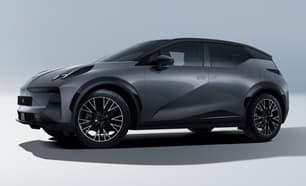
Zeekr is a new electric brand and the X small SUV is one of its first cars to come to Australia.
Owned by the Chinese carmaker Geely, which also has a big stake in Volvo, the X is designed in Sweden, built in China and now sold here.
Rivals to this little electric SUV include the Smart #1, Volvo EX30 and Xpeng G6.
The Zeekr X line-up is currently very simple - there’s the rear-wheel drive version and the all-wheel drive we tested.
The target market for the Inster isn't huge, and Hyundai knows it won't be a runaway best-seller for the brand. But those in the market for a bite-sized EV will find the Inster feels bigger, and drives better, than they might expect.
The Zeekr X all-wheel drive surprised me in a great way. Not only is this the first Zeekr I've driven, it's also one of the best small electric SUVs I've ever driven. There's so much to like - from the good price and quality design to the high level of safety and how easy it is to drive.
The words small but perfectly formed appear here, with Hyundai’s insistence on not having a traditional range-wide design identity allowing them the freedom to create something unique and pretty funky here — though I do see some shades of Suzuki Ignis in the side profile.
It does look fun though, right? With the selfie ring-light-style headlights, Tetris-style rear lights, those swollen guards and the funky alloys.
And you can dial up further with the Cross variant, which gets a tougher, more squared-off look front and back - even if you’re more chance of meeting a bunyip than an Inster on your favourite off-road track.
Inside, the cuteness continues, though some of the scratchy cabin materials definitely point to the entry-level nature of the Inster.
Still, the seat materials, both the cloth and the leather, are lovely and thoughtfully coloured, and the twin screen setup is nice, too. I love the inclusion of a host of physical buttons that control the climate, stereo and the nav.
More than interesting, the design of the Zeekr X is intriguing with styling that ranges from 'ooohhhh' when you see it from the front to 'huh?' when you catch it in side profile.
The nose design, to me anyway, looks exquisite - Porsche-SUV-like in its sporty and luxurious shape and the way the LED running lights are embedded into the bonnet is different and so special it probably makes some prestige brands a bit envious.
That side profile also looks pretty pleasing to me, until I reach that rear quarter where suddenly I feel I’m looking at panel shapes so oddly combined it’s like a puzzle with just five pieces and all of them in the wrong place.
The rear of the X looks good, but more importantly unique compared to the same templated styling many SUVs tend to safely stick to.
Zeekr and Volvo are owned by the massive Chinese car manufacturer Geely and the X is closely related to Volvo’s EX30. Once you know this you’ll see the similarities in the looks, although the less conservatively styled X is more appealing to me.
The X is also 100mm longer and all of that extra length is in the wheelbase which is 2750mm. As for the rest of the key dimensions, the overall length is 4432mm, the height is 1572mm and the width is 1836mm. So, a fairly small car.
The X’s interior is as intriguing as its exterior with the AWD version on test fitted with the no-cost option 'Mulberry & Rose' two-tone upholstery - a colour combination of maroon and off-white which you don’t see often unless it's a bespoke choice in a high-end car.
No, it’s not leather, but I don’t think this upholstery doesn't feel cheap or ‘plasticky’ as some synthetic leather interiors do.
There are high quality touches throughout, from the dotted city scape of Hangzhou where Zeekr is headquartered that glows through the door trim fabric at night to the embossed Zeekr pull tabs on the seats.
The X’s interior feels luxurious and the styling is outstanding.
The Inster stretches 3825mm long, 1610mm wide and 1575mm tall, but it rides on a 2580mm wheelbase – the later being bigger than the Hyundai Venue, and almost as big as the Kona.
It has allowed Hyundai to stretch the legroom options in the backseat, which actually gives you more space than the two bigger SUVs mentioned above, helped massively by the fact the Inster's rear pew is on rails, allowing you to slide it right back, and that it reclines a fair way, too.
I'm 175cm and I found I had more than enough leg and headroom, and with the backseat in full La-Z-Boy mode, I could sit back and relax, even on a longer journey.
It's a good thing it's four seats only, though. While the Inster feels longer than it is, it doesn't feel any wider, and even in the front seat you can feel like you're in economy class when you have a passenger on board, with both of you rubbing elbows on the central armrest.
Clever storage abounds though, with hidey-holes, handbag hooks and more dotted throughout the cabin. Opt for the roof box – and wear the efficiency penalty – and you can pop another 75kg worth of gear on the roof.
Also cool is the fact the backseats fold completely flat in the entry-level Inster, upping the storage possibilities. And in the top-spec Cross, the front seats fold down, too, allowing for fairly long items to be stowed. Though why you would need the driver's seat to fold flat is a bit of a mystery, unless you're looking to turn your Inster into an immovable storage container.
Apparently in Korea you can option a mattress that slides over all four seats, but I can't see that taking off here.
The official storage numbers are 280L and 1059L, and the small boot is helped along a little by underfloor storage where you can pop your charging stuff.
Small cars don’t generally have the practicality of larger ones because of the obvious space limitations but the Zeekr X has a long wheelbase for the class (longer than the Mitsubishi Outlander’s) making it roomy compared to rivals.
Second row head- and legroom is good and even at 189cm tall I can sit behind my driving position. Back there are two cupholders in the fold down centre armrest, directional air vents in the pillars and bottle holders in the doors.
Back seat downsides? No USB ports and the way the rear door sill kicks up means my two children (both under 10 years old) can’t see out of their windows well.
Up front space is good with plenty of elbow and foot room. Storage is good, too, with big door pockets, a couple of cupholders, a deep centre console bin and even a hook for a handbag or to hang a takeaway bag. There are USB ports up front and a wireless phone charger, too.
Front seat downsides? No glove box, and while we're at it the panoramic glass roof doesn’t have a sun shade and even though it is tinted I found that over summer in Australia the car heated up quickly and I’ve even had to wear a hat while driving to keep the sun off my head and face.
The Zeekr X has a decent-for-the-class 362L rear boot capacity and a tiny 21L front boot which is where the charging cable lives.
The Inster is available as an entry-level model, which comes as a Standard Range for $39,000 before on-road costs, or an Extended Range for $42,500. It then steps up to the Inster Cross, which is $45,000.
For perspective, the Geely EX5 is considerably bigger, and will travel further on a charge, for $40,990 before on-road costs. Then there's the Chery E5, which is now $39,990 plus on-road costs.
Anyway, the Inster nabs 15-inch wheels, dual 10.25-inch screens (one for the multimedia, another for driving info), a six-speaker stereo, Apple CarPlay and Android Auto, cloth seats, two V2L connectors, a wireless charging pad and rain-sensing wipers. The equipment list for the Extended Range is the same, but it rides on 17-inch alloys.
Stepping up to the Inster Cross scores you a unique and off-road-inspired look, but also leather trim inside, a unique design for its 17-inch alloys, heating and ventilation for the front seats and heating for the steering wheel, some extra safety kit and practicality perks, and the option of a sunroof or an exterior roof storage box, the latter of which seriously eats into the driving range.
The Zeekr X tested is the top-of-the-range all-wheel drive which lists for $64,900. The only other variant in the X model line-up is the rear-wheel drive which lists for $56,900.
Sure, $65K might seem a lot for what is a small SUV, but the X AWD is reasonably priced compared to rivals like the tinier Smart #1 for $58,900, its Volvo EX30 Performance Ultra twin for $69,990 and the Xpeng Long Range for $59,800.
We’ll get to the technical specs soon, but the all-wheel drive variant offers more than just AWD, there’s also more standard features than the RWD.
The RWD X comes with two-tone body colour with a black roof, a panoramic glass roof, a six-way power driver’s seat, an 8.8-inch digital instrument cluster and a 14.6-inch media screen.
There’s also Apple CarPlay and Android Auto, a seven-speaker audio system, dual-zone climate control and wireless phone charging.
The AWD has all of the RWD’s features and adds 20-inch alloy wheels, a 24.3-inch head-up display, an intelligent B-pillar which provides information on charging, a power adjustable front passenger seat, heated and ventilated front seats, a heated steering wheel, a 13-speaker Yamaha stereo and LED ambient lighting.
The RWD has just one motor while the AWD has two and more power, which we’ll cover soon.
The Hyundai Inster Standard Range kicks off power proceedings, with a single front-mounted electric motor producing 71kW and 147Nm.
Next is the Extended Range, which shares its outputs with the Inster Cross. Here, the front-mounted motor’s outputs have been ticked up slightly, now producing 84kW and 147Nm.
Those aren’t big numbers, but then neither does either Inster feel particularly slow or underpowered.
On test is the all-wheel drive version of the Zeekr X which has two motors while the rear-wheel drive has just one.
Two motors brings the AWD variant more power and torque than the RWD. A lot more. Zeekr’s specs state the combined output for the AWD is 315kW and 543Nm, while the RWD has 200kW and 343Nm.
Good traction and plenty of grunt means the AWD can accelerate from 0-100km/h in 3.8 seconds, while the RWD gets there in a respectable time of 5.6 seconds.
Electric cars are known for their rapid acceleration but just to put those numbers in context, a new base model Porsche 911 ($280K) has 290kW and 450Nm and does 0-100km/h in 4.1 seconds.
Standard Range cars get a 42kWh lithium-ion battery, producing a driving range of 327km. The Extended Range and the Cross get a bigger 49kWh battery, increasing the range to 360kms. Now, that roof box. It does look cool, but you’re going to really need to carry stuff to choose that option, given it increases energy consumption by 25 per cent, reducing the Cross’s range to just 293km.
When it comes to charging, the Inster is set up for 120kW DC fast charging, or 10.5kW AC charging - provided you have that much power available at home, as most wall boxes are more like 7.1kW.
The Zeekr X all-wheel drive has a range of up to 470km (WLTP), but if anything under 500km already has you twitching with anxiety, the rear-wheel drive's 540km range might alleviate some of that.
We found the range of the AWD to be fine for the city, but also learnt that we chewed through a lot of energy at an average of 18.4kWh/100km according to the trip computer.
Zeekr says after a combination of open and urban roads you’ll likely use 15.5kWh/100km, but you’d need to be a smooth driver that’s not tempted to test the acceleration at every traffic light and drain the battery.
Speaking of which, the Zeekr X has a 66kWh battery with a DC charging capacity of 150kW and at that rate can be charged from 10-80 percent in about 30 minutes.
Honestly, the impact electrification has had on vehicles in this class is staggering.
It wasn't so long ago that these micro cars were fitted with underwhelming petrol engines, four- or five-speed gearboxes and all the noise-deadening technology of a tin of beans.
As a result, they were cute, but painful. It always felt like you had to wring their neck to get the most out of them, and when you did, they were loud, buzzy and annoying.
But the Inster is none of those things. While not ludicrously powerful, the electric propulsion offered, and the nature of the way it's produced, feels ample in the little Hyundai, with the acceleration smooth, silent and easy,
It's also just generally quiet. Hyundai says it has double-sealed the doors, used thicker glass and fitted full underbody coverings to reduce the NVH - or noise, vibration, harshness - levels, and all of that, combined with the peace and quiet of an electric motor, have created a mostly blissful cabin experience.
The ride and handling hasn't been through the full Hyundai Australia ride and handling calibration of old. Instead, it's undergone the brand's more modern approach, which is to take the best componentry from what's available overseas and then build the Aussie-spec cars from there.
Either way, it all works pretty well here. Only really big bumps clang into the cabin, with the Inster otherwise riding well over all of the road surfaces we encountered.
The point, I guess, is that it's a drive experience stuffed full of happy surprises. The ride, the acceleration and the refinement are all well up on what you might expect from a city car.
In short, the Zeekr X is outstanding to drive for the class - it’s composed, comfortable as well as easy and fun to pilot.
Everything feels good - from the steering and the pedals to the seats and visibility.
The tech works well - the head-up display is large and shows directions and speed clearly, and the shifter being on the steering column makes three-point turns and just getting out of car parking spaces easy.
The acceleration is ridiculously good, but that novelty wears off after you’ve shown everybody in your family, which is why it’s lucky it's not the only thing this small SUV does really well.
While it’s not as spacious as the other large SUV I was testing at the time - the Zeekr X’s short length means it was the car I picked if I needed to go somewhere close where I knew parking spaces would be a bit squeezy.
The Hyundai Inster is yet to be crash tested, but does arrive with a solid safety offering including seven airbags, as well as active equipment like a auto emergency braking (AEB), rear cross-traffic avoidance, lane keep assist, and active cruise control.
The Cross ups the equipment a little more, including a surround-view monitor, blind-spot monitoring and front parking sensors.
The Zeekr X scored the maximum five-star ANCAP rating under the stringent 2024 criteria with a high 91 per cent for adult occupant protection and an impressive 87 per cent for child occupant protection.
The advanced safety tech is also impressive with AEB that not only detect pedestrians, cyclists and other cars on a straight road but also while turning at junctions and T intersections.
There’s lane keeping assistance, blind-spot warning, front and rear cross-traffic alert and airbags covering the front and rear occupants including a front centre airbag.
I used the Zeekr X to drive my own kids around and for child seats there are three top tether anchor points and two ISOFIX mounts in the second row.
The Inster delivers super long service intervals, requiring a trip to the service centre every two years or 30,000kms, but each service is priced at $655. A Toyota Yaris Cross, for perspective, will see you visit the service centre twice as often, but each visit will only cost you $255, or $510 every two years.
The Hyundai warranty is five years/unlimited kilometres, while the high-voltage battery is covered for eight years.
The X is covered by Zeekr’s five-year, unlimited-kilometre warranty while the drive battery has an eight-year, 160,000km warranty. Roadside assistance and connected services are also offered for five years.
Servicing is recommended every two years or 40,000km.
Service pricing is $690 at two years/40,000km and $1420 at the four-year/80,000km mark, which covers the warranty period. For reference, the same $690/$1420 sequence is repeated at the six-year/120,000km and eight-year 160,000km intervals.