What's the difference?
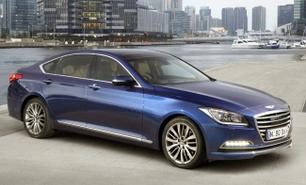
Anybody who doubts that Hyundai is gunning for the number one in the world has rocks in their head. Big heavy ones. Korean companies do not settle for anything less than number one. The second-generation Genesis (our first taste here in the Antipodes as the gen-one had its steering wheel on the wrong side) is proof.
What's different about Hyundai's unstoppable rise is the way they're going about it. They've always done their own thing in Korea, reinventing themselves time and again when they strayed off the beaten path.
The Genesis is a gamble for a Korean company in foreign markets whose default setting for luxury is marked, Britain or Germany. If Hyundai gets the Genesis wrong there will be howls of derision, or at best patronising pats on the back - "Nice try, you'll get there one day". But if they get it right...
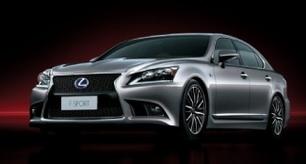
Almost 30 years after Lexus launched its original LS flagship sedan, the fifth generation of the car has arrived in Australia in what appears to be the brand’s never-ending battle to hunt down and beat Mercedes-Benz, BMW and Audi at their own game.
In some markets it looks as though Lexus is making headway. In the United States last year Mercedes-Benz was the best-selling luxury brand, followed by BMW and then Lexus. To give you even more insight, 50 per cent of all Lexus sales globally are in the US.
The story is different in Australia, with Lexus hardly a threat to the big three Germans, selling about a third less each month.
The Lexus LS is the Japanese prestige brand’s flagship and comes with a price that nudges up against formidable rivals. There’s the Mercedes-Benz S-Class, BMW 7 Series and Audi’s A8. Only the best cars from a few of the best brands in the world – no pressure, Lexus.
This may even be a reason to buy one – in that it’s not one of the traditional three. You could see Lexus as the popular underdog that in some ways does a better job than the usual suspects. A people’s favourite perhaps?
Just look at how often it’s mentioned in songs. According to lyrics.com.au the word Lexus has been used in 873 songs. Meanwhile Mercedes Benz appears in 500, Audi in 402 and BMW in 307.
With all this in mind we headed to the Australian launch to drive the LS 500 and its hybrid twin the 500h.
The Genesis is not quite a match for cars twice its price but it makes you think what's possible. It doesn't have the dynamic brilliance of a BMW or the self-assured faultless execution of a Mercedes. Lexus ought to be worried, though - why would you have an LS when you could have this? The only answer is 'badge'.
The Genesis is an epoch-making car for the Korean manufacturer. As the company has got better, there are fewer excuses for overlooking it. While the Genesis is pitched into a shrinking market, it's not really meant for the average i30 buyer to buy, but to see.
It's bristling with tech and is not only a halo car but a shot across the bows of both Lexus and the Germans. Attached to that shot is a note: "We're coming for you." In other words, Hyundai got it right.
The Lexus LS 500 and 500h are both exceptional cars. The ‘obnoxious’ styling especially to the grille makes the offerings from BMW, Benz and Audi look bland and overly corporate inside and out. It’s really in the dynamics department that the LS falls short of its rivals and only the LS 500 is enjoyable if you like to drive with a degree of conviction.
Both the LS500 and 500h, though, have wonderfully comfortable rides and this together with those sumptuous interiors makes these the perfect place to be if you’re in the back being swiftly and quietly taken to you next meeting.
For me the sweet-spot pick would be the LS 500 F Sport for its value and dynamic ability.