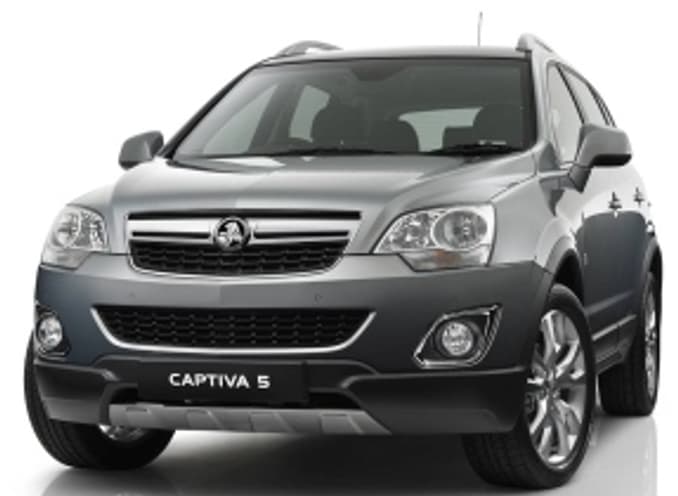
The 2015 Holden Captiva range of configurations is currently priced from $3,000.
Carsguide Contributing Journalist David Morley had this to say at the time: The list of known faults with the Captiva makes it a bit of a lottery, especially if it’s travelled a lot of kilometres.
You can read the full review here.
The 2015 Holden Captiva carries a braked towing capacity of up to 1500 Kg, but check to ensure this applies to the configuration you're considering.
The Holden Captiva is also known as Chevrolet Captiva, Opel Antara in markets outside Australia.
It’s certainly strange behaviour and your theory that because it works perfectly some of the time, it’s probably not terminal is a decent one. If something internal was broken or worn out, the transmission wouldn’t work at all. Which leads any mechanic to suspect you have either a gear selection problem or an electrical glitch.
Scan the car electronically to see if any fault codes are thrown up. But also check for things like bad earths or blown fuses and relays. You can’t rule out a major internal failure until you get inside the gearbox itself, but starting with these simple things can help eliminate other possibilities. You may find the ECU (the computer than controls the driveline) is the culprit, and is having random melt-downs.
Show more
Technically, the Captiva operates in all-wheel-drive all the time. But there’s a centre differential that apportions the drive between the front and rear axles to allow individual wheels to rotate at different speeds. If that centre coupling isn’t working properly it could cause the noise you’re hearing, possibly from the tyres that are skidding or skipping as they turn, or mechanical noises caused by what’s known as 'axle wind up'.
The Captiva normally operates much as a front-wheel drive vehicle and only engages the rear axle when the computer detects any wheel slip or loss of traction.
Show more
Let’s get something straight right from the off: The Holden Calais and Holden Captiva are not close family members. While the Calais was an Australian-engineered and built car, the Captiva is a rebadged Daewoo and not a very good one at that. So don’t be tricked into thinking that because they both have a Holden badge and a V6 engine, that they’re peas from a pod.
The reality is the Captiva has an absolutely dreadful reputation in the trade for poor build quality and sketchy reliability. Most mechanics wouldn’t travel 500 metres to look at one, let alone 500 kilometres. I’d take a 231,000km Calais over any Captiva, old or new, any day.
Holden actually sold a lot of Captivas back in the day, mainly on price alone. But many who bought them then stood and watched as they things fell apart and soon began to cost plenty in repair bills. Doubtless there will be some out there who own and love their Captiva, but the reality is that these cars are best left well alone.
Show more
| Holden Captiva Model | Body Type | Front Tyre Size | Front Rim | Rear Rim |
|---|---|---|---|---|
|
7 LT
|
Body Type: SUV | Front Tyre Size: 235x55 R18 | Front Rim: 7x18 in |
Rear Rim:
7x18 in
|
|
7 Ltz (4X4)
|
Body Type: SUV | Front Tyre Size: 235x50 R19 | Front Rim: 7x19 in |
Rear Rim:
7x19 in
|
|
5 Lt (Fwd)
|
Body Type: SUV | Front Tyre Size: 235x65 R17 | Front Rim: 7x17 in |
Rear Rim:
7x17 in
|
|
5 LTZ
|
Body Type: SUV | Front Tyre Size: 235x50 R19 | Front Rim: 7x19 in |
Rear Rim:
7x19 in
|
The Holden Captiva 2015 prices range from $6,600 for the basic trim level SUV 5 Lt (Fwd) to $12,540 for the top of the range SUV 5 Ltz (4X4).