What's the difference?
GWM’s Tank 300 struck a chord with Australian buyers when it launched in 2023. The rugged, boxy design, serious off-roading ability and unbeatable value for money - especially compared with similar models like the Jeep Wrangler - won it a number of new fans.
But something was missing. With an uninspiring petrol engine and a patchy hybrid powertrain the only options, the Tank 300 was sorely missing a diesel.
GWM itself says about 75 per cent of models in the off-road-focused large and upper-large SUV segments are made up of diesel-powered SUVs, so it was missing out on a chunk of sales.
Thanks to some serious nudging from GWM Australia and New Zealand, the Chinese parent company saw the potential and have added a diesel engine to the mix. This is the same diesel unit found in the GWM Cannon and Cannon Alpha utes.
Is the diesel now the pick of the Tank 300 range? Or should you look at another oil-burning 4x4?
A number of established small cars are becoming more expensive and less popular. The Toyota Yaris, Mazda2 and Suzuki Swift were once the go-to first car, but now start at around $25,000.
This repositioning was great for MG and its sub-$20,000 MG3, which has spent much of the last few years as Australia's most popular light car. It’s hard to deny a low price will open many wallets.
But now in its new generation, the MG3 is thousands of dollars more expensive than before, starting in the mid-$20K range and headed even further up with a new hybrid drivetrain option. We jump in the base petrol Excite to find out if the value is still there for this British-branded, Chinese-built hatchback.
The diesel is now the pick of the Tank 300 range. It’s the best fit for this vehicle and offers greater driver engagement than the petrol or hybrid.
It also has genuine off-road chops while still managing to suit family life.
While it could benefit from further refinements to on-road behaviour, cabin noise and the ADAS systems, none of these are deal breakers.
The fact that it is priced so keenly against some excellent competitors and is stacked with standard gear adds to the Tank 300’s appeal.
Note: CarsGuide attended this event as a guest of the manufacturer, with meals provided.
The MG3 still makes a strong argument for a low-cost, low-fuss option just like the models it now beats on price (Yaris, Mazda2, etc) used to.
While it also falls short in some areas like dynamics when pushed, the improvements to interior tech and comfort mean the MG3 should be considered if you're looking for a city runabout.
However, with the MG3’s price jump, rivals from Japanese and Korean brands are closer in cost than they were for the sub-$20K first-gen MG3, and their ability to handle Australia’s conditions outside the city mean they’ll prove a more useful long-term companion for many.
The MG3 nails its brief as a convincing option for first-car buyers or as a second runabout when there’s another option for long trips. It has taken a big step up from the ‘budget-friendly’ vibe of the original.
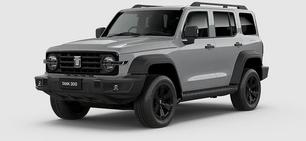
The only visible difference between the diesel and the petrol or hybrid 300s is a 2.4T badge. So you get the same boxy exterior as before.
It’s somewhat derivative and gives more than a nod to Jeep, but the design has intent - it looks capable off-road and for most people that’s enough. Luckily it is capable off-road. More on that later.
Inside the upright, shelf-like dash is appealing. I like that everything is nicely integrated, like the dual 12.3-inch screens which flow nicely into one another.
The big T-shaped three-spoke steering wheel looks cool and the aeronautical air vents are clearly inspired by Mercedes-Benz.
The chunky metal-look plastic glove box cover adds extra visual flair and the stitching throughout elevates the cabin further.
However, the futuristic looking gear shifter is chunky, takes up too much space and is unnecessary.
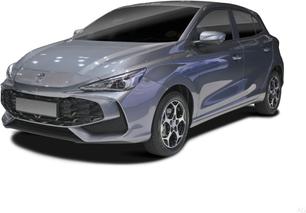
Following the new design language pioneered here by the MG5 sedan and MG4 electric hatch, the MG3 looks like it’s trying for a sportier vibe than its predecessor, and maybe even a hint of European flair.
A grinning front grille and pointed set of headlights are followed around the side by a couple of body creases that give the hatchback a sweeping look, an attempt perhaps to seem longer than it is.
It doesn’t look like any of its rivals, unlike the MG5 which is easily mistaken for a small Mercedes CLA at glance.
Here on our Dover White test car, some angles are unflattering (it's giving 'hire car'), though the model’s available Diamond Red or Brighton Blue are fairly distinctive. Yes, some of the colours reference the brand’s UK heritage, despite being built in China.
Inside, the cabin benefits from a fairly tidy layout, with some genuinely thoughtful attempts at making the otherwise budget-focused model feel a little nice. A cross-hatch design through the dash mirrors, the seat stitching and the steering wheel and its buttons are nicely angular.
Up front the Tank 300 offers a commanding view of the road and it’s easy to find your perfect driving position thanks to the power-adjustable seats.
Those seats have good side bolstering but could do with a little extra cushioning for the thighs. The Nappa leather-appointed seats in the Ultra look and feel lovely.
Storage is average for the segment with room for larger bottles and additional flat items in the door pockets, and a well-sized central bin that also houses two cupholders, although they sit low in the cavity and two coffees sit awkwardly together.
The Tank has one USB-C port for charging only but another USB-A port up front for connectivity. You shouldn’t need that given Apple CarPlay and Android Auto is wireless.
Keen off-roaders will have fun with the extensive Tank Expert Mode in the multimedia screen, which allows you to individualise your 4WD experience.
Beyond that the screen is neatly laid out, responsive and easy to use. GWM has come a long way when it comes to in-car tech. The icons on the digital instrument cluster, however, are still too small.
There’s ample leg room in the rear, with space between my knees (I am 184cm tall) and the rear of the front seat, and enough toe room. It doesn’t feel enormously spacious across the rear row but three kids should be comfy. Headroom is enhanced by a scalloped section of the roof specifically for rear-seat passengers, but it doesn’t leave a huge amount of space for taller people.
The rear seat bench is flat but the backrests have some support and overall the seats back there are comfortable.
You’ll find lower rear-seat air vents, map pockets, a fold-down central arm rest with two cupholders, room for small bottles in the doors and two USB-A ports.
The boot can take 400 litres with all seats up and 1635L with the rear seats folded. That figure is measured from the floor to the top of the rear seats.
Jeep says the Wrangler has 898L capacity with all seats in place but that is measured from the floor to the roofline.
There is no under-floor storage in the 300’s boot and the full-size spare wheel is housed in traditional 4x4 fashion on the tailgate.
That tidy design inside helps when it comes to making use of the space, as well as offering some generous storage spaces.
For starters, while the clean layout means the screen looks like the main point of access for much of the car’s function, there’s an all-important shortcut button for the climate control which means you don't waste time navigating to the vent and temperature controls.
The only issue is that while my phone was connected to the system for Android Auto, I had to navigate away from the mirroring screen back to the MG3’s home screen before being able to shortcut to the climate settings.
Demister and volume control buttons are also present, but the screen itself has an easy-to-navigate menu.
The steering wheel controls are similarly straightforward and clearly labelled, while the driver display is tidy and shows important information clearly.
While the steering wheel isn’t telescopically adjustable, it's easy to find a comfortable seating position thanks to the adjustability of the seats. The material on the seats doesn't feel rough or cheap.
Behind that, there is enough space for my 178cm frame in the second row for the most part, but headroom isn’t incredibly generous.
The rear pew is a single unit, rather than a 60/40 split, so the whole backrest folds down if you need to load anything long through the boot. There’s not even an armrest or little ski hatch for long, thin items.
Its 293-litre boot isn’t small, and there’s a space-saver spare tyre in both petrol variants, but the hybrids are stuck with repair kits.
One of the key selling points across GWM’s entire range is value for money, and the Tank 300 has always had that in spades.
As with the petrol and hybrid 300, the diesel is offered in two well-specified model grades - Lux and Ultra.
At $47,990 drive-away, the Lux diesel is $2000 more than the Lux petrol, but $3000 cheaper than the Lux hybrid.
The Ultra diesel, at $51,990, is $1000 pricier than the petrol equivalent and $5000 more affordable than the hybrid Ultra.
The GWM Tank 300 diesel Lux is also more affordable than equivalent grades of a number of ladder-frame 4x4 SUV rivals like the Isuzu MU-X, Toyota Fortuner, SsangYong Rexton and the Ford Everest.
It’s also significantly more affordable than the Jeep Wrangler, with the Tank 300 Lux costing about $30,000 less than a Wrangler Unlimited Sport S.
Note however that many of those models - except the Wrangler - have the option of seven seats, whereas the Tank is strictly a five-seat proposition. If you want a third row, check out GWM’s Tank 500.
There are cheaper off-road large SUVs out there – the LDV D90 and Mahindra Scorpio. But the Tank 300 is a more refined and higher-quality offering than those models.
Standard gear in the Lux includes 17-inch alloy wheels, synthetic leather seats and steering wheel, power-adjustable front seats, dual-zone climate control, seven-colour ambient lighting, keyless entry and start, a sunroof, power-folding mirrors, paddle-shifters, a nine-speaker audio system with digital radio, built-in sat-nav, and a pair of 12.3 inch digital displays with wireless Apple CarPlay and Android Auto.
It also gets roof rails, side steps, privacy glass, all-terrain mode selection and a rear diff lock.
The Ultra upgrades to 18-inch wheels, Nappa leather-accented seats, heated and ventilated front seats, a heated steering wheel, more adjustment for the front seats and a memory setting, a massage function for the driver’s seat, a wireless phone charger, 64 colours in the ambient lighting suite, and a nine-speaker premium audio system.
There is nothing obvious missing from the standard features list, but I don’t know why a wireless device charger is limited to the top grade.
Even though it’s now more expensive with its $23,990 before on-roads price, it’s hard to deny the petrol-only MG3 Excite is a compelling offering when it comes to inexpensive runabouts.
Not only has the price been bumped up, but so has the apparent interior quality and features list.
A new 13.25-inch multimedia touchscreen is paired with a 7.0-inch driver display and both look pretty slick for the price point and operate well.
Apple CarPlay and Android Auto are both available, but are wired only and can’t be accessed with a Bluetooth connection, while a six-speaker sound system handles entertainment duties.
In terms of seating and material, the Excite gets cloth pews with some contrast stitching.
On the outside, folding mirrors and a set of 16-inch alloy wheels join the new MG3’s design, while this base model Excite is left with halogen headlights like it’s 2015.
The Essence scores a set of LED units and is otherwise distinguishable by its sunroof, though it shares the same wheels as our base car, so it won’t feel like you’re missing out on heaps.
The big news with the Tank 300 is, of course, the new engine.
It is a 2.4-litre four-cylinder turbocharged diesel engine borrowed from the GWM Cannon and Cannon Alpha utes.
It pumps out 135kW of power and 480Nm of torque. That’s more torque than an MU-X but not as much as an Everest.
It is paired with a nine-speed automatic transmission and has part-time four-wheel drive.
If you need to tow, the diesel has a 3000kg towing capacity, which is 500kg more than the hybrid and petrol. It can’t beat the 3.5-tonne towing capacity of the MU-X and the Everest.
Payload has also increased compared with the petrol and hybrid, up from 400kg to 600kg.
GWM says it conducted extensive testing internationally but also in Australia to improve towing performance. There are approximately 20 different parts compared with the other powertrain variants to get the best out of towing in the diesel.
A rear diff lock is standard on both grades while the Ultra gains a front diff lock.
On paper, the MG3’s 1.5-litre four-cylinder engine is fairly underwhelming with its 81kW (peaking at 6000rpm) and 142Nm (at 4500rpm).
But these figures, including the engine size and even peak RPMs are not far off the likes of the Mazda2, which is a fairly peppy and fun car despite its lack of grunt.
Keen drivers will, however, be disappointed to hear the MG3 drives the front wheels via a continuously variable transmission (CVT) rather than a traditional torque-converter auto, taking much of the pep out of its power unit.
You can expect to hit 100km/h in a bit over 10 seconds.
The diesel Tank 300 consumes 7.8 litres of fuel per 100 kilometres on the official combined cycle, which is better than the 9.5L figure for the petrol and the 8.4L quoted for the hybrid.
That figure also sits somewhere between a 2.0-litre bi-turbo Everest (7.1L/100km) and a 3.0L MU-X (8.3L/100km).
It has a 75-litre fuel tank and GWM claims an NEDC range of about 950 kilometres. GWM says the Euro 5 engine does not require Adblue.
Given the restrictions of a media launch, we did not obtain real-world fuel use figures.
MG claims the MG3 uses just 6.0 litres of 91 RON petrol every 100km on the combined fuel cycle, so with its 45-litre tank you can hypothetically bank on a 750km range.
Of course, that might be achievable in lab conditions, but on test we found the trip computer’s estimates looking closer to 500km on a tank for the kind of urban driving it was undertaking with us.
On a dynamic test drive route, the trip computer settled at a displayed consumption figure of 7.7L/100km, but stop-start driving was not great for efficiency, as you'd expect.
I last drove a Tank 300 in late 2023 and it was the hybrid variant. While the hybrid has some positives, its driving characteristics were not high on that list.
It had an erratic throttle response, hesitation on take-off and it felt underdone.
In contrast, this new diesel variant just feels like the right fit for this SUV.
There is slight lag accelerating from a standing start, but the powertrain is torquey and there’s plenty on tap when overtaking or just increasing speed when already on the go. GWM has not provided a 0-100km/h time.
It is clear you’re in a diesel as soon as you turn on the ignition - it has that typical diesel rattle, but it is not as unsophisticated as some oil-burners I have driven.
The cabin could do with some extra insulation with wind and tyre noise detected, but it’s hardly a deal breaker.
Given the vehicle’s size, heft (nearly 2.3-tonne kerb weight) and the fact it’s shaped like a brick, the 300 holds its nerve on winding stretches of road with only a little body roll. In saying that, best not to treat it like a Mini Cooper on your favourite twisty road.
Ride quality is a bit mixed. We only drove the Ultra on 18-inch wheels and while it manages to soak up bumps, the ride is jittery, and that’s even more evident on uneven road surfaces.
Steering is heavily weighted and a little vague, but fine for a big off-roader, and the brakes need to be pushed hard.
One quirk is the indicator - it appears to be a one-touch setup for indicating to change lanes, but then the indicator stays on. I tried several times to test this, even flicking it to the opposite side to turn it off and it was very stubborn.
The good news is it appears GWM has toned down the awful indicator sound of its earlier models and is now much more subtle.
So on-road the Tank 300 is more than competent, and a much nicer vehicle to drive in an urban setting than a Jeep Wrangler, for example.
We also drove it briefly on an off-road trail, and in low range the Tank 300 proved that it can do what it says on the box.
I’m no off-roading expert and there are much more challenging trails out there, but I had confidence that the Tank 300 would not let me down traversing the many chunky rocks, massive holes and fallen tree limbs.
The higher quality look and feel of the new MG3 carries through to its day-to-day driving. Some of the car’s Chinese compatriots seem to fall down when it comes to the on-road part, which for some is the most important part of a car.
But for a small city car the MG3 is very user friendly, with light and direct steering, good visibility, and just enough power and torque to not feel like everyone’s getting the green light a couple of seconds earlier than you.
It’s comfortable at urban speeds when it comes to the suspension, and doesn't get rattled too much in the front end by tram tracks or other road imperfections.
In narrow streets, three-point turns aren’t a hassle and the car’s size means it’s easy to reverse parallel park, although the reversing camera takes a second to appear when using phone mirroring.
On the highway, however, and when it comes to high-speed cornering, the MG3 can feel a little uneasy.
The road noise becomes more and more obvious. Driving on well-maintained metro freeways at around 80km/h or above produces unpleasant noise, and a during a particularly breezy week the car felt susceptible to swaying in high wind.
Its power delivery starts to feel lacking out of town, too, and taking corners on fast back roads means plenty of slowing down to avoid the front-end sliding or the feeling of the MG3 leaning unsettlingly around corners.
If you’re considering the MG3 but you need to head out of town regularly, take a proper long test drive before opening your wallet.
But if you just need it as an urban runabout, the MG3 does a fine job.
ANCAP awarded the Tank 300 a five-star crash safety rating from testing done in 2022, scoring highly across all four of the major test categories.
GWM says it is waiting to hear from ANCAP but expects the diesel to be covered by the same rating.
As well as seven airbags including a front centre bag, the Tank 300 has a long list of safety gear covering both the Lux and Ultra.
There’s a suite of collision mitigation systems that includes auto emergency braking (AEB), lane departure warning, lane-keep assist, emergency lane keep, lane centring, front and rear collision warning, front and rear cross-traffic alert and lane change assist.
It also has driver fatigue monitoring, a rear seat child monitor, door opening warning, adaptive cruise, traffic sign recognition and hill-descent control.
I noted this in my recent GWM Haval H6 GT PHEV review, but GWM has made consistent tweaks to improve its advanced driver-assist systems (ADAS) and as a result they are less intrusive than they were when the Tank 300 launched in 2023.
There is still the occasional tugging of the wheel but it’s much less of a tug-of-war than it once was.
For the first 45 minutes of our test drive there was an annoying beep every 10 seconds that my co-driver and I could not identify. There was no icon on the driver display to indicate that it was a lane departure warning or speed limit alert, but eventually it just stopped. We still have no idea what it was but it was, thankfully, not present in the vehicle we drove in the second half of the launch drive.
ANCAP hasn’t tested the MG3 yet, so there’s no crash safety information available. It’s worth noting ANCAP gave the MG5 a zero star score for its lack of active safety equipment, but the MG3 comes with more under its belt than its sedan stablemate.
Six airbags, two front, two side and two curtain, are joined by adaptive cruise control, blind spot detection, rear cross-traffic assist, forward collision warning, lane departure warning, lane keeping assist and speed limit assist.
None of these systems were intrusive on test, though lane-keep assist feels like it could do with some more fine tuning.
GWM covers the Tank 300 with its seven-year/unlimited-kilometre new-vehicle warranty, which is an impressive offer.
You are covered for seven years of roadside assist and the Tank is offered with a seven-year capped-price servicing program.
GWM is yet to confirm the Tank 300 diesel’s servicing offer (including pricing), but expect a service schedule similar to the Cannon ute with the same powertrain.
That means the first service might be required at 5000km or six months and beyond that it will need a service every 12 months or 10,000km, whichever occurs first.
MG has a 10-year/250,000km warranty which is unmatched in the small-car market.
Servicing is scheduled at every 10,000km or 12-month intervals, with the first seven services averaging out at a fairly hefty $360 - the cheapest being $234 and the priciest $536.