What's the difference?
If you're in the market for a premium-style four-wheel drive wagon with eight seats and a petrol V8 engine and you live in Australia, your choices have been rather limited. You'd be looking at something like the Nissan Patrol or the Land Rover Defender 130.
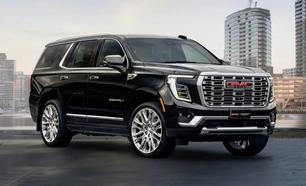
Well, that has now changed as General Motors Specialty Vehicles (GMSV) is importing the GMC Yukon Denali to Australia. This top-of-the-range Yukon arrives here as a left-hand drive vehicle and is converted to right-hand drive at a facility in Victoria to suit our market.
The Denali has a price tag just under $175,000, though, and that makes it a lot more expensive than most vehicles that could be considered rivals in the Aussie market. Is it worth it?
Read on.
Everything you need to know about the Mercedes-AMG G 63's personality pokes out from underneath the polished alloy steps running down each of its flanks. Side pipes… no one does side pipes.
A colleague was pulled over in a G 63 because the cops thought the '60s muscle car-style exhaust was after-market and illegal. But it's not, and it's brilliant.
Launched globally in early 2018, this brutal take on the second-generation Mercedes-Benz G-Class might look the same as the G 63 it replaces, but under the skin it's a whole new ballgame.
The first-gen was like grandpa's axe, regularly updated but underneath it all the same basic framework. This is a whole new axe, including a fresh drivetrain, suspension set-up and interior treatment.
The 2025 GMC Yukon Denali is a big, comfortable, eight-seat 4WD with few rivals in the Aussie market. However, while it may occupy its own niche, it doesn't offer enough in terms of premium look and feel and towing capacity over what could be considered its rivals – and it all comes back to that price tag.
While it lacks a competitive warranty and its price puts it way out of reach of a lot of 4WD buyers, if you are in the market for a big premium-style wagon with a V8 and eight seats – and the Nissan Patrol and Land Rover Defender 130 aren’t your cup of tea – then the Yukon Denali just might be the right choice for you.
But when all is said and done, for the price of the Denali, you could buy two Nissan Patrols – maybe not brand-new ones – and a camper trailer and a couple of cartons of beer.
The Mercedes-AMG G 63 isn't for shrinking violets. It's bold, fast, and loud, and in second-generation form massively improved dynamically and technically. It's a lot of money, but there's a lot to love, and here's hoping it stays around for decades to come.
The 2025 GMC Yukon Denali is 5337mm long (with a 3071mm wheelbase), 2378mm wide, 1943mm high and has a kerb weight of 2813kg.
Suffice it to say, it’s big.
The signature Denali grille – with LED headlights and chrome accents – is the size of a house and it’s eye-catching.
In terms of design, the rest of the Denali is standard SUV, but it's so massive it can't help but have plenty of presence on the road.
This 4WD has 24-inch rims, which are not suited to off-roading at all, but I’ll get to that later.
The Denali’s dual exhaust system, with polished stainless-steel tips, adds to the street-cool aesthetic.
The rest of the Denali exterior works – but it’s an in-your-face kind of success.
Inside, the space is cavernous and with leather upholstery, wood-look trim and soft-touch surfaces you’d expect it to feel like a plush, well-appointed cabin. But it doesn’t quite hit the mark.
Sure, all three rows of seats offer enough in terms of comfort and amenities but, for a $175,000 vehicle, the cabin lacks a distinctive premium feel, as you'd assume it should in a vehicle at this price point. That's a bit of a disappointment.
The original (W460) G-Glass, then known as the G-Wagen (or Geländewagen for cross-country vehicle), was launched in 1979 as an ultra-capable off-roader, soon favoured by armies the world over. Arriving here in 1982, its distinctive, slab-sided form remained unchanged over the best part of four decades.
At close to 4.8m nose-to-tail, more than 1.8m across, and a bit over 1.9m tall, the G 63 is now longer (+110mm), wider (+106mm), and fractionally lower overall (-13mm), but still pulls off a convincing impersonation of a bread box.
Merc-AMG confidently quotes a drag coefficient (Cd) of 0.55 for the G 63, which isn't as bad as a brick (around 2.0… I Googled it) although it is in the same league as a heavy truck.
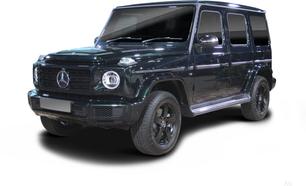
But it's the car's unique, upright stance, complete with pumped wheelarches and old-school flat glass, that sets it apart and draws people in. Looking more like a take-no-prisoners, functional device than a luxury cruiser, I can assure you it attracts as many admiring looks and comments as a low-flying supercar wedge.
The new-gen G 63 features AMG's vertically slatted 'Panamericana' grille, and our test example was fitted with the optional 'Night Package' ($5900) adding a range of dark exterior details including tinted indicator lenses, dark tinted glass, black exterior mirror shells and spare wheel ring, other black trim pieces and painted areas, as well as 22-inch AMG forged alloy rims.
Also worth noting, Merc has retained the G-Class's solid metal door handles, complete with the mechanism's unmistakable 'click-clack' opening and closing sound. Nice touch.
Inside, the biggest change is the upgrade from a conventional dual-gauge instrument cluster and central media stack to a pair of 12.3-inch digital screens, forming a sleek widescreen display, and bringing the G 63 in line with other recent Merc offerings.
Similarly, the gearshift moves from a traditional console-mounted set-up to Merc's 'Direct Select' lever on the steering column (exactly where the indicator stalk is located in 90 per cent of right-hand drive cars). And the standard flat-bottom, leather-trimmed 'AMG Performance' steering wheel is a racy addition.
Like the exterior door handles, another tip of the hat to the car's heritage is retention of the horizontal grab handle ahead of the front passenger on the dash above the glove box. Nice to have something to hold on to if the going gets rough.
The Denali has retractable sidesteps, which is a big help to hobbits, such as me, and it also has big grab handles, again a welcome addition for the purposes of easier ingress for those on the wrong side of tall.
Once you climb inside, it’s easy to appreciate the fact that this wagon’s interior is vast, functional and comfortable, with plenty of storage spaces for everything – glove box, centre console, sunglasses case, door pockets etc – and plenty of charge points for your array of smart devices, even a wireless charge pad.
It’s a well-designed cabin but, as mentioned earlier, the Denali lacks the prestige fit and finish and even build quality usually showcased in something at this price-point.
Instead, there are expanses of hard plastic throughout, storage receptacles with flimsy lids, and lacklustre fit and finish here and there.
The vertically-oriented 16.8-inch touchscreen multimedia system is simple enough to use, even when the road gets bumpy, although it sometimes took a few stabs of my finger to get the system to register a command.
Climate control switches and the like are located under the screen.
The three rows of seats offer more than adequate levels of comfort – the front seats are heated and ventilated and the second row’s outboard seats are heated – and each row also has the appropriate amount of amenity to suit its occupants, including cupholders, USB-C sockets, map pockets and the like.
The second-row seats even have 12.6-inch HD colour touchscreens – one on the back of each front-row headrest – with which to enjoy… whatever. Those units also have wireless headphones so everyone else in the vehicle doesn’t have to listen to… whatever.
Those in the third row get air vents, a USB-C plug and two cupholders on both sides.
Rear cargo volume with all seats up is 722 litres. With the second row folded that number expands to 2056 litres, and with only the front seats left standing you have a 'yuge' 3480 litres to play with.
The boot area has tie-down points, a shallow section of underfloor storage and plenty of packing potential. The tailgate door is power-assisted with remote open and close.
As I mentioned, the Denali’s interior is very functional and very comfortable and that includes the second and third row, which offer plenty of space.
Overall, my thoughts on the Denali’s cabin interior boil down to “massive”, “comfortable” and “feels cheap”.
The G-Class has never been a particularly squeezy proposition for passengers or cargo, but an extra 40mm in the wheelbase adds even more breathing space.
Getting in is the first step, and it's a big one. At 183cm tall, in an athletic mood, I could grab the A-pillar and swing up into the driver's seat in one vaguely respectable movement.
But, those side steps aren't just for show, and at the end of a long day provide a handy staging camp between terra firma and the lofty pilot's chair.
Once on-board there's plenty of room up front, with adequate storage including a bin between the seats (now with a double door opening rather than a single hinged lid), a modest glove box, oddments space and two cupholders in the centre console, and bins with space for bottles in the doors.
There's a 12-volt power outlet in the front, second row and cargo area, while there are two USB ports in the centre console bin and a charging USB port in the second row.
In the back I could have donned a dusty Akubra and still had headroom to spare, with generous foot room, and a substantial gap between my knees and the driver's seat (set to my position).
A fold-down armrest incorporates a pair of cupholders (as well as a through-port to the cargo space for long items) and there are map pockets on the front seat backs as well as space for bottles in the doors. Two adjustable air vents in the rear of the front centre console, and another pair in the B-pillars also provide climate-controlled air to those in the rear.
With the rear seats upright boot volume is quoted at 454 litres (VDA); enough to easily swallow our three-piece hard suitcase set (35, 68 and 105 litres) or the CarsGuide pram, or a largest-suitcase-and-pram combo.
There are tie-down shackles in each corner of the floor, usefully bright lighting, a netted storage area on the passenger side (containing five fluorescent emergency vests), and folding the 60/40 split rear seat liberates even more space.
Unfortunately, gaining access to that load space is fraught with compromise. First, the single-piece rear door hinges vertically and opens from right to left. No problem when you've nosed into a shopping centre space, but not so great when you're parking nose-to-tail on the left-hand side of the road.
That means you typically have a small space between you and the car behind to get the door open, and when it is at 90 degrees, you're blocked from unloading things onto the footpath until you've shut the door.
As well as that, the door has a full-size spare (alloy) wheel and tyre attached to it. Good because a full-size spare is welcome, and bad because it makes the already bulky door even heavier.
Those keen on towing things will be pleased to hear the G 63 is rated to haul up to 3.5 tonnes of braked trailer and 750kg unbraked.
The 2025 GMC Yukon Denali is a top-shelf, eight-seat, 4WD V8-powered wagon with a price-tag of $174,990, before on-road costs.
The standard equipment list is a comprehensive and its more notable features include a 16.8-inch touchscreen multimedia system (with wireless Apple CarPlay and Android Auto - but no sat-nav), a 14-speaker Bose sound system, power-adjustable heated and ventilated leather-accented seats, a head-up display, 12.6-inch rear HD touchscreens for the second-row passengers, a panoramic sunroof and an auto-sense power rear door.
It also has a 360-degree high-definition camera system (with up to 11 camera views), power-retractable sidesteps, 24-inch machined and painted 'pearl nickel' alloy wheels (on Bridgestone all-season tyres), all-around adaptive air suspension and a maximum braked towing capacity of 3628kg (when it has a 70mm ball and weight-distribution hitch).
Exterior paint choices include 'Onyx Black', 'Summit White', 'Titanium Rush Metallic', 'Volcanic Red Tintcoat' (on the test vehicle and costs $2000), 'Downpour Metallic', 'White Frost Tricoat' and 'Sterling Metallic'.
Okay, you're laying down a quarter of a million bucks ($247,329 before on-road costs) and it's fair to expect some serious tech and standard equipment to keep you feeling warm and fuzzy after you're finished impressing friends and family with the G 63's howling acceleration.
For a start, there's a bunch of leading-edge safety tech on-board (detailed in the safety section below), and as expected that substantial cost-of-entry brings an extensive list of luxury features.
We've touched on the twin 12.3-inch 'Widescreen Cockpit', and available media includes digital radio and TV tuner, internet connectivity and 3D nav (with dynamic route guidance), as well as smartphone integration with Apple CarPlay and Android Auto.
Audio is a thumping 15-speaker, and 590-watt Burmester surround sound system, and the ambient lighting set-up offers a choice of 64 colours.
Also included are 'Multibeam' LED headlights, 'AMG Ride Control' adaptive damping, a 'Parking Package' with 'Active Parking Assist' and 360 camera, a sliding glass sunroof (with tilt function), the selectable AMG sports exhaust system, keyless entry and start, the AMG Performance steering wheel (trimmed in nappa leather), and 21-inch AMG '5-Twin spoke' alloy wheels.
Then there are the three 100 per cent differential locks (plus an 'off-road information centre'), electronically adjustable front seats (ventilated front and heated front and outer rear), steering column and mirrors (with memory function), three-zone climate control, nappa leather upholstery, a leather-finished dashboard with open-pore ash wood trim, a 'Dinamica' microfibre roof liner, and an AMG-specific IWC design analogue clock. Plus, the 'Dynamic Select' system enables a choice of pre-set driving profiles or individual settings.
The optional 'Exclusive Interior Plus Package' ($10,300) fitted to 'our' car adds deluxe nappa hide on the dashboard, door centre panels and grab handle, as well as a diamond quilted treatment on the seat centres, a black 'Dinamica' roof liner, velour floor mats (with edging in nappa leather), a frameless interior mirror and air vents in 'Silvershadow'.
On top of that the test vehicle was optioned with the 'Night Package' ($5900) detailed in the Design section, and Designo 'diamond white bright' paint ($5900) for a manufacturer's recommended list price (MRLP) of $269,429.
That puts the G 63 in the same price and equipment ballpark as the supercharged V8 Range Rover Autobiography ($268,900), twin-turbo V8 Porsche Cayenne Turbo ($239,400), and its Mercedes-AMG GLS 63 sibling ($221,729), powered by a version of the 5.5-litre twin-turbo V8 used in the first-gen G 63.
An impressive trio of alternatives, but in reality the idiosyncratic G 63 doesn't have any direct competitors, and for those who give in to the pull of its powerful tractor beams value-for-money becomes a uniquely personal concept.
The GMC Yukon Denali has a naturally-aspirated 6.2-litre V8 petrol engine – producing 313kW and 624Nm – and that’s matched to a 10-speed automatic transmission.
This is an impressive set-up – the Denali is punchy off the mark, smooth and refined at highway speeds and overall it offers a composed and comfortable driving experience.
The Denali has a full-time 4WD system, selectable driving modes include 'Normal', 'Sport', 'Off-road' and 'Tow' and an electronic limited-slip differential is standard.
The G 63's 4.0-litre (M177) all-alloy V8 is closed deck design using direct-injection and a pair of twin-scroll turbos to produce 430kW at 6000rpm and no less than 850Nm from 2500-3500rpm. That's 10kW/90Nm more than the 5.5-litre twin-turbo V8 it replaces!
To improve throttle response and optimise efficiency, the turbos are located inside the engine's 'V', improving air flow and shortening the distance from the exhaust side to the turbos, and in turn, from the turbos to the inlet side.
And the housings on the twin-scroll turbos are divided into two parallel flow channels connecting with separate ducts in the exhaust manifold, allowing fine management of the exhaust gas coming in and pressure going out. Result is more torque and even better response times.
Drive goes to all four wheels via a new 'AMG Speedshift' nine-speed, dual-clutch auto (replacing the previous seven-speed auto transmission) with paddle shifters and a multiple downshift function which will go to the lowest ratio possible as you keep squeezing the shift paddle.
The 'AMG Performance 4Matic' all wheel drive system is front/rear biased 40/60 (50/50 in the previous model), although if you want to head off-highway the G 63 still features three 100 per cent diff locks and low-range off-road gear reduction.
Obviously, with such a big vehicle – almost three tons – driven by such a big V8 engine, fuel consumption is a concern. The 2025 GMC Yukon Denali has a listed fuel consumption figure of 12.8L/100km (on a combined, urban/extra-urban cycle).
I recorded 16.2L/100km on this test. I did a lot of high- and low-range 4WDing and this wagon was never working hard.
The Denali has a 91L fuel tank so, going by my on-test fuel-consumption figure, you could reasonably expect a driving range of about 560km from a full tank.
Claimed fuel economy for the combined (ADR 81/02 - urban, extra-urban) cycle is 13.1L/100km, with the 4.0-litre, twin-turbo V8 emitting 299g/km of CO2 in the process.
Despite the fact cylinder management tech means the engine will run on four cylinders under light load, and start-stop (with 'glide mode') is standard, we managed 16.7L/100km (measured at the bowser) over a mix of city, suburban and freeway running. To be expected for such a big bus, especially one that constantly tempts you into squeezing the throttle just to hear the exhaust bellow.
Minimum fuel requirement is 98 RON premium unleaded, and you'll need 100 litres of it to fill the tank.
The Denali is imported to Australia as a left-hand drive vehicle and then Walkinshaw's subsidiary company Premoso remanufactures the US 4WD wagons to right-hand drive at their facility in Clayton, Victoria.
And that mob has done a commendable job.
Firstly, the Denali is very impressive on general driving duties – settled and composed, that V8 just rumbles along. It’s pretty close to flawless on the open road - smooth and refined.
But off-road is a different story – especially in low-speed technical low-range 4WDing – and a lot of that has to do with the Denali’s sheer bulk and its 24-inch wheels.
The big pizza plate rims and paper-thin Bridgestone all-season tyres (285/40) aren't suited to four-wheel driving as they don’t offer the grip of a decent all-terrain and you can’t drop air pressures because there isn’t enough tyre there. Worth noting the spare is a Maxxis Bravo HT-750 (265/70R17).
In its favour, though, the Denali has a range of drive modes – one of which is Off-road and that seems well calibrated for a variety of 4WD situations – as well as high- and low-range gearing and an electronic limited slip diff.
Steering has a nice balance to it at low speeds, throttle response is quite impressive and controlled. And you can call on that 624Nm from the big 6.2-litre V8 pretty much as you see fit, and it delivers it smoothly and in a controlled fashion.
This top-shelf variant has air suspension – that does some levelling out of even major imperfections in the road or track surface – and it does have a special damper system also working away to even out ride and handling.
In terms of off-road measurements, the Denali offers approach, departure and rampover angles of 24.8 degrees, 20.5 degrees and 22.5 degrees, respectively.
Ground clearance is listed as 205mm, wading depth is not quoted, but likely a guesstimated 700-800mm, and turning circle is 12.4m.
And again, this is a big vehicle – 2813kg – so it requires more consideration, more patience, more skill and probably more experience than perhaps some smaller four-wheel drives do.
The Denali's payload is listed as 634kg, which is not a lot for a massive vehicle like this. Its towing capacities are 750kg (unbraked) and 3500kg braked.
If you do, however, put a 70mm tow ball and a weight-distribution hitch on the Denali, you can tow as much as 3628kg legally (braked).
That's not a lot more than something like the Nissan Patrol, which is 3500kg, or the equivalent 4WD wagon or ute available in Australia already. So the extra towing capacity in the Denali is not that big of a selling point. GVM is 3447kg and GCM is 6577kg.
Ultimately, even though the Denali has sound four-wheel drive mechanicals and reasonable off-road traction control, it's hampered by its gargantuan dimensions and let down by its 24-inch wheels and paper-thin tyres.
If you got rid of the standard wheel-and-tyre combination and replaced it with a set of decent, aggressive all-terrain tyres on 17 inch or 18 inch, or even (if you had to) 20 inch wheels, those changes would go a long way to making this over-sized 4WD capable in some off-road scenarios.
In its current state, however, the Denali is a tow vehicle playing at 4WDing rather than the other way around.
Let's cut to the chase. The G 63's pure grunt overpowers its challenging aero profile to thrust this boom box on wheels from 0-100km/h in a claimed 4.5 seconds. And believe it or not, despite its greater length and width, it has enough power to punch a 240km/h hole in the air (maximum velocity is limited to 220km/h if you choose not to opt for the 'AMG Driver's Package').
The new electronic architecture brings with it the latest version of Merc's 'Dynamic Select' system with five driving modes adjusting the engine, transmission, suspension, steering and assistance systems right up to maximum attack Sport+ mode.
All 850Nm of peak torque is available between 2500-3500rpm and pinning the throttle anywhere in that band feels like lining up a runway and preparing to rotate for take-off.
The two-stage exhaust flap arrangement allows you to turn the noise up from growl to roar even at modest around town speeds, and the nine-speed transmission is sharp and positive, with the multiple downshift function (in manual mode) hilariously good fun.
The racy AMG sports seats are as grippy as they are comfortable, and the fat 295/40 Goodyear Eagle F1 rubber, wrapped around the optional 22-inch forged alloys, does a good job of keeping all that mass and momentum in control as the high riding G 63 careens around corners.
And speaking of mass, the job of hauling it from warp speed to rest sits with big ventilated discs all around (cross-drilled 400mm front/370mm rear), clamped by monster six piston calipers at the front and single piston at the back. They're progressive and reassuringly powerful.
So, the performance is as dramatic as ever, but when I think of previous Merc-AMG G-Class offerings, two main shortcomings come to mind... steering and ride.
The steering was like a laggy mouse, with a few beats separating input at the wheel from response at the front treads. And the damping came up short, with a bouncy ride par for the course.
Still sitting on a ladder-type frame, the new G's suspension was developed by Mercedes-Benz and Mercedes-AMG. And finally, it has a decent double-wishbone independent front-end, with a rigid axle at the rear and coil springs all around. Plus, a strut tower brace, Merc-AMG calls it a 'suspension bridge', now connects the front strut towers, increasing torsional rigidity.
Ride comfort, especially in the most compliant 'Ride Control' suspension setting and riding on the big 22s, is massively better. It's no limo. You'll still feel jittering over higher frequency imperfections. But it's way, way ahead of the first-gen version.
The steering system changes from a recirculating ball to rack and pinion, and is now variable ratio with electro-mechanical rather than purely hydraulic assistance. And it's also much improved. We're not talking about a Lotus Elise-style connection with the road, but the steering is clearly more predictable and responsive.
One thing that hasn't changed is an ocean liner-worthy, 13.6m turning circle. You'll need to plan ahead for U-turns and reverse parks, but enough parking cameras (including surround view) to please Cecil B DeMille are on hand to help.
It's like a whole new world with a familiar cover wrapped around a markedly improved package. But (there must be a but) visibility is still compromised by thick window and door pillars, and despite the new dash layout ergonomic efficiency is patchy, with some switches and knobs located in relatively awkward positions.
As mentioned earlier the G 63 features three 100 per cent diff locks and low-range off-road gear reduction. But forget breakover angles and wading depths. This 4x4 seeing off-road action is as likely as an Abbott 2.0 prime ministership.
Suffice it to say, this car wears the 'Schöckl' badge at the base of its B-pillar. And in case you were wondering, Schöckl is a 1445m mountain in Graz, the Austrian city where the G-Class is built (and big Arnie Schwarzenegger was born!).
In the second-gen G-Class's development, prototypes covered roughly 2000km over a five kay trail including gradients of up to 60 per cent and lateral inclines up to 40 per cent. So, despite its irrelevance, the off-highway box is ticked.
The GMC Yukon Denali does not have an ANCAP safety rating because it has not been tested.
Standard safety features include six airbags (including full-length curtain airbags for all three rows) and a full suite of driver-assist tech includes AEB (with pedestrian detection), adaptive cruise control, blind-spot monitoring, lane-keep assist, rear cross-traffic alert, front and rear parking sensors, tyre-pressure monitoring, a surround-view camera, trailer sway control, trailer hitch guidance with hitch view and more.
The second-gen G 63 hasn't been assessed by ANCAP or Euro NCAP but its new electronic architecture brings the car up to speed on active safety tech, now incorporating 'Distronic' cruise control with 'Active Distance Assist', 'Active Brake Assist', AEB (forward and reverse), 'Active Lane Keeping Assist', 'Blind Spot Assist', 'Adaptive High-Beam Assist', tyre pressure monitoring, and 'Traffic Sign Assist'. Plus, the 'Pre-Safe' system prepares the vehicle and occupants in the face of an inevitable collision.
And once that impact has occurred, you're protected by nine airbags, including rear seat airbags, full-length curtains and a driver's knee bag.
There are three top tether points for child restraints/seats across the back seat, with ISOFIX anchors in the two outer positions.
The 2025 GMC Yukon Denali has a three-year/100,000km warranty – which is on the wrong side of ordinary in this day and age.
Roadside assistance is available for three years but check with your dealership for more details on that.
Servicing is scheduled for every 12 months or 12,000km. The first three workshop visits come in at $398.33, $420.33 and $506.48, including GST. Not outrageous for such a hefty beast.
Mercedes-Benz (and by extension Mercedes-AMG) offers a three-year/unlimited km warranty with 24 hour 'Road Care' emergency roadside assistance provide for three years.
Servicing is recommended every 12 months/20,000km and a capped price servicing plan is available at Silver and Platinum levels for up to five years/100,000km.