What's the difference?
If you're in the market for a premium-style four-wheel drive wagon with eight seats and a petrol V8 engine and you live in Australia, your choices have been rather limited. You'd be looking at something like the Nissan Patrol or the Land Rover Defender 130.
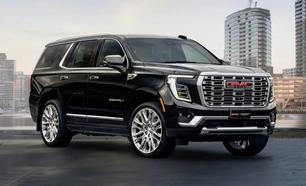
Well, that has now changed as General Motors Specialty Vehicles (GMSV) is importing the GMC Yukon Denali to Australia. This top-of-the-range Yukon arrives here as a left-hand drive vehicle and is converted to right-hand drive at a facility in Victoria to suit our market.
The Denali has a price tag just under $175,000, though, and that makes it a lot more expensive than most vehicles that could be considered rivals in the Aussie market. Is it worth it?
Read on.
Hybrid campers tread the line between caravan comfort and camper trailer-manoeuvrability and are touted as somewhat of a new thing; almost an evolution of comfort as more people look for a perfect camping experience.
But camper-trailers like the Cub Longreach LE prove that the concept has been around for decades.
It hasn't always been called the Longreach, but this high-walled, super-sized, off-road camper-trailer was one of the first to offer caravan-like comfort and space in a product that'll go anywhere off-road*. (* In terms of reasonable use and having obviously scrutinised your camper's warranty conditions before setting off to make sure you're covered for that sort of usage.)
The 2019 LE takes the comfort levels even further, so we grabbed one for a night to check it out.
The 2025 GMC Yukon Denali is a big, comfortable, eight-seat 4WD with few rivals in the Aussie market. However, while it may occupy its own niche, it doesn't offer enough in terms of premium look and feel and towing capacity over what could be considered its rivals – and it all comes back to that price tag.
While it lacks a competitive warranty and its price puts it way out of reach of a lot of 4WD buyers, if you are in the market for a big premium-style wagon with a V8 and eight seats – and the Nissan Patrol and Land Rover Defender 130 aren’t your cup of tea – then the Yukon Denali just might be the right choice for you.
But when all is said and done, for the price of the Denali, you could buy two Nissan Patrols – maybe not brand-new ones – and a camper trailer and a couple of cartons of beer.
This isn’t the camper for everyone – my guess is that plenty of people look at this and find it too sparse, too basic. I kinda get it.
But there are very few campers which offer the same amount of open, internal space, or that are as easy to set up.
That the Longreach, albeit with a few different names, has lasted so long on the Cub Campers' product roster is a testament to its versatility and ability to accommodate a small family on off-road camper trips.
It's arguably one of the forerunners of the hybrid camper scene, and it's now starting to evolve with campers' desires for more comfort.
The Denali has retractable sidesteps, which is a big help to hobbits, such as me, and it also has big grab handles, again a welcome addition for the purposes of easier ingress for those on the wrong side of tall.
Once you climb inside, it’s easy to appreciate the fact that this wagon’s interior is vast, functional and comfortable, with plenty of storage spaces for everything – glove box, centre console, sunglasses case, door pockets etc – and plenty of charge points for your array of smart devices, even a wireless charge pad.
It’s a well-designed cabin but, as mentioned earlier, the Denali lacks the prestige fit and finish and even build quality usually showcased in something at this price-point.
Instead, there are expanses of hard plastic throughout, storage receptacles with flimsy lids, and lacklustre fit and finish here and there.
The vertically-oriented 16.8-inch touchscreen multimedia system is simple enough to use, even when the road gets bumpy, although it sometimes took a few stabs of my finger to get the system to register a command.
Climate control switches and the like are located under the screen.
The three rows of seats offer more than adequate levels of comfort – the front seats are heated and ventilated and the second row’s outboard seats are heated – and each row also has the appropriate amount of amenity to suit its occupants, including cupholders, USB-C sockets, map pockets and the like.
The second-row seats even have 12.6-inch HD colour touchscreens – one on the back of each front-row headrest – with which to enjoy… whatever. Those units also have wireless headphones so everyone else in the vehicle doesn’t have to listen to… whatever.
Those in the third row get air vents, a USB-C plug and two cupholders on both sides.
Rear cargo volume with all seats up is 722 litres. With the second row folded that number expands to 2056 litres, and with only the front seats left standing you have a 'yuge' 3480 litres to play with.
The boot area has tie-down points, a shallow section of underfloor storage and plenty of packing potential. The tailgate door is power-assisted with remote open and close.
As I mentioned, the Denali’s interior is very functional and very comfortable and that includes the second and third row, which offer plenty of space.
Overall, my thoughts on the Denali’s cabin interior boil down to “massive”, “comfortable” and “feels cheap”.
For a rear-fold camper-trailer, the space inside couldn't be more practical. The long body and high sides mean that when the camper is open and set up, it has a lot more space than most. Behind the bed, for instance, there is enough space for Cub to have fit a small dinette.
The dinette has cushioned benches for two and a swivel table that can also become a counter over the rear floor area.
The camper's length also means that the rear floor area is massive. It is easily big enough to lie a couple of kids on, or if your nest is empty, to set up some camp chairs and a table to enjoy a covered living area.
It is still a rear-fold camper-trailer, though so, despite the fact it has nearly twice the space of other hybrid-style campers, it's very sparsely furnished. There's no internal kitchenette or anything like that.
The Denali is imported to Australia as a left-hand drive vehicle and then Walkinshaw's subsidiary company Premoso remanufactures the US 4WD wagons to right-hand drive at their facility in Clayton, Victoria.
And that mob has done a commendable job.
Firstly, the Denali is very impressive on general driving duties – settled and composed, that V8 just rumbles along. It’s pretty close to flawless on the open road - smooth and refined.
But off-road is a different story – especially in low-speed technical low-range 4WDing – and a lot of that has to do with the Denali’s sheer bulk and its 24-inch wheels.
The big pizza plate rims and paper-thin Bridgestone all-season tyres (285/40) aren't suited to four-wheel driving as they don’t offer the grip of a decent all-terrain and you can’t drop air pressures because there isn’t enough tyre there. Worth noting the spare is a Maxxis Bravo HT-750 (265/70R17).
In its favour, though, the Denali has a range of drive modes – one of which is Off-road and that seems well calibrated for a variety of 4WD situations – as well as high- and low-range gearing and an electronic limited slip diff.
Steering has a nice balance to it at low speeds, throttle response is quite impressive and controlled. And you can call on that 624Nm from the big 6.2-litre V8 pretty much as you see fit, and it delivers it smoothly and in a controlled fashion.
This top-shelf variant has air suspension – that does some levelling out of even major imperfections in the road or track surface – and it does have a special damper system also working away to even out ride and handling.
In terms of off-road measurements, the Denali offers approach, departure and rampover angles of 24.8 degrees, 20.5 degrees and 22.5 degrees, respectively.
Ground clearance is listed as 205mm, wading depth is not quoted, but likely a guesstimated 700-800mm, and turning circle is 12.4m.
And again, this is a big vehicle – 2813kg – so it requires more consideration, more patience, more skill and probably more experience than perhaps some smaller four-wheel drives do.
The Denali's payload is listed as 634kg, which is not a lot for a massive vehicle like this. Its towing capacities are 750kg (unbraked) and 3500kg braked.
If you do, however, put a 70mm tow ball and a weight-distribution hitch on the Denali, you can tow as much as 3628kg legally (braked).
That's not a lot more than something like the Nissan Patrol, which is 3500kg, or the equivalent 4WD wagon or ute available in Australia already. So the extra towing capacity in the Denali is not that big of a selling point. GVM is 3447kg and GCM is 6577kg.
Ultimately, even though the Denali has sound four-wheel drive mechanicals and reasonable off-road traction control, it's hampered by its gargantuan dimensions and let down by its 24-inch wheels and paper-thin tyres.
If you got rid of the standard wheel-and-tyre combination and replaced it with a set of decent, aggressive all-terrain tyres on 17 inch or 18 inch, or even (if you had to) 20 inch wheels, those changes would go a long way to making this over-sized 4WD capable in some off-road scenarios.
In its current state, however, the Denali is a tow vehicle playing at 4WDing rather than the other way around.
Cub Campers are famously good to tow, and even the largest of them lives up to the reputation.
As big as it is, the Longreach LE is quite light thanks to the effort Cub puts into engineering. As a result, it's not a strain, even for older dual-cabs like the D22 Navara.
And because it isn't any higher or wider than a modern SUV, there was very little wind-drag or buffeting as we cruised along the highway.
Cub developed the camper's Australian-made and -designed independent, coil-spring suspension and the set-up yields excellent ride in any conditions.
For the LE, Cub has added an extra shock-absorber each side to improve its performance even on the most corrugated roads.
An AL-KO off-road ball hitch is standard but can be upgraded to the Click-Lock version if you'd prefer that or need a more low-profile hitch.
In reverse, the long drawbar makes it an easy camper to manoeuvre around a campsite, plus it has enough size that the tow-vehicle driver never really loses sight of it while positioning it.