What's the difference?
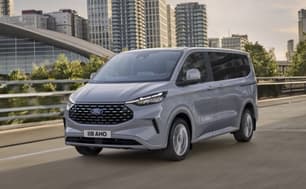
This idea hasn’t always worked out too well. Take a parcel-van (in this case the Ford Transit Custom) strip out the rubber matting and cargo barrier and bolt six or seven seats into what was the load area. Sure, the original vehicle to use this concept, the Volkswagen Kombi way back in the 1950s, got away with it, possibly because there wasn’t anything better around.
Ford has plenty of history with this notion, too. The first Transit of 1965 was also available as a mini-bus, but worked okay because the Transit itself was such a car-like departure from the commercial-vehicle norm.
Things didn’t go so well for Ford in the early 1980s, however, when the Econovan-badged parcel van it shared with Mazda (the E2200) was fitted with eight seats, given some fuzzy velour trim and dubbed the Spectron. And it was dreadful. In fact, so bad, that it made the contemporaneous Mitsubishi Nimbus and the even more forgettable Nissan Prairie seem like vastly superior alternatives to the job of moving people. Only because they were.
Early versions of the Spectron retained the Econovan’s crude suspension, wheezy (and fragile) little engines and even the tiny dual rear wheels that entirely deprived the vehicle of any traction. In fact, dreadful doesn’t even cover it.
So you can see why Ford might be a bit antsy about me referring to the new Tourneo (a badge that has been around in Europe for decades) as a Transit Custom with extra seats and windows. Yet that kind of sums it up (up to a point, anyway). Luckily, the Transit Custom itself is a pretty sorted thing these days, so maybe Ford has nothing to worry about. Maybe…
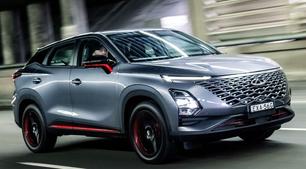
Visit Chery’s website, click on the Omoda 5 GT and you’ll find references to its “dynamic personality”, “distinctive face” and “cinematic elegance”.
Is this a show-stopping movie star or a new, sporty compact SUV? Maybe in the context of our video review of the car it can be both?
Either way, it extends the still fresh Omoda 5 line-up from two grades to four, adding the option of all-wheel drive at the same time.
It’s aimed at premium versions of small SUV favourites like the GWM Haval Jolion, Hyundai Kona, Mitsubishi Eclipse Cross and Subaru Crosstrek, expanding the new challenger brand’s scope in this intensely competitive segment.
So, read on to see if the Omoda 5 GT has the star quality required to enhance your urban life.
There’s absolutely no doubt that the van-based people-mover has some distinct advantages over a three-row SUV. The rear seat is bigger, access to it is far better and there’s more luggage space even when all eight seats are occupied. But the Tourneo goes a step or two further with the sliding, swivelling seats that make it one of the most practical and flexible interiors on the market.
True, the driving experience is a bit alien at first, but it’s a case of different, rather than worse. Meantime, the ride is excellent and the performance and economy from the turbo-diesel driveline are both absolutely spot on for this vehicle’s intended purpose.
And perhaps that’s the metaphor for the whole thing: By not trying to be something it’s not, and concentrating on what it needs to do, the Tourneo emerges as a bit of a quiet achiever.
As we said earlier, this type of vehicle concept is never a sure-fire proposition. Parcel vans converted to passenger duties haven’t always worked out. This time, though, it’s different.
The GT AWD successfully adds a performance spark to the city-sized Chery Omoda 5 SUV formula. It’s sprightly and stacks up well in terms of value and practicality. It’s also space-efficient, safety’s great and the ownership package is hard to beat.
That said, despite the shift to a multi-link rear suspension, ride comfort and the steering could be better. But overall, no rotten tomatoes here. This is a worthy contender that shows how far and how quickly Chery has progressed.