What's the difference?
The new Ford Mustang GT was not designed for Paris.
Fighting through the morning peak hour rush (which seems to extend through the middle of the day and the afternoon), the new Mustang feels like a caged animal. Which is appropriate, given the car’s namesake is a wild horse that exists to roam the American wilderness.
But once we finally break the shackles of Parasian traffic we find ourselves getting to let this Mustang gallop across the French countryside and unleash its full potential. But more on that later…
The reason we're driving the Mustang in France is because the American brand wanted to connect it to its new racing program at the famous Le Mans sports car race (you know, the one in the Matt Damon movie, Ford v Ferrari).
No less than Bill Ford, great-grandson of the company’s famous founder, was on-hand to see the Mustang at Le Mans, such is the passion for performance.
Ford (the man, not the company) took the opportunity to declare that the Blue Oval brand is not only committed to internal combustion engines for the foreseeable future, but it will retain the V8 under the bonnet of the Mustang GT for as long as it can legally do so.
Australians will have to wait a few more weeks (maybe months) before the seventh-generation Mustang arrives, but here’s what you can expect when it lands on local roads.
The Ducato originated in 1981 through a joint venture between Fiat and PSA Peugeot-Citroen, which are both now part of the recently formed Stellantis conglomerate. The Ducato has evolved through four decades and several generations, with more than 2.6 million sold in a variety of body styles (including popular motorhomes) and wheelbases.
The current generation van, which competes in the 3501-8000kg GVM commercial class, is also marketed as the Peugeot Boxer, which was tested at maximum GVM by CarsGuide in 2020. Despite many similarities between them, the latest iteration of the Ducato is more than just a badge-engineered version of its French sibling.
The MY21 Fiat Professional Ducato Series 7 is equipped with an all-new drivetrain, updated safety and convenience features and a class-leading two-tonne-plus payload capacity, which we recently put to the test.
Having driven the latest example of the Mustang GT, I hope Bill Ford is true to his word and keeps the V8-powered Mustang for as long as possible. It isn’t the most razor-sharp sports car or the most powerful muscle car, but it offers the kind of driving thrills and enjoyment that have made the car an icon.
The price increase is steep but the new technology inside drags the Mustang into the modern era and will add more youth appeal to a car that is largely unchanged in concept for the past 60 years.
But now that I’ve driven it in the USA and France, I can’t wait for it to finally reach Australia.
Note: CarsGuide attended this event as a guest of the manufacturer, with travel, accommodation and meals provided.
The latest Fiat Ducato, in MWB MR configuration with optional nine-speed auto, is a competent competitor in the 3501-8000kg GVM segment. Its class-leading two-tonne-plus payload rating would have considerable appeal for those who need to carry exceptionally heavy loads and we couldn’t find any major flaws in its design and performance. However, the warranty is short and there are niggling issues in terms of driver comfort, which if addressed would increase the Ducato’s appeal.
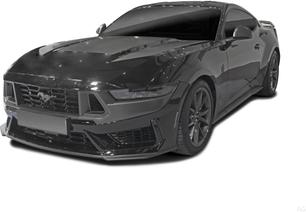
While this is considered a ‘new generation’ Mustang, the reality is this is more of a major overhaul than a complete, blank sheet redesign. As such, there’s a lot of carry over to the design, but that’s not to say there aren’t some significant changes.
For example, it’s still clearly a Mustang in its silhouette, sharing that with the sixth-generation model it replaces, as well as the now-iconic 1960s Fastback models, but the details are noticeably different.
To try and create more differentiation between the GT and EcoBoost models, Ford has designed unique front ends for each. Both are characterised by a strong horizontal line across the front of the more angular grille that meets the new ‘tri-bar’ daytime running lights.
The EcoBoost has an upper grille similar in size to the out-going model, the GT is a much larger upper section which incorporates a pair of ‘nostrils’ as well as a bonnet vent - both of which are functional for cooling and aerodynamics.
Down the sides Ford has lowered the beltline and created a more defined rear fender ‘shoulder’ that helps create the impression of a wider car.
At the rear the famous ‘tri-bar’ lights remain and there are unique diffusers for each model, with the EcoBoost running two exhaust tips and the GT getting quad pipes.
But it’s inside where the biggest design changes have happened. The retro-inspired cabin of the sixth-generation - which features shiny silver plastic toggle-like switches and round air-con vents - has been overhauled.
The iconic ‘double brow’ design to the dashboard, which dates back to the original 1964 Mustang, has been dropped and replaced with a pair of digital screens. There’s a 12.3-inch display for the digital instrument cluster and a 13.2-inch multimedia touchscreen.
This change is designed to appeal to a younger audience but also allows for greater customisation and variety of displays, with Ford developing six different instrument panel options depending on the setting the driver chooses.
The primary three are the 'Normal', 'Sport' and 'Track' modes, which have been inspired by the GT supercar and the Mustang Mach-E electric SUV, while there’s also a 'Calm' setting, providing only the necessary data, such as speed, in a simplified format.
The final two have been created to tailor to fans of the brand’s 1980s ‘Fox Body’ Mustang, with digital versions of its round analogue dials in both a ‘Day’ and ‘Night’ mode, with the former using white graphics and the latter getting retro green dials.
The MWB MR's front-wheel drive chassis rides on a 3450mm wheelbase with 12.5-metre turning circle. It’s 5413mm long, 2050mm wide and 2539mm tall, so like numerous van rivals in this GVM class it can’t access shopping centre and underground carparks which typically have a 2.2-metre height limit.
Underpinnings are simple and rugged, combining coil-spring strut front suspension with a leaf-spring rigid-tube rear axle that’s well designed for heavy load-carrying, with compressible rubber cones between body and axle that provide a second stage of support. There’s also four-wheel disc brakes, power-assisted rack and pinion steering and ample hard-wearing black plastic protecting the most vulnerable areas of the bodywork from scrapes and dents.
A sealed steel bulkhead separates the cabin from the cargo bay, insulating driver and passengers from load area noise and doubling as a robust cargo barrier. Its sliding window is ideally positioned to allow the driver or passenger to make a quick over-shoulder glance to check that their load is secure. Leg room for the centre passenger is unusually generous, even for tall adults, which would be appreciated by a crew of three.
Interestingly, the rear barn-door windows are heated but there are no wiper/washers fitted. At first this appeared to be an oversight, but having driven the Ducato in heavy rain we were surprised at how spray-free the rear screens remained and how clean they were afterwards.
Our only gripes are that the driver’s left footrest is so short you can only rest your toes on it. It’s a shame the excellent full-length one that resides in the passenger footwell (which of course is the driver’s footwell in LHD models) can’t migrate across the cabin for RHD versions. Driver comfort would be further improved with more rake adjustment in the base cushion.
The small 5.0-inch infotainment screen also makes it difficult to see much detail in the vision provided by the reversing camera. The optional 7.0-inch screen would be an improvement here, but is only available as part of the Comfort and Tech Pack.
The sixth-generation Mustang copped a lot of criticism for its interior look and feel, and while it certainly wasn’t at European levels of quality it was more affordable than any European V8-powered coupe.
The introduction of the new digital displays certainly adds a more premium impression to the cabin when you get inside, but you can still see a lot of the previous generation in this model, in particular the doors and centre console.
It’s pretty practical, for a sports car, with a pair of cupholders and a lidded centre console box for small item storage.
One noticeable issue with the screens is the control virtually everything to do with the multimedia, including the air-conditioning, so trying to make small temperature adjustments is more complicated than just pressing a physical button.
Not surprisingly space feels very similar to the outgoing Mustang with supportive and comfortable seating up front that made long stretches behind the wheel feel easy, which is nice for a sports car.
As for the rear seats, they remain incredibly tight for space and are better for soft item storage rather than squeezing people into.
Despite the largely carried over body and interior, the boot is slightly smaller than the previous model, with the coupe measuring 376 litres compared to the 408 litres offered previously.
The Ducato’s 2060kg kerb weight and 4250kg GVM results in a huge 2190kg payload rating which dwarfs rivals we've tested including the Mercedes-Benz Sprinter, Ford Transit and its Peugeot Boxer sibling. It's also rated to tow up to 2250kg of braked trailer but given that Fiat does not publish a GCM (Gross Combination Mass) number, we can’t confirm if it can tow that weight while carrying a full payload.
The cargo bay, with a competitive 11.5 cubic metres of load volume, has an unprotected load floor that’s 3120mm long and 1870mm wide with 1422mm between the wheel housings. Therefore, it can easily carry two 1165mm-square standard Aussie pallets or three 1200 x 800mm Euro pallets, held in place by eight sturdy load-anchorage points.
There’s also ample forklift access through either the rear barn-doors, which can swing open to 270 degrees with a combined 1562mm-wide opening, or the sliding side doors with their 1250mm-wide openings.
All doors and walls are lined to mid-height and the raised roof cavity allows even tall adults to stand inside without stooping. It also provides a large and very useful storage area over the driver’s cabin, which is ideal for stowing ropes, straps, load-padding etc.
There’s plenty of cabin storage too, with large-bottle holders and two levels of storage bins in each front door. The dashboard offers numerous open storage bins plus small-bottle/cup holders, a glovebox, large overhead map shelf and storage tray under the driver’s seat. The centre seat’s backrest also folds forward to reveal a handy work desk on the back of it, complete with a spring-loaded clip to hold documents in place, a pen holder and two more small-bottle/cup holders.
Ford Australia hasn’t confirmed the complete list of specifications for the seventh-generation Mustang range, but pricing has been locked in and we do know all three initial models - Dark Horse, GT and EcoBoost - will be offered here.
Having previously driven the Dark Horse in the USA in 2023, this time we sampled the GT and that’s the model we’ll focus on in this review.
We already know it will be priced from $77,002 for the six-speed manual and $80,902 for the 10-speed automatic coupe (both prices exclude on-road costs). The GT will be the only convertible option for Australians (and will only be available with the auto), priced from $86,102.
That’s a significant price rise from the out-going model, jumping up nearly $12,000 ($11,712 to be precise), which means it will be more expensive than the Nissan Z ($75,800) and closer to the BMW-based Toyota Supra (starting at $87,380).
On the plus side, this price increase is expected to come with a ramp up in standard equipment, including a new digital dashboard which features a pair of large screens, as well as the introduction of the line lock feature we missed on the previous model and the all-new 'Drift Brake'.
Our white test vehicle is the MWB MR, which translates to Medium Wheel Base Mid-Roof. It’s one of four Ducato van configurations featuring medium, long and extra-long wheelbases and two roof heights.
They’re all powered by a new 2.3 litre turbo-diesel engine, with a list price of $48,300 for the MWB MR with standard six-speed manual or $51,190 with the optional new nine-speed torque converter automatic like our test vehicle. It also has an extra side-sliding door that adds another $1190.
A few of the standard features include 16-inch steel wheels with heavy-duty 215/75 R16C tyres and a full-size spare (16-inch alloys optional), infotainment system with 5.0-inch touchscreen, USB/AUX connectivity and steering wheel controls, power-adjustable and heated exterior mirror, dual passenger seat with three-point central seatbelt, single cargo bay side-sliding door, twin rear barn-doors with 270-degree opening, reversing camera/rear parking sensors plus an upgraded safety suite headlined by AEB.
There’s also a wide choice of colours and other options including the Comfort and Tech Pack which for an additional $2190 brings a larger 7.0-inch infotainment touchscreen with DAB digital radio, Apple CarPlay/Android Auto, plus sat-nav, LED daytime running lights, automatic climate control and tyre pressure monitoring.
For the same price you can also get a Safety Plus Pack comprising rain/dusk sensor, auto high beam, traffic sign recognition, blind-spot monitoring and rear cross-traffic alert, fog lights, traction control and all-season tyres.
During the top secret development of this seventh-generation model there were plenty of rumours that Ford was considering a hybrid system for this Mustang. Fortunately for lovers of old-school V8 engines that proved not to be the case.
Instead it’s powered by a 5.0-litre V8 that's an evolution of the ‘Coyote’ unit from the previous ‘Stang but now featuring some technical changes, including dual throttle-bodies and separate airboxes to help improve performance. In the GT it’s tuned to make 345kW and 550Nm.
It can be paired with either a six-speed manual gearbox or 10-speed automatic transmission, both sending all the power to the road via the rear wheels.
The all-new drivetrain features Fiat’s latest 2.3 litre four-cylinder turbo-diesel with Multi-Jet 2 electronically-controlled common rail direct injection, variable-vane turbocharging, intercooler and Euro 6-emissions compliance using AdBlue. It produces 130kW at 3500rpm and (in automatic models) 450Nm of torque which peaks at 1500rpm. In case you’re wondering, the red ‘180’ body badges denote European metric horsepower.
The new ZF nine-speed torque converter automatic is a sweet-shifting transmission which Fiat claims is designed to optimise the engine’s torque delivery and fuel economy. It has a sequential manual-shift function if required, which could be useful if hauling big payloads in hilly terrain, but works most efficiently when left alone.
While it hasn’t been confirmed by Ford, the Federal Government's Green Vehicle Guide has the Mustang GT rated at 12.8L/100km. And while that’s quite a thirst for unleaded petrol, it shouldn’t come as a surprise given it’s a 345kW 5.0-litre V8 engine.
If you value efficiency in your American muscle car, the four-cylinder turbocharged EcoBoost is rated at 9.4L/100km. But based on previous evidence, Mustang buyers are likely to opt for power over saving petrol.
The claimed consumption figure translates to a driving range between fills of around 650km.
Fiat does not publish a combined average consumption figure for the Ducato, but the dash display was claiming 10.2L/100km at the end of our test, which covered almost 300km of which more than a third was with a heavy payload. We also had the auto stop-start function switched off. That consumption figure was very close to our own, calculated from fuel bowser and tripmeter readings, of 10.6L. So, based on our numbers you could expect a real-world driving range of around 850km from its 90-litre tank.
As promised earlier, here’s how the Mustang GT felt powering through the French countryside…
But first, it’s worth acknowledging that, in truth, it wasn't hard work getting through the traffic even in the manual Mustang. While the clutch is on the heavier side, it’s got a smooth action and the engine's torque and flexibility make darting in and out of gaps in the traffic a breeze.
However, once out on the open roads the Mustang really could run free. The V8 engine sounded fantastic bellowing out across the fields and through the quaint little villages we passed through.
As you'd expect, the V8 provides plenty of grunt, it's an incredibly flexible engine pulling hard right across the rev range and makes us appreciate even more that this now remains the last of its kind since the demise of the V8-powered Chevrolet Camaro and Dodge Challenger.
Driving the Mustang in conditions like this makes you understand why it has been such a popular sports car not only in Australia but around the world for decades.
While the manual transmission has fallen out of favour with Aussie buyers, the truth is it's the pick for this GT. The fact it has less ratios to choose from than the 10-speed automatic means it feels more urgent and (again) the flexibility of the engine allows it to shine.
Not that the auto is bad, it does a fine job, it just lacks the buzz and engagement the manual ‘box provides.
What arguably impresses even more than the engine is the handling. Having driven the Dark Horse last year and being so impressed by its handling, particularly with the 'Performance Package', there was some concern prior to driving the GT that it would feel less impressive and, dare I say, duller.
But that's far from the case. Instead, the GT feels responsive and well sorted across a variety of road conditions. While it may lack the precise handling characteristics of a European sports car, it’s clear Ford has made this latest Mustang better suited for the rest of the world, not just America.
Not that Ford has made the Mustang too serious, as the introduction of the Drift Brake demonstrates. This rally-style electronic handbrake allows you to, as the name suggests, snap the car into a slide - when the circumstances allow.
Ford finally gave us our first (official) use of the Drift Brake when it paid us up with stunt driving expert, Paul Swift, who taught us how to slide the Mustang into a parallel park.
Obviously this is not designed for road use but for those who want to take their Mustang to the track it will no doubt lead to a lot of fun and some shredded tyres.
There’s a commanding view for the driver thanks to a panoramic windscreen and clear eye-lines to the truck-sized door mirrors. There’s also reasonable but cluttered vision through the central rear-view mirror, which is partly obscured by the centre seat’s headrest.
The cabin bulkhead is effective in all but eliminating cargo bay noise and engine/wind noise volume is commendably low even on the highway. The highest audible intrusion at those speeds comes from the front tyres, which is acceptable on smooth bitumen surfaces but increases on coarser grades.
Its leather-rimmed steering wheel is nice to use and thanks to the driver’s door moulding and fold-down in-board armrest, there’s evenly balanced elbow support to relieve strain on the neck and shoulders.
The engine and nine-speed auto transmission are well matched, providing energetic performance when prodded and crisp, decisive shifting. Long-legged highway gearing allows 100km/h at 1500rpm (which is also bang on maximum torque) and less than 1700rpm at 110km/h. Ride quality when empty or lightly loaded can get bouncy on bumpy roads, which is not unexpected from suspension with a two-tonne-plus payload capacity.
Our main criticism is insufficient rake adjustment in the driver’s seat base cushion. There’s not enough angle available to stop the driver sliding forwards, requiring constant repositioning that becomes tiring after a while. More rake in the base cushion, combined with a decent-sized left footrest, would solve this issue.
Also annoying is the audible lane-departure warning, which is too loud and sounds like you’re being zapped by a ray-gun in an old sci-fi movie if you step out of line. A less confronting warning would be welcome.
Full safety specifications haven’t been announced, but in the US, where it’s already on sale, all models are equipped with at least a reversing camera, rear parking sensors, auto high-beam headlights as well as front, side and driver’s knee airbags.
There’s also a decent level of active safety gear with pre-collision assist with autonomous emergency braking and lane departure warning all standard. But adaptive cruise control, lane centring assist and intelligent speed assist are all optional.
Frankly, after my French experience I’d be hoping the lane centring assist is an optional locally because the overly sensitive system drove us crazy on our French test drive.
Repeated warnings to ‘put our hands on the wheel’ when our hands were firmly affixed to the tiller moved from just frustrating to borderline dangerous as the only way to trigger the system to stop making its request was to quite violently tug on the wheel and jerk the car in the lane.
It’s another case of poorly calibrated safety systems that make you question the value of the technology in the first place, especially when you find yourself turning it off because it’s safer to just pay attention as a responsible driver.
It will be interesting to see if ANCAP crash tests this new generation Mustang, especially considering how closely related it is to the previous model.
ANCAP famously (or infamously, depending on your point-of-view) crash-tested the previous Mustang and awarded it two from a possible five-star rating.
Despite the public criticism it didn’t seem to impact Ford’s sales of the pony car, which remained a best-seller.
Since the Mustang, ANCAP has not tested any of its rivals, with sports cars including the Toyota Supra, Nissan Z and Subaru BRZ all unrated by the safety authority.
There’s no ANCAP ratings for this GVM division and above, but the latest Ducato is equipped with AEB, forward collision alert, lane departure warning, rear parking sensors, reversing camera plus driver and dual-passenger airbags as standard. Buyers can also option the Safety Plus Pack mentioned earlier.
There are no details confirmed at this stage but there’s no reason to believe the Mustang won’t be covered by Ford Australia’s usual five-year/unlimited kilometre warranty.
Similarly, service intervals are likely to be 12 months/15,000km.
For reference, capped price servicing on the out-going Mustang GT came in at $299 for each of the first four services, up to four years/60,000km. Not bad.
Three years/200,000km warranty looks undercooked compared to the five years/unlimited km offered by some rivals. Scheduled servicing, though, is excellent for hard-working vans at 48,000km/12 months whichever occurs first. Five years of Fiat Professional servicing, based on a total distance of 240,000km, equals $6756.99 or an average of $1351.40 per year.