What's the difference?
The original Ford Fiesta ST from 2013 was a modern classic. The combination of appealing pricing, point-and-shoot driving dynamics and a sweet turbocharged engine ensured it won a legion of fans.
Its follow-up from 2020 continued that formula and brought with it a refinement missing from the original. But it was just as fun to drive.
Ford has launched a mid-life update for the sprightly hot hatch, which despite arriving in Australia halfway through 2022, is still officially an MY22 model. This latest version introduces upgrades to interior tech and exterior styling, as well as a 30Nm bump in torque.
But given it’s facing a ballsy competitor from Hyundai, has Ford done enough to keep its B-segment hot hatch crown?
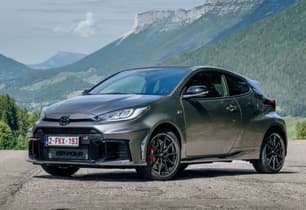
Thank the automotive gods cars like the GR Yaris still exist.
Not only are hot hatches the funnest way to drive, but in a world that’s obsessed with electric vehicles, these combustion-powered beasties remind us what we’ve got before it's gone.
The GR Yaris arrived in 2020 and won praise for its rally-car-for-the-road feel with Toyota’s high-performance division Gazoo Racing heavily modifying the docile Yaris hatch - while adding a bit of Corolla - to create this little monster.
In early 2025 Toyota added more power and torque, along with an automatic transmission for the GR Yaris and now a new variant has been launched - the GTS Aero Performance Package and this is what we are testing.
The Fiesta ST is an addictive car to drive. It's a modern classic and hard to beat when it comes to engaging performance and smile-inducing dynamics. Add in excellent value for money and you have a certified performance car bargain.
The GR Yaris GTS with the Aero Performance Package is a so wonderfully special with its brilliant engineering, mind-blowing dynamics and fun-to-drive nature. The new aero package makes an already angry beastie look furious, making it the perfect enhancement that's also functional.
The only lower marks here are for warranty, fuel use and practicality. But if there was a score for fun it'd be a 10/10.
The styling changes ushered in by the 2022 update are subtle. The Fiesta ST gains a revised front fascia with LED Matrix headlights, a larger grille with a repositioned Ford badge, and restyled bonnet and bumper.
It gets a fresh 18-inch alloy wheel design and black tail-light surrounds at the rear. It also comes in two new exterior paint colours - 'Mean Green' and the 'Boundless Blue' of our test car.
The current-generation Fiesta ST has an appealing design that represents a clear evolution of its predecessor, and, arguably, it didn’t need much work this time around.
The ST’s sporty bodykit adds a touch of aggression but not in a boy racer sort of way. It’s a classic hatchback design with a bit of an edge.
The GR Yaris exists so that Toyota could go racing in the World Rally Championship. As with many racing series it required Toyota to build a road-going version of their Yaris race car, also known as a homologation vehicle. It’s a good deal, they get to race, you get a race car for the road. And so the GR Yaris was born.
Wildly different from a regular five-door garden variety Yaris, the GR Yaris is a hand-built three-door hatch with a wider track, wider and lower body and the use of forged carbon and aluminium for lightweight construction.
The GR Yaris already looks very angry, but the GTS Aero Performance Pack makes it look furious. It adds a huge adjustable rear wing, fender ducts that channel air, a front spoiler lip that aids stability, a giant bonnet scoop to help release air, and rear bumper ducts to reduce drag.
The GR Yaris’s cabin was redesigned for the 2025 update and that saw the dashboard angled more to the driver much like in a race car, but it's more functional than fancy and it’s all very plain.
Still, we’re not complaining. The seats are lovely and the red stitching is a nice touch but this isn’t a Lexus. It’s supposed to favour function over form and so the design is absolutely fitting. And by function I mean dynamics and not practicality.
As part of the update, the Fiesta ST gains new Recaro front sports seats that are firm and hug the body tightly. You feel well supported when cornering. The mix of synthetic leather and suede looks spot-on.
Like a number of sports-focused models, the ST features red stitching throughout the cabin - on the steering wheel, gearbox gaiter and air vent surrounds - and while it’s ubiquitous, it’s still a nice touch.
The chunky perforated leather steering wheel feels nice to touch, as does the metal gear knob.
Cabin materials are a mix of soft-touch and hard plastics, and there’s carbon-fibre-look inserts on the dash.
There’s no denying Ford’s dash design is a huge improvement over the previous-generation Fiesta that ran from 2009, but the current model still lacks the polish of the VW Polo. It’s about on par with the Hyundai i20 N, although the Ford’s layout is a little busier.
In saying that, it’s hard to fault the cabin’s functionality. It has a deep central storage bin, which is larger than most cars in this category, a decent sized glove box, two-and-a-half cupholders in the centre console and storage for narrow bottles in the doors.
There’s a wireless charging dock behind the gear shifter, two USB ports (one in the storage bin and one next to the charger), as well as a 12-volt charger.
It’s nice to see the ST still has a manual park brake, too.
The facelift introduced a 12.3-inch fully digital instrument cluster, and while some may lament the loss of analogue dials, it’s nice to see Ford taking the opportunity to improve the tech.
The multimedia is housed in a smallish 8.0-inch digital screen sitting atop the centre stack and it runs Ford’s Sync 3 system.
Sync 3 functions well, is hard to fault and the menu layout is easy to navigate, but it is being left behind by competitors with more modern and appealing graphics. The latest version in the new Ranger will no doubt be a major improvement, but we won’t be seeing it in this generation of Fiesta.
The diminutive size of the Fiesta ST is more apparent when sitting in the rear seats. It’s pretty tight behind my 183cm (6ft) driving position, with my knees hitting the rear of the front seats.
It’s a cramped space that’s not designed for long trips by adults. It has redundant tiny rear-side windows behind the C-pillar, but on the plus side, there’s acres of headroom.
It lacks rear-seat air vents and the closest USB port is in the front centre storage compartment. Taller bottles won’t fit in the doors and it lacks a centre fold-down armrest, but it has map pockets.
The rear seats are flat and the Fiesta has outboard ISOFIX points for child seats.
Realistically, most people buying a car like this aren’t using it to haul children around so think of it as a two-seater with handy rear-seat storage.
The rear seats fold 60/40 but not flat. A space-saver spare wheel lives under the boot floor and it has a high boot lip, meaning you have to lift items up and over to get them in.
At 311 litres, it’s a decent sized boot with usable space. It’s just one litre more than the Hyundai i20 N, and six litres more than the Polo GTI.
The regular Yaris is small, the GR Yaris is smaller at 3995mm end-to-end and with two fewer doors. As a tall person (I’m 1890mm end-to-end) the space on board is adequate up front with just enough knee, head and elbow room.
The GR Yaris is a four seater with the two rear seats accessed through the front doors. There’s not much room in there for adults and not even my lanky 11-year old would be happy in there. Still if you need to carry three other people, technically you can.
Cabin storage is limited to fairly large door pockets and two cupholders between the front seats. There is a little shelf carved into the dashboard which is great and a small glovebox below it.
Boot space is tiny at 174 litres but again this is a small car with other priorities.
As far as mid-life updates go, the Fiesta ST’s isn’t significant. But the additions bring with it a bump in price. At $34,490, before on-road costs, it is $1200 more expensive than the previous version.
It still represents good value and is only $500 more than its newest rival, the Hyundai i20 N ($32,990 BOC). It’s quite a bit cheaper than the other big gun in the light hot hatch battle, the Volkswagen Polo GTI ($38,750 BOC).
Another offering in this group is the Suzuki Swift Sport which is the price leader, starting from $27,990 BOC.
Ford has specified a lot of standard gear for the price, including some niceties you don’t even get in pricier premium European cars.
It comes with a leather-wrapped heated steering wheel, heated front seats, Recaro sports seats, an auto-dimming rear-view mirror, heated power door mirrors, an 8.0-inch touchscreen with digital radio, satellite navigation, 'Sync 3' multimedia with voice control and Apple CarPlay/Android Auto, and a 10-speaker audio system.
As with the pre-update model, the German-built ST is the only Fiesta variant available in Australia.
The GR Yaris GTS Aero Performance Pack sits at the top of the model range with the six-speed manual version listing for $64,990 before on-road costs, while the automatic is $67,490. That’s $4500 more than the standard GTS without the aero pack
The aero pack significantly toughens up the look of the GR Yaris, and also improves its dynamics. So if you plan to use the GR Yaris as a track car and drive it hard and fast, the kit will help.
That's thanks to improved down force from the giant rear wing, air ducts in the fenders to improve steering under braking, a front splitter for stability, underbody cladding to maximise airflow and a bonnet scoop to help release hot air from the engine bay.
The rest of the high-performance equipment comes on the regular GTS including a Torsen limited slip differential, high performance suspension tune and 18-inch forged wheels with Michelin Pilot Sport 4S tyres.
Standard features are the same as the regular GTS and include heated GR sports front seats with suede leather upholstery, a 12.3-inch digital instrument cluster, leather-wrapped steering wheel, aluminium pedals, dual-zone climate control, proximity unlocking and push-button start.
There's also an eight-speaker, eight-inch media screen with Apple CarPlay and Android Auto, and an eight-speaker JBL sound system.
The value is actually great considering all the high-performance engineering around you in the GR Yaris, and it will save you money from being tempted to go down the aftermarket route and buy equipment that hasn't been designed for the car by the people who made the car.
There are some nice comforts, too, like the leather seats, although the media screen is small.
Under the Fiesta’s cute bonnet is Ford’s 1.5-litre three-cylinder turbocharged petrol engine delivering 147kW at 6000rpm and 320Nm at 4000rpm - the latter is an increase of 30Nm over the pre-facelift model.
Interestingly, it now matches the power and torque outputs of the Polo GTI. The i20 N pumps out 150kW and 304Nm.
The engine is exclusively paired to a six-speed manual gearbox - there is no auto transmission available - and it is front-wheel drive.
It still boggles my mind how 221kW and 400Nm is extracted from a 1.6-litre three-cylinder petrol engine but here we are. The GR Yaris has this set up with this output, along with all-wheel drive.
Thanks to lightweight materials such as forged carbon and aluminium the GR Yaris weighs nothing in car terms - just 1300kg - so acceleration from 0-100km/h is a rapid 5.1 seconds.
I’ve already detailed the juicy engineering bits the GTS Aero Package is fitted with, from the limited slip diff to the adjustable rear wing, and it’s not an exaggeration to say that not many small hatches are this gifted with this kind of genius.
Our test car has an eight-speed automatic, which is easy to drive in city traffic. However, I'd opt for the six-speed manual because if you've come this far you may as well go the whole way.
Ford claims the Fiesta ST has an official combined cycle fuel use figure of 6.3 litres per 100 kilometres.
After a week of predominantly inner city and freeway driving, we recorded a much higher 10.2L/100km. However, that was very shortly after an enthusiastic back-road blast to test its performance chops. We did see single-digit numbers throughout the week prior to that.
The Fiesta requires premium 95RON petrol and it has a 45-litre tank. CO2 emissions are 144g/km of CO2.
The GR Yaris is a hungry beastie that eats through its 50L petrol tank fairly quickly and then wants more. Toyota says you should see 9.1L/100km of 98 RON used in the automatic and 8.2L/100km with the manual over a combination of driving conditions.
Stop-start city driving in traffic saw fuel use increase dramatically to 13.0L/100km in the auto. According to our car's trip computer, my own testing used an average of 14.5L/100km after mainly suburban driving.
It’s easy to find your ideal driving position in the Fiesta ST, thanks to the reach and height adjustable steering wheel and the adjustable seat.
Aside from the extra 30Nm dollop of torque, Ford hasn’t changed anything else about the Fiesta ST mechanicals for 2022, but arguably, it didn’t need to.
The pre-facelift model could cover 0-100km/h in 6.7 seconds, and while Ford has not revealed whether that has changed with the facelift, it feels about right.
It’s brisk from a standing start, without being neck-snappingly quick, but there is strong urge and a lack of noticeable turbo lag. There is, however, some axle tramp on take-off, particularly in the wet. We also detected some torque steer when pushing hard up a hill, but it was minimal.
Speaking of, the little three-pot turbo engine is utterly unfazed by steep hills - it just keeps adding speed. A light kerb weight of 1218kg helps here.
The three-pot turbo engine sounds wonderful when accelerating, and the Fiesta ST begs to be driven hard.
The engine is perfectly matched with the slick shifting six-speed manual gearbox that has lovely short throws and is a joy to use. Even if Ford offered an auto with the Fiesta ST, it would take away from the driving experience.
'Sport' mode ups the growl from the engine and throttle response, but it’s not a dramatic departure from 'Comfort' mode.
The ST’s strong brakes are bordering on sensitive, but the heavily weighted steering is incredibly sharp.
On a back road run, the front-wheel drive Fiesta ST comes alive, hugging corners confidently.
On bends that would’ve seen many other cars come undone, the Fiesta’s tight, balanced chassis, grippy tyres and the standard mechanical limited slip differential ensure it maintains its composure.
The ride is undeniably firm, particularly around town in urban areas - you feel every speed bump. My partner found the ride a bit too much at times, but I was far more forgiving.
The Fiesta feels solidly built and has a level of refinement that’s missing from the likes of the Suzuki Swift Sport and Hyundai i20 N.
However, the cabin could do with more noise deadening materials as it can be quite rowdy at speed and on coarse chip roads. Another negative is the massive turning circle - a bit odd for a city-focused light hatchback.
But these are things I could happily live with. During my week with the Fiesta ST, I made any excuse to jump behind the wheel and go for a drive.
Me: “I’m just going to run to the shops to get pasta.”
My partner: “We’re not cooking pasta this week.”
Me: “Yeah but you never know when you need pasta. Bye!”
There’s been a multitude of electric cars through the test garage over the past six months and the GR Yaris is like a diamond found in a tub of Lego when it comes to driving.
So much sound. The three cylinder snarls on start up sending vibrations into the cockpit and up through the steering wheel, the transmission can be heard engaging gears, the big brakes creak as they’re released. And we’re hardly even moving yet. There’s so much theatre. It’s all real and I love it!
I even love that in the first 10 minutes of driving, a message appears on the instrument cluster asking that excessive acceleration be avoided while the engine is cool. You don’t get that beautiful inconvenience in an electric car.
But when you can excessively accelerate (on a race track of course, right?) it's wonderful and it's loud. Lift off, and the wastegate lets out a little "weeee!" in excitement.
I don't need to tell you that the GR Yaris handles better than just about anything in this price range and while the ride is firm and speed bumps feel like you’ve hit a gutter I still drove the GR Yaris every day, even to do the school run, because it is so much fun. Meanwhile my hybrid long0term test car looked lonely in the driveaway all week...
Being an automatic makes it easy to drive in traffic and the small size makes finding parking spots quick and simple.
Visibility is good, steering is excellent, the seats are big enough to accommodate me but snug enough to offer good lateral support, too.
The Fiesta ST has not been tested by ANCAP for crash safety.
It comes with standard safety gear including auto emergency braking (AEB) with pedestrian detection, forward-collision warning, lane-keeping assist with lane-departure warning, speed-sign recognition, rear parking sensors and a reversing camera.
Given it’s a manual, it has old-school non-adaptive cruise control.
The GR Yaris has not been crash tested by ANCAP and the score for the regular Yaris can't be applied to the GR version.
Still the GR Yaris comes equipped with an array of advanced safety tech such as auto emergency braking (AEB), lane keeping assistance and a blind spot warning.
There are six airbags, two child seat ISOFIX points and two top tether anchor mounts in the rear row.
The Fiesta is covered by Ford’s five-year/unlimited kilometre warranty and you get free roadside assistance and state/territory auto club membership each year that you service your car at a dealer, for up to seven years.
The servicing schedule is every year or 15,000km, whichever comes first. There’s a four-year/60,000km capped-price servicing program, which costs $299 per service.
Ford also offers a free service car loan that can be booked in ahead of your service.
The GR Yaris is covered by Toyota's five-year/unlimited-kilometre warranty which is lacking compared to many other mainstream manufacturers’ seven-year-plus warranties. The good news is that the engine and driveline is covered by an extra two-year warranty.
Servicing is capped at about $300 for the first six visits, although services are six months apart which means that after three years you’ll run out of capped-price servicing.
Still, Toyota’s reputation for reliability does provide some peace of mind.