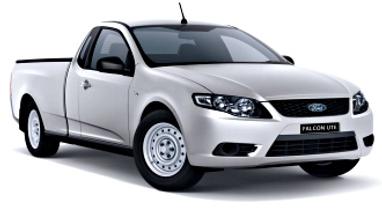
Ford Falcon 2011 Problems

Are you having problems with your 2011 Ford Falcon? Let our team of motoring experts keep you up to date with all of the latest 2011 Ford Falcon issues & faults. We have gathered all of the most frequently asked questions and problems relating to the 2011 Ford Falcon in one spot to help you decide if it's a smart buy.

Used Ford Falcon review: 1998-2012
By Ewan Kennedy · 05 Jul 2013
Ford's Falcon has slipped from the minds of many new-car buyers in recent years, resulting in the sad news that production will cease late in 2016. However, the iconic Falcon has long been a favourite with used-car buyers and there’s no sign of that changing anytime soon.To some extent we blame the demise of the Falcon on over adventurous styling. The radical shape of the AU was years ahead of its time when it was introduced in September 1998 and many conservative buyers didn’t like it.Facelifts to create the AU Falcon Series II in April 2000 and to the AU III in November 2001 lifted sales slightly. In September 2002 a major facelift to produce the BA Falcon started to put the Falcon back on track in new sales. The BA Falcon was upgraded to the BF Falcon in October 2005.The introduction of the rather conservative FG-series Falcon saw sales slip again, and history shows that Ford Australia never did recover after that.Falcons have seating for five adults, though four makes more sense because rear-wheel drive means the transmission tunnel takes up a lot of footroom in the centre-rear position. Legroom and headroom are ample for all but the largest adults. Some find the relatively steep slope of the roof in the AU to BF Falcons make it awkward to get in and out; naturally the back seat of the wagon doesn’t have this hassle.Comfort is very good and passengers can step out of a Falcon after a trip of hundreds of kilometres still feeling fresh and relaxed.The boot in the sedan is rather shallow in the older models and the slope of the bootlid on the AU reduces its practicality. It’s easy to load thanks to a good-sized opening. The BA Falcon is better, though still on the shallow side.Falcon station wagons are great load carriers as they are built on a longer wheelbase than the sedan so they have a long, wide, practical cargo area. The rear end of the BA is virtually identical to that of the older AU. Ford chose not to do an FG variant of the wagon. Instead, it created a Series III BF model to sell alongside the FG sedans. It wasn’t a success and was discontinued in 2010.Handling is surprisingly good for a car of this size and mass. You wouldn’t call it agile, but Falcons hold on when cornering at speeds far above those likely to be attempted by most drivers.Ford's six-cylinder engines all have a capacity of 4.0 litres but come in several formats, including one with a turbocharger. An interesting variant on the six-cylinder is a dedicated LPG engine. Very common in taxis, but less so in private cars (except in Victoria) this engine is all but indistinguishable from a petrol unit to drive. It’s quite a bit thirstier than the petrol so fuel range suffers.The standard AU six-cylinder unit is good enough, but the BA’s six-cylinder is noticeably smoother and offers even better performance.Ford fitted a 5.0-litre V8 to the AU, but it didn’t have a lot more performance than the six-cylinder units and was on the thirsty side. Much better were the BA bent eights: there was a choice of two, both with a capacity of 5.4 litres, one with a single-cam cylinder head, the other with a twin-cam setup.A powerful four-cylinder engine, tagged the EcoBoost gave us arguably the best Falcon ever, thanks to excellent performance and nimble handling, the latter due to the lighter weight of the smaller engine. Buyers in this market segment can be on the conservative side and they stayed away from the EcoBoost in droves.Automatics were all four-speed units until the launch of the BF, when a sophisticated six-speed ZF unit was installed. The ZF was originally only fitted in the topline variants, with the introduction of the FG Falcon all received the six-speed auto, with the exception of the LPG power models, which stuck with the old four-speed unit until the launch of the new-design LPG unit in July 2011.Manual gearboxes are rare and probably best avoided in all but the sporting XR6 and XR8 as they can affect resale value. The manual was a five-speed until the BF series, when a six-speed was installed.Prices for spare parts, servicing and repairs are very reasonable and there are Ford dealers just about everywhere in Australia. Most spare parts for the Falcons covered here are readily available, although a few bits on some older cars may have to come from a wrecker.These are very simple cars to work on, with plenty of underbonnet and undercar space. We recommend having a workshop manual at your elbow before starting the work.Insurance prices are generally very reasonable and premiums for the everyday models are invariably at the lower end of the scale. It will generally cost more to cover a V8 Falcon than a straight-six, and more expensive for a turbo six.WHAT TO LOOK FORRust is far less of a problem in these newer Falcons than old ones. To be on the safe side, check the door lower corners, door sill panels, mudguards and bootlid. If you do find serious rust the car may have been badly repaired after a crash.Many thousands of used Falcons will have been taxis at some time in their life. Be wary of one running on dedicated LPG; while these are quite common in Victoria, they are rare anywhere else in Australia. Signs of an ex-taxi are vinyl, rather than cloth, upholstery, severe wear both inside and out, holes where signs and a taximeter have been removed, and possibly a paint respray.Engine wear is indicated by a reluctance to start and by smoke from the exhaust and/or oil filler cap when the engine is revved.Four-speed automatics can cause problems on hard-driven cars, especially the older models. Check they change gears cleanly and don't hunt up and down through the ratios. Be suspicious of any automatic that’s slow at going into gear from Neutral or Park.Listen for a whining differential when driving at around 60 to 90km/h.Check the cabin for damage caused by wild kids. In station wagons have a good look at the load area for signs of commercial useCAR BUYING TIPBeware ex-taxis: they are run hard and often not driven in a sympathetic manner. 
Read the article
Used Ford Falcon review: 1997-2012
By Ewan Kennedy · 22 Oct 2012
Ford's Falcon is a rugged family car that copes well with rough and ready Australian bush roads so are very popular out there. They can be on the large side for close city work but have good outward visibility and a reasonably tight turning circle so aren’t too hard to drive in confined spaces.The radical styling of the AU was years ahead of its time when it was introduced in September 1998 and many conservative buyers didn’t like it. Facelifts to create the AU Falcon Series II in April 2000 and to the AU III in November 2001 helped a bit. However, it wasn’t until September 2002 that a major facelift to produce the BA Falcon started to put the Falcon back into buyers’ minds again.The BA Falcon was further upgraded to the BF Falcon in October 2005. Visual differences are minor, but there were significant changes to the transmissions at this time – more about them later. The introduction of the new FG series Falcon in May 2008 lifted awareness, but its shape was on the conservative side (it’s hard to please people…) and sales didn’t return to the record levels Falcon had enjoyed in the past.Falcons have seating for five adults, though four makes more sense because the use of rear-wheel drive means the transmission tunnel takes up a lot of foot room in the centre-rear position. Legroom and headroom are ample for all but the largest adults.Some find the relatively steep slope of the roof in the AU to BF series makes it awkward to get into the car. This applies to both front and back seats in sedans, naturally the back seat of the wagon doesn’t have this hassle. Comfort is very good and passengers can step out of a Falcon after a trip of hundreds of kilometres still feeling fresh and relaxed.The boot in the sedan is rather shallow in the older models and the slope of the bootlid on the AU reduces its practicality. It’s easy to load thanks to a good-sized opening. The BA is noticeably better, though still on the shallow side. Falcon station wagons are great load carriers as they are built on a longer wheelbase than the sedan so they have a long, wide, practical cargo area.The rear end of the BA is virtually identical to that of the older AU. Ford chose not to do an FG variant of the wagon. Instead, it created a Series III BF model to sell alongside the FG sedans. It wasn’t a success and was discontinued in 2010. Handling is surprisingly good for a car of this size and mass. You wouldn’t call it agile, but Falcons hold on when cornering at speeds far above those likely to be attempted by most drivers.Ford's six-cylinder engines all have a capacity of 4.0 litres but come in several formats, including one with a turbocharger. An interesting variant on the six-cylinder is a dedicated LPG engine. These are very common in taxis, but less so in private cars, with the exception of Victoria, and the engine is all but indistinguishable from a petrol unit to drive. It’s quite a bit thirstier than the petrol, so fuel range suffers.The standard AU six-cylinder unit is good enough, but the BA’s six-cylinder is noticeably smoother and offers even better performance. Ford fitted a 5.0-litre V8 to the AU, but it didn’t have a lot more performance than the six-cylinder units and was on the thirsty side. Much better were the BA bent eights: there was a choice of two, each with a capacity of 5.4 litres, one with a single-cam cylinder head, the other with a twin-cam setup.An impressive four-cylinder turbocharged engine was introduced midway through 2012. It has plenty of power and torque and lower fuel consumption than the big engines. The four’s lighter weight gives the big car a nicely nimble feel during cornering. Automatics were all four-speed units until the launch of the BF, when a sophisticated six-speed ZF unit was installedlpgThe ZF was originally only fitted in the topline variants, with the rest of the range using the four-speed. With the introduction of the FG Falcon in May 2008 all received the six-speed auto, with the exception of the LPG power models, which stuck with the old four-speed unit. A six-speed auto was finally installed behind the new design of LPG engine in July 2011.Manual gearboxes are rare and probably best avoided in all but the sporting XR6 and XR8 as they can affect resale value. The manual was a five-speed until the October 2005 BF series, when a six-speed was installed. Prices for spare parts, servicing and repairs are very reasonable and there are Ford dealers just about everywhere in Australia.Most spare parts for the Falcons covered here are readily available, although a few bits on some older cars may have to come from a wrecker. These are very simple cars to work on, with plenty of underbonnet and undercar space. We recommend having a workshop manual at your elbow before starting the work.Insurance prices are generally very reasonable and premiums for the everyday models are invariably at the lower end of the scale. It will generally cost more to cover a V8 Falcon than a straight-six, and be dearer again for a turbo six.WHAT TO LOOK FORRust is far less of a problem in these newer Falcons than old ones. To be on the safe side, check the door lower corners, door sill panels, mudguards and bootlid. If you do find serious rust the car may have been badly repaired after a crash.Many thousands of used Falcons will have been taxis at some time in their life. Be wary of one running on dedicated LPG, while these are quite common in Victoria, they are rare anywhere else in Australia. Signs of an ex-taxi are vinyl, rather than cloth, upholstery, severe wear both inside and out, holes where signs and a taximeter have been removed, and possibly a paint respray.Engine wear is indicated by a reluctance to start and by smoke from the exhaust and/or oil filler cap when the engine is revved. Four-speed automatics can cause problems on hard driven cars, especially the older models. Check they change gears cleanly and don't hunt up and down through the ratios. Be suspicious of any automatic that’s slow at going into gear from Neutral or Park.Listen for a whining differential when driving at around 60 to 90km/h. Check the cabin for damage caused by wild kids. In station wagons have a good look at the load area for signs of commercial use.CAR BUYING TIPNo matter how good a car looks on the surface it may have problems under the skin, never buy without a full inspection. 
Read the article
Ask Smithy Xtra Falcon fuel warning lamp
Answered by Graham Smith · 07 Jun 2011

All models, petrol and LPG, are fitted with a trip computer/multi-function display that has a range function to show you the distance to empty along with visual and audible warnings as you approach empty. The info is contained in you owner’s manual.

Ford Falcon 2011: Water pump
Answered by Graham Smith · 25 Oct 2013

It sounds as if the fan is coming on when it shouldn't, so have the dealer check the temperature when it does kick in, or simply have the fan replaced.

Ford Falcon 2011: Turbo rattle
Answered by Carsguide.com.au · 24 Jan 2014

No, I think you have a good case, particularly as you are not asking for the whole cost to be covered. Flexplates do crack, more on performance cars because of the extra loads they have to endure, but if it does crack it's a poor design in the first place.

Falcon Tyres
Answered by Graham Smith · 14 Jul 2011

For starters you need to take more interest in what happens to your car; after all you are the person responsible for keeping in a roadworthy state. You should have checked what was done at the 30,000 km service and made sure everything that should have been done was done. You should also have checked the condition of the tyres before you left on your trip to the coast. Had you done so you would have seen the condition they were in and not suffered the fright of your life. The tyre could well have gone from roadworthy to unroadworthy between 30,000 km and 40,000 km; they could have been just roadworthy when checked at 30,000 km and the extra 10,000 km could have tipped them over the edge. Tyre specialists say that 50,000 km is about average for a heavy car like the Falcon, but that can be substantially reduced if the wheel alignment is out, as you say yours was.

Ask Smithy Xtra Rear window louvres
Answered by Graham Smith · 15 Sep 2011

Aunger went out of business a year or so ago. I haven’t been able to find a substitute for the Aunger louvers, so the best bet is to use a dark tint.

Falcon G6E on unsealed roads
Answered by Graham Smith · 28 Jul 2011

We haven't had any other reports of dust entry into the cabin, but perhaps if there other readers who haven't had the problem they could contact us. Driving with the air-conditioning on will help keep the dust out if the actual source of the leaks can't be traced and fixed. We will pass your concerns on to Ford and see if we can get some action on the issue.

FG Falcon convert to gas
Answered by Graham Smith · 04 Aug 2011

You're correct there isn't a lot of difference between the earlier series and the FG that might affect the conversion, and there are kits available for the FG. Go to one of the larger, more experienced outfits.

Ford Falcon 2011: Seat moves by itself
Answered by Carsguide.com.au · 15 Mar 2013

I would have to suspect a problem with the controlling ECU and I would having Ford check it out.
 

Disclaimer: You acknowledge and agree that all answers are provided as a general guide only and should not be relied upon as bespoke advice. Carsguide is not liable for the accuracy of any information provided in the answers.
Have a new question for the CarsGuide team?
More than 9,000 questions asked and answered.
Complete guide to Ford Falcon 2011
Complete guide to Ford Falcon 2011 CarsGuide Logo
Reviews, price, specs and more