What's the difference?
Ford’s legendary F-Series has been America’s best-selling truck for more than four decades. A major factor in that success is the Super Duty range (F-250/F-350/F-450), which reports for duty when loggers, landscapers, miners, oil-field workers and anyone else with seriously heavy on- and off-road load-hauling requirements needs more than the entry level F-150 can deliver.
Not surprisingly, such extreme-duty towing is also required in Australia, particularly by tradies with heavy equipment, and/or for recreational and sporting pursuits that involve multi-axle caravans, horse floats, boat trailers and the like. Some of these large trailers feature a goose-neck design which requires a prime mover-style turntable coupling mounted in the cargo tub.
There are a number of small volume importers which cater for these specialised requirements, including Harrison F Trucks at Melton in Melbourne’s outer west. Harrison provides ADR-approved right-hand drive conversion, local certification and sales/after-sales service for these American giants, one of which we recently sampled for a few days to see what life is like in the world of the Super Duty.
Eco-friendly vehicles are the leather pants of the new-car world; it takes a lot of money to make them look good (but people who own them think they look fantastic regardless). If you don't have a gazillion dollars to drop on a Tesla, then it's a one-way ticket to Prius town. And really, who wants that?
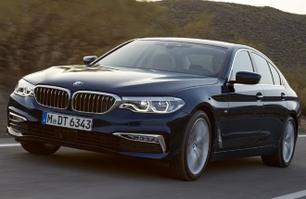
But what if it didn't have to be that way? Behold the BMW 530e iPerformance.
Seemingly tired of waiting for the Australian Government to introduce any sort of meaningful subsidy for green cars, BMW has made the choice simple: you can have a petrol-powered 530i for $108,900, or opt for the plug-in hybrid 530e for... $108,900. This is truly revelatory thinking.
There's no specification penalty, either, and the hybrid will power to 100km/h in an identical 6.2 seconds, so you're not even any slower. But you are sipping less fuel, emitting less C02 and basking in the general smugness, and sweet silence, that comes with feeling like you're saving the world.
So what's the catch?
If you’ve got something really heavy to tow and you have the budget to do it in grand style and with minimal effort, then a Super Duty could be just what you’re looking for. Its gargantuan proportions make it impractical for daily driving in Australian city and suburban traffic, but as a heavy-duty tow vehicle, particularly for long-haul open highway work, you’ll feel like king of the road.
Vehicle supplied by Harrison F-Trucks.
Not all superheroes wear capes, and we're proud to report the 530e does its bit for green motoring without feeling the need to shout about it. And with no price or specification penalty, it's easier being green than ever before, and the pricing of this BMW really puts the cat amongst the canaries.
Needless to say, the MY18 F350 Super Duty 4x4 is a monster, even in this SWB specification. The massive 4059mm wheelbase is 839mm longer than a Ranger Wildtrak, which is also dwarfed by the Super Duty’s 6350mm overall length (961mm longer). The F-Series’ 2032mm width is 182mm wider than the Ranger, and its 2065mm height is 217mm taller. It's like a Ranger that's been fed heaps of fertiliser.
Underneath is the kind of heavy-metal hardware needed to justify a Super Duty badge. Ford claims its massive fully-boxed steel ladder-frame chassis is up to 24 times stiffer than the previous generation, along with improved corrosion resistance. The cargo tub is made from military-grade aluminium with the dual benefits of less weight and no rust. A tough spray-on cargo tub liner boosts dent and weather protection.
Live axles are used at both ends, suspended on huge leaf spring packs at the rear and softer-riding coils up front. Steering and four-wheel disc braking are both power-assisted, of course, and there’s a choice of trailer-towing hitches available.
As you would expect, cabin space for both front and rear occupants is palatial, with even tall adults feeling dwarfed by its enormous dimensions. Rear passenger leg and shoulder room even for tall adults is limousine-grade, although headroom is reduced (but still adequate) due to the lower roof lining surrounding the full-length sunroof.
The overall fit and finish of the dashboard, following Harrison’s local RHD conversion process, displays quality workmanship. However, some DNA from its Kentucky birthplace remains in the control screen’s software, which, for example, displays 911 Assist instead of 000, and a left-side driver’s seat icon for the massage control. We also noticed that the AM radio station display only moves in 10kHz increments without the ability to tune between them (too bad if you like talkback).
There’s also no driver’s left footrest and the parking brake pedal seems overly high, requiring the raising of your left knee above steering-wheel height to get your boot on it.
Crucially, there's nothing weird about the way the 530e looks. While some green cars look like they've been designed by one of the kids from 3rd Rock from the Sun, the 530e looks much the same as the rest of the range, save a few tiny but telltale giveaways - like the e-drive badging outside, and what looks like a bonus fuel flap tucked in behind a front wheel that houses the whole plug-in bit.
And we really, really like it. It's elegant and statesman-like from every angle, and looked especially important in the deep-blue colour of our test vehicle. It's not over-designed, with body creases used sparingly, and the occasional glint of polished silver that rings the windows and the grille adds a final sense of shininess to an understated design.
Inside, there's more going on than you might normally find in a BMW. The hugely complicated digital display screen now includes everything from battery charge, power usage to the usual assortment of speedometers and petrol readouts.
It doesn't feel overdone or crazily festooned, but there's more at play here than in your usual BMW.
The dash is busy, too, with a wide screen emerging from a centre stack that also houses a CD player and a digital aircon setup, which in turn sits above a complex centre console from which you can alter driving settings, control the multimedia or cycle through electric modes. It doesn't feel overdone or crazily festooned, but there's more at play here than in your usual BMW.
Elsewhere inside, the seats are beautifully designed, with a quilted leather highlight through the middle, while the gloss-black strip that lines the dash hides a dual strip of ambient interior lights that also runs across all four doors.
Our F-350 test vehicle with its F-250 downgrade results in a 700kg decrease in both payload and tow ratings. In other words, based on Harrison’s figures, in full F-350 specification it has a 1700kg payload capacity and 9700kg GCM, which means it can legally tow up to 4510kg of braked trailer with a full payload or up to 6210kg without. In our F-250 form it offers a 1000kg payload with 9000kg GCM, and can legally tow up to 3810kg of braked trailer with a full payload, or 4810kg without.
The huge cargo tub has a load floor length of 2080mm and width of 1700mm, with 1283mm between the wheel arches allowing ample room for a standard 1160mm-square Aussie pallet. There’s a total of eight tie-down points, overhead and internal lighting plus key fob operation of the tailgate, which houses a handy fold-out step and grab handle for easy cargo tub access.
The sumptuous cabin has plenty of storage options, including a single glovebox, and a bottle holder and two storage bins in each front door. The centre console has an open storage cubby at the front, another open storage bin and two bottle holders in the centre, a cavernous box behind that with a padded lid which doubles as a comfortable armrest, and two more bottle/cup holders at the back.
Those in the rear seat also get a fold-down centre armrest with two pop-out cup holders and each rear door has a bottle holder and two storage bins. There are also flexible storage pockets on the rear of both front seats and the 60/40-split rear seat base cushions swing up through 90 degrees and lock into position, revealing a huge full-width storage area underneath.
As the world's motoring tastes shrink faster than a lap-banded Clive Palmer, it's easy to forget the joys of the full-size sedan, but the space for passengers and luggage in the 5 Series will have you questioning your downsizing ways.
Upfront, there's plenty of room between front-seat riders, who will also share two smallish cup holders, along with room in each front door for bottles. There's also a dedicated wireless charge pad (which, because of its tight design, is crazy difficult to actually remove your phone from), but you'll also get two USB points and a power outlet that's hidden in the sizeable centre storage bin as standard fit.
Backseat riders get heaps of space, both in width and in leg room behind the front seats. And there's twin air-con temp controls and twin power outlets, too. But middle-seat passengers will be forced to sit with their legs on either side of the raised tunnel, which will definitely impact on comfort.
The boot's still sizeable, despite shrinking slightly to house the battery/fuel tank setup
Best to ditch the fifth passenger, then, and deploy the pull-down seat divider, which also houses two cup holders. Finally, there are three ISOFIX attachment points, one for each seat in the back.
The boot's still sizeable, despite shrinking slightly to house the battery/fuel tank setup (the tank has been moved further back to accomodate the batteries), and can be adjusted to be a flat load area if you'd like, offering up to 410 litres with the rear seats in place.
Our test vehicle was the MY18 F350 SWB Crew Cab Platinum 4x4 pick-up, downrated to a 4490kg GVM rating (same as the F-250) to allow it to be driven with a normal car licence. According to Harrison, Ford achieves this by simply removing an additional booster spring and block in the rear suspension, resulting in the lower ratings. It was also fitted with Ford’s FX4 off-road option (rear diff lock, skid plates, special shocks, hill-descent control), bringing the drive-away price to an eye-watering $165,990.
The Platinum is one of six grades in the Super Duty range, and one of three only available in the Crew Cab, in which it represents the middle tier above King Ranch and below Limited. Although Harrison can import most of the Super Duty model grades, it claims the Platinum delivers the best ‘bang for buck’ in terms of features and trim level, riding on stylish 20-inch polished alloy wheels and LT245/75Rx17E all-terrain tyres with a full-size spare.
As you can imagine, the sumptuous Platinum has power everything and is loaded with features that are way too numerous to list here. Suffice to say, everywhere you look there’s conspicuous luxury, from the moment the concealed power-operated side-steps smoothly extend when you open the door, and then retract when you close it.
Inside is an 8.0-inch touchscreen for the SYNC3 voice-activated infotainment system with multiple connectivity options, including Apple CarPlay and Android Auto, premium leather seating (with heating, cooling and even massage for the front seats), a full-length panoramic sunroof, huge power-extendable door mirrors for towing (with built-in courtesy lights), power adjustable pedals and steering wheel (which is also heated), remote-opening tailgate with fold-out step, cameras everywhere for 360-degree coverage and even a wide choice of changeable colours for the ambient cabin lighting.
We could go on, but you get the picture. It’s magnificent excess in the true US tradition, where too much is never enough.
The 530e commands a 530i-equalling $108,900 price tag, which is genuinely impressive when you consider all the extra bits and pieces that go into make a plug-in hybrid. That money buys you a well-equipped car, and only those allergic to money need reach for the options list.
As standard, you'll find leather-wrapped - and heated in the front - sports seats, 19-inch alloy wheels and a 10.25-inch touchscreen that pairs with a really very good 16-speaker Haman Kardon stereo. Wireless Apple CarPlay is available, but it'll cost you an extra $500. To be honest, though, we didn't miss it.
You'll also find adaptive LED headlights, a huge head-up display (so big, in fact, that it impedes vision when climbing steep hills), dynamic dampers, an auto opening/closing boot and a self-parking system, along with BMW's suite of self-driving tech - but we'll come back to that under the Safety sub-heading.
The F350 Super Duty is powered by Ford’s common rail 6.7-litre Power Stroke V8 turbo diesel, which, with four valves per cylinder and variable vane turbocharger, punches out 335kW at 2800rpm and a massive 1267Nm of torque at only 1800rpm.
The SelectShift six-speed automatic transmission is also designed and built by Ford. Its triple-plate, two-stage torque converter offers full lock-up capability as low as 900rpm, and there’s a dedicated tow/haul mode which avoids unwanted shifts on climbs and provides powerful engine braking on descents.
The exhaust brake can also be manually selected. The 4x4 system is part-time dual-range, with auto-locking front hubs and shift-on-the-fly engagement.
Drift around in pure EV mode and you'll be relying on the 530e's 83kW and 250Nm electric motor, which will provide what BMW refers to as "between 28 and 32 real-world kilometres".
Run out of range, or simply use too much throttle, and the 2.0-litre petrol engine comes into play, adding 135kW and 320Nm to the mix. All up, that's 185kW and 420Nm - respectable numbers by any measure, and enough to match the petrol-powered 530i's zero to 100km/h sprint of 6.2 seconds.
That power is fed through an eight-speed automatic transmission before being sent exclusively to the rear wheels, where it belongs.
Flick through a Super Duty sales brochure and you won’t find any reference to fuel economy ratings. However, for what it’s worth we crunched some figures at the end of our relatively short 200km test based on trip meter and fuel bowser readings, resulting in a reasonable 15.8L/100km.
That’s not far away from the dash read-out at 14.2, so with its big 130-litre fuel tank you could expect a driving range of around 820km.
Like a Facebook relationship status, it's complicated. The 530e will sip a claimed combined 2.3 litres per hundred kilometres on the claimed/combined cycle, which is amazing for a car this size. Better still, it seems genuinely achievable - at the vehicle's launch, our own Richard Berry recorded a stunning 2.0 litres per hundred kilometres on a short test route.
But that's with a full load of battery charge on board. For our week with the 530e we were unable to actually plug it in (living in Sydney, I can't afford a garage), so once the initial battery charge had been used we were back to mostly petrol power. Unlike some other plug-in hybrids we've driven, we found it very difficult to recharge the battery to any meaningful level using regenerative braking, so once we were flat we stayed flat. If we had plugged it in, it would have been a two-hour recharge using a specialised wall unit, or about four hours using a normal plug.
As a result, though, our fuel use was closer to 7.0 litres per hundred kilometres after some considerable real-world testing.
You sit up nice and high in very comfortable seats, with a commanding view of surrounding traffic and the road ahead. We quickly adapted to the width and height of the Super Duty, but the major issue in city and suburban driving was its oil-tanker length, which required later turn-in on tight corners to provide kerbside clearance. We also needed to check that there was ample reversing room when choosing a space in a parking lot, to ensure we didn’t get wedged when trying to leave.
With the big turbo diesel V8’s 1267Nm of torque being tapped at only 1800rpm, it provides spirited getaways from traffic lights, and easily keeps up with normal city and suburban traffic flow with your big toe barely touching the accelerator pedal.
The ride quality without a load is quite good on smooth surfaces, with its massive 3.5 tonne kerb weight feeling like the tyres are leaving indents in the bitumen. However, over rougher roads and larger obstacles like speeds humps, it starts to bounce around more and can feel quite ponderous at times. However, this is to be expected in an empty vehicle with such high payload and tow ratings.
The steering is surprisingly direct and firm in feel. It’s also quite linear in turning weight regardless of road speed, without the more noticeable changes evident in its little brother Ranger, which is very light at parking speeds but gets noticeably firmer as speeds increase.
Braking is reasonably responsive but like other giant US pick-ups we’ve tested, you have to get them quite hot to make them really bite. That’s because their pad compounds tend to be on the hard side, given they have to cope with the high temperatures generated by heavy-duty towing.
The engine exhaust brake is surprisingly quiet and very effective at slowing the vehicle, aided by more aggressive downshifts in the six-speed auto.
There's so much to like about the way the 530e sets about saving the world, and that's mostly because it doesn't shout about it, either to the driver or the outside world.
It's very much an underpants inside its pants superhero, which makes us like it even more. Set off in EV mode, and the 530e will drift silently away from the curb, burning battery power over fuel for as many as 30(ish) kilometres. But equally important, the shift from green to gas is largely imperceptible, with the petrol engine joining in willingly when you ask it to - usual via a prod of your right foot.
It is so effortlessly smooth that you need to really pay attention to notice the eight-speed 'box changing gears at city speeds, and it's commendably quiet, whichever drive mode you're in.
Downsides? Well, it doesn't feel quite as sharp as it's conventional-engined siblings. The batteries add around 230kg in weight, which never helps, and it all feels a little softer and a little less dynamic, even with Sport mode engaged. BMW assures us the adaptive suspension setup and tune is identical, but the 530e feels noticeably softer when you tackle a twisting back road. And that encourages you to use your right foot a little more, which in turn negates the whole electric thing in the first place.
One of the great joys of BMWs has always been their ability to transform from cosseting comfort to rear-drive rocket when you want them to, and you can't help but notice the 530e isn't quite up to that challenge. But if your intentions are mostly city- and freeway-based, then this plug-in BMW is almost indiscernible from its petrol-powered sibling.
No ANCAP rating, but for what it’s worth the 2017 F-250 Super Duty SuperCab and Crew Cab 4x2 models earned the US government’s highest five-star safety rating. Passive safety includes driver and passenger front and seat-side airbags plus side-curtain airbags. All three rear seat positions have top tethers for child seat restraints but no ISOFIX.
Dynamic safety does not include AEB, but there’s adaptive cruise control and collision warning with brake support, (BLIS) blind spot information system with trailer coverage and cross-traffic alert, lane-keeping alert, reverse sensing system, rain-sensing wipers, automatic high beam headlights, hill-start assist, trailer sway control, tyre-pressure monitoring, SOS post-crash alert system and lots more.
You'll want for little here, with front, front-side and full curtain airbags joining parking sensors, a surround-view camera and a self-parking system.
You can also expect active cruise control, lane control assist with lane keep assist (so it will stay between the lane markings for you), AEB and cross-traffic warning. And all of that means that, technically, the 530e can drive for you. That is, of course, if you don't mind driving like a dick - in full-autonomous mode it will swerve from lane marking to lane marking like it's playing bumper bowling.
Harrison F Trucks provides a four-year/130,000km warranty, which it claims is the same as the Ford warranty with standard exclusions. Harrison also provides four-year premium roadside assistance.
Scheduled servicing is 12 months/10,000km with costs ranging between $495 and $1400.
Harrison says servicing can be done at any certified service department in Australia, with direct communication with Harrison’s service manager if required for diagnostics and advice.
Like the rest of the 5 Series range, the 530e falls under BMW's three-year, unlimited-kilometre warranty. There are no set service intervals, either, with BMW using what it calls 'condition-based' servicing. In other words, the car will tell you when it requires a trip to the service centre.
The batteries are covered by a separate warranty covering six years or 100,000km.