What's the difference?
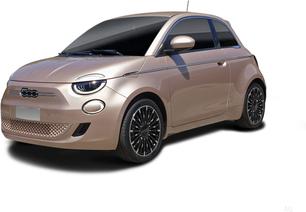
You wouldn’t know it to look at it, but this is a brand-new — as in really and truly all-new — Fiat 500.
That has got to be a big deal for fans of Fiat’s pint-sized city car, with a genuinely all-new 500 about rare as spotting Halley’s Comet soaring over Turin. The last time was way back in 2007, by the way, and that car will remain on sale alongside this new one for the foreseeable.
But that’s not the only surprise. This 500 is also entirely electric, properly modern inside, and it has actual technology in its cabin and on its safety list.
Fiat reckons this is a big reset for the 500. And that there will never be another all-new petrol model again.
So, how does this new 500e stack up against the recent flood of small EVs, predominantly from China?
Let’s go find out.
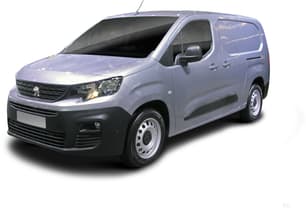
In 2023 Peugeot commands around 50 per cent of sales in Australia’s small (under 2.5-tonne GVM) commercial van segment with its Partner range, which offers a choice of wheelbase lengths and model grades.
The French marque has recently introduced its first fully electric variant to the Australian market called the e-Partner, even though this van has been on sale in Europe since 2021.
We recently put one to work for a week, which included loading it up to the max, to see how it compares to its petrol-powered sibling.
A fun, funky EV which will no doubt appeal to lovers of Italian style, but also one which struggles a little on the range and price front.
Still, there’s no doubt that electrification has improved the Fiat 500 formula.
It’s a lot of money for a small commercial vehicle that’s well into its current model cycle in Europe, falls short on benchmark safety and requires convenient charging infrastructure to minimise inconvenience for owners. However, its emissions-free drivetrain is quiet and competent under load, with a range that should comfortably cater for the daily urban use small van operators typically require. Whether those positives outweigh the negatives, only a potential buyer can decide.
It looks, well, it looks like a Fiat 500.
It’s actually bigger in every dimension than an ICE cinquecento, but it doesn’t really look like it, which is a good thing.
The 17-inch wheels look great, and big against the very small Fiat, and I like the hidden doorhandles, which make the already smooth-looking 500’s flanks look a little smoother still. But I can take or leave the little DRLs up front that are meant to act as little illuminated eyebrows for the headlights, which come over a bit too cutesy.
But I think the highest compliment I can pay it is that it looks like a regular Fiat 500 — one of the most successful reincarnations of a timeless design ever — and not some modern, eco-friendly version that would have killed the look.
In the cabin, however, it’s definitely a more modern affair, with the big screen, the horizontal push-button gear selector, and the nifty push-button door openers.
Still, it’s all pretty familiar Fiat 500, only a little nicer, even if some of the plastics are far too hard and scratchy for a vehicle this expensive.
There are five colours available: Ice white, Onyx black, Rose gold, Ocean green and Celestial blue.
The single electric motor is positioned at the front where it drives the front wheels. The 50kWh lithium-ion battery that provides its energy is located beneath the cargo bay’s load floor to ensure that the total load volume, floor loading heights, etc, are identical to the petrol version.
The same applies to its compact 2975mm wheelbase, 4753mm length, 1921mm width and car park-friendly 1880mm height.
The e-Partner rides on MacPherson strut front suspension and coil-spring trailing-arm rear suspension, with electric power steering and four-wheel disc brakes. Its 11.4-metre turning circle is larger than we expected.
There are unpainted dark grey plastic finishes in all the places where bumps, scrapes and wear usually occur in working vans including hubcaps, bumpers, body side-mouldings, door mirrors and handles. The charging port is located above the left rear wheel.
A sealed metal bulkhead with central window separates the cabin and cargo bay, which minimises tyre noise emanating from the rear-wheel housings and doubles as a cargo barrier.
The cabin architecture, with two bucket seats and wipe-clean vinyl floor, is outwardly the same as the petrol version but the driver’s analogue instrument display has been reconfigured for the electric drivetrain.
This includes continual display of energy consumption levels, comprising 'Eco' (minimum consumption), 'Power' (maximum consumption) and 'Charge' (energy recovery from regenerative braking).
It also displays energy consumption by the cabin heating/air-conditioning and battery charge-level, while the dash’s central touchscreen includes an ‘electric menu’ that monitors live energy flows and consumption statistics plus allows scheduling of delayed charging if required.
The 500e is 29mm taller, 61mm longer and 56mm wider than the current ICE Fiat 500 (now 1529mm, 3631mm and 1683mm respectively), and it rides on a longer wheelbase, too .
That means more front-seat room and head room, but there’s still not oodles of space in the four-seat cabin, and especially in the back, where things are pretty tight.
I’m 175cm tall, and my head touches the ceiling in the back, and if I had another full-size human in the back with me, I’d want it to be someone I know well, because we’d be well and truly aquatinted by the time we got to our destination.
The front seats are more accomodating, but there is a strange tightness to the pedal area for the driver. It’s so tight, in fact, that when you rest your left foot, you have to be careful not to accidentally clip the brake pedal when driving.
The boot is a small 185 litres, too. But you’re not buying this for practicality perks, are you?
The e-Partner’s 1632kg tare weight is about a quarter of a tonne (247kg) heavier than its 1385kg petrol-engine equivalent, largely caused by the lithium-ion battery pack.
So, even though the electric model has more power (100kW vs 96kW) and torque (260Nm vs 230Nm), the battery ensures it has an inferior power-to-weight ratio, with the e-Partner carrying 16.3kg/kW compared to the petrol’s 14.4kg/kW.
The e-Partner’s 753kg payload rating is also 182kg less than its petrol sibling, so be mindful of these differences if payload is important.
The e-Partner is also rated to tow up to 750kg, but given Peugeot does not publish a GCM figure (how much it can legally carry and tow at the same time) we don’t know if it can haul its maximum payload while towing its maximum trailer weight.
The cargo bay, with 3.9 cubic metres of load volume, is a window-free zone accessed by a sliding door on each side and asymmetrical rear barn-doors that open to 180 degrees for optimum loading access.
With its 2167mm length, 1527mm width, 1243mm height and 1229mm between the rear-wheel housings, it can carry one standard Aussie pallet or two Euro pallets held in place by a choice of six load-anchorage points.
The cargo bay is lined to mid-height and there’s protective mesh over the bulkhead window. However, the bulkhead protrudes into the sliding door openings given the need to allow sufficient cabin space for the seat backrests.
There’s also no load-floor protection provided as standard, so to avoid scratches and dents we’d recommend fitting a floor-liner like the thick rubber one fitted to our test vehicle.
Cabin storage includes a full-width shelf above the windscreen and bins in the base of each door. The dash offers small bottle/cupholders on each side plus a lidded upper glove box and open storage on the passenger side.
The dash extension, where the gear-selector and electronic handbrake reside, offers more open storage as does the floor-mounted centre console.
Our criticisms include the lack of a dedicated storage place for the charging cable, which is supplied in a zip-up vinyl bag.
Although it was sitting on the passenger floor when we collected the vehicle, it was difficult to find a secure place to store it with a passenger aboard. It ended up unsecured in the cargo bay.
The rear barn-doors also do not have any stays to keep them open when positioned at 180 degrees.
As a result, the slightest breeze swings them shut.
And due to the lack of any dedicated bottle-holders in the front door bins, bottles tend to topple onto their sides and can be difficult to extract when driving.
The 500e is not cheap by modern small EV standards — we’re looking at you, China — but it does arrive in one well-equipped trim level, called La Prima, with paint the only available option.
It's also, quite shockingly for anyone who has driven an ICE Fiat 500 lately, stacked with some truly high-tech kit.
There’s heated seats for the first time ever, for example, and there’s 10.25-inch central screen with Apple CarPlay and Android Auto, and wireless charging.
There’s a digital driver display, too, plus there’s faux-leather on the seats and dash, a panoramic glass sunroof and fancy push-button front doors (though with a mechanical back-up lever hidden in the door pockets should something go pear shaped).
Outside, you’ll find 17-inch alloys, as well as LED lightning all around, including the DRLs, and there’s keyless entry and push-button start, too.
But, and it’s a significant but, the 500e lists at $52,500 before on-roads , which — when you consider its size, battery and range — really edges it into the premium EV space.
A similar-sized EV from China can be had for under $40k, which means you are going to have to really love the 500e to drop that extra $15k or so.
Our test vehicle is available in only one specification, based on the ‘Pro Long Auto’ which means it’s the more work-focused ‘Pro’ model grade with long wheelbase and automatic, which in this application is a single-speed transmission.
With a 100kW/260Nm single electric motor and 50kWh lithium-ion battery, it has an eye-opening list price of $59,990, plus on-road costs.
That represents a substantial 56 per cent increase over its petrol-powered equivalent ($38,388) and optional metallic paint like ours adds $690.
However, the e-Partner has more power and torque with zero drivetrain emissions. It also comes standard with work-focused 16-inch steel wheels and 215/65R16 Michelin tyres with a full-size spare, a toggle-style gear selector, electric parking brake, reversing camera, two-way adjustable leather-rimmed steering wheel, 12-volt accessory socket and USB port plus a four-speaker multimedia system with 8.0-inch touchscreen, digital radio and multiple connectivity including Apple and Android devices.
A single front-mounted electric motor delivers the power here, with 87kW and 220Nm on offer. Enough, Fiat says, to knock off 100km/h in 9.0 seconds. But it does feel quicker than that in real life, thanks to the way electric vehicles deliver their power.
There’s the usual EV single-speed gearbox, too, with power sent to the front wheels.
The single electric motor and 50kWh lithium-ion battery combination produces 100kW of power and 260Nm of instant torque.
It also offers three switchable drive modes including Eco (60kW, 190Nm) for minimal performance and energy use, Normal (80kW, 210Nm) which is a happy medium for everyday use and Power (100kW, 260Nm) for maximum performance when hauling heavy loads.
The gear-selector controls Park, Reverse, Neutral, Drive and Brake functions. There's also a button marked B which engages regenerative braking for optimum battery top-ups when driving.
The Mode 3 Type 2 wall-box/public station charging cable is supplied as standard, but buyers can also purchase a domestic wall socket cable for home-charging.
Quickest charge time from 0-80 per cent is 30 minutes using a 100kW DC charger while a 0-100 per cent charge using a single-phase wall-box (7.4kW) takes about 7.5 hours.
Home-charging from 0-100 per cent using a domestic wall socket (2.3kW) takes about 24 hours.
The Fiat 500e’s 42kWh battery provides a smallish 311km driving range on paper, but when we got in it was more like 290km at 96per cent charged. A city car, then, rather than a long-distance hauler.
When it does come time to charge, you’re set up for 85kW DC fast charging which should take you from zero to 80 percent in 35 minutes.
Peugeot claims an official WLTP driving range of 258km. The dash display was showing a projected driving range of 280km when we collected the vehicle.
A few days later when we stopped to top-up the battery at a public charging station, after 135km of unladen city and suburban driving, it was displaying average consumption of 20.4kWh/100km.
When charging was completed, the dash display was claiming 270km of driving range. This had dropped to 194km the following day when we stopped to load the vehicle for our GVM test. Average consumption had also dropped to 19.0kWh/100km.
We then drove 52km with a heavy payload in busy traffic, during which consumption dropped again to 18.8kWh/100km with regular switching between the drive modes.
After unloading and then returning the vehicle to Peugeot, there was still 96km of range remaining and energy consumption had dropped again to 18.4kWh/100km.
So, we covered a total of 271km during our test, of which about one quarter was with a heavy payload.
So, based on its lowest consumption figure, Peugeot’s claimed 258km range in real world driving conditions is pretty accurate by our measure.
This is the probably the best-driving example of the Fiat 500 I’ve ever climbed into. Sure, it’s not quite as engaging as self-shifting a perky little manual, but it’s smoother, easier and more comfortable, and a whole lot better than ICE vehicles fitted with Fiat's odd dual-logic automatic gearbox.
The EV transition genuinely suits the little Fiat, admittedly sapping a little character, but also thoroughly modernising the drive experience, with smooth, constant acceleration, sharp-enough steering and a ride that’s mostly settled, only really becoming crashy over the bigger road imperfections.
The small dimensions here also help the EV reincarnation. Yes, it’s heavier than you might expect, weighing in at 1290kg (tare), with the batteries adding several hundred kilograms to the equation, but the 500e still doesn’t feel overly heavy, with the little Fiat remaining pretty light on its feet.
There are three drive modes on board, including the catchy Sherpa mode (because it will help get you where you’re going), which, when you’re running low on battery, kills the climate control and anything else it needs to preserve range and get you home.
But you can’t shake the feeling that the 500e is a little expensive for such a specialist tool. It’s unashamedly a city car, but one that will cost you more than $50k, and which doesn’t feel quite premium enough in the cabin to justify that asking price.
It has a comfortable driving position thanks to a reasonably spacious cabin, two-way adjustable steering wheel, left footrest and fold-down inboard armrest.
However, the base cushion feels a tad short for proper upper-thigh support and does not have rake adjustment.
The flat top of the rectangular steering wheel provides a clear view of the instrument display while the flat bottom allows ample driver clearance.
The electric motor with its muted hum delivers a liquid-like flow of acceleration that’s different to a petrol engine.
The lack of engine noise also makes other sounds more prominent, including tyre roar on coarse bitumen surfaces and thumps from the rear suspension over larger bumps.
The extra battery weight is not a noticeable hindrance in stop-start traffic, given the instant torque of the electric motor.
Its location under the load floor also contributes to a low centre of gravity which makes the e-Partner feel well-planted on the road. Even so, it takes a leisurely 11.2 seconds to accelerate from 0-100km/h.
To test its payload rating we forklifted 650kg into the cargo bay which with driver was just under its 753kg limit. The rear suspension compressed 70mm, but there was no bottoming-out over bumps due to large rubber cones positioned inside the coil springs that assist in supporting heavy loads.
We covered more than 50km with this weight in city and suburban driving and its performance was good in all modes including the energy-saving Eco. Energy consumption did not spike as expected.
Our only gripes from a driver’s perspective are the absence of blind-spot monitoring and rear cross-traffic alert, which should be mandatory in all solid-walled vans given the huge blind-spot over the driver’s left shoulder. Relying only on the relatively small passenger door mirror is potentially hazardous.
The other is the cruise control stalk located on the steering column, which is hidden from view by the steering wheel arm. Therefore, it must be operated purely by feel, which can be fiddly and distracting when driving.
There’s a heap of active safety stuff on board (again, unusual for a 500), with active cruise control, traffic sign recognition, front, rear and side parking sensors, blind-spot monitoring, AEB with pedestrian and cyclist detection, and more.
Still, the 500e only secured a four-star ANCAP safety rating, scoring just below the five-star cut off in Adult Occupant Protection, Child Occupant Protection and Safety Assist, with a lack of a centre airbag not helping.
Only four from a possible five ANCAP stars for the e-Partner (achieved 2018) and the lack of blind-spot monitoring, rear cross-traffic alert and adaptive cruise control, etc, highlight a safety menu in need of updating.
Even so, it does have front, side and curtain airbags for driver and passenger plus AEB, lane-keeping, audible low-speed pedestrian alert and tyre under-inflation warning.
The fly in Fiat’s ointment is its ownership proposition, with a three-year, 150,000km warranty now way below par in Australia these days, even if the battery is covered for the standard eight years.
Servicing is every 12 months or 15,000kms, and will cost $250 a pop for the first eight years, which is commendably cheap.
Warranty is five years/200,000km plus eight years/160,000km for the battery. There are also three-year paintwork and 12-year corrosion warranties.
Scheduled servicing is every 12 months/25,000km, whichever occurs first.
The pre-paid service plan price of $1000 covers the first five scheduled services, or just $200 per service.