What's the difference?
Picturing yourself driving a Ferrari is always a pleasant way to waste a few 'when I win Lotto' moments of your life.
It’s fair to assume that most people would imagine themselves in a red one, on a sunny, good-hair day with an almost solar-flare smile on their faces.
The more enthusiastic of us might throw in a race track, like Fiorano, the one pictured here, which surrounds the Ferrari factory at Maranello, and perhaps even specify a famously fabulous model - a 458, a 488, or even an F40.
Imagine the kick in the balls, then, of finally getting to pilot one of these cars and discovering that its badge bears the laziest and most childish name of all - Superfast - and that the public roads you’ll be driving along are covered in snow, ice and a desire to kill you. And it’s snowing, so you can’t see.
It’s a relative kick in the groin, obviously, like being told your Lotto win is only $10 million instead of $15m, but it’s fair to say the prospect of driving the most powerful Ferrari road car ever made (they don’t count La Ferrari, apparently, because it’s a special project) with its mental, 588kW (800hp) V12, was more exciting than the reality.
Memorable, though? Oh yes, as you’d hope a car worth $610,000 would be.
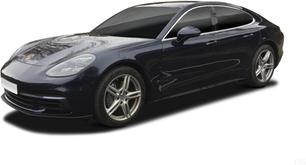
Australia hasn't had what you'd call a love affair with the Porsche Panamera. Especially compared to the on-going romance with its iconic sibling, the 911 and even its SUV stablemates.
The Panamera straddles the fence between high-performance sports car and family sedan and it's a position rivals like the BMW 740i, Maserati Quattroporte and Mercedes-Benz S450 have sometimes found difficult to balance.
This new-generation 'base' Panamera model is on test to see if this sedan's 2025 redesign will launch an arrow from Cupid's bow for Australian families?
Clearly, this is not a car for everyone, and you’d have to question whether it’s a car for anyone, really, but people who like spending $610,000 on Ferraris, and waiting in a queue to do so, will be delighted, because it delivers the kind of exclusivity, and bragging rights, that you’d have to hope a car called Superfast would.
Personally, it’s a little too much, a little too over the top and definitely too mad, but if rockets are your thing, you won’t be disappointed.
The Panamera is the ‘have your Porsche and drive it too’ model.
It encompasses the fun of the 911 while still being a comfortable daily driver that can easily fit a family of four. The cabin is sumptuously styled and not hurting for features, either.
Could the ownership costs and storage be better? Probably, but if you’re looking at this model, those items will probably be lower priorities for you.
For my little family of three, the base model Panamera is a win.
It’s very… big, isn’t it? And it looks even bigger in the flesh with a bonnet you could use to put a roof over your tennis court. In all, the Superfast is 4.6m long, almost 2.0m wide and weighs 1.5 tonnes, so it certainly has presence.
Making something this big look good is a challenge even for those as talented as Ferrari’s design team, but they have nailed it. The front has what appears to be a mouth, poised to swallow lesser cars whole like some whale shark Terminator.
The bonnet appears to be flaring its nostrils, and looks fabulous from the driver’s seat, and the swooping side and taut rear complete things nicely.
Personally, it still just looks too big to be a Ferrari, but then this is not a mid-engined super car, it’s a grand touring rocket ship, and the ultimate expression of unnecessary excess, and it pulls off that aura perfectly.
This is more than just a new Panamera - it’s a new generation Panamera.
The outgoing model was sort of a mix between the 911 and Macan but didn’t really hit the mark with any of its borrowed elements.
Beauty is in the eye of the beholder but the redesign sees this model get an outward appearance that looks far more aggressive with a distinct profile that now sets it apart for all of the right reasons.
On the outside, the biggest changes include larger matrix LED headlights and a new front fascia that sits a bit higher with more pronounced curving in the bonnet.
The front gets extra air intakes but there are also larger 'air blade' vents behind the front wheel arches which help smooth the air flow around the wheels and add some extra sculpted sportiness to the car's sides.
The rear has been reshaped to look more like the 911 and isn't as pillowy as the outgoing model. There is a new long LED strip light running the width of the rear and an extra brake light for added dazzlement at night. The rear window now spreads to the width of the liftback lid which makes it appear frameless.
The optioned 21-inch alloy wheels look gorgeous in their painted bronze (or Neodyme) glory and feature the Porsche crest in full colour for added pizzazz. The bronze accent is also carried across to the quad exhausts.
All these factors make the exterior design look more cohesive than the previous model.
The interior has been reworked, too, and the dashboard now sports upgraded tech panels that makes the cabin feel cinematic. The optioned passenger display screen only adds to this effect.
Purists will pout, but like the new 911 the analogue cluster and turn-key operation have died a quiet death. You now get a 12.3-inch digital instrument panel and push-button starter. Plus, the gearshift has been repositioned from the centre console to the dash.
The optioned Sports Chrono and Neodyme accent packages of our test model means the dashboard gets a race clock (superfluous for every day driving but fun to look at) and the door handles, steering wheel and dashboard feature the same bronze highlights.
The only elements that don't look the part are the shiny piano black panels mainly found in the centre console. They're too easily scratched/marked for a car at this price point.
The cabin may not be as flashy as its competitors but it's still sumptuous.
Practicality isn’t really your concern when you buy a two-seat mega car like this, so let’s just say it’s about as practical as you would expect it to be. Not very, then.
The cabin feels spacious in both rows and the rear row can comfortably fit those who are above six foot (182cm) with a caveat.
Despite being optioned with the '4+1' seating, don't be fooled; the middle rear seat is nothing more than extra room for the out-boarders as the rear centre console takes up all legroom a middle seater might need. Not even a kid will be happy in the middle for long.
Amenities in both rows are good. The heating/cooling and massage functions on the front seats are great and the four-zone climate control means everyone can get comfortable.
Access to both rows is surprisingly good with doors that open widely but the rear footwell lip is high and the well narrow. So, if you have clunky boots on you may feel clumsy getting into position.
My seven-year old found the doors heavy to open and it took him a while to realise he didn’t have to slam the doors shut thanks to the soft-close feature.
Individual storage is better than you usually get in a sports car but all cubbies still fall on the shallower side. There are four cupholders, four drink bottle holders, a glove box, a middle console and two small net map pockets. There is also a dedicated phone cubby housing the wireless charging pad.
The boot aperture is wide and it’s super easy to reach things in the back thanks to the liftback lid but that sloping roofline means you lose out on height for larger items.
Stack bigger things right behind the back seat if you want to fit them. Capacity is below average compared to its rivals at 460L.
The rear row has a 40/20/40 split to open up storage options and there is a very deep cubby underneath the floor with the tyre compressor/repair kit.
Device charging options are great with a total of four USB-C ports, a wireless charging pad and three 12-volt sockets to choose from.
The upgraded multimedia system looks fantastic and is user-friendly. The built-in satellite navigation is simple to use and the multimedia system, head-up display and instrument cluster can be highly customised.
The base Panamera model now comes standard with wireless Apple CarPlay and Android Auto. Connecting to the CarPlay is easy and the connection remains seamless.
The optional passenger display panel allows the front passenger to control their climate and seat comfort, see a duplicate of the instrument panel or just watch a movie on a long trip.
The screen has a privacy filter, which means the driver can’t see what’s on it and is thus not a distraction. However, no one in my family bothered to use it.
Is it possible that any car - save one made from gold, dusted with diamonds and stuffed with truffles - would represent good value at a price of $610,000? It seems unlikely, but then people who can spend that much assay value differently, and would probably say that something as profound as the 812 Superfast is worth buying at any price.
Another way to look at it is price-per-litre, which is less than $100,000, considering you do get 6.5 litres of V12 Ferrari donk. Or you could go by kilowatt, which works out at nearly $1000 each for your 588kW.
Other than that you do get a lot of leather, a high-quality interior, superior exterior styling, badge-snob value that’s hard to put a price on and vast swathes of F1-derived technology. And a free car cover.
There are four grades of Panamera on offer for the Australian market and the model on test is the entry-grade sedan, simply titled Panamera.
It feels silly calling a car priced at $236,990, before on-road costs, a 'base' model but here we are.
Our test model has $45,810 worth of optional extras but compared to its rivals the base price positions it towards the middle of the market with the Maserati Quattroporte GT being the most affordable at $219,000, then the Mercedes-Benz S450 at $241,275 and BMW 740i at $272,900. All prices before on-road costs.
As you’d expect, the standard equipment for the Panamera is long-winded and includes matrix LED headlights, four-point DRLs, ambient lighting, four-zone climate control, a dual sunroof, upgraded 12.3-inch touchscreen multimedia system, a new 12.65-inch digital instrument panel, wireless Apple CarPlay/Android Auto and built-in satellite navigation.
Comfort items include 14-way powered front seats with heating/cooling, as well as three-position memory functions. There is also a powered tailgate, front and rear parking sensors, a 360-degree view camera system and soft-close doors with a 'door brake' function.
The latter means the door holds the position you push it out too, minimising the chance of your kids hitting the neighbouring car, which is an awesome feature in a family car!
Other technology includes a total of four USB-C ports, three 12-volt sockets, a wireless charging pad, digital radio, the Porsche app and over-the-air updates.
As for the optioned extras... there is Burmester high-end sound ($11,200), full-grade leather upholstery ($7470), dark bronze accents on the quad exhausts ($6470), 21-inch alloy wheels ($3400), the 'Sport Chrono Package' ($3340), 10.9-inch passenger display screen ($3140), wheels finished in 'Neodyme' bronze ($2500), a massage function on the front seats ($2200), a middle rear seat ($1750), an interior Neodyme accent package ($1190), a heated steering wheel ($1140), an air quality system ($890), an interior black trim package ($760) and comfort pillow accessories ($450). Phew!
I did want to give the epic, enormous 6.5-litre naturally aspirated V12 engine a perfect 10 here, but when I paused to think about it I had to admit that it is, quite possibly, a little too powerful.
Yes, it is amazing to think Ferrari can build a car that has 588kW (800 horsepower - hence the 812 nomenclature; 800 horses and 12 cylinders) and doesn’t just dig itself a hole in the road as soon as you put your foot down.
And yes, it does provide the kind of performance that makes all other cars seems a bit piss poor and pathetic, even the really good ones.
But honestly, who could ever use it all, or need it all? They might seem like irrelevant questions, I guess, because it’s all about conspicuous over-excess, a car like this, so really the question is, would anyone want to live with 588kW and 718Nm of torque, or is it just too scary in reality?
Well, a little bit, yes, but Ferrari’s engineers have been wise enough not to actually give you all of that power, all the time. Torque is limited in the first three gears, and maximum mental power is actually only available, in theory, at 8500rpm in seventh gear, at which point you’d be approaching its top speed of 340km/h.
The fact that you can rev an engine this big, and this lusciously loud, all the way to 8500rpm is, however, a joy that would never tire.
In more practical terms, you can run 0-100km/h in 2.9 seconds (although cheaper, less crazy cars can do that, too) or 200km/h in 7.9 (which is a tiny bit slower than the far lighter McLaren 720S).
What you can’t do, of course, is achieve any of those numbers on winter tyres, or roads with snow on them.
The base Panamera doesn’t have a hybrid powertrain like its siblings and sports the 2.9L V6 twin-turbo petrol engine of the outgoing model. But it’s been retuned and now produces 260kW and 500Nm – both figures up from the previous model.
The Sport Chrono Package means the 0-100km/h sprint improves from 5.1-seconds to a tummy-sucking 4.8-seconds and my son gave a whoop of delight whenever we had to get up to speed.
The Panamera has an eight-speed, dual-clutch auto transmission and is the only RWD for the Panamera line-up. It also sports a top speed of 272km/h. So, suffice it to say, the engine has the sports cred you expect from a Porsche.
Much as you can’t have a good volcano without some serious lava, you can’t have 800 horsepower without burning a lot of dead dinosaur goo. The Superfast has a claimed fuel-economy figure of 14.9L/100km, but on our drive the screen just said "Ha!" and we burned through a whole tank of fuel in less than 300km.
Theoretical emissions are 340g/km of CO2.
The official combined (urban/extra-urban) fuel-cycle consumption figure is 9.5L/100km, which is pretty low for a high-performance vehicle (and a big one at that) but after a lot of open road and urban driving my real-world usage came out at 10.9L/100km.
That's the result after not being skimpy with using the power, either, so it's not as thirsty as you might expect.
When it comes to times between fills, the Panamera might surprise you. Based on the official combined fuel cycle and large 90L fuel tank, expect a theoretical driving range of up to 947km (825km using our on-test figure) – which is a great driving range for a performance vehicle, let alone a family one.
The Porsche Panamera only drinks the best, so while the driving range is great you won't be able to fill 'er up with anything but premium 98 RON unleaded petrol.
Insane. It’s a word that people often lift from their lexicon when describing a supercar experience, because clearly, as forms of transport, things like Ferraris and Lamborghinis are not sane options.
But the Superfast really deserves the word, because it feels not only the opposite of sane, but truly bonkers. As if someone built it for a dare, realised it was a bad and possibly dangerous idea, and then put it on sale anyway.
Picture some tiny-handed child with his greasy, post-cheeseburger fingers poised over a big red button on his desk that could wipe out humanity, and that’s basically the situation your right leg finds itself in when driving the Superfast.
There is so much power on tap here - even the limited amount of it that the engineers allow you to access in lower gears - that it truly seems possible you’ll have a Road Runner moment, and simply dig a hole in the ground, if you push the throttle too hard.
Yes, on the one hand, the noises this extreme V12 makes above 5000rpm are memorable and moving, like Satan himself singing Nessun Dorma in a shower of sparks. At one stage we found a long tunnel, perhaps the only dry road within 500km that day, and my colleague forgot all about his licence and let rip.
The numbers on my 'Passenger Screen' spun like poker-machine wheels, then turned red and then implausible. I was shoved back into my seat as if by Thor himself, and I squealed like a small pig, but my co-driver heard nothing over the Monaco tunnel during F1 sound.
Even on dry road, of course, the winter tyres we were forced (by law) to run in the foul snowy conditions could not maintain grip, and we constantly felt the rear skipping sideways. Fortunately we were in Italy, so people simply cheered us on.
The likelihood that you will lose traction in this car is so high that the boffins have included a special feature in its new 'Electronic Power Steering' system called 'Ferrari Power Oversteer'. When you inevitably start going sideways, the steering wheel will apply subtle torque to your hands, 'suggesting' the best way to get the car back in a straight line.
A proud engineer told me that this is basically like having a Ferrari test driver in the car with you, telling you what to do, and that they used their skills to calibrate the system. You can override it, of course, but it sounds scarily like an autonomous-driving precursor to me.
What’s disappointing about this car having EPS at all, rather than a traditional hydraulic system, is that it just doesn’t feel muscular enough for a hairy-handed monster of a car like this.
It is accurate and precise and pointy, of course, and makes driving the Superfast, even in stupidly slippery conditions, almost easy. Almost.
It’s actually surprising how hard you can push a car like this along a windy and wet mountain road without careering off into a muddy field.
More time, and more traction, would have been appreciated, but you can tell it’s the sort of car you’d grow into, and perhaps even feel in control of, after a decade or so together.
So it’s good, yes, and very fast, obviously, but I can’t get past the idea that it’s all a bit unnecessary, and that a 488 GTB is simply, in every single way, a better car.
But as a statement, or a collector’s item, the Ferrari 812 Superfast certainly is one for the history books.
Some people might not understand the obsession or loyalty Porsche owners have towards their cars but if you’re a fence sitter, get in the Panamera. It will make you understand because after driving one... you'll hear yourself say 'I get it'.
The base model has the goods with the engine outputs to ensure the driving experience remains fun and responsive.
The Panamera is no wild bronco, it's a cool customer. The composure for power delivery is unlike other performance sedans you may have driven. Acceleration is effortless without any twitchiness. You never feel out of control.
The air suspension means you hear the bumps more than you feel them but you still get excellent road feedback as a driver.
Passenger comfort is high, despite the cabin being quite loud with road and engine noise, because the seat and ride comfort remains well-cushioned. Fatigue and jostling are at a minimum.
The handling of the Panamera when it comes to cornering and steering feels dynamic and agile. I made a point of doing multiple mini roadies this week, simply for the joy of driving it.
While the Panamera is the most fun on a winding mountain road, it's a pleasant open-road cruiser as well.
The base Panamera has three driving modes - 'Normal', 'Sport' or 'Sport Plus' with a 20-second power booster available when you need extra oomph.
The Normal mode is sufficient for daily driving and the Sport Plus offers stiffer suspension and handling but the preference is to keep it in Sport mode.
Mainly because in this mode you get an awesome throatiness from the exhaust as well as the dynamics you expect from a sports car.
It’s a bit deceptive but the Panamera is massive and sits at 5052mm long and 2165mm wide - so, it definitely fills out a parking space!
However, the 360-degree view camera system is one of the best in the segment but you may still get choosy with where you park it.
It might not surprise you to hear that, unlike every other company’s press kits, the Ferrari ones don’t generally include a section on 'safety'. Perhaps because driving something this powerful is inherently unsafe, or possibly because they believe their 'E-Diff 3', 'SCM -E' (magnetorheological suspension control with dual-coil system), 'F1-Traction Control', ESC and so forth will keep you on the road no matter what.
If you do fly off, you’ll have four airbags, and a nose as big as a house forming a crumple zone, to protect you.
No Porsche is rated with ANCAP and the Panamera is no exception but the base model still has an extensive safety list that includes 10 airbags, which is more than some people movers!
The standard safety kit includes AEB, forward collision warning, blind spot monitoring, driver attention alert, safe exit warning, rear occupant alert, tyre pressure monitoring, an active bonnet and a side impact protection system.
There's also rear cross-traffic alert, lane departure alert, lane keeping aid, a head-up display, adaptive cruise control, a 360-degree view camera system, front and rear parking sensors, park assist, an engine immobiliser and an alarm system with radar-based interior surveillance.
The base Panamera misses out on traffic sign recognition and rear collision warning, though.
The rear row has two ISOFIX mounts and three top tethers but only two seats will be able to fit across the row.
Once you’ve paid the vast cost of entry, it’s nice to know you will get some stuff for free, like your first seven years of servicing, including all parts and labour, carried out by trained Ferrari technicians, who even dress like pit crew. It’s called 'Genuine Maintenance', and is genuinely Kia-challenging in its scope.
Porsche offers the Panamera with a three-year/unlimited km warranty, which is less than its competitors. It's more typical to see a five-year/unlimited km warranty in this segment.
Servicing intervals are reasonable at every 12-months or 15,000km, whichever occurs first and pricing varies per dealership.
The one I contacted (in Sydney) confirmed the first four years of servicing costs $8605 for an average of $2151.25 per workshop visit.
Worth noting the fourth year is a biggie at $4875, this major service including everything from an air-conditioning clean and transmission oil change to spark plug check/replacement and safety checks.
The Panamera is up there for service costs, even for the class but this kind of outlay comes with the territory when you're considering a car worth almost $300K.