What's the difference?
I know, picture Ferrari and you'll likely be conjuring images of potent V12 or V8 engines, a scenery-shaking exhaust bark on start-up and a fuel bill that would make a Sheikh wince.
But this one, the 296 GTS, doesn't have, or do, any of those things. In fact, it doesn’t so much explode into life as it does kind of whirr gently, as though you’ve just switched on a photocopier.
And yet, people I trust on these matters reckon this just might be the best Ferrari to have ever worn the badge. So, I guess we better get to figuring out what the hell is going on with this plug-in Prancing Horse.
The SUV craze is such that high-riding wagons are increasingly being tasked with also doing the job of sports cars, despite the immutable laws of physics clearly working against them.
While the results have been mixed, Mercedes-AMG has some serious form in this area, so much so that it’s been confident enough to unleash the second-generation GLE63 S.
Yep, this large SUV is looking to do its best impersonation of a sports car, so we’re looking to find out if it’s a convincing Jekyll and Hyde. Read on.
Anyone who says electrification somehow muddies the Ferrari formula is wrong. This plug-in Prancing Horse is among the most potent and direct vehicles I’ve ever driven, and the electric motor only adds to the experience.
There’s little wonder the GLE63 S is back for a second go around, after clearly putting the frighteners on the Audi RS Q8 and BMW’s X5 M Competition and X6 M Competition.
After all, it’s a large SUV that sacrifices little in the way of practicality (especially the wagon) in its pursuit of high performance.
And for that reason, we’re itching to go for another drive – with or without the family.
Note: CarsGuide attended this event as a guest of the manufacturer, with travel and meals provided.
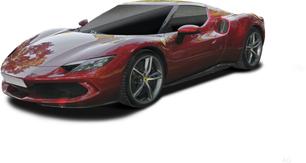
It is hard not to swoon when you gaze upon the 296 GTS, and I say that with no bias - I don’t think all Ferraris have looked this good.
But this is Ferrari at its dreamy, sweeping best, from the tarmac-kissing front — which generates so much downforce and cooling it negates the need for active aero — to its swollen haunches and the glass-topped engine window.
So what’s the difference between this and the GTB? Largely it is the ability to drop the folding roof, meaning you can feel the wind in your hair and that exhaust in your soul. To be honest, though, I reckon it looks better top up...
It’s a cockpit-style driver’s set-up inside, and there’s lots I love and some things I don’t. But let’s start with the steering wheel, which might be one of the best in existence.
It feels magic under the touch, as do the giant flappy paddles which remain fixed in place as you turn the wheel.
It’s also surprisingly comfortable in the figure-hugging sports seats, though climbing in and out of them is not necessarily something you want to do in front of a crowd.
Downsides? There is plenty of tech in the 296 cabin, but it’s all controlled from the steering wheel, making it fiddly and annoying to use.
Also, there are F1-levels of complexity on the control-everything steering wheel, and if I’m being honest, there are some buttons or switches, the function of which I still don’t fully understand.
First things first, the new GLE63 S is available in two body-styles, with the wagon appealing to the traditionalists out there, while the coupe targets the style-conscious.
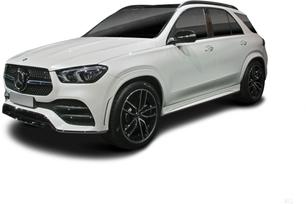
Either way, few large SUVs are as imposing as the GLE63 S, which is a good thing considering it wants to be taken seriously.
Up front, it’s immediately identifiable as a Mercedes-AMG model thanks to its distinctive Panamericana grille insert.
The angry look is punctuated by the angular daytime running lights integrated into the Multibeam LED headlights, while the chunky front bumper has large air intakes.
Around the side, the GLE63 S stands out with its aggressive wheelarch extensions and side skirts, with the wagon getting 21-inch alloy wheels as standard, while the coupe gets 22-inch items.
From the A-pillars onwards, the differences between the wagon and coupe body-styles start to become apparent, with the latter’s roofline much more steeply raked.
At the rear, the wagon and coupe differentiate themselves even more clearly with their unique tailgates, LED tail-lights and diffusers. That said, they do have a sports exhaust system with squared-off quad tailpipes in common.
It’s worth mentioning that the difference in body-style also means a difference in dimensions, with the coupe 7mm longer (4961mm) than the wagon, despite having a 60mm-shorter wheelbase (2935mm). It’s also 1mm narrower (2014mm) and 66mm shorter (1716mm).
Inside, the GLE63 S separates itself with its flat-bottom steering wheel with Dinamica microfibre accents, and multi-contour front seats, which are upholstered in Nappa leather alongside the armrests, dashboard and door shoulders and inserts.
The door bins are of the hard plastic variety. That’s underwhelming in a vehicle that costs this much, as you would hope cow hide – or at least a soft-touch material – would be applied to them.
The black headliner acts as another reminder of its performance focus, and while it makes for a darker cabin, metallic accents feature throughout, while the trim (our test vehicle had open-pore wood) adds some variety alongside the ambient lighting.
That said, the GLE63 S is still filled to the brim with cutting-edge technology, including two 12.3-inch displays, with one the central touchscreen and the other a digital instrument cluster.
Both use Mercedes’ MBUX multimedia system and feature Apple CarPlay and Android Auto support. This set-up is still the benchmark, thanks to its speed and breadth of functionality and input methods, including always-on voice control and a touchpad.
What do you want to know around practicality? We’re talking two seats, about 200 litres of cargo space total and a couple of smallish storage spaces in the cabin. And… that’s about it.
Next question, please.
Being a large SUV, you’d expect the GLE63 S to be quite practical, and it is, but what you wouldn’t expect is the coupe to have 25L more cargo capacity than the wagon, at a generous 655L, due to its higher window line.
That said, when you stow the 40/20/40 split-fold rear bench via the second row’s release latches, the wagon has a significant 220L advantage over the coupe, at a cavernous 2010L, thanks to its boxier design.
Either way, there’s a small load lip to contend with, making loading bulkier items a little more difficult, although that task can be made easier with the flick of a switch, as the air springs are able to lower the load height by a handy 50mm.
Better yet, four tie-down points are on hand to help secure loose items, alongside a couple of bag hooks, while a space-saver spare resides under the flat floor.
In the second row, things are even better, with the wagon offering a crazy amount of legroom behind our 184cm driving position, as well as two inches of headroom for me.
With its 60mm-shorter wheelbase, the coupe naturally sacrifices some legroom, but it still provides three inches of legroom, while its sloping roofline trims headroom to an inch.
No matter the body-style, the five-seat GLE63 S is wide enough to seat three adults abreast with few complaints, with the transmission tunnel on the smaller side, meaning there’s plenty of room for feet.
There’s also plenty of room for child seats, with two ISOFIX and three top-tether anchorage points on hand for fitting them.
Amenities-wise, rear occupants are treated to map pockets on the front-seat backrests, as well as a fold-down armrest with two cupholders, while the door bins can accommodate a couple of regular bottles each.
A fold-out cubby is positioned below the air vents at the rear of the centre console, containing two slots for smartphones as well as a pair of USB-C ports.
In the first row, occupants have access to the centre console’s cubby, which features two temperature-controlled cupholders, in front of which are a wireless smartphone charger, two USB-C ports and a 12V power outlet.
The central storage bin is pleasingly large and contains another USB-C port, while the glovebox is also on the larger side, and you get an overhead sunglasses holder too. Stunningly, the front door bins can take three regular bottles apiece. Not bad.
While the wagon has a large, square rear window, the coupe’s is a letterbox in comparison, so rearward visibility isn’t one of its strong suits.
Okay, hold your breath for a moment. The 296 GTS lists at $668,146, which is a sizeable jump over the hard-top GTB, which is more like $551,800. But what price a little open-air freedom?
What you get for that investment is a two-part (solid) folding roof, of course, but also what might be Ferrari’s most high-tech offering to date, with a plug-in hybrid system delivering potent performance rather than a usable EV driving range, a mega-clever braking system and an almost telepathic six-way 'Chassis Dynamic Sensor' designed to link the car’s key functions to make the experience, and the driver, somehow better.
Elsewhere, there are sports seats, Matrix LED headlights, 20-inch alloys, keyless entry and a very cool engine start touch-button on the even cooler steering wheel.
Oh, and there's wireless charging and Apple CarPlay, both thankfully standard in Australia, the latter controlled through the steering wheel and digital driver display.
It's all beautifully finished and a joy to behold and sit in.
Priced from $220,600 plus on-road costs, the new GLE63 S wagon is $24,571 dearer than its predecessor. While the rise is unfortunate, it is accompanied by the fitment of a lot more standard equipment.
And the same is true of the new GLE63 S coupe, which is priced from $225,500, making it $22,030 more expensive than its forebear.
Standard equipment for both cars includes metallic paintwork, dusk-sensing lights, rain-sensing wipers, power-folding side mirrors with heating, side steps, soft-close doors, roof rails (wagon only), keyless entry, rear privacy glass and a power-operated tailgate.
Inside you score push-button start, a panoramic sunroof, satellite navigation with live traffic, digital radio, a 590W Burmester surround-sound system with 13 speakers, a head-up display, a power-adjustable steering column, power-adjustable front seats with heating, cooling and massaging functionality, heated front armrests and outboard rear seats, four-zone climate control, stainless-steel pedals and an auto-dimming rearview-mirror feature.
Rivals for the GLE63 S include the less expensive Audi RS Q8 ($208,500) and BMW’s X5 M Competition ($212,900) and X6 M Competition ($218,900).
Now we're talking. The powertrain here is both tremendous and terrifying, pairing a 3.0-litre twin-turbo-petrol V6 with a rear mounted electric motor, and a 7.5kWh battery, to deliver a total 610kW and 740Nm. That power is fed through an eight-speed dual-clutch auto transmission.
Those are, frankly, scary numbers, and enough, Ferrari says, to dispatch 100km/h in just 2.9 seconds, and to push on to a top speed of 330km/h.
The GLE63 S is powered by Mercedes-AMG’s ubiquitous 4.0-litre twin-turbo V8 petrol engine, with this version pumping out a hard-hitting 450kW of power at 5750rpm and 850Nm of torque from 2250-5000rpm.
But that’s not all, because the GLE63 S also has a 48V mild-hybrid system called EQ Boost.
As its name suggests, it has an integrated starter-generator (ISG) that can provide up to 16kW and 250Nm of electric boost in short bursts, which means it can also reduce the sensation of turbo lag.
Mated to a nine-speed torque-converter automatic transmission with paddle-shifters, and Mercedes-AMG’s fully variable 4Matic+ all-wheel-drive system, the GLE63 S sprints from a standstill to 100km/h in just 3.8 seconds, in either body-style.
As well as the ability to start up and slink away silently, the Ferrari 296 GTS’s little battery will deliver a 25km EV-only driving range, and contribute to the overall claimed fuel use of just 6.5L/100km.
Charging is AC only, and the the brand reckons it takes around 90mins to top up using an 11kW charger. The self-charging is on-point, though, with the Ferrari able to quickly recoup energy from braking and the like to top up the battery without needing to plug in.
The GLE63 S’s fuel consumption on the combined-cycle test (ADR 81/02) varies, with the wagon achieving 12.4L/100km, while the coupe needs 0.2L more. Carbon dioxide (CO2) emissions are 282g/km and 286g/km respectively.
When you consider the high level of performance on offer, all of these claims are fairly reasonable. And they’re made possible by the engine’s cylinder-deactivation technology and the 48V EQ Boost mild-hybrid system, which has coasting and extended idle-stop functionality.
That said, in our real-world testing with the wagon, we averaged 12.7L/100km over 149km. While that’s a surprisingly good result, its launch drive route mainly consisted of high-speed roads, so expect a much higher number in metropolitan areas.
And in the coupe, we averaged a higher but still respectable 14.4L/100km over 68km, although its launch route purely involved high-speed country roads, and you know what that means.
For reference, the wagon has an 80L fuel tank, while the coupe has an 85L unit. Either way, the GLE63 S only takes more expensive 98RON premium petrol.
The engine is undoubtedly a highlight, and we’ll get to that in a moment, but I first want to talk about the steering in this car.
It might sound like a weird point to get hung up on, but it is sensational, and maybe the best I’ve ever experienced. Generally speaking, super-responsive steering can risk feeling overly sharp and uncomfortable when cruising, but somehow the 296 manages to feel super natural, super responsive, and super engaging, without every feeling sharp or darty. It’s just predictable, responsive, and spectacular.
Honestly, it is a highlight of a drive experience filled with highlights, with another being the dual-nature of this drop-top supercar. Long before I got anywhere near a twisting road I needed to navigate the usual nightmare that is Sydney, tackling traffic, suburbia, freeways, tunnels and expansion joints galore, and the 296 never felt uncomfortable.
Instead, the 296 slipped into a comfortable kind of lope, never jarring or rough, and eminently easy to get along with. And yet, when you arrive on the right road that veil of sensibility drops, and the Ferrari quickly reminds you of its potential.
For a start, the acceleration is properly, startlingly aggressive. Engage the 'Qualification' drive mode (which unlocks the full might of the Ferrari's electrified powertrain) and flatten your right foot, and you'll find the world suddenly hurtling past your windows, and your knuckles will no doubt whiten as you feel the rear tyres fighting for traction against the onslaught should you try it on anything but the straightest of roads.
It's addictive, but it's just one element of a near-perfect combination on offer here, with the 296 GTS the stiffest Ferrari drop-top to date, which becomes immediately clear as you start to attack corners with ever-growing confidence.
Grip, stability and stiffness in spades, the GTS delivers. And all accompanied by an exhaust howl so angry and evil it’s hard to believe it’s being generated by a V6.
It’s a thing of very near perfection.
Make no mistake, the GLE63 S is a big beast, but it certainly doesn’t act its size.
Firstly, the GLE63 S’s engine is an absolute monster, helping it to hunker down off the line and then charge on towards the horizon with serious vigour.
While there’s so much initial torque to begin with, you still get the added benefit of the ISG, which helps to eliminate lag as the new twin-scroll turbos spool up.
That said, acceleration isn’t always brutal, as the electronic stability control (ESC) is often quick to cut power when under full throttle in first gear. Thankfully, engaging the ESC system’s Sport mode solves this issue.
This behaviour is somewhat ironic as the 4Matic+ system is seemingly never short of grip, with it's working hard to find the axle with the most traction, while torque vectoring and a rear limited-slip differential proportion torque from wheel to wheel.
Regardless, the transmission provides predictably smooth and predominantly timely gear changes, although they’re definitely not dual-clutch quick.
What’s more memorable, though, is the sports exhaust system, which keeps your neighbours relatively sane in the Comfort and Sport drive modes, but will drive them mad in Sport+, with hilarious crackles and pops heard loud and clear on the overrun.
It’s worth noting that while the sports exhaust system can be manually engaged in the Comfort and Sport drive modes via a switch on the centre console, it only makes the V8 rumble grow stronger, with the full effect only unlocked in Sport+.
Of course, there’s more to the GLE63 S experience, like the fact that it somehow rides like a large SUV yet handles like a sports car.
The suspension’s air springs and adaptive dampers offer up a luxurious ride in the Comfort drive mode, with the GLE63 S wafting along with confidence. Not even its large-diameter alloy wheels pose too much of a threat to this quality on poorer country roads.
The ride is still more than liveable in the Sport drive mode, although the adaptive dampers become a too firm in Sport+, with the ride becoming a little too jittery to be bearable.
Of course, the whole point of the adaptive dampers becoming progressively firmer is to help the GLE63 S handle even better, but the real revelations here are the active anti-roll bars and engine mounts, which effectively limit body roll to such a level that it’s almost imperceptible.
In fact, overall body control is impressive, with the GLE63 S not feeling like the 2.5-tonne-plus behemoth it is. It really has no right to attack corners the way it does, with the coupe feeling a touch tighter than the wagon, thanks to its 60mm-shorter wheelbase.
Further confidence is afforded by the sports brakes, which include 400mm discs with six-piston calipers up front. Yep, they wash away speed with ease, which is exactly what you’d hope for.
Also key to the handling is the electric power steering, which is speed-sensitive and has a variable ratio. It’s really quick in the wagon, and even more so in the coupe, thanks to its more direct tune.
Either way, this set-up is well-weighted in the Comfort drive mode, with plenty of feel and just the right amount of heft. That said, Sport and Sport+ make it gradually heavier, but neither make the driving experience better, so stick with the default setting.
Meanwhile, Noise, Vibration and Harshness (NVH) levels are pretty good, although tyre roar is consistent at highway speeds, while wind whistle is prominent over the side mirrors when travelling above 110km/h.
Not much chance of the 296 GTS being crash-tested in Australia — you’d be able to hear the Italians weeping across the ocean.
You do get front and side airbags parking sensors, a reversing camera, auto high beam and tyre pressure monitoring.
ANCAP awarded the second-generation GLE range its maximum five-star rating in 2019, meaning the new GLE63 S gets full marks from the independent safety authority.
Advanced driver-assist systems generously extend to autonomous emergency braking with pedestrian and cyclist detection, lane-keep and steering assist (including emergency), adaptive cruise control with stop and go functionality, traffic-sign recognition, driver attention alert, high-beam assist, active blind-spot monitoring and cross-traffic alert, tyre pressure monitoring, hill-descent control, park assist, surround-view cameras and front and rear parking sensors.
Other standard safety equipment includes nine airbags, anti-skid brakes, electronic brake-force distribution and the usual electronic traction and stability control systems.
Standard is a three year warranty, but you can extend that for up to five years. Then, if your car has less than 90,000km on the clock, you can opt into the 'New Power15', which gives you up to 15 years total warranty coverage and is fully transferable.
The first seven years scheduled maintenance is free-of-charge.
As with all Mercedes-AMG models, the GLE63 S comes with a five-year/unlimited-kilometre warranty, which currently sets the standard for the premium market. It also comes with five years of roadside assistance.
Better yet, the GLE63 S’s service intervals are relatively long, at every year or 20,000km – whichever comes first.
It’s also available with a five-year/100,000km capped-price-servicing plan, but it costs $4450 in total, or an average of $890 per visit. Yep, the GLE63 S isn’t exactly cheap to maintain, but you expected that.