What's the difference?
I know, picture Ferrari and you'll likely be conjuring images of potent V12 or V8 engines, a scenery-shaking exhaust bark on start-up and a fuel bill that would make a Sheikh wince.
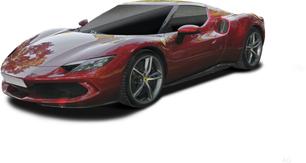
But this one, the 296 GTS, doesn't have, or do, any of those things. In fact, it doesn’t so much explode into life as it does kind of whirr gently, as though you’ve just switched on a photocopier.
And yet, people I trust on these matters reckon this just might be the best Ferrari to have ever worn the badge. So, I guess we better get to figuring out what the hell is going on with this plug-in Prancing Horse.
Honda built its four-wheeled automotive empire on the back of small cars, flying in the face of 1970s convention that bigger was better. As the ubiquitous Civic grew larger and larger, a niche for a smaller car appeared, and that niche was subsequently filled by the City in sedan guise, and the Jazz hatch that sits alongside it.
The buying public, however, is simply not as interested as it once was in small hatches and sedans, and Honda, along with other importers, is feeling the pinch when it comes to slumping sales for its smaller models.
But are we all missing out on something here? After all, the Thai-built City is priced from a rock-bottom $15,990 in base manual form – which is not a lot of money for a Honda.
We’re trying the range-topping, $21,590 VTi-L to see what we may have been missing.
Anyone who says electrification somehow muddies the Ferrari formula is wrong. This plug-in Prancing Horse is among the most potent and direct vehicles I’ve ever driven, and the electric motor only adds to the experience.
Small sedan sales are on the wane, and as a result, the cars that remain in the market often aren’t the best in a brand’s lineup.
This is the case with the Honda City. While it’s got plenty of space for passengers and it’s economical, the performance of the drivetrain in terms of composure leaves a lot to be desired.
The underdone steering, too, makes the car uncomfortable for passengers more often than not, while the buggy, hard-to-use multimedia system is unforgivable in an almost-$22,000 car.
Put it this way… the larger, newer, more refined base model Honda Civic is tantalisingly close in price to the top-spec City, and we know which side of the dealership we’d be walking towards.
It is hard not to swoon when you gaze upon the 296 GTS, and I say that with no bias - I don’t think all Ferraris have looked this good.
But this is Ferrari at its dreamy, sweeping best, from the tarmac-kissing front — which generates so much downforce and cooling it negates the need for active aero — to its swollen haunches and the glass-topped engine window.
So what’s the difference between this and the GTB? Largely it is the ability to drop the folding roof, meaning you can feel the wind in your hair and that exhaust in your soul. To be honest, though, I reckon it looks better top up...
It’s a cockpit-style driver’s set-up inside, and there’s lots I love and some things I don’t. But let’s start with the steering wheel, which might be one of the best in existence.
It feels magic under the touch, as do the giant flappy paddles which remain fixed in place as you turn the wheel.
It’s also surprisingly comfortable in the figure-hugging sports seats, though climbing in and out of them is not necessarily something you want to do in front of a crowd.
Downsides? There is plenty of tech in the 296 cabin, but it’s all controlled from the steering wheel, making it fiddly and annoying to use.
Also, there are F1-levels of complexity on the control-everything steering wheel, and if I’m being honest, there are some buttons or switches, the function of which I still don’t fully understand.
The City does a good job of disguising the fact that it’s a micro-sized sedan; at first glance, the revised front bar and grille that’s meant to mimic the one on the new Civic does such a good job that some people will need to look at the bootlid badge to find out it’s not a Civic.
A high waistline and a solid yet stylish sweep over the roof keep the City from looking overly twee, and even though the 16-inch wheels look a bit narrow, the overall impression is one of a larger car.
The interior, too, is spacious and airy, while the controls and steering wheel give the City an upmarket feel. There’s a little too much grey plastic inside, and hard plastics aren’t difficult to spot, but the City presents well, on the whole.
What do you want to know around practicality? We’re talking two seats, about 200 litres of cargo space total and a couple of smallish storage spaces in the cabin. And… that’s about it.
Next question, please.
Up front, the City is a great fit even for taller drivers, and its height-adjustable seat also means that the, err, less vertically inclined pilot can find a comfortable position behind the tilt-and-reach adjustable wheel.
A regular gear shifter and manual handbrake means the two cupholders are squashed under the centre console, but there are bottle holders in all four doors, as well as two more cupholders in the rear centre armrest in the VTi-L.
The VTi-L also gains two extra 12-volt accessory power points in the rear to complement the USB and a third 12V point up front, while the keyless entry system is not something you’d usually find on a car at this price point.
Sadly, the City’s multimedia system lets the side down - big time. Try as we might, we couldn’t connect a phone to our tester, no matter what we did, and it’s just utterly unintuitive to use in most situations.
It’s a bit of a rude shock, actually; most manufacturers have media systems sorted, but there’s simply not a even a half-decent one in any Honda that’s currently on sale. And there's no Apple CarPlay or Android Auto, though you can find those mirroring systems in the larger Civic.
Rear seating has adequate headroom – just – for taller teens, and there isn’t a lot of compromise required from front seaters to comfortably accommodate four people. Five? That’s getting crowded, but it can be done.
Two ISOFIX baby seat fixtures are present, along with three top-tether mounts. Boot space measures 536 litres - which is actually 12 litres bigger than that of the new Camry - while both rear seats fold flat(ish) to increase load capacity further.
A good point; the seats can be unlatched via boot-mounted buttons. A bad point; you still have to reach in and push the seats down by hand. A space saver spare nestles under the boot floor, as well.
Okay, hold your breath for a moment. The 296 GTS lists at $668,146, which is a sizeable jump over the hard-top GTB, which is more like $551,800. But what price a little open-air freedom?
What you get for that investment is a two-part (solid) folding roof, of course, but also what might be Ferrari’s most high-tech offering to date, with a plug-in hybrid system delivering potent performance rather than a usable EV driving range, a mega-clever braking system and an almost telepathic six-way 'Chassis Dynamic Sensor' designed to link the car’s key functions to make the experience, and the driver, somehow better.
Elsewhere, there are sports seats, Matrix LED headlights, 20-inch alloys, keyless entry and a very cool engine start touch-button on the even cooler steering wheel.
Oh, and there's wireless charging and Apple CarPlay, both thankfully standard in Australia, the latter controlled through the steering wheel and digital driver display.
It's all beautifully finished and a joy to behold and sit in.
The top shelf VTi-L is the best of a two-model lineup, and costs $21,590 plus on-road costs. It comes with an 88kW 1.5-litre four-cylinder petrol engine and a continuously variable transmission driving the front wheels, as well as LED daytime lamps, a part-leather interior, push-button start and smart key, climate control air conditioning, 16-inch alloys and a 7.0-inch touchscreen multimedia system with sat nav and Bluetooth phone and audio streaming.
It also has a leather-bound steering wheel and gear shifter, and map pockets on both seat backs.
It does miss out on a lot of other stuff, though, including Apple CarPlay and Android Auto capability, automatic lights (remember when a car last beeped at you to turn off the lights? Me neither...) and automatic wipers, and it also misses out on driver aids like auto emergency braking (AEB).
It starts to look a bit dear when you look at similarly priced cars - even from the next size sector up - that do offer inclusions like AEB and automatic headlights, though the small sedan is a bit of a rarity in the Aussie market now.
Its only like-for-like rivals in the space are the Mazda2 sedan and the Hyundai Accent sedan. Other potential competitors like the Ford Fiesta sedan and, more recently, the Toyota Yaris sedan have been deleted from local line-ups after years of declining sales, while the subsequent rise of the compact SUV will continue to have an impact on the so-called 'light car' market.
Now we're talking. The powertrain here is both tremendous and terrifying, pairing a 3.0-litre twin-turbo-petrol V6 with a rear mounted electric motor, and a 7.5kWh battery, to deliver a total 610kW and 740Nm. That power is fed through an eight-speed dual-clutch auto transmission.
Those are, frankly, scary numbers, and enough, Ferrari says, to dispatch 100km/h in just 2.9 seconds, and to push on to a top speed of 330km/h.
The i-VTEC four-cylinder 1.5-litre single cam engine is naturally aspirated, and it makes its 88kW at a high 6600rpm, while its modest 145Nm of torque peaks at 4600rpm.
It means the CVT gearbox needs to work pretty hard to get the best from the engine, which has been superseded by a twin-cam version in other markets.
As well as the ability to start up and slink away silently, the Ferrari 296 GTS’s little battery will deliver a 25km EV-only driving range, and contribute to the overall claimed fuel use of just 6.5L/100km.
Charging is AC only, and the the brand reckons it takes around 90mins to top up using an 11kW charger. The self-charging is on-point, though, with the Ferrari able to quickly recoup energy from braking and the like to top up the battery without needing to plug in.
The underdone performance does offer a benefit at the petrol pump, with the City returning a claimed 5.9 litres per 100km on the combined fuel economy cycle.
A 320km test loop netted us a dash-indicated figure of 6.3 litres per 100km, which is impressively close.
The 40-litre fuel tank is happy to accept standard unleaded petrol, too.
The engine is undoubtedly a highlight, and we’ll get to that in a moment, but I first want to talk about the steering in this car.
It might sound like a weird point to get hung up on, but it is sensational, and maybe the best I’ve ever experienced. Generally speaking, super-responsive steering can risk feeling overly sharp and uncomfortable when cruising, but somehow the 296 manages to feel super natural, super responsive, and super engaging, without every feeling sharp or darty. It’s just predictable, responsive, and spectacular.
Honestly, it is a highlight of a drive experience filled with highlights, with another being the dual-nature of this drop-top supercar. Long before I got anywhere near a twisting road I needed to navigate the usual nightmare that is Sydney, tackling traffic, suburbia, freeways, tunnels and expansion joints galore, and the 296 never felt uncomfortable.
Instead, the 296 slipped into a comfortable kind of lope, never jarring or rough, and eminently easy to get along with. And yet, when you arrive on the right road that veil of sensibility drops, and the Ferrari quickly reminds you of its potential.
For a start, the acceleration is properly, startlingly aggressive. Engage the 'Qualification' drive mode (which unlocks the full might of the Ferrari's electrified powertrain) and flatten your right foot, and you'll find the world suddenly hurtling past your windows, and your knuckles will no doubt whiten as you feel the rear tyres fighting for traction against the onslaught should you try it on anything but the straightest of roads.
It's addictive, but it's just one element of a near-perfect combination on offer here, with the 296 GTS the stiffest Ferrari drop-top to date, which becomes immediately clear as you start to attack corners with ever-growing confidence.
Grip, stability and stiffness in spades, the GTS delivers. And all accompanied by an exhaust howl so angry and evil it’s hard to believe it’s being generated by a V6.
It’s a thing of very near perfection.
Weighing just 1100kg, you’d expect the 1.5-litre powered City to have a bit of get up and go… but unfortunately it’s already gotten up and left by the time you drive off.
The 1.5-litre naturally aspirated engine is a carryover unit from the previous generation, and it feels like it, too. It’s also teamed with a CVT gearbox that isn’t a patch on more up-to-date trannies from the likes of Subaru and Toyota.
On any sort of incline, the CVT ups the revs of the engine to a point between bloody annoying and mildly painful, too. The VTi can be ordered with a manual gearbox, which has to be better than the CVT in this example.
The underdamped suspension tune is adequate for light duties around town, but the electric steering feel very odd underhand, especially at the very beginning of a turn.
There’s a big initial motion at the front wheels when you start to turn which then quickly tapers off, meaning that you have to be ultra precise with your steering to prevent the City from lurching into the corner and falling over its soft suspension.
On light throttle, with no hills and few corners, though, the City is just fine…
Not much chance of the 296 GTS being crash-tested in Australia — you’d be able to hear the Italians weeping across the ocean.
You do get front and side airbags parking sensors, a reversing camera, auto high beam and tyre pressure monitoring.
As mentioned, the City misses out on AEB and other driver aids, but does offer emergency brake assist and emergency flashing brake lights, as well as hill-start assist.
Full-length curtain airbags are offered along with dual front and front side 'bags, and there's a reversing camera. The City holds a maximum five-star ANCAP rating, which it has had since it was tested back in 2014.
Standard is a three year warranty, but you can extend that for up to five years. Then, if your car has less than 90,000km on the clock, you can opt into the 'New Power15', which gives you up to 15 years total warranty coverage and is fully transferable.
The first seven years scheduled maintenance is free-of-charge.
Honda sells the City with a five-year, unlimited kilometre warranty, while a no-catch seven-year, unlimited kilometre warranty is occasionally offered with its cars, along with premium roadside assistance for the life of the longer warranty.
Both warranties are also transferable to the next owner, should you sell your car before the warranty expires.
A fixed-price servicing regime is in place for the City, too, starting at $259 and peaking at $297. But Honda asks for the City to be serviced every six months or 10,000km, which does add to the cost of running the car.