What's the difference?
The Ferrari 12Cilindri should not exist. Everything about it shouts of excess to the point of illegality. Surely, one would assume, emissions regulations have made a vehicle with a naturally aspirated V12 engine as socially, and indeed legally acceptable as asbestos sandwich wrapping.
The work it must have taken to somehow squeeze this thing through the regulatory net is clearly more than any other company could be bothered with - the 12Cilindri is the only new atmo V12 a lot of money can buy.
Ferrari made the effort because this car, with this layout, is an integral part of the brand’s heritage, dating back to 1947, the rock on which it is built. Old Enzo Ferrari himself said the V12 is the Ferrari engine “everything else is a derivation of the original”.
And, of course, they made it because there are plenty of purists out there who will pay big, big dollars to have one. We flew to an unfortunately soggy launch for the car in Luxembourg to see what a V12 that can now rev to 9500rpm would feel, and sound like.
Do you remember when you first saw an Audi TT? I can go first. It was 1998 and I’d been backpacking through Europe for months and had arrived in Paris just as all my money had run out.
Anyway, as I was beating myself up for spending way too much on a fridge magnet in a souvenir shop (it had a built-in thermometer) when one drove past me.
I saw the Audi badge but before I could work out what it was it turned the corner and was gone.
The mysterious Audi was silver and it looked like it was from the future, but actually it was the original TT, the first one, and being about October ‘98 it would have only just come out.
I would never have believed you if you’d told me at the time that 25 years later I’d be a motoring journalist and that I’d be reviewing the final Audi TT ever.
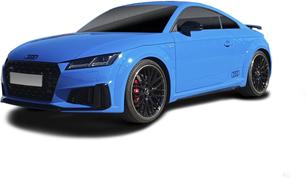
And here we are with the Audi TT Final Edition. That’s right, Audi has decided to discontinue this sports car after 25 years of production and it’s made this commemorative TT Final Edition that adds unique fettling and some nice features.
So, is the TT Final Edition worth buying? What’s so good about it? And how much more does it cost over a regular TT?
I found out after spending a weekend on some great roads to say goodbye to this icon. Oh, and I still have the fridge magnet.
In the near future we’ll look back at the 12Cilindri and say it’s a shame Ferrari doesn’t make cars like that any more. But if this is the last proper, naturally aspirated V12 Ferrari ever, it’s definitely a worthy one. One day you’ll enjoy seeing this in a car museum.
Note: CarsGuide attended this event as a guest of the manufacturer, with travel, accommodation and meals provided.
Audi is finally saying hooroo to this model which has made the world stop and stare like I did on that Parisian street all those years ago.
The Final Edition is a fitting tribute to this iconic sports car and I’m glad Audi didn’t go ‘OTT’ and deck it out with gimmicky features.
At the same time the Final Edition’s big rear wing, blacked out badges, wheels and interior colour coding hint that this is not just any ordinary TT and those that know will know.
Farewell Audi TT, we hope something just like you but probably electric appears to stop us in our tracks again.
So, while I’ll admit a vehicle with such a massive, phallic bonnet and a cabin that seems to sit over the rear wheels is never going to be my favourite Ferrari, personally, it’s impossible to see how you could make a giant-bonneted V12-powered, heritage-hugging grand tourer look better than this.
Yes, it does look striking in pictures but in the flesh it is absolutely gob smacking, a thing of real beauty from some angles, and outrageous showiness from others.
Following one from behind, its massive, hunkered rear end actually brings to mind a Lamborghini Diablo, although I wouldn’t tell the many passionate Ferrari designers I met that.
They have a lot to say about why the 12Cilindri (and can we just discuss that name - yes, it is silly, in English, but when an Italian says it - Dodici Cilindri - with the properly poetical pronunciation, it really does make sense) looks as outrageously lovable as it does.
They reckon they were inspired by the exciting era of car design in the 1970s, but also by science fiction movies, and the desire to build something modern that also feels classic.
Take the black banded front end where the headlights live. “Our intent was to lose the human expression that cars have, to not have an actual human gaze, so it doesn’t have eyes.”
Of course, no car has actual eyes, but you get the idea, they didn’t want it to look like it has them, the way most vehicles do.
There’s also a lot of talk about dihedrals and monoliths. The 12Cilindri also has an incredible clam shell bonnet, which not only creates a sense of theatre when you open it but means there’s no cut line through the bonnet, adding to that sense of the whole front end being monolithic.
Then there are the many aero features, including two Batmobile-like flaps on the rear wing that activate to provide downforce when required - some 50kg of it at 250km/h.
I could go on and on, surely they did, but let’s just say this is one hugely impressive piece of car design. I know some people find it a little weird looking in photos, but they are simply wrong. It's beautiful in the flesh.
The Audi TT’s shape has morphed over the past 25 years from the cute, rounded bubble car that first appeared in the late 1990s to the more aggressively and sleek looking sports car with the sharp creases we see today.
Still, there are the familiar pumped-out wheel arches and, while not as prominent as it used to be, that arching roof and the way it flows down to those tail-lights and stumpy tail remains so true to the original TT.
The TT Final Edition has a more menacing and athletic look than the regular 45 TFSI its based on thanks to the S Line Competition Plus exterior package.
So you’re getting the big fixed wing, an aggressive front bumper, and the 19-inch alloy wheels in gloss black.
There’s a black package, too, which add the decals down the side, the blacked-out badges, the black exhaust tips and black wing mirrors.
My test car’s paint colour was Turbo Blue and you can see in the images of the cabin how Audi matches interior elements in the same colour. The contrast stitching on the seats also lifts the sporty feel into high-end territory.
It’s a simple cabin, though, free from busy buttons and giant screens and the incorporation of climate controls into the air vents is genius.
If you’re wondering what the TT Final Edition’s dimensions are its 4191mm long, 1832mm wide and 1376mm tall.
For what it is, a two-seat grand tourer/rocket ship, the space inside is perfectly functional, and there’s a large kind of overgrown parcel shelf where you can throw a back pack or your jackets if you need to.
You also get a 270-litre boot, which is, you guessed it, just big enough for a set of golf bags.
Keep in mind that there is literally no one on Earth who will buy this as their only car.
The Audi TT isn’t going to cut it as a family car, but it’s more practical than a lot of people might think.
First this is a '2+2' sports car meaning those two rear seats are there for the odd occasion when you might need them, because the space back there is limited.
But for most of the time having a place to throw a jacket or extra luggage and not have to ask your co-plot to rest it on their lap will feel like absolute luxury.
Up front head and legroom is good, even for me at 189cm tall. Being a coupe the doors are long and although the car is low I found getting in and out easy.
There’s a pretty clever use of space when it comes down to cabin storage. You’ll find door pockets, a glove box, a covered centre console box and a hidey hole/wireless phone charger in the dash.
Back seat passengers have built-in shelves near their armrests. Surprisingly there are four cupholders - two of which fold out of the dash.
The boot isn’t huge at 305 litres but you can fold the rear seats down to open up the cargo capacity to 712 litres.
So, compared to its two-seater sports car rivals, the TT is relatively and pleasantly practical.
So just how big are these big dollars we’re talking about, for a Ferrari 12Cilindri. Well take a big deep breath, because the Coupe we drove starts at $803,500 while the convertible Spider, which is also available for order is $886,800.
Yes, that does seem like a lot to just take the roof off, but we’re talking about customers who will likely pay over $1M for one of these cars by the time they’ve finished personalising and adding expensive options, so they won’t mind.
And, to be fair, aside from the Purosangue SUV, this is about as many square metres of Ferrari as your money can buy you - not to mention the most cubic centimetres of engine, at 6.5 litres.
There’s a fair slab of luxury inside with a new 10.2-inch central touchscreen that makes it easier to ignore just how poorly designed and difficult to use the haptic buttons on the steering wheel are.
This is where you can run your Apple CarPlay or Android Auto without the kind of frustrated screams you’ll hear in some Ferraris.
The driver also looks at his own lush 15.6-inch display while the passenger now gets an 8.8-inch screen of their own, which can tell them how fast the person next to them is driving, or allow them to choose music to distract them from the blurred scenery outside.
The 12Cilindri is also available with luxurious ventilated seats featuring massage functions, as well as heating and cooling. But if you don’t want that kind of frippery you can opt for the far sportier carbon-fibre bucket seats instead.
Similarly, you can choose to have a very snazzy looking tinted glass roof or a carbon-fibre one, if you're very serious about lowering your centre of gravity.
Those kind of choices actually speak to the fact that the 12Cilindri is very much trying to be two cars at once; a luxurious and powerful Grand Tourer in the tradition of gentlemen drivers exploring Europe by road and, effectively, a supremely fast supercar, although Ferrari admits it is no longer the ultimate vehicle in its range, because more modern hybrid heroes like the 296 GTB and SF90 are, today, much more impressive when it comes to pure pace.
Audi has taken the $84,000 TT Coupe 45 TFSI quattro and created this TT Final Edition with extra features for a list price of $88,749.
Here’s what you’re getting. First there’s the 'S Line Competition Plus' exterior package which beefs up the TT’s looks with the big, fixed rear wing and 19-inch Audi Sport wheels in gloss 'Anthracite Black' with red brake calipers.
There’s also the black exterior package which brings the black Audi rings badging, black chunky exhaust tips, black side trims and Audi logo decals.
Inside there’s Nappa leather S sport seats; an Alcantara and leather flat-bottomed steering wheel with paddle shifters; while the armrests, door handles and the centre console are covered by the 'Leather Package' which includes contrasting stitching.
Metallic paint is also included as part of the Final Edition’s features. Ours was 'Turbo Blue'.
Much of the rest of the Final Edition’s features are shared with the TT Coupe 45 TFSI quattro and includes a 12.4-inch 'Virtual Cockpit' digital instrument display, sat nav, CD and DVD player, eight-speaker stereo, digital radio, Apple CarPlay and Android Auto, wireless phone charging and proximity unlocking.
Our car had a couple of options fitted - the privacy glass which is $950 and the 20-inch gloss black alloy wheels for $1600.
Rivals to the TT include BMW’s Z4 which lists for $99,200, and its Toyota GR Supra twin for $87,380, while the Nissan Z Coupe is also part of that sporty coupe club at $75,800.
You might already know this but the TT doesn’t have a central media screen and that can appear odd in a new car world where big screens dominate the dashboard.
This stupendous, trumpeting, mid-mounted 6.5-litre V12 (it’s mounted just beneath the windscreen, effectively, which actually looks a bit weird when you lift up that big clamshell bonnet, but makes sense in terms of mid-engine balance for handling) is a further development of what was already a fearsome powerplant in the vehicle that precedes this, the Ferrari 812 Superfast.
This new version also gets an eight-speed dual-clutch transmission, instead of the old seven-speed one, which theoretically provides better economy, as if the owners will care, but also provides “more driving enjoyment” as its shift times are now 30 per cent faster.
The V12 itself, naturally aspirated remember, now revs even higher, with maximum power of 610kW arriving at a very, very loud 9250rpm, just short of the 9500rpm redline.
What is incredible about that rev number is just how effortlessly and easily the engine will climb to those heights, repeatedly and addictively.
Ferrari says it’s also developed something called 'Aspirated Torque Shaping', which allows it to “sculpt” the torque curve in relation to engine speed and the gear selected, with 80 per cent of its 678Nm kicking in from 2500rpm.
The goal of this, on which it delivers, is to provide a sense of “seemingly endless acceleration”, particularly in third and fourth gear, where the car’s happy place exists.
All that grunt will hurl you to 100km/h in 2.9 seconds or from a standing start to 200km/h in 7.8. No, it's not the fastest power plant Ferrari now makes, but in terms of its intended goal of being the greatest naturally aspirated V12 ever, it's a 10 out of 10 effort.
There is no way that Ferrari will get away with making another engine like this, so it’s fitting that it’s going out on an operatic high note.
The TT Final Edition has the same 2.0-litre, four-cylinder, turbo-petrol engine as the regular 45 TFSI TT Coupe with the same 180kW and 370Nm outputs.
The TT is light, though, at only 1460kg and that grunt is enough to slingshot it from 0-100km/h in 5.1 seconds.
The transmission is an eight-speed dual-clutch automatic which sends drive to all four wheels.
Sure, the TTS has more grunt and the TTRS is nothing short of wonderful with its five cylinder powerplant, but the 2.0-litre engine in the Final Edition feels perfectly suited to what is a fun and engaging sports car.
Move along, nothing to see here. Well, nothing you wouldn’t expect, except for the fact the Ferrari 12Cilindri is fully emissions compliant with the 2026 Euro-6-E standard. Incredibly. A ceramic catalytic converter is part of the magic, apparently, but a lot of effort has clearly gone into all areas of emissions.
Its CO2 emissions are claimed to be 353g/km, but then its fuel efficiency is a claimed 15.5 litres per 100km, and that’s just having a laugh.
Despite having a 92-litre tank, I was shown a predicted range of just over 415km when full, and was down to a predicted 300km to go after draining a quarter of a tank. Even EVs can do better than that.
Audi says that after a combination of open and urban roads the TT Final Edition should use 7.0L/100km.
My own testing took in a combination of the best country roads and worst city traffic and at the fuel pump I measured 10.9L/100km.
But most of my time was spent in 'Dynamic' drive mode with the fuel-saving idle stop system switched off.
The TT's 55-litre fuel tank means you should have a range of about 785km.
To say that our first drive of the Ferrari 12Cilindri was impacted by nasty wet weather and standing water on slick and narrow European roads would be like saying that going outside naked when it’s snowing impacted your level of goose flesh.
For the first 30 minutes I was breathing like someone who’d just been pushed out of a plane with no parachute. When trucks came towards me, and when the rear wheels scrabbled madly to find grip - bringing to mind the whirling legs of the cartoon Road Runner - I breathed in so severely that I think I now have a pair of boxer shorts stuck in my chest cavity.
Fortunately, Ferraris have a 'Wet' setting, which is a work of genius, sensing the amount of grip you might not have and adjusting the power delivery to keep you safe. Remarkably, even in this mode, you don’t feel short changed on power in this wild V12-powered machine.
Unfortunately, the combination of my work ethic, professional pride and male ego meant that I could not allow myself to stay in Wet mode and would occasionally switch to 'Sport', when the rain eased up and the road almost dried out.
It was during these times that, after about an hour, I really started to gel with the Dodici Cilindri and found opportunities to enjoy its stupendously operatic soundtrack.
Much as the emissions laws have squeezed the engine, new sound regulations mean this V12 Ferrari must be quieter, in theory, than ever before, at least from outside.
But the sound designers have gone to a lot of trouble to make sure the sensational noise of this engine spinning its way to 9000rpm-plus finds its way into the cabin, and into your ears, and your very soul.
The temptation to give it plenty in the lower gears was thus overpowering and unending, but this grand tourer is so powerful that exploring the upper ranges in any gear means warping straight past speed limits, and sane behaviour.
Fortunately, the 12Cilindri has stupendous brakes, and while its extreme length - almost 5.0m - causes some nose lifting under acceleration and diving under hard stopping, the car’s mid-engined balance means you always feel planted and in control.
The steering is also super sharp and, while it takes some getting used to, the accuracy of its turn-in encourages you to push harder and harder. I had a fantastic time driving it through long sweeping bends, and a slightly more stressful time in sharp hairpins.
This Grand Tourer really is two cars in one, however, because if you leave the gearbox in Automatic it really does take all the effort away, riding its wall of torque and seemingly capable of driving at any speed from 40km/h to 240km/h in seventh or eighth gear.
It is far more fun, and frightening of course, to change the gears yourself, and explore those higher, scintillating rev ranges.
So, it’s a great car, a collector’s piece, because they’ll never make another one like it, and a moving piece of visual drama. The only problem I have with the 12Cilindri is it’s just not the best Ferrari a huge whack of cash can buy.
Indeed, the Ferrari 296 GTB is not only the best Ferrari I’ve ever driven, it’s the best car I’ve ever been lucky enough to sit in, and it’s more than $100K cheaper.
Apparently the thing to do, if you’re a Ferraristi, is to have one of each. Sounds good.
There are plenty of sports cars out there which are dynamically superb yet uncomfortable to sit in.
But the TT’s cabin is as ergonomic as it is stylish with a great, low sitting position and good pedal feel, a steering wheel that can be adjusted to be just right and still with plenty of space underneath for long legs like mine.
The shifter feels the right distance away, good visibility even out the rear window and plenty of ventilation. And we haven’t even started driving yet.
The TT Final Edition felt to me how a TT should. Fun. Not overpowered nor brutally firm and not ridiculously loud.
Instead, my drive in the Final Edition, which took me along some of my favourite country roads, was one of the most enjoyable runs I’ve had in any car.
This is a car which ‘listens’ to you and replies with exactly what you’ve asked for in the way it turns into corners and accelerates out of them, and pulls up when you need it too.
There’s so much connection to the road, you can hear the sticks and stones flying up into the guards, you can feel the coarse chip bitumen through the steering wheel.
But it’s all so easy, too. The suspension is firm but soft enough that you can drive this daily. The steering is light but still with great feedback.
Some sports cars leave you feeling exhausted, like you’ve just wrestled a bear but the TT Final Edition just leaves you feeling like you've been on a ride and all you want to do is run back around to line up and get back on it again.
The Ferrari 12Cilindri has not been ANCAP tested, nor is that ever likely to happen.
As well as a new brake-by-wire system and improved brakes that promise shorter stopping distances, this Ferrari is packed with software designed to keep you on the road, including 'Side Slip Control' and too many levels of traction control to count.
It also features, as standard, adaptive cruise control, 'Surround View', 'Assisted Emergency Braking', lane keeping assist, 'Traffic Sign Assistance' and 'DDAW' or Driver Drowsiness and Attention Warning.
This could be a deal breaker for you. The Final Edition, like all Audi TTs, falls short in terms of safety equipment compared to its rivals.
This third generation TT only managed four ANCAP stars out of a maximum of five when it was assessed in 2015.
This was due to the model not having AEB or lane keeping assistance or rear cross-traffic alert.
The only assistance features it has are blind spot warning and self parking (which is handy). It doesn’t even have adaptive cruise control.
There are two top tether points for child seats in the second row but please be aware that the TT was also scored low by ANCAP for child occupant crash protection.
If you do have children and are looking for something safer but still small and sporty, the BMW 2 Series Gran Coupe or Mercedes-Benz A-Class are excellent choices.
Something to think about.
Like all Ferrari’s, the 12Cilindri comes with a seven-year, unlimited km warranty and a free-of-charge seven-year maintenance program covering all regular maintenance for the first seven years of the car’s life.
Service intervals are once a year, or every 20,000km.
The TT Final Edition is covered by Audi’s five-year, unlimited kilometre warranty.
Serving is recommended every 12 months or 15,000km and although Audi doesn't have capped price servicing there is a five-year/75,000km plan which will cost about $3000 in total for regular maintenance. Yep, that's $600 per workshop visit.