FROM OUR EXPERT TEAM
Explore Articles

Likes

Smooth, easy power
Genuine EV-like drive experience
Street-smart styling

Dislikes

Random thrum of petrol engine takes some getting used to
Fuel efficiency not all its cracked up to be
Expensive way to drop your fuel bill
Andrew Chesterton

Contributing Journalist

5 min read

I know by now you probably think you have a fair idea of how petrol cars work – even the hybrid ones, which have been around for more than two decades at this point.

But this one, the Nissan Qashqai Ti e-Power, might just test your knowledge a little bit. Because it is a hybrid, yes, just not as we've known them. 

While relatively fresh to Australia, the technology isn't actually all that new. Nissan's e-Power has been around in Japan since 2016, when it debuted in that market's Note – a bite-sized city car not offered here.

Read More About Nissan Qashqai

But now it's in Australia, and specifically in the X-Trail and Qashqai, so it's time we figured out exactly what it is. 

In this Ti trim, the Qashqai e-Power blends a petrol engine – in this case a turbocharged 1.5-litre unit – with an electric motor and a small 2.1kWh lithium-ion battery to produce a total 140kW and 330Nm. 

So far, so familiar. But where the e-Power differs from conventional hybrids (the type used in Toyota's mega-popular electrified vehicles, like the RAV4 Hybrid or Corolla Cross Hybrid) is in the way it delivers its power.

See, in the Nissan, the petrol engine is used only as a power generator, used to recharge the battery or to deliver grunt directly to the electric motor.

Nissan says will deliver fuel use of 5.2L/100km on the combined cycle.

The electric motor, and only the electric motor, drives the front wheels, meaning it behaves much like a true electric vehicle – smooth, constant acceleration without heavy revs or a wonky gearbox – but you also never need to plug it in. A hybrid, then, just not as we know them.

Nissan says this technological wizardry will deliver fuel use of 5.2L/100km on the combined cycle. That's not as good as the fuel figure Toyota says you'll see in the Corolla Cross Hybrid, by the way, with the Japanese giant promising a combined 4.4L/100km figure.

The e-Power system delivers a car that drives better than most hybrids.

So, real world? Well, like most cars and their claimed figures, I've gotten close, but never landed on the money. My first couple of weeks with the Qashqai saw me travel some 445kms, for which my average fuel use was 5.7L/100km. To be fair, that period had lots of long-distance freeway driving, which helped to drop that figure.

The following two weeks were spent largely in the city, which saw my average fuel use climb to 7.2L/100km. In all, the Qashqai I've got has averaged 6.3L/100km over a total 2826kms. Not bad, but not quite 5.2L/100km, either.

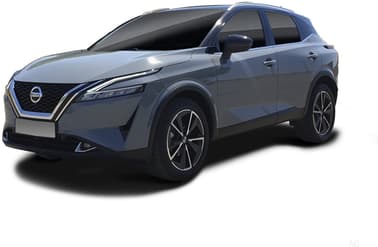
19 alloy wheels.
19 alloy wheels.

But to be honest, viewing the Qashqai through an exclusively fuel-efficient lens is to do this urban SUV a disservice. For mine, the single biggest perk of the e-Power system has nothing to do with the petrol station, or trying to cover your commute in a vague green glow. It's actually far more simple than that.

In short, the e-Power system delivers a car that drives better than most hybrids. While conventional hybrid vehicles can be loud and thrashy, and drone on and on through their CVT gearboxes, the Qashqai is the opposite – smooth, quiet and comfortable, and genuinely EV like in the way it goes about its business.

The Qashqai is smooth, quiet and comfortable, and genuinely EV like in the way it goes about its business.

The power isn't immense, but it's instant and unbroken by gearshifts, giving you smooth and easy acceleration no matter the circumstances. Yes, there is the sight weirdness of having a petrol engine occasionally revving out of synch with your pedal inputs (remember, the engine doesn't drive the wheels, so while it will kick in when you flatten your right foot to power the electric motor, it can also just kick in at random when the battery needs a top up) but you quickly get used to it.

The whole e-Power lark does then feel like a genuine bridge between petrol power and full electrification, given there's no need to ever plug this one in, but there is a sizeable catch.

If we agree e-Power is a bridge, then in the Qashqai Ti it's a bridge paved with diamonds and suspended by golden chains, because this vehicle is not cheap.

The power isn't immense, but it's instant and unbroken by gearshifts, giving you smooth and easy acceleration no matter the circumstances.

While the regular petrol-powered Qashqai Ti is a pricey $51,358 drive-away, fitting the e-Power tech ups the on-the-road cost to a sizeable $55,955. That's almost $20k more than the cheapest Qashqai, the petrol-powered ST, which is $37,375 on the road.

Those numbers aren't helped by the fact the most expensive Corolla Cross Hybrid, the Atmos, is $51,453 drive-away, while the cheapest hybrid in Toyota's Corolla Cross family is just $40,505 drive-away - a full $15k less than the Nissan.

So, a better drive experience, but also a far more expensive one. But at least you get plenty of bang for those bucks. But for that, and much more, you'll have to tune in next month.

Acquired: July, 2024

Distance travelled this month: 918.4km

Odometer: 3585km

Average fuel consumption this month: 7.2L/100km

Nissan Qashqai 2024: Ti E-Power (Hybrid)

Engine Type Turbo 3, 1.5L
Fuel Type Electric/Pulp
Fuel Efficiency 5.2L/100km (combined)
Seating 5
Price From $39,050 - $45,980
Safety Rating

Pricing Guides

$36,226
Based on 119 cars listed for sale in the last 6 months.
LOWEST PRICE
$23,987
HIGHEST PRICE
$50,995
Andrew Chesterton

Contributing Journalist

CarsGuide contributing journalist Andrew Chesterton is an award-winning Australian automotive reporter with more than 20 years of experience across newspapers, magazines, digital publishing and automotive corporate communications. Andrew began his journalism career at Sydney’s The Daily Telegraph and The Sunday Telegraph, reporting across business, courts, crime, property and state politics before moving into automotive journalism. He joined TopGear Australia as its online editor in 2008, later being appointed editor of Top Gear New Zealand. He subsequently worked as an assistant editor during the Australian launch of the Daily Mail Australia, and as communications manager at FCA Australia, now Stellantis. His experience on both sides of the media industry gives him an unrivalled understanding of the automotive industry, and the relationship between car manufacturers, the media, and Australian consumers. Andrew’s work has appeared across leading automotive, news, business, luxury, travel and lifestyle publications, including CarsGuide, EV Central, DMARGE, The Sydney Morning Herald, Marie Claire, Top Gear, GQ Australia, The Australian, WISH Magazine, Boss Hunting, The West Australian, The Nightly, Women’s Day Australia, Carsales, NRMA, Men’s Health, CEO Magazine, Australian Financial Review and more.   Andrew specialises in industry news, vehicle reviews, policy,  performance and luxury cars, electric vehicles, automotive technology, EVs hybrid and plug-in hybrids, and the broader Australian new-car marketplace. In 2025, Andrew was named Newspress Australia News Journalist of the Year and was a finalist for the overall Journalist of the Year award. Earlier honours include Website of the Year wins at the Australian Magazine Awards and ACP Awards, the ACP Rising Star Award and recognition in the Bauer Media and News Ltd journalism awards. Expertise Electric, hybrid and plug-in hybrid vehicles Performance, luxury and supercars New-car reviews and road testing Australian automotive industry and new-car sales Chinese automotive brands and emerging manufacturers Utes, SUVs and family vehicles Automotive technology Policy Awards 2025 Newspress Australia News Journalist of the Year Featured Publications CarsGuide EV Central DMARGE The Sydney Morning Herald Marie Claire Top Gear GQ Australia The Australian WISH Magazine Boss Hunting The West Australian The Nightly Women’s Day Australia Carsales NRMA Men’s Health CEO Magazine Australian Financial Review The Daily Telegraph The Sunday Telegraph Note: The author, Andrew Chesterton, is a co-owner of Smart As Media, a content agency and media distribution service with a number automotive brands among its clients. When producing content for CarsGuide, he does so in accordance with the CarsGuide Editorial Guidelines and Code of Ethics, and the views and opinions expressed in this article are solely those of the author.
About Author
Disclaimer: The pricing information shown in the editorial content (Review Prices) is to be used as a guide only and is based on information provided to Carsguide Autotrader Media Solutions Pty Ltd (Carsguide) both by third party sources and the car manufacturer at the time of publication. The Review Prices were correct at the time of publication. Carsguide does not warrant or represent that the information is accurate, reliable, complete, current or suitable for any particular purpose. You should not use or rely upon this information without conducting an independent assessment and valuation of the vehicle.
Pricing Guide
$23,987
Lowest price, based on CarsGuide listings over the last 6 months.
For more information on
2024 Nissan Qashqai
See Pricing & Specs

Have you considered?

Mitsubishi Outlander
BYD Atto 3
BYD Atto 3
Mahindra XUV700
Mahindra XUV700
Hyundai Tucson
Hyundai Tucson
Hyundai Inster
Hyundai Inster
Suzuki S‑Cross
Suzuki S‑Cross
Volkswagen T‑ROC
Volkswagen T‑ROC
Kia Sportage
Kia Sportage
Skoda Karoq
Skoda Karoq
Nissan X‑TRAIL
Nissan X‑TRAIL
Honda ZR‑V
Honda ZR‑V
Leapmotor B10
Leapmotor B10
Mitsubishi ASX
Mitsubishi ASX
Geely Starray Em‑I
Geely Starray Em‑I
Toyota Corolla Cross
Mazda CX‑5
Mazda CX‑5
Chery Tiggo 8 PRO MAX
Renault Arkana
Renault Arkana
Renault Symbioz
Renault Symbioz
Forthing Taikon 5
Forthing Taikon 5
Subaru Crosstrek
Subaru Crosstrek
Chery E5
Chery E5
Suzuki Vitara
Suzuki Vitara
KGM Ssangyong Torres
Renault Koleos
Renault Koleos
Volkswagen T‑Cross
Volkswagen T‑Cross
Nissan Qashqai
Nissan Qashqai
GWM Haval H6
GWM Haval H6
Mazda CX‑30
Mazda CX‑30
MG HS
MG HS
BYD Sealion 5
BYD Sealion 5
Hyundai Kona
Hyundai Kona
Honda HR‑V
Honda HR‑V
GWM Ora 5
GWM Ora 5
BYD Atto 2
BYD Atto 2
Jaecoo J7
Jaecoo J7
Mitsubishi Eclipse Cross
Renault Duster
Renault Duster
Skoda Kamiq
Skoda Kamiq
Toyota Yaris Cross
Toyota Yaris Cross
Kia Seltos
Kia Seltos
MG ZS Hybrid+
MG ZS Hybrid+
Mazda CX‑3
Mazda CX‑3
Check out more SUVs
CarsGuide Logo

Rival reviews

Toyota Corolla Cross hybrid 2023 review: snapshot
8.5/10
Mazda CX-30 2024 review: G25 GT SP long-term | Part 3
8.4/10
Honda ZR-V e:HEV LX vs Nissan X-Trail Ti e-Power 2024 comparison review

Comments