What's the difference?
Hybrid campers tread the line between caravan comfort and camper trailer-manoeuvrability and are touted as somewhat of a new thing; almost an evolution of comfort as more people look for a perfect camping experience.
But camper-trailers like the Cub Longreach LE prove that the concept has been around for decades.
It hasn't always been called the Longreach, but this high-walled, super-sized, off-road camper-trailer was one of the first to offer caravan-like comfort and space in a product that'll go anywhere off-road*. (* In terms of reasonable use and having obviously scrutinised your camper's warranty conditions before setting off to make sure you're covered for that sort of usage.)
The 2019 LE takes the comfort levels even further, so we grabbed one for a night to check it out.
How much of a vehicle’s personality is determined by its tech? I’m pretty certain a Porsche 911 is still a 911 despite now being turbocharged, liquid-cooled and fitted with electric power-steering.
And surely a Toyota Corolla is still the spiritual equal of the original Corolla of the 1960s, despite the current car being front-drive, roughly the same size as an early Camry and fitted with a hybrid driveline and CVT transmission.
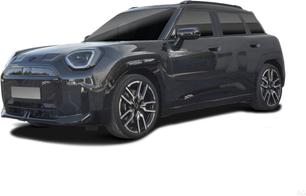
But what about our old friend the tiny, two-door Mini first seen in the late 1950s? Specifically, can the new Aceman variant still claim all (or, indeed, any of) its Mini-ness?
Okay, it’s still front-wheel drive and retains a few crucial visual clues. But let’s be clear here, it’s not only built in China as part of a joint venture between parent company BMW and Great Wall Motors, it’s also now a five-door hatchback and uses nothing but volts to get around. Can there be any Mini left in it?
Mini also claims the Aceman is part of a spearhead attack to take the brand towards an EV stance. Fitting in between the Mini Cooper two-door EV and the Countryman EV in both front and all-wheel-drive form, the Aceman theoretically broadens that range but, in reality, is more or less a replacement for the discontinued Clubman badge.
And despite the five-door layout, Mini is also happy to maintain that the original Mini’s genius in rewriting the book on interior-space-to-footprint ratio still shines through here. Maybe. At least it’s smaller than the hulking (by Mini standards) Countryman.
So here’s how it pans out: If you want a five-door, electric Mini that isn’t as big as a Countryman, the Aceman is your, er, man.
This isn’t the camper for everyone – my guess is that plenty of people look at this and find it too sparse, too basic. I kinda get it.
But there are very few campers which offer the same amount of open, internal space, or that are as easy to set up.
That the Longreach, albeit with a few different names, has lasted so long on the Cub Campers' product roster is a testament to its versatility and ability to accommodate a small family on off-road camper trips.
It's arguably one of the forerunners of the hybrid camper scene, and it's now starting to evolve with campers' desires for more comfort.
In many ways - range, performance and purchase price, for instance - the Mini Aceman is decent value, somewhat par for the course and would give its logical competition a proper marketplace run. But it’s better than that. The car’s big point of difference is its retro charm and the fact that it’s been tuned to be a fun drive rather than the non-confronting experience some carmakers strive for.
The performance is strong and the handling and steering serve up a bit of entertainment as well as giving the car a particular flavour. Which, as electric drivelines threaten to homogenise cars even further, must count for something.
Yes, some of what you’re paying goes towards that arguably nebulous notion of 'driving-spice' but once you’ve driven it, you’ll probably know what we’re talking about. A new car purchase is always special, so why not make that specialness last a bit longer with a car that will still be an entertainer long after the showroom thrill has worn off.
Meantime, it’s easy to see why Mini has already begun to run-out stocks of the cheaper E model. The SE still manages to play on that cheeky charm, but offers a more mature vehicle into the bargain. Not a bad trick, really.
Note: CarsGuide attended this event as a guest of the manufacturer, with accommodation and meals provided.
For a rear-fold camper-trailer, the space inside couldn't be more practical. The long body and high sides mean that when the camper is open and set up, it has a lot more space than most. Behind the bed, for instance, there is enough space for Cub to have fit a small dinette.
The dinette has cushioned benches for two and a swivel table that can also become a counter over the rear floor area.
The camper's length also means that the rear floor area is massive. It is easily big enough to lie a couple of kids on, or if your nest is empty, to set up some camp chairs and a table to enjoy a covered living area.
It is still a rear-fold camper-trailer, though so, despite the fact it has nearly twice the space of other hybrid-style campers, it's very sparsely furnished. There's no internal kitchenette or anything like that.
Perhaps it’s the packaging designed to play the retro card, but I can’t help feeling the door openings on this car are pretty tight. The rear doors, in particular, seem designed for someone smaller than I, and even once I’m in the news doesn’t really improve.
The Aceman’s rear pew seems tight for both foot and legroom and should you have an adult in the back seat, they’re only going to fit by having somebody smaller in the front seats. The chances of a six-footer (183cm) sitting behind a driver of similar stature are pretty slim (over a distance, anyway).
This is all to do with Mini keeping the overall length of the car to just over four metres, and stuffing a compact SUV into that space.
Perhaps that also explains the giant blind spot formed by the thick B-pillar. Either way, taller drivers will find themselves peering around it when crossing or tuning into intersections.
The seats themselves, however, are quite charming. They look a bit small with their cloth trim, but in reality, they’re comfy and supportive. The pleated John Cooper Works front seats that are standard in the SE are phenomenally good. The only thing missing is that distinct smell of leather we’d normally associate with a 60-grand car.
The traditional row of toggle switches under the central screen remains… sort of. These days, they’ve been modified to act as the starter button for the keyless start system and also the gear selector. The problem is that they’re gloss black on a black background, so they can seem a bit indistinct.
The gear selector has also been reinvented – again – with a separate Park button now to the side of the toggle. The other ergonomic glitch I noticed was every time I went for the interior door handle to leave the car, I fumbled for a second till I located it, tucked up under the armrest.
The clean, uncluttered dashboard means a couple of items have moved to the space between the front seats. So, there’s a pair of cupholders, a small, lidded compartments and a pair of USB charge-points all living in the real estate between the front chairs. That’s in the SE, anyway, because the cheaper E retains only the cupholders.
The luggage space is deeper than a lot of EVs manage and the rear seat folds 60/40 to open up a huge area if you don’t need the seats. With the rear seat up, there’s 300 litres of capacity and, with the seat folded, that leaps to 1005 litres.
There are three child restraint tether points, and the luggage space is served by a 12 volt socket.
There’s also a luggage cover that can be quickly removed for taller items. The tailgate is manually operated.
There are also three ISOFIX attachment points for child seats; two on the rear seat and one on the front passenger seat.
Cub Campers are famously good to tow, and even the largest of them lives up to the reputation.
As big as it is, the Longreach LE is quite light thanks to the effort Cub puts into engineering. As a result, it's not a strain, even for older dual-cabs like the D22 Navara.
And because it isn't any higher or wider than a modern SUV, there was very little wind-drag or buffeting as we cruised along the highway.
Cub developed the camper's Australian-made and -designed independent, coil-spring suspension and the set-up yields excellent ride in any conditions.
For the LE, Cub has added an extra shock-absorber each side to improve its performance even on the most corrugated roads.
An AL-KO off-road ball hitch is standard but can be upgraded to the Click-Lock version if you'd prefer that or need a more low-profile hitch.
In reverse, the long drawbar makes it an easy camper to manoeuvre around a campsite, plus it has enough size that the tow-vehicle driver never really loses sight of it while positioning it.
Much is made by Mini of its tradition of go-kart-like handling. And fair enough, it’s one of the things that allows the Mini brand to justify a premium price-point. And the good news is that this version, electric driveline notwithstanding, continues that theme. Position the manually-adjustable steering column to the right spot and suddenly, you’re in a car that encourages you to enjoy the drive.
The steering is light but accurate and is actually one of the better calibrated modern, electrically-assisted set-ups we’ve sampled for a while.
The only thing it doesn’t do is give the feeling that you’re sitting right over the physical point in the car that it rotates around when it corners.
Instead, you get the impression of there being a fair bit of Mini nose jutting out in front of you, with the driver’s seat positioned well back in the cabin.
Given the extra length of the five-door layout, that’s not completely unexpected, but it’s something drivers of short-wheelbase Minis will perhaps note.
What that doesn’t affect is the way the car feels tied down pretty well, but never degenerates into a crashing, buck-board. Despite the flat cornering, there’s always some suspension travel left, it seems, and the damping is clearly spot on as it arrests wheel movement without interfering with the fun.
There’s plenty of grip, too, and if you play the Mini game and hustle it through a few corners, the Aceman quickly reveals its fun side, which is precisely the point here.
The instant urge of an electric drivetrain is also very much in evidence and flooring the throttle pedal results in an instant surge of Newton-metres. I could do without the Warner Brothers soundtrack (and I did, by turning it off) but the acceleration itself is pretty impressive without being confronting (as some EVs with their brutal delivery can feel).
The only other thing we’d comment on is a level of tyre and road noise that is far from best in class. Okay, so a bit of tyre roar is okay, and it’s only audible at all because silence from traditional mechanical sources is such an EV thing.