What's the difference?
It was, of course, inevitable that electric cargo vans would fall in price. Even allowing for the front-loading of running costs inherent in an EV, the fact that many cargo vans are company-owned and, therefore, purchased largely on price, meant somebody would hit the market with a cheapie that did the job.
In Australia, the cut-price last-mile vans include the Kia PV5 EV and Farizon V7E, both with price-tags under $56,000. The Farizon was the title-holder at sub-$50K drive-away, but a newcomer called the Cavan C1 rewrites that script with a starting price of under $45,000, drive-away, for the cheapest version.
A sub-brand of Chinese behemoth Foton, the Cavan brand will be distributed and retailed in Australia by a separate company to Inchcape (the local Foton distributor) and at the moment, there’s but a single dealership (in Melbourne’s south-east suburbs). That will surely change, however, as deliveries ramp up and the word gets out. In fact, as we go to press, a second dealership, also in Melbourne, has been announced.
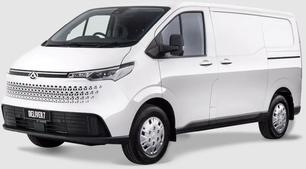
Following up the electric LDV eDeliver 7 comes the diesel-powered model which may look identical from the outside but is an altogether more traditional package.
Effectively replacing the G10 as LDV’s mid-size (2.5-3.5 tonne GVM) van, the Deliver 7 competes against segment stalwarts like the Ford Transit Custom, Hyundai Staria Load, Renault Trafic Pro, Toyota HiAce and Volkswagen Transporter.
Unlike some of the others in that list, the Deliver 7 has its eyes firmly set on the fleet operator crowd with all the required safety equipment, plenty of payload capacity and – crucially – a cheap starting price.
The deliberately simplistic styling, sometimes weird cabin ergonomics and slavish devotion to pulling dollars from the end result make us wonder if the Cavan C1 doesn’t represent some kind of a revival of the white-versus-blue-collar occupational class system.
Socio-economic aspects aside, this would be okay if the C1 did everything as well as its peers. But it doesn’t. It does, however, get enough things right and enough things covered off adequately to be a viable tool for a business in the last-mile delivery industry or some other version of the courier game.
But it won’t be as easy to use as some offerings, nor will it be as comfortable over an eight-hour shift. And the way the driver-assistance features are calibrated means the Cavan will very possibly start to wear thin by about morning-tea time. This may bother its operators somewhat. But some fleet managers and CFOs? Not a bit. Which is where the return to that us-and-them thing comes into it.
A metaphor for the planet right now? Perhaps.
For a van that is going to be heavily loaded most of its life, the diesel Deliver 7 offers a strong value proposition with snazzy exterior design and passenger car-like interior tech.
As a fleet-oriented vehicle, that ANCAP sticker of approval, non-slip flooring and ergonomic seats will please the health and safety officers, too.
It's a shame, then, that LDV couldn't match the reasonable refinement and ride quality offered by the electric eDeliver 7. Where that van feels competitive with rivals, the diesel Deliver 7’s budget bones add up to a bouncy, unrefined and bonging safety aid-filled driving experience.
The diesel Deliver 7 is a decent enough workhorse but it’s hard to recommend saving the money over its more refined competitor set.