What's the difference?
The Cadillac Lyriq really flies in the face of what has become our reality in the world of new cars.
It’s a brand-new, EV-only brand in Australia, but for once, it’s not Chinese.
It’s built in America and shipped to Australia, but it’s not converted from left-hand drive by Walkinshaw or a similar outfit. It’s built in right-hand drive at the factory for us.
And it’s a new player fighting for market share, but it’s not really trying to massively undercut its premium competitors, with the range kicking off north of $120,000.
So, iconic American brand Cadillac seems destined to do things a little differently with the Lyriq. The question is, is it good enough to forge its own path?
Let’s find out.
Being a true Jack of all trades in the car world is rare.
Generally speaking, a vehicle is either capable or comfortable. Attractive or aerodynamic. Practical or performance orientated. And problems arise when cars try to do all those things well, all at the same time.
Which make the Lexus LC 500 Convertible such an interesting proposition. Because it is, without doubt, stylish, and lavishly equipped. It’s also rather large and rather heavy. All of which is perfect for cruising the Bondi foreshore.
But it’s also equipped with a thumping V8 engine and a throaty exhaust that sounds like bricks in a blender on the overrun. It’s stiffer than the LFA supercar, and plenty powerful, which should deliver one of Lexus’ sportiest-ever drives.
So can the LC 500 really do it all? Let’s find out.
It's got a couple of quirks, but the Cadillac Lyriq is a pretty convincing, and definitely American, take on a premium electric vehicle in Australia. The only issue, I think, is that, while the brand is obviously iconic in the USA, it's not that well known in Australia, and we are a market now awash with pretty good, and often much cheaper, EVs from China. It's a hyper-competitive market. Only time will tell if Cadillac can convince Australians that its badge belongs among the European premium marques.
Stunning to behold, and even more so to listen to, the LC 500 Convertible with no doubt turn as many heads as its owners surely want it to. It's not the final word in performance, but it's a lavishly equipped transporter none the less.
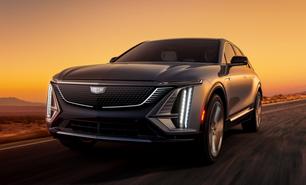
The Cadillac looks… well, it looks American, right? A kind of difficult-to-describe Americanness that’s somewhere between an SUV and state car.
That’s not an insult, by the way. I personally think the Lyriq looks kind of pretty, with its bold elements countered by the surprisingly gentle touch applied in places, like its razor-thin daytime running lights (DRLs).
I’ve got to say, it doesn’t look much like any of the other new SUVs arriving, or a knock-off German brand. It’s got its own persona.
The cabin of the Lyriq is predictably plush, with comfy massaging seats, soft-touch materials and plenty of tech, but it is a little shiny and busy in places for my tastes. Minimalist this is not.
But I do like the fact that – when I’ve got Apple CarPlay hooked up – I can just leave the screen be. My driving stuff is accessed by the wheel, and everything else I want is accessible through physical buttons.
There are some strange elements, though. The grab handle on the driver’s side, which isn’t replicated on the passenger side, is odd, and likely a byproduct of the factory moving the steering wheel. Some of the central storage bins are too small to be really useful, and I hate gloveboxes that can only be opened through the screen.
It’s eye-catching, the LC 500, if big, bolshy convertibles are your thing, and especially viewed front-on, where the aggressive nose design ends in a sharp crease in the mesh grille. I love the headlight design, too, which bleeds back into the body work, but also merges with the vertical light cluster that bookends the grille.
The side view is all shining alloys and sharp body creases, too, leading to an oversized boot that stores the fabric, aluminium and magnesium roof structure, which drops or raises in 15 seconds at speeds of up to 50km/h. The design fits into what Lexus calls an “impossibly small space behind the seats”.
Inside, it’s a snug but luxurious space, wrapped largely in leather and equipped with a wealth of technology. It’s a point we’ve made before, but why Lexus perseveres with its trackpad infotainment control technology is beyond us, but there’s no denying the cabin of the LC 500 is a wondrous place to spend time.
We particularly like the integration of the centre screen, which is recessed beneath the leather-wrapped edge of the dash. While some look like an afterthought, this appears to have been included in the broader design philosophy.
It’s a big boat, the Lyriq, stretching more than five metres long and almost two metres wide. That’s not much shorter than, and in fact slightly wider than, something like a Nissan Patrol, just to put it into perspective. Though of course it’s nowhere near as high as a proper 4WD.
Predictably, though, its dimensions mean plenty of room in the boot, which opens to reveal a very useable 793 litres of luggage space. Drop the seats, and that number grows to a massive 1722 litres.
But the Lyriq does without any spare wheel of any kind. A tyre repair kit is your only option.
Now, the backseat. And I know this is likely only of interest to parents of newborn babies, but that’s me, so I noticed. These are some of the best ISOFIX attachment points I ever used. Usually you’re fumbling around between the seat cushions trying to line up the latch points, but the Lyriq's solution — while perhaps not the most visually alluring – puts the brackets beneath plastic lift-up flaps, and they're so damn easy to use.
But there are some quirks in the backseat, too. Those same ISOFIX attachment points, which are so great for baby seats, are less great for the adults actually sitting in the back. You can feel the hard plastic covers, and what feels like the bracing bar running across the backseat, beneath the cushions. It's not diabolical, and if you shift your rear-end forward slightly you can't feel it at all, but it's a strange quirk all the same.
Elsewhere in the backseat, there is plenty of room for backseat riders, and you can control your own temps, too.
It’s not, really. But then, what were you expecting?
As mentioned above, the interior feels snug for upfront riders, but not in a bad way. More that elements of the interior feel like they’re reaching out to greet you, leaving you with the impression of being tucked into the cabin.
Backseat riders are out of luck, though, with the seats really only reserved for emergencies. Legroom is tight, and while Lexus promises the roofline is about on-par with the Coupe, it’s not going to be a comfortable journey.
The LC 500 Convertible stretches 4770mm in length, 1920mm in width and 1350mm in height, and it rides on a 2870mm wheelbase. It will sit four at a pinch, and provide 149 litres of luggage space.
There are two ISOFIX attachment points in each of the rear seats, as well as top-tether points.
You can have your Cadillac Lyriq in two flavours — the Luxury, yours for $122,000 plus on-road costs. Or the Sport, which is two grand more, listing at $124,000.
Perspective time. The new Polestar 3 starts at around $118k, but climbs to more than $130k for the dual-motor options. The similarly sized BMW iX starts at more than $140k, and the Mercedes-Benz EQE is north of $135k. So if you consider the Cadillac a ready-made premium brand, then its looking like a relatively sharpish one.
Cadillac says the changes between the trims largely focus on the “aesthetic signature” rather than any major equipment differences. The Luxury gets chrome highlights, for example, while the Sport gets a darkened design theme, including the wheels, body highlights and windows.
Both trims are otherwise identically equipped, which means 21-inch alloy wheels, full LED lighting, an electric sunroof, an auto-opening boot and a touch-to-open charging port.
Inside, there’s a 33-inch digital dash, with Apple CarPlay and Android Auto, wireless device charging, a thumping 19-speaker AKG stereo and USB connection points galore.
The leather-wrapped front seats have heating, ventilation and a massage function, there’s heating and cooling for the window seats in the back, tri-zone climate control and there’s 126-colour ambient interior lighting.
It costs $214,000 - and that’s rather a lot of money - but unlike some premium and luxury cars, with Lexus, once you’ve handed over the cash, that’s it. There’s no tempting option list to lure you into parting with even more of your hard earned.
And I mean that literally - Lexus proudly proclaims that “there is no option list” for the LC 500 Convertible, so suffice it to say it arrives with plenty of gear.
Take a deep breath…
You get 21-inch two tone alloys, triple-stack LED headlights, keyless entry, retractable door handles and rain-sensing wipers outside, while inside, you’ll find dual-zone climate, leather-accented seats which are heated and ventilated, neck-level heating for when the roof is down, a heated steering wheel and sports pedals.
The tech stuff is handled by a 10.3-inch centre screen with Apple CarPlay, Android Auto and on-board navigation, both of which are controlled via Lexus’ impossible-to-kill touchpad. There’s a second, 8.0-inch screen for the driver, and the lot pairs with an impressive 13-speaker Mark Levinson stereo.
There’s also a heap of safety stuff, but we’ll come back to that in a moment.
If that’s not enough for you, you can spring for the Limited Edition, which is $234,000 for each of its 10 available examples. It arrives in a unique Structural Blue hue, with a white leather interior with blue highlights. It is designed to be the most blue of blues, too, with Lexus saying the paint colour was the result of a 15-year research project. Which sounds like a thrilling way to spend a decade and a half.
All Aussie Lyriqs are dual-motor affairs, with an electric motor at each axle producing a total 388kW and 610Nm, which in a car this big, which weighs just under 2.7 tonnes, is more than enough to get the Caddy up and moving, but not enough to make it feel like a supercar. The two motors mean AWD, of course.
It’s a lusty power plant, this one, and not something you immediately expect to find in a luxurious Lexus convertible.
The 5.0-litre V8 produces 351kW and 540Nm - 260kW of which arrives from 2000rpm - and it sounds like a God of Thunder as it’s doing it.
It pairs with a 10-speed automatic and sends all that grunt to the rear tyres, with Lexus’ Active Cornering Assist and a mechanical limited-slip differential helping you to not make a mess of things when tackling corners.
The Lyriq is equipped with a 102kWh lithium-ion NCMA battery, which delivers an ok 530km on the combined cycle. I say 'ok', because the BMW iX offers 600km-plus, while the dual-motor Polestar 3 is more like 630km claimed. Energy consumption is a claimed 22.5kWh per 100km on the combined cycle.
When it comes to plugging in, the Lyriq is set up for 190kW DC fast charging, with the brand promising 128km of range in 10 minutes, or 10 to 80 per cent in just under 30 minutes. At home, a 7kW wall ox will deliver more like 43km an hour.
Remember when I said it was lusty V8? When has that ever been good news for fuel use?
Lexus reckons you’ll get 12.7L/100km on the combined cycle, but the temptation of all that grunt will pretty much ensure that never happens. Emissions are pegged at 290g/km of C02.
The LC 500 Convertible’s 82-litre fuel tank only accepts 98RON fuel.
The first thing you notice behind the wheel of the the Lyriq is just how whisper-quiet it is on the road. Cadillac makes a big deal about its 'Active Noise Cancellation' tech that's deployed here – it uses sensors to monitor road vibrations and the like, and then uses the car's stereo to create what it calls an 'anti-noise' signal.
It all sounds pretty high-tech and complicated, but it also works, with the Lyriq a seriously quiet and composed way to get around, with only the artificial EV noise really noticeable in the cabin.
Even travelling past freeway speeds, the Lyriq remains quiet, which does lend the whole experience a sort of premium vibe.
The Cadillac is also one of those cars that thinks solidity means premium, from the solid 'thunk' of the doors shutting to a general heft and weight to the steering, there's nothing feather-light or agile about the Lyriq experience, but it does all feel a little artificial, and like it's trying to be heavy on purpose.
The Lyriq, then, is no out-and-out performance car – it's 2.5-tonne-plus kerb weight and Olympic swimming pool dimensions largely put an end that – but it's more than brisk enough to get up and moving, with its twin-motor powertrain finding grip even in slippery conditions. It's brisk, but not brutal.
The Lyriq hasn't been tested or tuned in Australia, but happily it doesn't have that floaty, wafty suspension style so popular in the USA. This one feels to have at least had an international tune, which removes some of that marshmallow softness and makes you feel connected to the road.
The steering, too, feels direct enough and easy to predict, and the overall impression is one of quiet, calm motoring, which is probably what it says on the tin of any premium vehicle.
It’s a tough nut to immediately crack, the LC 500 Convertible.
It feels like it really wants to be a super-accomplished performance car, and on longer, more sweeping bends it is, with that thick flow of power ensuring you simply surf through corners before rocketing out the other side, the air filled with that growling exhaust note as your right foot finds its way to the carpet.
But on the tighter stuff, there are some factors that play against it. The suspension feels sorted and that engine is always willing to deliver, but for mine, the steering and brakes felt a little disconnected from the experience, not inspiring much in the way of late-braking confidence. And then there’s the sheer two-tonne-plus weight of the thing, which can’t be totally hidden, even by Lexus’ best wizardry.
Don’t get me wrong, it’s very capable, even on surprisingly tight stuff. It’s just that there’s something of a disconnect between car and driver.
That’s not a bad thing, really. Are you really buying a premium convertible to attack a mountain pass? Probably not. And keep it flowing through corners and the LC 500 Convertible will keep a smile painted on your face, owing mostly to wave of torque you can ride to your destination.
Hovering your foot over the accelerator must surely be what the President feels like whenever he stands near the nuclear football, with that big V8 always ready to turn on the fireworks.
Away from the red mist, you’ll find the LC 500 Convertible positively flows from destination to destination, the 10-speed gearbox - which can feel flustered at pace - seamlessly flicking through its options, and the ride in its most comfortable settings disposing of most road imperfections before they enter the cabin.
The cabin is also very cleverly insulated, not just when the four-part roof is up, but also when it’s down, with the climate and ambience of the interior largely unaffected by what’s going on in the outside world.
The Lyriq hasn’t been crash-tested in Australia, but it did get a five-star equivalent in American testing. There’s autonomous emergency braking (AEB) with pedestrian protection and junction assist, as well as active blind spot monitoring and assist. There’s also a side bicycle alert to stop you opening your door into someone, rear pedestrian alert, adaptive cruise and a total eight airbags, including knee bags for the driver and front passenger.
Interestingly, the Lyriq ditches those annoying safety bings and bongs for a novel, and far less intrusive approach which involves sending gentle vibrations through, well, your backside if the vehicle senses incoming danger.
The Lexus LC 500 Convertible arrives with six airbags, a reversing camera with guide lines, parking sensors, and the usual suite of traction and braking aids, but there’s much more to the safety story, too.
The more high-tech stuff includes parking sensors, pre-collision assist with AEB, lane keep assist, blind-spot monitoring, rear cross-traffic alert and active cruise, as well as bespoke convertible safety gear, like active roll bars that deploy when the car is in danger of rolling over, protecting the occupants beneath that soft roof.
Cadillac has built a pretty convincing ownership package around the Lyriq, which begins with a five-year, unlimited-kilometre warranty, and an eight-year, 160,000km battery warranty. Beyond that, you also get five years of servicing, and five years of roadside assistance, free.
Then you get a year’s free public charging through the Chargefox network and a free home wall box charger. If you have a wall box, or don’t want one, you can trade the home charging for an extra two years of free public charging.
Lexus vehicles are covered by a four-year, 100,000 kilometre warranty, and the LC 500 Convertible requires servicing every 15,000kms.
Lexus's Encore ownership program includes pick-up and drop-off servicing, but the new Encore Platinum level for owners of its more exclusive models unlocks even more stuff.
One is a new On Demand service, which allows owners to book a different style of car when heading off on a holiday or business trip. The loans are available in your state or somewhere else in Australia if you're travelling, with your car waiting for you at Qantas Valet for you when you arrive.
The On Demand service is available on four occasions over your first three years of ownership (which is also the length of the Encore Platinum membership).