What's the difference?
We appear to have reached a tipping point in the acceptance of electric vehicles in this country. The early adopters have made their switch but the technology has become more widely accepted, so now carmakers need to woo buyers with conventional means.
That means the tried and tested methods for making any car more appealing to a customer - lower cost and more equipment.
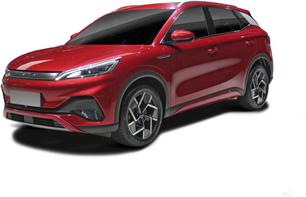
No car demonstrates this better than the BYD Atto 3, which is one of the most popular electric vehicles in Australia. But after an initial surge of buyers happy for a more affordable EV, BYD needs to find fresh ways to attract new customers.
So, for this updated 2024 Atto 3, BYD has made it cheaper and added some key new equipment, while retaining its previous strengths in terms of value and technology.
The new-gen Peugeot 5008 brings a streamlined line-up and a fresh hybrid powertrain, promising improved efficiency for this seven-seat mid-size SUV.
We’re family testing the flagship GT Premium Hybrid to see whether the updated model delivers enough substance to match its premium positioning - especially in a segment where value-packed rivals like the Chery Tiggo 8, Mitsubishi Outlander and Nissan X-Trail are hard to ignore.
BYD hasn’t made dramatic changes to the Atto 3 for 2024, but has it done enough to lure in more buyers?
The additional equipment, namely the larger infotainment screen and new tyres, will certainly help make the Atto 3 more appealing. And the technology behind EVs is more understood by the average motorists, so the barriers to making the switch to electrification are dropping.
But the single biggest factor is likely to be the price. At a time when inflation (and other reasons) is driving the cost of new vehicles up, having your updated model go in the wrong direction will only help make potential buyers take notice.
Especially when you consider Toyota’s closest rival to the Atto 3, the bZ4X, starts at $66,000, while the Tesla Model Y is priced from $55,900, making both significantly more expensive propositions. Heck, the cheapest Toyota RAV4 hybrid model starts at $42,260, only marginally cheaper than the Atto 3 Standard Range.
So, if BYD can make its value argument strongly it will help lure more new buyers to take the plunge into the world of EVs.
Despite its new mild-hybrid powertrain and generous list of premium features, the Peugeot 5008 GT Premium Hybrid doesn’t always hit the mark. It’s not a bad car. In fact, it’s comfortable, stylish, and well-equipped. But it sits in a highly competitive segment where some rivals offer more space, more power, or better value.
It’s not the most versatile seven-seater on the market, but it will suit families who only occasionally need that third row. And that’s the theme here. The 5008 is sufficient. It does most things well enough, but in a class full of standout options, it doesn’t quite push through to the front.
In a couple of words, not really. At least when it comes to the exterior design.
In fact, the biggest design change for 2024 is actually the colour of our test car, the new Cosmos Black. Apart from that, the rest of the Atto 3 is unchanged visually, which is becoming something of a trademark for EVs, at least from newer brands like BYD and Tesla.
Instead of worrying about adding a new grille, different headlights or an alternative alloy wheel design, brands like BYD are focusing on updating batteries, the technology and other software enhancements to keep their models fresh.
The only exterior change is at the rear, where the previous 'Build Your Dreams' lettering has been replaced by a simple 'BYD' badge.
As for the interior design, kudos to BYD for not following Tesla down the cost-saving-disguised-as-minimalist-design path, but personally the design aesthetic and the variety of colours and trims used aren’t to my taste, but I can see why others may love it. The ‘guitar string’ door pockets are likely a particularly polarsing design choice.
BYD has added a new interior option, with a black/blue trim for the examples finished with grey and black exteriors, while white and blue painted cars get a blue/grey interior.
The redesigned 5008 essentially looks like a stretched 3008, with a more squared-off rear that adds some robustness but not necessarily extra style.
It’s nice enough from most angles, but not all of them. The front, however, is a different story. With its fresh grille design and sharp pixel LED headlights, it looks striking, and the signature Peugeot ‘claw’ light motif remains; a detail fans will appreciate. The flagship grade also gets a stylised C-pillar and 19-inch alloy wheels to round out the look.
Inside is where the 5008 really shines. Trust the French to bring some dramatic flair, as the cabin is a standout. A multi-tiered dashboard and centre console are finished in a mix of grey knit fabric and Nappa leather, adding texture and elegance. Soft-touch materials are used generously, and with interesting lines and layered details, there’s always something to catch the eye.
The panoramic sunroof brightens things up during the day, while customisable ambient lighting adds wow-factor at night. That said, the pixel-style lighting strips can be a bit trippy if you stare at them too long!
The Atto 3 remains classified as a ‘Medium SUV’ but blurs the line between mid-size and small in terms of dimensions, especially inside. It’s not in the same size game as the Toyota RAV4 or Mitsubishi Outlander, but is close in size to the likes of the Honda ZR-V and Mazda CX-5.
While there’s a few key practical storage spaces, there aren’t as many as some newer rivals, which does suggest the Atto 3 design is starting to date or just wasn’t well thought-out enough in the first place; such as putting all the switchgear in the centre console rather than on the dashboard.
This was probably done, at least in part, to accommodate the rotating touchscreen, which seems like a poor design and practicality choice to me. Especially the new one, which at 15.8-inches when rotated to the portrait mode it starts to interfere with your vision and the layout is more user-friendly in landscape mode - both when using the native multimedia system or your smartphone connection.
Space is respectable in the back seats, and there’s both a USB-A and USB-C port for charging devices. While out the back the boot measures 440 litres, which is a respectable amount of space for an SUV this size, but there’s only a tyre repair kit instead of a spare wheel.
When it comes to functionality and practicality, the new 5008 mostly hits the right beats. The beats it doesn't hit feel more quirky than full-fledged misses, though.
The first row is the clear winner for comfort, offering electric front seats with heating, ventilation, massage functions, expandable under-thigh support and adjustable lumbar and side bolsters.
That said, the passenger seat sits too high and is angled slightly forward in its base position, which made it tricky to find a comfortable setting for a long road trip.
The middle row features three individually folding seats, though they slide in a 60/40 split. At 4791mm long, the 5008 is on the larger side of the mid-size SUV segment, and that translates to decent legroom in the second row.
However, the seats are quite firm and set in a stadium-style layout. That raised position gives passengers a good view forward but means taller occupants will find themselves close to the roofline.
Amenities in the second row are solid, including climate control, manual sun-blinds, heated outboard seats and two USB-C ports. The only letdown is the fold-down centre armrest, which is frustratingly hard to open as it doesn’t have a toggle.
The third row is strictly kid territory. Access is manageable and the space is fine for children, but don’t expect adults to enjoy the ride. Even my eight-year old noted the limited amenities and legroom back there.
Access throughout the cabin is slightly awkward as the front footwells are flush with the door sills, but that changes towards the rear where the sill and floor levels shift, making it easy to tangle feet on entry until you get used to it. However, the 231mm ground clearance means it’s easy for oldies to get in and out.
Storage is well thought out, with a large ventilated centre console, glove box, centre console bin, phone cradle and sunglasses holder up front. The second row gets two netted map pockets and a small storage cubby under the rear of the centre console. There are cupholders in the first two rows and bottle holders in every door.
Boot space is decent for a seven-seater. With all three rows in place, you get 348L which is enough for a couple of school bags or a modest grocery run.
Fold the third row down and it expands to a useful 916L. There is an underfloor storage area but it disappears underneath the third row and the little space is hard to access if something rolls back there. A powered tailgate is standard on the GT Premium, though we found it didn’t open reliably from the external button.
Technology is fairly straightforward. The media display is responsive and includes sat nav, plus wireless Apple CarPlay and Android Auto. However, the screen’s narrow, wide layout can make it easy to hit the wrong icon, and the lack of physical shortcut buttons means you’re relying heavily on the customisable on-screen panel. It didn’t bother me but my dad didn’t like it.
Charging options are good across the cabin, with USB-C ports in the first and second rows, a 12-volt socket and wireless charging pad up front and another 12-volt socket in the boot which third-row passengers can access in a pinch.
Don't bother looking for a spare of any description, a tyre repair kit is your only option.
As we just mentioned, price has been a critical tool for carmakers looking to keep demand for EVs rolling along as the early adopters fade, and BYD is not immune from this. Earlier in 2024 the Atto 3 Extended Range, the model we’re testing here, started at $50,011 before on-road costs. Then in April 2024, BYD announced a drive-away deal for $45,990 for pre-registered demos.
Now this updated model is priced from $47,499 (plus on-road costs), which is a jump up from the sale price, but is more than $3500 cheaper than the Atto 3 was at the start of 2024. Meanwhile, the Standard model is priced from $44,990 (plus on-road costs), which is also a saving of more than $3000 on the previous model.
The key difference between the Standard and Extended Range models are the batteries, so the specification is similar. Both variants are equipped with LED headlights, power tailgate, synthetic leather upholstery, power-adjustable front seats, 5.0-inch digital instrument panel and in-built satellite navigation.
One of the big ticket item changes for 2024 is the upgraded 15.8-inch multimedia touchscreen, which comes with BYD’s signature trick - rotating between portrait and landscape modes. This is upsized from 12.8-inch in the old model. Wireless Apple CarPlay and Android Auto are now standard too.
The new 5008 line-up has been simplified to just two grades, the Allure and flagship GT Premium Hybrid, which we’re testing for this review. With a drive-away price of $73,705, it’s the most expensive top-spec, seven-seat mid-size SUV in its class.
For comparison, the Chery Tiggo 8 Super Hybrid Urban drives away at $49,990, the Mitsubishi Outlander Exceed Tourer at $63,130, and the Nissan X-Trail Ti-L e-Power at $59,990.
That higher price tag is softened somewhat by a generous list of premium features. You get Nappa leather upholstery, electric front seats (with heating, ventilation and massage functions), a panoramic sunroof, heated rear outboard seats, built-in sat nav and three-zone climate control.
New for this update is a 21-inch curved panoramic display that blends the digital instrument cluster with the central touchscreen.
You’ll also find pixel LED headlights, wireless Apple CarPlay and Android Auto, an AI voice assistant and over-the-air updates for the nav system.
Other standard features include keyless entry and start, a hands-free powered tailgate, four USB-C ports, two 12-volt sockets, a wireless charging pad, customisable ambient lighting, rear sun-blinds, a retractable cargo cover and a 360-degree camera system as well as front and rear parking sensors.
All up, the spec list justifies the GT Premium’s high-end position but make no mistake, you are paying for it.
As with the design there isn’t much to say about what’s powering the Atto 3 because it’s the same as the 2023 model. Both the Standard and Extended Range use the same front-mounted electric motor, which makes 150kW/310Nm and drives the front wheels through a single speed transmission.
With 0-100km/h times of 7.9 seconds and 7.3 seconds respectively for the Standard and Extended Range, the Atto 3 won’t shove you back in your seat, but it has adequate performance for a mid-size SUV.
All grades of the 5008 now share the same mild-hybrid powertrain, paired with a six-speed dual-clutch auto transmission. The set-up combines a 1.2-litre, three-cylinder, turbo-petrol engine with a small electric motor and a 48-volt battery.
Together, they produce 107kW and 230Nm, making it the least powerful offering compared to its rivals.
Performance is modest, with a claimed 0-100km/h time of 11.3 seconds, so you won’t be winning any races. While there's more to consider for everyday driving than outright speed it factors into long highway trips.
The Standard Range has a rated driving range of 345km (WLTP) from a 49.92kWh ‘Blade’ lithium-iron phosphate (LFP) battery while the Extended Range’s bigger 60.48kWh unit increases that to 420km.
Charging is capped at 70kW (DC) for the Standard and 80kW (DC) for the Extended.
One of the major hurdles for EV brands is convincing people that they won’t run out of charge every day. At 420km the Extended Range Atto 3 will get most people through multiple days of commuting, so even with public charging you shouldn’t worry about range anxiety.
Those drivers with commutes longer than 420km per day should be looking at something other than an electric car (and probably a job closer to home).
The new hybrid powertrain has a claimed combined cycle (urban/extra-urban) fuel consumption figure of 5.1L/100km. With a 55-litre fuel tank that translates to a theoretical driving range of up to 1078km, which is impressive for a seven-seat SUV.
The regenerative braking offers mild feedback but obviously helps because in real-world conditions I averaged 6.1L/100km over a week of mixed urban and open-road driving. That’s not far off the official claim and still very respectable for a family hauler of this size.
Driving the updated Atto 3 feels… fine. Nothing special or class-leading, but within the expectations buyers should look for in a mid-size SUV. Which is meant as a compliment to BYD, as it is still a relatively new brand in this very competitive market and there are certainly some noticeably worse rivals in this same segment.
The Atto 3 may not be the most comfortable, most powerful or most dynamic mid-size SUV, but it’s a perfectly nice thing to drive and it will get you from Point A to Point B quietly and smoothly.
Another of the major changes for 2024 is BYD’s decision to ditch the fantastically named, but not very good Atlas Batman tyres, replacing them with Continental rubber. The Atlas tyres were a major drawback on the old model, lacking grip and detracting from the driving experience, with the new ‘Contis’ solving those problems.
You quickly learn the 5008's limits. It has enough power to get up to speed without feeling strained but there’s not much left in reserve. Overtaking is doable but not fast. It’ll get the job done, just don’t expect a burst of responsiveness once you're already cruising.
Steering has a nice, reassuring weight to it and helps you feel in control. The lane-keeping aid can be a little over-eager and tends to jiggle you around, but otherwise the driver assists don’t get in the way.
The suspension is on the firmer side, so you feel bumps on the road. That said, I never winced going over them, which speaks to how well it handles everyday surfaces.
Visibility is a strong point from the driver’s seat. The B-pillar is a little chunky, but the elevated driving position gives you a clear view through the front and sides.
You can feel the transition between the hybrid components, but it’s not jarring. However, the regenerative braking isn’t very strong. A bit more bite could help the driving experience, especially around town.
Parking is refreshingly easy. The 360-degree camera system's screen is small but clear, and the 5008’s relatively compact footprint for a seven-seater makes it easier to slot into tight spots. It’s a plus if you’re regularly navigating city streets.
In terms of safety, both Atto 3 variants get a comprehensive list of both passive and active safety features, enough to score a five-star ANCAP rating.
There’s airbag coverage for all occupants, 360-degree parking cameras, adaptive cruise control, autonomous emergency braking, forward and rear collision warning, blind spot detection, lane departure warning, lane keeping assist, rear cross-traffic alert, rear cross-traffic brake and door open warning.
Most of these systems behaved themselves during our testing, although the forward collision warning did seem overly sensitive at times, and sounded alarms over potential accidents that simply weren’t a problem. Still, compared to some modern brands, the BYD systems performed well.
At the time of writing, the new Peugeot 5008 remains unrated by ANCAP, which may be a consideration for some family buyers. It also features just six airbags which is on the low side for a seven-seater but the side curtain airbags extend to the third row, which is important.
Crash avoidance tech is comprehensive and includes autonomous emergency braking, forward collision warning, blind-spot monitoring, lane departure warning, lane-keeping assist, driver attention alert, traffic sign recognition, a 360-degree camera system, front and rear parking sensors, rear cross-traffic alert, hill start assist, tyre pressure monitoring and intelligent seatbelt reminders for all seven seats.
In terms of child-seat accommodation, the second row offers two ISOFIX anchors and three top-tether anchor points.
The adaptive cruise control isn’t as well-calibrated as I’d like as it can feel a little slow to react and sometimes reacts to vehicles in side lanes. But otherwise, the safety tech works in the background without being overly intrusive.
BYD offers a six-year/150,000km warrant for the vehicle, with eight years/160,000km coverage for the batteries.
Service intervals are every 12 months of 20,000km and while a minor service is only $165, every second visit is more expensive, ranging from $498 to more than $600. There may be less oily bits under the bonnet but there’s still a cost to owning an electric car.
The new 5008 is backed by Peugeot’s five-year/unlimited kilometre warranty, with five years of complimentary roadside assistance included.
While that’s fairly standard, it doesn’t quite match the longer coverage offered by some rivals, with several now pushing out to seven years or more.
Servicing intervals are spaced at every 12 months or 20,000km, whichever comes first, which is generous compared to some competitors.
Peugeot also offers pre-paid service plans in three-, four-, or five-year packages. The five-year plan costs $1995, which is cheaper than paying as you go and reasonable for this class.