What's the difference?
Balancing luxury car comfort, hot hatch agility and supercar speed is no easy task, yet that is what made the six previous generations of BMW's M5 so iconic.
In seventh-generation ‘G90’ guise, the M5 has another skeleton in the cupboard: the toughest emissions regulations that Europe, and now Australia, have ever seen.
A twin-turbo V8 was untenable and going battery electric was not an option. Plug-in hybrid was the only answer. For the new M5, BMW combined a revised 4.4-litre ‘S68’ bent eight with a punchy electric motor for 535kW and 1000Nm.
Problem is, the G90 is widely acknowledged as one of the greatest BMW M cars of all time, especially in CS trim. And thanks to a circa-600kg weight hike to nearly 2500kg, the new M5's 0-100km/h claim is actually slower than the old 'F90' M5.
Doesn’t exactly sound like a big leap forward, does it?
A drive through the Central West of NSW and around the iconic Mount Panorama racing circuit gave us answers to two questions. Does the M5 work on Australia roads, and does BMW M's latest super-sedan represent progress?
It doesn't feel like that long ago I spent a day with the brand spanking new Mercedes-AMG GLC 63 S when it first arrived in Australia. It's a car that stuck with me, the SpaceX-worthy thrust of AMG's 4.0-litre twin-turbo V8 translating into that dirty V8 exhaust note.
Turns out it wasn't that long ago, but time waits for no car - the 2020 GLC 63 S has arrived, with some useful upgrades and a deep suspicion that someone, somewhere thought the car needed some changes.
And they may be right, because in June 2018, the GLC 63 S assumed an empty throne. Now in 2020, it has the Jaguar F-Pace SVR and BMW X3 and X4 M twins to deal with.
So, under a scorching hot Bathurst sun, I examined the box-fresh GLC 63 S for signs of nefarious activity, hoping things have not changed for the worse just because there are a couple of challengers in town.
Let’s get one thing out of the way: the new M5 is a very good car. Considering the emissions limitations and size increase of its base model, it is an impressive bit of engineering.
What’s trickier is deciding whether the new car is really better to drive. Less edgy but supremely comfortable and quiet; BMW leaned into the daily usability of the plug-in hybrid M5 rather than amping the petrol-electric system for maximum thrills. And do you know what? That’s fine with me.
The new M5 still performs on road and track and does an incredible job of hiding its weight (most of the time). Perhaps the G90 is a little more Audi RS6 than F90 in its demeanour but some would argue that’s no bad thing.
The concept of the BMW M5 is not static, it evolves with the times, and the G90 is no exception. Expect future Competition and CS variants to unlock some extra lunacy.
Note: CarsGuide attended this event as a guest of the manufacturer, with meals provided.
Obviously, I had nothing to worry about. The GLC 63 S is the same boisterous, silly car I drove 18 months ago, just with a few new bits to improve the package. As ever, the GLC 63 S is all about the experience - big noise, huge grip but all in comfort with plenty of gadgets.
The only real issues are price, service pricing and the length of the warranty. The first two probably won't bother most owners and one hopes the third won't be problem, but it would be nice if the length was reflected in the price.
If you care about badge, it has impeccable credentials, the AMG stripes and that plate on the engine with the builder's name. They're good credentials. The GLC 63 S has some very determined and capable competition, but none of them blend the speed, overall comfort and sheer sensory silliness of the AMG.
The M5’s raw size is what you notice first. The G90 M5 is a whopping 113mm longer, 67mm wider and 37mm taller than the car it replaces, with the wheelbase stretched 24mm.
It is also the most pumped M5 yet, compared to a 520i it is 70mm chubbier at its flared wheel arches. The ‘M5’ insignia on the C-pillar means you’ll know this is the fast one.
Presence is not in question, then, but beauty? Not the right word. The G90 makes its predecessors — especially the original ‘E28’ — look demure.
The cabin layout builds on the concept debuted by the iX electric SUV, with twin integrated screens and focus on technology and minimal buttons. Materials are mostly high quality and feel fitting for the M5’s asking price.
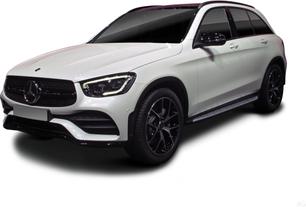
As before, the GLC 63 S comes in wagon and couple bodystyles. Little has changed, with just the usual tweaked front and rear bumpers and mildly redesigned headlights.
All the good bits have remained, like the 'Panamericana' grille from the AMG GT monsters, the jet wing-inspired front bumper and plenty of open space to feed the radiators and intercoolers.
Neither the wagon nor coupe is a pretty machine, but no mid-size SUV is much of an oil painting, with the exception of the Jaguar F-Pace.
The 'Night Package' is still a standard inclusion, blacking out various bits and pieces and looking good when allied with the dark alloys. They both look tough, though, which is classic AMG DNA.
Inside is pretty much the same as before, with just two obvious changes. The new Alcantara-trimmed steering wheel, again from the AMG GT, and also on the C 63 S, joins the party with a more expensive look and feel.
And the new MBUX screen is wider and looks much more at home in a $165,000-plus car. It's still a bit old-feeling, but the digital dash adds a bit of techno-style while the garish speaker covers don't.
BMW has persevered with its twin-screen, minimal-button approach for its 'Operating System 8.5' in the M5.
The 14.9-inch central touchscreen is bright, responsive and high resolution but the software remains a little strange. The main interface is classy but when looking for settings to adjust you’re presented with a Windows 95-esque panel of small square touch targets. It’s not intuitive.
Wirelessly mirroring Apple CarPlay or Android Auto works a treat, at least. Digital climate controls keep temp adjustment persistently on screen and a shortcut to fan speed. The nipple-like vent direction adjustment grows on you, as do the digital vent sliders.
The 12.3-inch digital driver’s display still doesn’t have the freedom of customisation and clarity of Audi’s interface.
The M5 has two cupholders, a deep central storage cubby, door bins that swallow two 600mL plastic bottles and twin wireless charging pad that resolutely grips smartphones even under the sort of tummy-churning G-Forces this M5 can manage.
Setting the M5 apart from the regular sedan is a unique centre console bunching 'M Drive' modes, 'M Hybrid' modes and other shortcut functions together next to the gear toggle and M-engraved crystal 'iDrive' controller.
Comfortable front seats are power adjustable with in/out, up/down lumbar support and have two memory positions.
The 5096mm long M5’s back seat is very spacious. Headroom is good for those beyond 182cm (six-foot), the bench is extremely supportive, while leg and toe room are adequate.
A fold-down centre armrest has two cupholders and there are USB-C charge ports in the back of each bucket seat for a total of four.
You can buy an accessory mount that holds tablets or smartphones for rear seat passenger entertainment, too.
When you look in the boot, BMW offering a Touring version of the latest M5 makes even more sense. The load aperture is big but the usable space is narrow; the sides intrude on load space.
The 466-litre space will make fitting suitcases for an airport run tricky and, even with the 40/60 split-fold rear bench, you will struggle to fit a bike in the back. There’s no spare tyre, either.
A family of four will love any GLC. The wagon's extra headroom over the coupe is useful if not life-changing, while the knee, leg and foot room are generous. Front seat passengers enjoy comfortable seating as long as you're not too keen on pudding.
Underneath, the upward sweep of the centre console is a pair of cupholders and a wireless charging Qi pad that will fit larger phones. Under the split armrest is a small but handy console bin, inside which you'll find USB-C ports.
Two more USB-C ports in the rear join a 12-volt socket and there are also climate controls for the rear seat passengers. The centre armrest pops open with a shallow, carpet-lined tray and two cupholders pop out the front. Each of the four doors has a bottle holder, too.
The boot space is unchanged for each bodystyle - 550/1600 litres for the wagon and 500/1400 litres for the coupe. Both have high loading lips, which is something to consider if you're hauling heavy things about or have trouble lifting items to a reasonable height.
The last M5 was well equipped but the new car is wanting for nothing. Australian cars have just about every option for $259,900, before on-road costs.
Australian M5s wear staggered 20-inch front and 21-inch rear alloy wheels paired with standard metallic paint, 'M Carbon Exterior' package (including carbon roof and rear lip spoiler), adaptive LED headlights and BMW’s 'Iconic Glow' illuminated kidney grille surrounds.
Keyless entry, a heated steering wheel, heated and ventilated front seats, interior camera, powerful 18-speaker Bowers & Wilkins sound system, M seatbelts, four-zone climate control and a power tailgate are the cabin highlights.
Optional extras are thin on the ground; you can choose from (eight) no-cost paint colours and all manner of 'Individual' shades (from $4100), four interior trims including classy 'Dark Oak' wood and four leather colours. There’s classic black ‘Merino’ leather, or you can have it dyed with a mix of 'Silverstone', red or 'Kyalami Orange'.
Aside from that, the only major option is carbon ceramic brakes at a staggering $18,500, and an M5 Touring wagon costs $263,900.
Though the M5 is more expensive than Audi’s closest rival, the RS6, the gulf isn’t huge considering you get a lot more punch in the BMW. Mercedes-AMG does not have an E-Class answer, yet.
Good value, then? Well, an equally potent Porsche Panamera is twice the price. So yes, in a sense.
As before, we get two bodystyles and the high(er) performance version, the GLC 63 S (a 'base' GLC 63 is available in other markets). Mercedes followed everyone else's lead and realised nobody would buy the skim milk version.
Unfortunately, that translates to the highest sticker price of the three, with the wagon coming in at $164,900, and the coupe at $171,900, before on-road costs.
That doesn't seem to hurt Mercedes too much with other cars in the range, but it's a significant difference. Incidentally, both prices are up by about $3000.
It's loaded, though - 21-inch wheels, multi-zone climate control, air suspension with dynamic dampers, electric and heated front seats, active cruise control, head-up display, reversing camera, around-view cameras, sat nav, front and rear parking sensors, keyless entry and start, electric tailgate, Nappa leather and wood trim, active LED headlights, auto wipers, auto parking, roof rails, sunroof, DVD player, and TV tuner, but no spare tyre, just a repair kit.
A Burmester-branded 13-speaker sound system is powered by Mercedes' spangly MBUX system on a new 10-inch touchscreen, which is much nicer than the old software and hardware combo.
MBUX offers deeper integration with the car's systems. The 'Themes' function is like a series of shortcuts to set the car up for a particular mood, but let's face it, most GLC 63 S drivers are just going to find the 'Race' function and go for it.
MBUX also has Apple CarPlay and Android Auto, but via USB only.
Unlike the Mercedes-AMG C63, BMW has kept the M5’s eight-cylinder heart and this has proven to be a good decision.
The 4.4-litre twin-turbo petrol engine has been optimised with “a cross-bank exhaust manifold and optimised oil separation”, says BMW.
The V8 spins to 7200rpm though it isn't a screamer, outputting a full-bodied 430kW (5600-6500rpm) and 750Nm (1800-5400rpm).
Augmented with a transmission-mounted 145kW electric motor that can produce up to 450Nm, thanks to pre-gearing, maximum combined outputs are 535kW and 1000Nm.
Weight blunts punch, though, so despite nearly 100kW and 250Nm more, the new M5 is a tenth slower to 100km/h than its predecessor (claimed), at 3.5 seconds for the sprint.
You can thank a 220kW/tonne power-to-weight ratio, worse than the old car's 233kW/tonne figure. The new G90 claws some time back with brute force, hitting 200km/h in just 10.9 seconds and goes on to a limited top speed of 305km/h.
You can choose from five powertrain settings, starting with 'Electric' and 'Hybrid' for everyday use, while 'eControl' lets you store battery power for urban use.
'Dynamic' provides the best balance, says BMW, while 'Dynamic Plus' is like a qualifying mode. Think maximum combined punch for up to 10 minutes, at which point you’ll have drained the battery.
Driving in pure electric mode, the take-off can be a little jerky but the quietude and decent power make it pleasant. Power sources are combined expertly in Hybrid and giving it some stick in Dynamic is more than enough to make your passengers feel queasy.
An AMG 4.0-litre twin-turbo V8 brings the thunder, with a massive 375kW and 700Nm of torque. That's plugged into a nine-speed MCT (multi-clutch as opposed to twin-clutch) transmission and Merc's '4Matic+' all-wheel drive system.
With all that power and grip, you'll crack the ton in a supercar-baiting 3.8 seconds. One little point to note is the engine has active mounts.
Should you fancy turning your tinny into a landspeedboat, you can tow up to 2000kg for a braked trailer, and 750kg unbraked.
Electric-only range is rated up to 69km in WLTP testing, but the 18.6kWh battery is more likely to give you around 60km in real-world driving. It can be topped up in about two hours using an 11kW AC charger, or overnight on a three-pin socket.
BMW includes both Mode 3 (public) and Mode 2 (home) charging cables with the M5.
The M5 uses 3.2L/100km of 98 RON premium unleaded in ADR testing, corresponding to just 72g/km of CO2, so it should sail through the first rounds of Australian emissions regulations.
Indulging in what the V8 has to offer sees that consumption spike, though. An enthusiastic road drive saw the M5 gulp 12.4L/100km, according to the trip computer.
Mercedes reckons you'll get 12.2L/100km on the combined cycle which seems laughable at first and then you see what it actually does. To be fair, the car I drove on the launch copped a hammering and was hovering around the 17.0L/100km, with the start-stop and coasting functions playing only cameo roles.
The three M5 elements start with daily usability. We trundled out of Bathurst in electric mode, with the adaptive dampers (and other myriad settings) in Comfort.
The M5 has steel springs, double wishbone front suspension and a five-link rear axle, all of which has been heavily reworked by the boffins at M. Naturally, the ride is firm, though in Comfort the body moves through its motions smoothly.
The M5 is an effortless tourer, its eight-speed automatic shmoozing through ratios as it climbs and descends steep gradients. Wind and tyre noise insulation is good on coarse chip tarmac, though a bit more burble from the V8 would be appreciated.
The M5 has nine adjustable parameters to wake it up: 'Drivetrain', 'Energy Recovery', 'Drivelogic' (gear shift aggression), 'Chassis', 'Steering', 'Brake', 'M xDrive', stability control settings and 'M Sound'. Favourite settings can be stored to the wheel-mounted M1 and M2 buttons.
With the dampers still in Comfort the M5 remains fantastically capable with power delivery from the xDrive mighty rewarding on corner exit. Sport dampers sharpen the experience up further, amplifying the M5’s surprising agility. Thank the rear-wheel steer for this big sedan’s switchback performance.
Step beyond the limit of grip, brake too late, or get on the power too early, though, and the M5’s mass reveals itself rapidly. It doesn’t help that the accurate steering is devoid of feel. The brake-by-wire pedal is too numb and light, as well, making it tricky to judge grip levels on the road.
Feel is less of an issue on a dry Mount Panorama circuit, where the M5 turns out to be a total pussycat. The all-wheel drive, consistent dynamics, strong brakes and well-tuned stability control make for an approachable but seriously fast sedan.
The responsive transmission will hold gears to redline and is eager on the downshift in its most aggressive setting while tactile shift paddles make commanding ratio changes yourself that bit more engaging.
Prodigious punch out of corners is matched by the impressive consistency of the carbon ceramic brakes. The M5 pulled up for The Chase every time with minimal fuss, even from above 250km/h.
Similar credit goes to the 285mm front and 295mm rear Hankook S1 Evo tyres which remained consistent and predictable all day despite reaching temperatures over 130 degrees, according to the tyre pressure monitor.
Like any V8-powered AMG, the twin-turbo engine absolutely dominates the GLC 63 S. Even at walking speeds you can feel the serious firepower on offer, just a flex of your ankle away.
The figures are colossal - 375kW (over 500 horsepower) and 700Nm pushing around two tonnes of mid-sized SUV. Its famed bark is bettered only by Jaguar's completely unhinged, and surely borderline illegal, 5.0-litre supercharged V8.
You need to know you've got plenty of tech underneath you to make this stick to the road. The 21-inch alloys are wrapped in 265/40s at the front and 295/30s at the back, Continental Cross Contacts if you're interested.
They should - and would - ruin the ride, but the standard fitment of air suspension means that in normal driving, the GLC 63 S is firm but comfortable. A BMW X3 M is much harder, especially at the rear, going without the complex and heavier air set-up.
The air suspension is probably the pivotal piece of chassis tech that makes this car so versatile. While it's got driving modes up the wazoo - including the new 'Slippery' mode - it's a perfectly agreeable daily driver.
Leave it in comfort, accept that it has a firm ride and you're in good shape for the school run or the commute. You just sail along on a light throttle because there is virtually no turbo lag.
Whack it in Race and you can attack your favourite empty, bendy road with all the grip you could ever need.
The steering is remarkably light and direct for such a chunker and the optional carbon ceramic brakes were never bothered by what I could throw at them.
The V8 roars and spits and crackles, the gearbox shifting seamlessly up and down through the ratios. It's blissfully silly.
In a way, it's a velvet fist in an iron glove - comfortable inside but happy to headbutt the horizon with little provocation.
I'd prefer it if the transmission was a bit more decisive on slow speed shifts and you'll have to prepare yourself for a lot of wearying road noise on long trips. The latter is the price you pay for a ton of grip.
The regular BMW 5 Series range scored a maximum five stars in 2023 ANCAP safety testing but this does not apply to the M5.
The M5 features nine airbags and a host of active safety systems, including auto emergency braking (AEB), blind-spot monitoring, rear cross-traffic alert, lane-keep assist, auto parking and speed limit assist.
Lane-keep can easily be turned off via two taps but the other systems require more menu navigation, though are mostly unintrusive. A 'Track' mode disables lane-keep, AEB and other systems along with switching the central display off.
All GLCs have nine airbags, ABS, stability and traction controls, traffic sign recognition, around-view cameras, reversing camera, rear cross traffic alert, blind spot monitor, forward AEB, forward collision warning and tyre pressure monitoring.
There are also three top-tether mounts and two ISOFIX points.
The GLC scored a maximum five ANCAP stars in January 2016.
In Australia, BMW has moved to match other manufacturers in offering a five-year/unlimited kilometre warranty on all its cars.
Servicing is recommended on a condition basis, with the M5’s multimedia system prompting a visit to the mechanics. BMW offers pre-paid service packs for five years/80,000km at a price of $5059 for the basic offer and $8152 for 'Inclusive Plus', which covers brake pad and rotor replacements.
It is expensive next to a regular 5 Series but when you consider the purchase price and performance level, the M5’s service pricing is not astronomical.
Mercedes Benz offers a three year/unlimited kilometre warranty with roadside assist which is not really up to scratch for a premium brand. Yes, the cars are complex but they're also expensive, so the investment should come with a commensurate warranty.
Service intervals are generous at 12 months/20,000km (as opposed to the 25,000km of other GLCs) and the capped price servicing means you'll know what you're paying.
Mercedes offers you the choice of an up-front payment or pay-as-you-go. Upfront ranges from $4050 for three services, $6100 for four, and $6850 for five.
If you go with PAYG, three services is a hefty $5000. Basically, each service is at least a grand when averaged out over time and that's pricey.
Service inclusions differ between your chosen method, but only slightly. The pricing includes filters, oil and, unusually, spark plugs and brake fluid, but that's small comfort.