What's the difference?
Balancing luxury car comfort, hot hatch agility and supercar speed is no easy task, yet that is what made the six previous generations of BMW's M5 so iconic.
In seventh-generation ‘G90’ guise, the M5 has another skeleton in the cupboard: the toughest emissions regulations that Europe, and now Australia, have ever seen.
A twin-turbo V8 was untenable and going battery electric was not an option. Plug-in hybrid was the only answer. For the new M5, BMW combined a revised 4.4-litre ‘S68’ bent eight with a punchy electric motor for 535kW and 1000Nm.
Problem is, the G90 is widely acknowledged as one of the greatest BMW M cars of all time, especially in CS trim. And thanks to a circa-600kg weight hike to nearly 2500kg, the new M5's 0-100km/h claim is actually slower than the old 'F90' M5.
Doesn’t exactly sound like a big leap forward, does it?
A drive through the Central West of NSW and around the iconic Mount Panorama racing circuit gave us answers to two questions. Does the M5 work on Australia roads, and does BMW M's latest super-sedan represent progress?
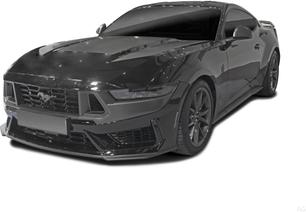
The new Ford Mustang GT was not designed for Paris.
Fighting through the morning peak hour rush (which seems to extend through the middle of the day and the afternoon), the new Mustang feels like a caged animal. Which is appropriate, given the car’s namesake is a wild horse that exists to roam the American wilderness.
But once we finally break the shackles of Parasian traffic we find ourselves getting to let this Mustang gallop across the French countryside and unleash its full potential. But more on that later…
The reason we're driving the Mustang in France is because the American brand wanted to connect it to its new racing program at the famous Le Mans sports car race (you know, the one in the Matt Damon movie, Ford v Ferrari).
No less than Bill Ford, great-grandson of the company’s famous founder, was on-hand to see the Mustang at Le Mans, such is the passion for performance.
Ford (the man, not the company) took the opportunity to declare that the Blue Oval brand is not only committed to internal combustion engines for the foreseeable future, but it will retain the V8 under the bonnet of the Mustang GT for as long as it can legally do so.
Australians will have to wait a few more weeks (maybe months) before the seventh-generation Mustang arrives, but here’s what you can expect when it lands on local roads.
Let’s get one thing out of the way: the new M5 is a very good car. Considering the emissions limitations and size increase of its base model, it is an impressive bit of engineering.
What’s trickier is deciding whether the new car is really better to drive. Less edgy but supremely comfortable and quiet; BMW leaned into the daily usability of the plug-in hybrid M5 rather than amping the petrol-electric system for maximum thrills. And do you know what? That’s fine with me.
The new M5 still performs on road and track and does an incredible job of hiding its weight (most of the time). Perhaps the G90 is a little more Audi RS6 than F90 in its demeanour but some would argue that’s no bad thing.
The concept of the BMW M5 is not static, it evolves with the times, and the G90 is no exception. Expect future Competition and CS variants to unlock some extra lunacy.
Note: CarsGuide attended this event as a guest of the manufacturer, with meals provided.
Having driven the latest example of the Mustang GT, I hope Bill Ford is true to his word and keeps the V8-powered Mustang for as long as possible. It isn’t the most razor-sharp sports car or the most powerful muscle car, but it offers the kind of driving thrills and enjoyment that have made the car an icon.
The price increase is steep but the new technology inside drags the Mustang into the modern era and will add more youth appeal to a car that is largely unchanged in concept for the past 60 years.
But now that I’ve driven it in the USA and France, I can’t wait for it to finally reach Australia.
Note: CarsGuide attended this event as a guest of the manufacturer, with travel, accommodation and meals provided.