What's the difference?
There’s no point waxing too lyrical here, because the facts surrounding the M3 Touring are more than exciting enough.
It’s a (kind of) family friendly wagon with oodles of space and practicality. It’s also an unhinged performance weapon with a thumping 3.0-litre twin-turbo-petrol inline six-cylinder engine.
And it has been years — decades, even — in the making. So, has it been worth the wait? Let’s strap in and find out.
Like most people in this day and age, I like to consider myself fairly green-minded. I recycle. I canvas bag. One time I even took public transport, despite having a perfectly good car at my disposal.
But most importantly, at least as far as our only planet is concerned, I’ve embraced electrification in the automotive world, confident in the knowledge that, 99 times out of 100, introducing a hybrid, plug-in hybrid or fully electric powertrain to the equation improves both the driving experience and your fuel bill.
The one out of that 100? That would be the McLaren 750S — the British brand’s new apex predator, and a vehicle that might just be the marque's last non-electrified series-production supercar ever.
It’s powered by a spectacular twin-turbo V8 engine that contributes to a drive experience so raw, so pure, and so unfiltered, that to sully it with heavy batteries or silent electric motors would just about qualify as a crime against humanity, or at least against the parts of humanity fortunate enough to be able to afford one.
So, is this McLaren 750S the best of the current supercar bunch? Let's find out.
Long live the mighty wagon. The BMW M3 Touring is treat to look at, and an even bigger treat to drive.
If you want one, act fast. We waited a long time for a wagon-shaped M3, and with electrification increasing in the automotive industry, this will likely be your last chance.
Not just a love letter to the intoxicating delights of the mighty V8 engine, the McLaren 750S is a genuine joy across the board.
Note: CarsGuide attended this event as a guest of the manufacturer, with travel, accommodation and meals provided.
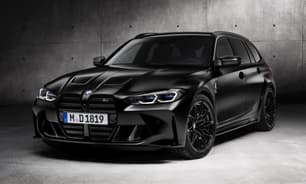
It looks spectacular, this M3 Touring, and even more so given a) wagons are so rare, and b) proper low-riding performance wagons with massive alloys are even rarer.
That said, I expect it will be polarising – and possibly too shouty for some – but I've got to say, I like it.
I’ve seen it described elsewhere as a bit of a sleeper, but for mine, you’d need painted-on eyes to not see there’s plenty going on with the Touring, especially one finished in the same Frozen Black paint as our test car.
It is at once sleek and swept back, and bulging and aggressive, especially at the flared wheel arches and fat exhausts poking from its diffuser-filled rump.
Inside, it’s mostly business as BMW usual, though with more carbon-fibre elements — our vehicle was equipped with the M Carbon Experience pack — but snug-fitting seats aside, it’s a premium, if performance-focused, place to spend time.
McLaren concedes the cosmetic updates for the 750S are “relatively subtle”, but there have been some key changes.
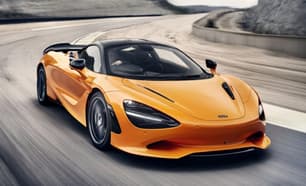
The front bumper and splitter are new, as is the rear bumper, while the rear wing is now bigger, with 20 per cent more surface area.
Also at the back, a new (and lighter, of course) stainless steel exhaust is now centre-exit, rather than off to either side.
Like the 720S before it, the 750S looks more like a statement of intent than a designer’s dream, with aerodynamic function over form the order of the day.
In the cabin, you’re looking at two sports seat, a grippy Alcantara steering wheel, and two relatively small screens by today’s sizeable standards.
You can have your cabin trim in full Nappa leather, or the leather mixed with Alcantara, and the audio is taken care of by Bowers & Wilkins.
Still, the 750S delivers everything you need and nothing you don’t in a car in this category.
A performance-focused wagon is still a wagon, right? And that means there is oodles of space in the boot, though the seating choices in our test cars made the front seats less comfortable than they could, and should, be.
But first, the boot. The M3 Touring is a 4.8m-long wagon, which pays dividends when it comes to cargo. BMW says you'll find a minimum 500L of storage space, which grows to 1510L with the rear seat folded.
In the back, you’ll find seating for three, with the requisite ISOFIX attachment points, and with enough head and leg room to get comfortable.
But those carbon front seats are an option I wouldn’t be springing for. They arrive carved out of the rock-hard material, though with big holes throughout to reduce their overall weight, and they’re not only challenging to climb in and out of, but they’re awkward and hard to sit behind.
Stick with the regular seats and both rows will be happier.
Next question, please. This is a stripped-back, lightweight, two-seat supercar designed to get you to, and then around, a corner in the least amount of time possible. So, no, you can’t fit much in the way of grocery shopping in the back.
You can, however fit a total 150 litres (front) and 210 litres (rear) in the 750S, and it gets bonus points for having deep cut-outs in the roof that make slipping in under those scissor doors far easier than you might expect.
The BMW M3 Touring lists at $180,100, which isn’t chump change, and positions the wagon body shape a fair way above a regular M3 sedan.
That’s before on-road costs, of course. According to BMW’s website, putting an M3 Touring on the road in NSW will be more like $194,039 — before you start ticking option boxes.
The 'M Carbon Experience' adds $17,500, and reduces overall weight by close to 10kg through carbon bucket seats, and adds more visible carbon and even more possible headroom to fit a helmet
The 'M Carbon ceramic brakes' add another $16,500, and while there are plenty of free paint colours, you can pay up to $7000 for the 'Frozen White' paintwork.
Our test car was finished in 'Frozen Black', a bargain at $5K.
Elsewhere, there is plenty of equipment on a stacked standard features list.
That includes staggered 19- and 20-inch alloys, BMW’s digital 'Laserlight' headlights, and an automatic boot.
Inside, there’s a 'BMW Live Cockpit' with a 12.3-inch instrument display, a 14.9-inch central screen, a head-up display, wireless device charging, Apple CarPlay and Android Auto and a premium Harman Kardon surround sound stereo.
You also get three-zone climate, leather seats, an 'Active M Differential' and 'Adaptive M Suspension', and seat heating up front.
Oh, and there is lots — lots — of performance, but we’ll come back to that shortly.
The McLaren 750S can be yours in hardtop ($585,800) or drop-top Spider ($654,600) guises, both of which have travelled north from the pricing applied to the 720S, which was $489,900 at launch, and its Spider equivalent, which was $556,000.
What you’re getting, though, is more — and less— of everything. More power, more performance, more downforce and more stiffness, combined with less weight, with McLaren having taken a forensic approach to stripping kilos from the 750S.
What you're not getting, though, is much in the way of niceties, with the McLaren 750S offering less interior tech and comforts than a mid-range hatchback (“it now has Apple CarPlay,” they exclaimed excitedly).
But for mine, that only enhances the drive experience, with the 750S offering a genuinely pure-feeling drive — a steering wheel free of buttons, a cabin largely free of distractions, no safety chimes bonging, and a nuclear reactor attached to your right foot. These are all good things.
Elsewhere, the McLaren 750S rides on ultra-lightweight forged alloy wheels (19-inch front / 20-inch rear) wrapped in Pirelli P Zero rubber as standard, and there are thinly cushioned carbon-fibre-shelled racing seats that hold you snuggly in place, and are every bit as comfortable on bumpier roads as cuddling a cactus.
In the cabin, McLaren has worked to up the tech, though its best to remember this is pared-back over plush.
A steering column-mounted driver display is new, and delivers all your key driving info, and it’s framed by all your go-to switches, like your 'Drive Mode' options.
In the centre, an 8.0-inch portrait-style screen now has Apple CarPlay as standard (but not Android Auto), and there are USB-C and USB-A connections for your devices, too.
The M3 Touring’s engine might well be one of the best in the business – a hard-charging 3.0-litre twin-turbo-petrol inline six-cylinder engine that produces a sizeable 375kW and 650Nm.
That power is sent to all four wheels via BMW’s 'M xDrive' with Active M Differential, producing a sprint to 100km/h of just 3.6 seconds.
Ah, now we’re talking. In the huge-displacement world of supercars, a 4.0-litre twin-turbo V8 might sound a little on the small side when put up against V10s and V12s out of Italy.
But this mid-mounted, twin-turbo powertrain perfectly compliments the overall balance of the 750S, and when its 552kW and 800Nm (fed through a seven-speed automatic) meets the lightweight McLaren, the results are staggering.
The zero to 100km/h dash is dispatched in 2.8 seconds, while 200km/h flashes by in 7.2 seconds. Want to push to 300km/h? You’ll need just 19.8 seconds.
Officially, you should see a claimed 10.4L/100km on the combined cycle, but as is often the case in cars with engines that tempt you to be aggressive with the accelerator, the reality can be a little different.
We saw more like 16.4L/100km, but in the big bruiser’s defence, we spent a lot of time in city and suburbs, and a lot more time standing on the accelerator.
The M3 Touring is fitted with a 59-litre tank, and will only accept 98RON premium fuel.
Range is close to 570km using the official consumption figure and around 360km using our real-world number.
McLaren says you can expect 12.2L/100km on the combined cycle, with emissions pegged at 276g/km. But you can also expect to win the lottery. It doesn’t make it likely.
It’s hard to imagine how softly you’d have to treat the 750S to get anywhere near those numbers, but I know you almost certainly won’t. The temptation is simply too great.
In a word? Delightful.
Don’t get me wrong, it’s not the easiest car in the world to daily drive. The carbon-fibre seats fitted to ours, for example, made getting in and out a slightly embarrassing challenge, and there’s a surging eagerness to the delivery of power that makes you look a little like you're showing off.
But the adaptive suspension serves up a far more comfortable ride than you might be expecting (more comfortable, in fact, than lesser, cheaper M models), making tootling around town easier and less chiropractic than I was expecting.
But it’s away from the city, with its traffic and red lights, that owning the M3 Touring becomes a delight, from its potent and punchy powertrain to the thrum of its exhaust, and the EV-like immediacy of its power delivery.
This is a driver’s wagon, there’s no doubt about it, with proper seatback-pushing acceleration, direct and confident steering and enough body stiffening and bracing that you really would have no idea you’re driving a wagon when cornering.
Engage its sportiest settings, and disengage its electronic nanny systems, and you can even set to work judging your drifting skills, courtesy of the (as yet untested, honestly) 'M Drift Analyser'.
A family car like few others, then. That you can also take it to Bunnings and throw some sleepers in the back is just a very welcome bonus.
Usually we wouldn’t be dedicating much space to the kilogram’s shaved here and there off the total weight of a vehicle, but it’s important in this case.
In the 750S, that starts with a bespoke carbon-fibre monocoque platform, which is not only light, but also so inherently stiff that even chopping the roof off for the Spider version required no extra bracing or supports, and only marginally impacts the performance figures.
Then, there are the lightest alloys ever fitted to a series McLaren, which reduce unsprung weight by up to 14 kilos.
That rear wing isn’t just bigger, but also lighter, saving another 1.6 kilos, the carbon-fibre-backed seats save a whopping 17.5kg, the new suspension springs shave another two-or-so kilograms. The list goes on and on.
All up, they've found 30 kilos between 720S and 750S, which is now 1389kg total.
The result is a vehicle that feels endlessly athletic — light, lithe and perfectly balanced — but also one that, when you’re feeding on that endless power, feels as though it might suddenly take flight.
Flat-footed acceleration is laugh-out-loud fun, the tyres scrabbling for grip with each donkey-kick gear shift, even past 100km/h, with the rear end shifting around slightly as the Pirelli rubber deals with the physics of what’s happening. It’s loud, visceral and intoxicating, and you absolutely never tire of it.
But the magic in this McLaren is that it's more than just brutally fast in a straight line, it's also one of the most engaging vehicles I've ever driven, and one that provides a near-telepathic connection to the car, its tyres, and the tarmac below.
The more time you spend behind the wheel, the more tameable it feels, and even at warp speeds (somewhere above 270km/h), you feel connected and in control, owing mostly the open lines of communication between the tyres, the steering and the driver.
Also ferocious is the McLaren's braking force, combining carbon ceramic discs with a rear wing that doubles as a jet-style air brake, and stamping on the brake pedal produces vision-blurring force that leaves you feeling like you're not just stopping, but hurtling backwards through time.
So, race track, tick. But away from it, the McLaren – with its 'Proactive Chassis Control' hydraulic suspension – is surprisingly compliant when you want it to be, with its 'Comfort' drive mode delivering exactly that, softening the important bits so you don’t rattle yourself to death on the freeway.
If the 720S was a benchmark, then this 750S is something else entirely, shifting the needle in every important way to create a vehicle that sparks pure, unadulterated joy from behind the wheel.
Neither the M3 or M3 Touring have been independently crash tested to date, but it’s worth pointing out the 3 Series and 4 Series received maximum five-star scores from Euro NCAP.
Standard safety kit includes AEB with pedestrian detection, active lane keeping assist, blind spot monitoring, adaptive cruise control and rear cross-traffic alert.
You’ll also find six airbags on board.
Safety systems hardly abound here, and nor is McLaren or ANCAP likely to pony up for the 750S for crash testing.
You do get front and front-side airbags, front and rear parking sensors and a reversion camera, as well as a handy nose-lift function which should stop you scraping over steep speed bumps and the like.
The BMW M3 Touring is covered by a five-year, unlimited kilometre warranty, and servicing is "condition based", in that the vehicle will tell you what maintenance is required, and when.
You can prepay your service costs at the time of purchase for all BMW vehicles, covering the first five years of ownership.
The 750S is covered by a standard three-year, unlimited-kilometre warranty, which is fully transferable.
Owners can also spring for an extended warranty, which can cover the McLaren for up to 15 years.
Servicing is required every 12 months or 15,000km.