What's the difference?
Phwoar. Mate!
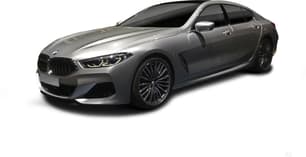
Or should I say, M-eight-fifty-I. That’s right. This is the all-new, 2020 BMW M850i Gran Coupe, the first ever example of its kind. It’s a big, long, luxury, sporty, coupey thing. And it’s gorgeous.
The BMW 8 Series 2020 range includes this new Gran Coupe body style, and also the Coupe and Convertible models. This particular model, the M850i xDrive Gran Coupe, is essentially BMW’s answer to, say, the Audi RS7. Or one of the many Porsche Panamera variants. Or the Mercedes-Benz CLS or Mercedes-AMG GT 4 door Coupe.
Like those cars it has svelte looks, striking dimensions and a sledgehammer engine under its long, shapely bonnet. This is first ever 8 Series Gran Coupe, as it essentially stands in place of the existing, now defunct, 6 Series Gran Coupe. But it’s bolder, bigger and more brutal - just take note: this isn’t a full-scale ‘M8’ Gran Coupe. It has more of a luxury speed cruiser angle to it, arguably like a Mercedes-AMG CLS 53, not the full-fat AMG 63.
The question is, then, should you buy it over one of its established rivals?
Let’s figure it out together, shall we?
Like most people in this day and age, I like to consider myself fairly green-minded. I recycle. I canvas bag. One time I even took public transport, despite having a perfectly good car at my disposal.
But most importantly, at least as far as our only planet is concerned, I’ve embraced electrification in the automotive world, confident in the knowledge that, 99 times out of 100, introducing a hybrid, plug-in hybrid or fully electric powertrain to the equation improves both the driving experience and your fuel bill.
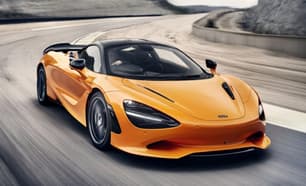
The one out of that 100? That would be the McLaren 750S — the British brand’s new apex predator, and a vehicle that might just be the marque's last non-electrified series-production supercar ever.
It’s powered by a spectacular twin-turbo V8 engine that contributes to a drive experience so raw, so pure, and so unfiltered, that to sully it with heavy batteries or silent electric motors would just about qualify as a crime against humanity, or at least against the parts of humanity fortunate enough to be able to afford one.
So, is this McLaren 750S the best of the current supercar bunch? Let's find out.
If you’re the sort of buyer who wants a car that signifies a lifestyle that is ‘large and in charge’, the BMW M850i Gran Coupe could be just the thing for you. It isn’t as showy as some of its competitors, and mightn’t reach the same levels of excitement as those cars either - but it is a convincing offering in its own right, and a beautiful piece of design at that.
Not just a love letter to the intoxicating delights of the mighty V8 engine, the McLaren 750S is a genuine joy across the board.
Note: CarsGuide attended this event as a guest of the manufacturer, with travel, accommodation and meals provided.
This could be BMW’s most convincing design in years. I mean, the X5 is predictably handsome, the X3 was unexpectedly muscled, and the less said about the frumpy 1 Series and busy 3 Series (apart from the wagon… drool) the better.
To my untrained but enthusiastic eye, the 8 Series Coupe is a bit too rounded over its rear haunches, and the rear screen is just a little steep - to me, that lets its dimensions down a little. But this. This is gorgeous.
I mean, you might have questions over the tail-light design, which is a theme across a few BMW models now. But there isn’t as much confrontation between horizontal and vertical graphics for this model as you’ll find one other big Bimmers, like the X7.
The M850i model has BMW Laserlight headlights, which throw a sharp beam and look menacing in their signature, while the grille and bumper are strong. The stance of the car is prominent - there’s a long body, a long wheelbase, and a long body in general. The standard wheel package consists of 20-inch rims, and they don’t look disarmingly large.
As our images show, there’s a lot to talk about when it comes interior design and finishes, but the cabin doesn’t quite benefit quite as mochas you might think it would from all that real estate. I mean, with dimensions of 5074mm long (on a 3023mm wheelbase), 1932mm wide and 1402mm tall, this is a squat, yet substantial vehicle. It’s just more cramped than you’d think inside.
McLaren concedes the cosmetic updates for the 750S are “relatively subtle”, but there have been some key changes.
The front bumper and splitter are new, as is the rear bumper, while the rear wing is now bigger, with 20 per cent more surface area.
Also at the back, a new (and lighter, of course) stainless steel exhaust is now centre-exit, rather than off to either side.
Like the 720S before it, the 750S looks more like a statement of intent than a designer’s dream, with aerodynamic function over form the order of the day.
In the cabin, you’re looking at two sports seat, a grippy Alcantara steering wheel, and two relatively small screens by today’s sizeable standards.
You can have your cabin trim in full Nappa leather, or the leather mixed with Alcantara, and the audio is taken care of by Bowers & Wilkins.
Still, the 750S delivers everything you need and nothing you don’t in a car in this category.
I recall a Mitsubishi designer telling me, once upon a time, that he dreamed of making ‘a big car on the outside with a very small interior’. Maybe he made the jump to BMW, because that’s pretty much the 8 Series Gran Coupe.
There aren’t many other vehicles on the market, of this size, that offer less space inside. The boot capacity, for instance, is just 440 litres. Competitors like the Audi A7 (535L) and Mercedes CLS (520L) easily outdo it - but at least this car has more boot than the Panamera (405L), though the BMW is a smidge bigger. The cargo space is large enough for a couple of overnight suitcases, but you’re hardly going to fit a family of four’s luggage for a week away.
And while we’re in the “not quite what you’d expect” column, the back seat space is hardly commodious. There’s enough space for me, at 182cm, to sit behind my own driving position, but not without wishing for a bit more toeroom, headroom and knee space.
The big centre console section eats into the space in the rear, justifying the brand’s “4+1” seating claim, and unpleasantly it has a hard plastic finish to rest your leg against. Getting in and out of the second row isn’t easy for bigger people, and it’s quite a squat down into the rear seat - it really has taken inspiration from its squashy-back-seated predecessor in that regard.
If you have smaller rear-seat occupants, however, there will be catered for with dual ISOFIX and three top-tether points, plus there are air vents with climate controls (quad zone in total), and two USB-C ports as well. There are sun-blinds on the rear windows, too, which is a plus, and there is a pair of cup holders in the fold-down armrest, and map pockets in the seat backs, too. The door pockets are near-useless, though.
The front seats score better practicality, with bottle holders in the doors, bigger and sturdier cup holders, a covered centre storage bin between the seats with a USB-C port, and a wireless phone charger (Qi) with standard USB port in front of the gear selector.
Above that is the weird, very out-of-place quick buttons (1-8) that BMW could easily do away with, and further up are the controls for the climate control (thankfully with hard buttons for fan speed and temperature), and above that is the media screen, a familiar looking 10.25-inch touch display running BMW OS 7.0.
The screen is quick and crisp, and is backed up by the rotary controller and buttons on in the centre console area. There’s wireless Apple CarPlay (now at no cost for three years), as well as a built-in SIM card for 4G data and access to the BMW Online news and weather stations, accessed through the screen.
It’s all pretty easy to use, and the sound system is excellent - the standard setup consists of 16 speakers, with DAB+ digital radio, Bluetooth and USB plus the smartphone mirroring tech, provided you don’t have an Android device, as Android Auto is still missing from BMW’s range.
It’s a nice cabin, but I couldn’t help but thinking that I’d want a little more differentiation from the lesser models in the range if I was spending this much. Especially considering the optional cost of the interior trim fitted to our test car - see below for more detail.
Next question, please. This is a stripped-back, lightweight, two-seat supercar designed to get you to, and then around, a corner in the least amount of time possible. So, no, you can’t fit much in the way of grocery shopping in the back.
You can, however fit a total 150 litres (front) and 210 litres (rear) in the 750S, and it gets bonus points for having deep cut-outs in the roof that make slipping in under those scissor doors far easier than you might expect.
No-one could level the accusation of affordability at the BMW 8 Series Gran Coupe, as it’s one of the brand’s most expensive models.
This one, the M850i xDrive Gran Coupe, is the range-topping version for 2020, with a list price of $272,900 plus on-road costs.
Where does that plot the BMW against its rivals? It’s beyond the level that the existing Audi RS7 Sportback was (last sold in 2018 at $261,140), and the Mercedes-AMG CLS 53, which looks like a value offering at $182,740. Also, it splits the difference between and the Mercedes-AMG GT 4 door Coupe variants (GT 53: $251,140; GT 63: $351,640), and could best be considered a contemporary of the Porsche Panamera E-Hybrid AWD ($252,400) or the Panamera 4S ($316,500).
So, look - competitors might matter to you. But there’s a good chance that if you’re shopping for an 8 Series, you’ve already made up your mind that you want the BMW four-door coupe slugger. So here’s what you need to know about it when it comes to equipment.
Standard it comes with the M Sport styling pack, 20-inch M alloy wheels with run-flat tyres and tyre pressure monitoring, adaptive M suspension with active roll stabilisation, 395mm M brakes, BMW Laserlight headlights, BMW Night Vision infrared camera with pedestrian detection.
Luxury touches include soft close doors, semi-autonomous parking, panoramic glass sunroof (front opening, rear fixed), keyless entry and push-button start and electric auto tailgate, heated and ventilated front seats with electric adjustment including lumbar and bolster, leather seat trim, a 16-speaker harman/kardon sound system, 10.25-inch media screen with gesture and voice control, 12.3-inch digital instrument display, full colour head-up display, ambient lighting and rear sun-blinds.
You’re getting a lot for your money, though our tester had a couple of extras. Metallic paint is included, but no the Frozen Bluestone matte finish our car had ($2600), and the interior piano black trim elements cost $200, as well. Plus the Full Leather Merino finish in Ivory White and Night Blue - that box cost $10,200 to tick. All told, the price as tested before on-roads was $285,900.
The McLaren 750S can be yours in hardtop ($585,800) or drop-top Spider ($654,600) guises, both of which have travelled north from the pricing applied to the 720S, which was $489,900 at launch, and its Spider equivalent, which was $556,000.
What you’re getting, though, is more — and less— of everything. More power, more performance, more downforce and more stiffness, combined with less weight, with McLaren having taken a forensic approach to stripping kilos from the 750S.
What you're not getting, though, is much in the way of niceties, with the McLaren 750S offering less interior tech and comforts than a mid-range hatchback (“it now has Apple CarPlay,” they exclaimed excitedly).
But for mine, that only enhances the drive experience, with the 750S offering a genuinely pure-feeling drive — a steering wheel free of buttons, a cabin largely free of distractions, no safety chimes bonging, and a nuclear reactor attached to your right foot. These are all good things.
Elsewhere, the McLaren 750S rides on ultra-lightweight forged alloy wheels (19-inch front / 20-inch rear) wrapped in Pirelli P Zero rubber as standard, and there are thinly cushioned carbon-fibre-shelled racing seats that hold you snuggly in place, and are every bit as comfortable on bumpier roads as cuddling a cactus.
In the cabin, McLaren has worked to up the tech, though its best to remember this is pared-back over plush.
A steering column-mounted driver display is new, and delivers all your key driving info, and it’s framed by all your go-to switches, like your 'Drive Mode' options.
In the centre, an 8.0-inch portrait-style screen now has Apple CarPlay as standard (but not Android Auto), and there are USB-C and USB-A connections for your devices, too.
If you’re going for the M850i, you’re getting the big bopper engine. It’s a 4.4-litre twin-turbo V8 petrol engine, and it isn’t short on horsepower.
The outputs for this engine are 390kW of power (at 6000rpm) and 750Nm of torque (from 1800-4600rpm). Hardly numbers to sneeze at.
And the performance figures are exceptional, too: the claimed 0-100 km/h time is just 3.9 seconds. That’s because there’s the traction of BMW’s xDrive all-wheel drive system, and shifting gears is an eight-speed automatic transmission.
For what it’s worth, your humble reviewer saw a 0-100km/h time very close to that (4.2sec).
The quoted kerb weight for this model is 1995kg.
Ah, now we’re talking. In the huge-displacement world of supercars, a 4.0-litre twin-turbo V8 might sound a little on the small side when put up against V10s and V12s out of Italy.
But this mid-mounted, twin-turbo powertrain perfectly compliments the overall balance of the 750S, and when its 552kW and 800Nm (fed through a seven-speed automatic) meets the lightweight McLaren, the results are staggering.
The zero to 100km/h dash is dispatched in 2.8 seconds, while 200km/h flashes by in 7.2 seconds. Want to push to 300km/h? You’ll need just 19.8 seconds.
You can’t really expect a big V8 beast like this to be a fuel miser, and it isn’t.
The claimed consumption is 10.7 litres per 100 kilometres. Which is alright, honestly, given the sheer volume of car you’re driving.
But on my test - which consisted of more than 300km of mixed driving, including days of city commuting, some twisty mountain driving, and all the freeway floundering to get there - I saw an at the pump real-world figure of 15.4L/100km.
That’s not very efficient, and it’ll be expensive to run on the daily — yet the argument could be made that if you’re spending this much on a car, fuel costs won’t matter much to you. But with a small fuel tank capacity of 68 litres, it could become a little inconvenient as you’ll be seeing a lot of your local servo.
McLaren says you can expect 12.2L/100km on the combined cycle, with emissions pegged at 276g/km. But you can also expect to win the lottery. It doesn’t make it likely.
It’s hard to imagine how softly you’d have to treat the 750S to get anywhere near those numbers, but I know you almost certainly won’t. The temptation is simply too great.
It’s an impressive thing, this M850i xDrive Gran Coupe. But I’m just not sure who it’s trying to please.
It’s not the sort of German monster coupe-sedan that grabs you by the scruff of the neck and throws you around with its mammoth acceleration. Not unless you poke it and prod it and make it really angry.
And that might be exactly what you want to do - put it in Sport mode, sling the shifter across to sport or manual mode, hear the exhaust open up from a pursed-lip tongue-click to an open-mouth growl.
You’ll push hard on the accelerator, watch the tacho needle jolt to the redline, and if you’re in auto mode you’ll feel the transmission whipcrack as it shifts rapidly up through the gears as you’re shoved back into your seat. Before you know it you’ll be in licence-loss zone, and you won’t have even made the tyres chirp - that’s how immense the traction from the all-wheel drive system is.
You’ll brake hard into a sharp bend, and you’ll feel the front end dip and the body of the car change direction more readily than you’d think given its size as you turn in. The steering response will meet your expectation, with rapid reaction to adjustments mid corner. And the Active Roll stabilisation system will mean you’re not being thrown around in your seat, because it’s sitting flatter and truer than you might have expected - you’ll notice how it works extremely well in conjunction with the car’s torque-vectoring-by-braking system. There’ll be little weight shift or body roll to be counteracted, and that’ll inspire you to push it even harder.
Put it in manual transmission mode and you’ll rejoice that it won’t overrule you and shift up, but you’ll also feel shortchanged because it gets to the end of its limit very quickly. And when it hits redline, it emits a breathless little cough rather than a “oh maybe I should stop” rev-bounce noise.
But, if you’re like me, you might be doing all this with a niggling thought in the back of your mind that, while this car is technically really good and it’s a clinical performance car, you might just think to yourself, “I’m not having as much fun as I thought I would”.
A Mercedes-AMG would be more fun; it’d be more raucous, more of a muscle car experience. An Audi RS7 (at least the previous one) would be noisier, brasher, more theatrical than this car. And likewise, a Porsche Panamera - no matter the model you go for - would be more entertaining in the bends.
Maybe it’s just a bit too predictable - and maybe that’s a result of this car being honed for drivers who will spend more time on the Autobahn than anywhere else. I have to say, there are much, much worse (and slower) ways of getting from A to B, and the highway cruising comfort of the M850i Gran Coupe was what impressed me most.
It’s also surprisingly adept at urban driving duties, coping well with unpleasant city surfaces, though potholes can still upset things because of the stiff-sidewalled run-flat tyres. The suspension does an exceptional job otherwise, however, and I switched between the Adaptive drive mode and Comfort mode for my commuting duties. Both proved comfortable and controlled.
The M850i is by no means a failure when it comes to fulfilling the expectations you might have of a luxury sports sedan of this size. In fact, it’s close to a distinction. But I just can’t help thinking that it’s not as much an ‘M car’ as that M850i badge might have you believe it should be.
Usually we wouldn’t be dedicating much space to the kilogram’s shaved here and there off the total weight of a vehicle, but it’s important in this case.
In the 750S, that starts with a bespoke carbon-fibre monocoque platform, which is not only light, but also so inherently stiff that even chopping the roof off for the Spider version required no extra bracing or supports, and only marginally impacts the performance figures.
Then, there are the lightest alloys ever fitted to a series McLaren, which reduce unsprung weight by up to 14 kilos.
That rear wing isn’t just bigger, but also lighter, saving another 1.6 kilos, the carbon-fibre-backed seats save a whopping 17.5kg, the new suspension springs shave another two-or-so kilograms. The list goes on and on.
All up, they've found 30 kilos between 720S and 750S, which is now 1389kg total.
The result is a vehicle that feels endlessly athletic — light, lithe and perfectly balanced — but also one that, when you’re feeding on that endless power, feels as though it might suddenly take flight.
Flat-footed acceleration is laugh-out-loud fun, the tyres scrabbling for grip with each donkey-kick gear shift, even past 100km/h, with the rear end shifting around slightly as the Pirelli rubber deals with the physics of what’s happening. It’s loud, visceral and intoxicating, and you absolutely never tire of it.
But the magic in this McLaren is that it's more than just brutally fast in a straight line, it's also one of the most engaging vehicles I've ever driven, and one that provides a near-telepathic connection to the car, its tyres, and the tarmac below.
The more time you spend behind the wheel, the more tameable it feels, and even at warp speeds (somewhere above 270km/h), you feel connected and in control, owing mostly the open lines of communication between the tyres, the steering and the driver.
Also ferocious is the McLaren's braking force, combining carbon ceramic discs with a rear wing that doubles as a jet-style air brake, and stamping on the brake pedal produces vision-blurring force that leaves you feeling like you're not just stopping, but hurtling backwards through time.
So, race track, tick. But away from it, the McLaren – with its 'Proactive Chassis Control' hydraulic suspension – is surprisingly compliant when you want it to be, with its 'Comfort' drive mode delivering exactly that, softening the important bits so you don’t rattle yourself to death on the freeway.
If the 720S was a benchmark, then this 750S is something else entirely, shifting the needle in every important way to create a vehicle that sparks pure, unadulterated joy from behind the wheel.
The safety equipment fitted to the BMW M850i Gran Coupe as standard is extensive - but this model has not yet been tested by ANCAP or Euro NCAP, so there’s no safety rating or crash test rating available.
Standard equipment includes BMW’s Driving Assistant Professional system with adaptive cruise control with stop and go in traffic, auto emergency braking with pedestrian and cyclist detection, front and rear cross-traffic alert, lane keeping assist with steering input, blind spot monitoring, “crossroads warning and evasion aid” which can help you steer away from potential danger more easily.
There’s also a comprehensive camera suite with a reversing camera, surround view and forward view camera setup which can adjust based on what part of the parking manoeuvre you’re up to. Plus if you get stuck, the reversing assistant system can remember the last 50 metres you drove and get you out of the spot. There’s also a thing called Active Park Distance Control rear, which will apply the brakes when you’re reversing if it thinks you’re getting to close to an impact.
There are six airbags - dual front, front side and curtain - with no rear side airbag protection, which seems odd in a car at this price point but is likely down to packaging.
Safety systems hardly abound here, and nor is McLaren or ANCAP likely to pony up for the 750S for crash testing.
You do get front and front-side airbags, front and rear parking sensors and a reversion camera, as well as a handy nose-lift function which should stop you scraping over steep speed bumps and the like.
BMW backs its cars in Australia with a three-year/unlimited kilometre warranty.
You may be confused if you head to the BMW site and see that M models and 8 Series models aren’t covered by BMW’s pre-pay capped price servicing plan (as I saw when testing this car), but CarsGuide can confirm that the 8 Series is indeed covered - unless it’s the real M8, not this M850i jigger.
BMW Australia has clarified that the Service Inclusive pack for five years/80,000km of maintenance cover is $2490 for Basic cover (no brakes/pads, no wiper replacement), or $5641 for the more comprehensive Plus pack. Hardly affordable, but nor’s the car.
The company uses a condition-based servicing program, too - there are no set service intervals, but the car will tell you when it needs maintenance based on how you drive it.
For what it’s worth, we ran the numbers on resale value using Glass’s Guide predictive analysis tool, and after three years/40,000km the expected retained value for this version is approximately 66 per cent - which is impressive.
The 750S is covered by a standard three-year, unlimited-kilometre warranty, which is fully transferable.
Owners can also spring for an extended warranty, which can cover the McLaren for up to 15 years.
Servicing is required every 12 months or 15,000km.