What's the difference?
Eco-friendly vehicles are the leather pants of the new-car world; it takes a lot of money to make them look good (but people who own them think they look fantastic regardless). If you don't have a gazillion dollars to drop on a Tesla, then it's a one-way ticket to Prius town. And really, who wants that?
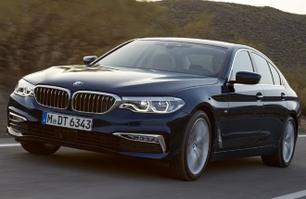
But what if it didn't have to be that way? Behold the BMW 530e iPerformance.
Seemingly tired of waiting for the Australian Government to introduce any sort of meaningful subsidy for green cars, BMW has made the choice simple: you can have a petrol-powered 530i for $108,900, or opt for the plug-in hybrid 530e for... $108,900. This is truly revelatory thinking.
There's no specification penalty, either, and the hybrid will power to 100km/h in an identical 6.2 seconds, so you're not even any slower. But you are sipping less fuel, emitting less C02 and basking in the general smugness, and sweet silence, that comes with feeling like you're saving the world.
So what's the catch?
Look, personally I found it amusingly weird when German car companies started sloping the roofs on sedans and calling them “coupes”, despite the fact that they had four doors. Their ability to imagine segments, and find buyers in them, that have no reason to exist is almost something to admire.
But turning SUVs, like the already very capable X3, into coupes? Frankly, it’s like turning an ass into an elbow. Lower the roof to reduce headroom and shrink the boot? Why? Because it will look so sexy people won’t be able to resist it. That’s BMW’s approach with the X4 and, somehow, it seems to work.
And, to be fair, sporty SUVs are not a BMW thing: the Range Rover Evoque, Audi Q5 Sportback, and Mercedes-AMG’s range of GLC Coupé models have all taken off, each contributing toward an unlikely trend that doesn’t seem to be going away any time soon.
Not all superheroes wear capes, and we're proud to report the 530e does its bit for green motoring without feeling the need to shout about it. And with no price or specification penalty, it's easier being green than ever before, and the pricing of this BMW really puts the cat amongst the canaries.
Okay, so the BMW X4 xDrive30i is neither an ass nor an elbow, to be fair, it's more of a bulky shoulder muscle, or two.
I can't say I'll ever love the X4, the idea of it is a bit too weird for me, but I can't help admiring the way it looks and the way it drives.
It's a bit like a sedan on steroids - or an SUV on a diet, depending on your perspective - but that doesn’t take away from the fact that it’s fun to drive, comfortable and retains just enough coolness, and just enough practicality, to make it worthwhile.
Crucially, there's nothing weird about the way the 530e looks. While some green cars look like they've been designed by one of the kids from 3rd Rock from the Sun, the 530e looks much the same as the rest of the range, save a few tiny but telltale giveaways - like the e-drive badging outside, and what looks like a bonus fuel flap tucked in behind a front wheel that houses the whole plug-in bit.
And we really, really like it. It's elegant and statesman-like from every angle, and looked especially important in the deep-blue colour of our test vehicle. It's not over-designed, with body creases used sparingly, and the occasional glint of polished silver that rings the windows and the grille adds a final sense of shininess to an understated design.
Inside, there's more going on than you might normally find in a BMW. The hugely complicated digital display screen now includes everything from battery charge, power usage to the usual assortment of speedometers and petrol readouts.
It doesn't feel overdone or crazily festooned, but there's more at play here than in your usual BMW.
The dash is busy, too, with a wide screen emerging from a centre stack that also houses a CD player and a digital aircon setup, which in turn sits above a complex centre console from which you can alter driving settings, control the multimedia or cycle through electric modes. It doesn't feel overdone or crazily festooned, but there's more at play here than in your usual BMW.
Elsewhere inside, the seats are beautifully designed, with a quilted leather highlight through the middle, while the gloss-black strip that lines the dash hides a dual strip of ambient interior lights that also runs across all four doors.
So here's the thing. Obviously I have a personal beef with the existence of vehicles like this, but my eyes cannot deny the facts - the X4 looks fantastic. It's muscular, imposing and smooth all at once. Unlike the X6, a bigger and less visually successful attempt to play the same styling tricks with an X5, it doesn't have a ridiculous rear view that looks like it shoulders and buttocks have been fused (although it's hard to miss just how small the rear window is).
Even more impressively, there's no denying it looks better than the X3 that gave birth to it, so I can easily see why someone in a BMW showroom could be drawn to it. At least until they sit inside.
If the exterior style and eye-catching Sophisto Grey metallic paint don’t make an immediate impression then your eyes will surely widen at the interior, resplendent with bold Tacora Red seats, Aluminium Rhombicle trim finisher and the kind of sleek, classy styling that BMW excels in.
Both the adjustable ambient lighting on the doors (we were partial to lilac) and door projectors that shot out what looked like robot wings onto the ground every time we hopped out of the X4 at night walked a fine line between futuristic cool and “parked out the front of a nightclub entrance” chintz, but over time the scales tipped more to the former.
The big differentiator between the X4 and X3, of course, is the sloped coupé roof, a design feature that may make the X4 look a little cooler, but at the expense of cabin space, but more of that in a moment.
As the world's motoring tastes shrink faster than a lap-banded Clive Palmer, it's easy to forget the joys of the full-size sedan, but the space for passengers and luggage in the 5 Series will have you questioning your downsizing ways.
Upfront, there's plenty of room between front-seat riders, who will also share two smallish cup holders, along with room in each front door for bottles. There's also a dedicated wireless charge pad (which, because of its tight design, is crazy difficult to actually remove your phone from), but you'll also get two USB points and a power outlet that's hidden in the sizeable centre storage bin as standard fit.
Backseat riders get heaps of space, both in width and in leg room behind the front seats. And there's twin air-con temp controls and twin power outlets, too. But middle-seat passengers will be forced to sit with their legs on either side of the raised tunnel, which will definitely impact on comfort.
The boot's still sizeable, despite shrinking slightly to house the battery/fuel tank setup
Best to ditch the fifth passenger, then, and deploy the pull-down seat divider, which also houses two cup holders. Finally, there are three ISOFIX attachment points, one for each seat in the back.
The boot's still sizeable, despite shrinking slightly to house the battery/fuel tank setup (the tank has been moved further back to accomodate the batteries), and can be adjusted to be a flat load area if you'd like, offering up to 410 litres with the rear seats in place.
For a car that is very much a mid-sized SUV on the outside, the interior can feel a bit too snug, like you’re driving a compact car that’s tried on a suit a few sizes too big (for reference, I’m 175cm tall - above-average height drivers may find the snugness soon turns to claustrophobia).
While comfortable - it is BMW we’re talking about, after all - there’s not an overly abundant amount of headroom available, a feeling that becomes more pronounced should you shut the big moon roof.
My two children felt slightly too close to “you’re annoying me” distance from one another, which is to say this isn’t really the kind of car you should be getting if you plan on regularly ferrying about passengers in the rear who are bigger than a child. But I really don't think many people with kids would choose the X4 over the X3.
Boot space also takes a hit when compared to the X3 (550 litres versus 525-litres in the X4 - I was surprised the difference wasn't larger - although that expands to 1430-litres with the rear seats folded down.
The boot opening is also mouth-shaped, which makes packing in wide-load items more of an issue.
Cupholders are plentiful - two in the front, two in the rear, and bottle holders in each door - and there’s a decent-sized storage cubby in between the front two seats.
The sloped roof, and big fat A pillars, also result in the X4 being a bit more pinched at the rear, which is not especially great for visibility, with the vehicle’s blind spots taking some getting used to.
The 530e commands a 530i-equalling $108,900 price tag, which is genuinely impressive when you consider all the extra bits and pieces that go into make a plug-in hybrid. That money buys you a well-equipped car, and only those allergic to money need reach for the options list.
As standard, you'll find leather-wrapped - and heated in the front - sports seats, 19-inch alloy wheels and a 10.25-inch touchscreen that pairs with a really very good 16-speaker Haman Kardon stereo. Wireless Apple CarPlay is available, but it'll cost you an extra $500. To be honest, though, we didn't miss it.
You'll also find adaptive LED headlights, a huge head-up display (so big, in fact, that it impedes vision when climbing steep hills), dynamic dampers, an auto opening/closing boot and a self-parking system, along with BMW's suite of self-driving tech - but we'll come back to that under the Safety sub-heading.
Cost-wise, the X4 is roughly in the same ballpark as the other cars in this strange sub-segment, but when you add in optional extras - metallic paint, panorama glass sunroof and BMW Laserlight headlights among them - the base price of $95,900 plus on-road costs sneaks up to $101,800, which is is no small figure.
It’s also a considerable $8000 more than the SUV-shaped X3, meaning you’re essentially getting the same car, but with less cabin and boot space, for more money. To be fair, this is just part of a long tradition of the style-conscious buyer being willing to pay more for less, one that the invention of the coupe pretty much invented.
That kind of money also makes exclusions like adaptive cruise control, heated seats and wireless charging a bit of a head-scratcher.
Still, there’s plenty to love, including an M Sport kit that comes standard with the X4 (a suspension/brake package and various styling embellishments), butter-soft Tacora Red Vernasca leather seats (Sport adjustable for the driver and front passenger), 20-inch M light alloy double-spoked wheels, a head-up display, adaptive LED headlights, and an automatic tailgate.
There’s also a generous high-resolution 12.3-inch control display and digital 12.3-inch instrument display, the former operated by touch or via the rotary iDrive Touch Controller.
Cable-free Apple CarPlay and Android Auto are also available, but BMW allows you the option to use its iDrive system instead, just in case you're some kind of mad Munich fanboy - or you hate Apple.
Drift around in pure EV mode and you'll be relying on the 530e's 83kW and 250Nm electric motor, which will provide what BMW refers to as "between 28 and 32 real-world kilometres".
Run out of range, or simply use too much throttle, and the 2.0-litre petrol engine comes into play, adding 135kW and 320Nm to the mix. All up, that's 185kW and 420Nm - respectable numbers by any measure, and enough to match the petrol-powered 530i's zero to 100km/h sprint of 6.2 seconds.
That power is fed through an eight-speed automatic transmission before being sent exclusively to the rear wheels, where it belongs.
Now, prepare to be confused. In the past, the 3.0 in the xDrive3.0i nomenclature might have led you to believe you'd bought a BMW with a 3.0-litre straight six engine. But in this case, you have not, the 3.0 just means you have a more exciting version of the 2.0; a TwinPower turbo 2.0-litre inline four-cylinder engine, making 179kW and 353Nm that the xDrive system delivers to all four wheels.
The claimed zero to 100km/h time of 4.9 seconds feels completely realistic as this engine has plenty of poke. Put it in the Sport setting and you'll get some serious shove. Indeed, the switch between Comfort and Sport is very noticeable and changes the character of the car entirely.
The transmission is an eight-speed conventional torque converter automatic gearbox that’s both smooth and responsive.
Like a Facebook relationship status, it's complicated. The 530e will sip a claimed combined 2.3 litres per hundred kilometres on the claimed/combined cycle, which is amazing for a car this size. Better still, it seems genuinely achievable - at the vehicle's launch, our own Richard Berry recorded a stunning 2.0 litres per hundred kilometres on a short test route.
But that's with a full load of battery charge on board. For our week with the 530e we were unable to actually plug it in (living in Sydney, I can't afford a garage), so once the initial battery charge had been used we were back to mostly petrol power. Unlike some other plug-in hybrids we've driven, we found it very difficult to recharge the battery to any meaningful level using regenerative braking, so once we were flat we stayed flat. If we had plugged it in, it would have been a two-hour recharge using a specialised wall unit, or about four hours using a normal plug.
As a result, though, our fuel use was closer to 7.0 litres per hundred kilometres after some considerable real-world testing.
The X4’s 65-litre tank needs to be 95-octane at a minimum, and BMW’s claimed combined fuel consumption is 7.9 litres per 100km. The temptation to use its rorty little engine is going to push you higher, though - you chose the one with the 3.0 badge on it after all - and we averaged 10.9 litres per 100km in our week together, which was mainly city driving, to be fair.
There's so much to like about the way the 530e sets about saving the world, and that's mostly because it doesn't shout about it, either to the driver or the outside world.
It's very much an underpants inside its pants superhero, which makes us like it even more. Set off in EV mode, and the 530e will drift silently away from the curb, burning battery power over fuel for as many as 30(ish) kilometres. But equally important, the shift from green to gas is largely imperceptible, with the petrol engine joining in willingly when you ask it to - usual via a prod of your right foot.
It is so effortlessly smooth that you need to really pay attention to notice the eight-speed 'box changing gears at city speeds, and it's commendably quiet, whichever drive mode you're in.
Downsides? Well, it doesn't feel quite as sharp as it's conventional-engined siblings. The batteries add around 230kg in weight, which never helps, and it all feels a little softer and a little less dynamic, even with Sport mode engaged. BMW assures us the adaptive suspension setup and tune is identical, but the 530e feels noticeably softer when you tackle a twisting back road. And that encourages you to use your right foot a little more, which in turn negates the whole electric thing in the first place.
One of the great joys of BMWs has always been their ability to transform from cosseting comfort to rear-drive rocket when you want them to, and you can't help but notice the 530e isn't quite up to that challenge. But if your intentions are mostly city- and freeway-based, then this plug-in BMW is almost indiscernible from its petrol-powered sibling.
The impressive trick that BMW continually pulls off with its SUVs is giving them the same sensual, muscular steering as its sedans, and an impressively similar ride and handling balance.
The steering is the highlight here, but it's also noticeable how planted to the road it feels.
The X4 speaks to its looks, in fact, by feeling sportier and more alive to drive than you'd expect an X3 to be.
This is less an SUV for soccer mums and dads, and more a bastard love-child that’s into loud leather and bright neon - a CEO who dressed punk rock-lite on weekends, if you will.
If those weekends are bereft of child taxiing and loading up the boot with several tons of kid stuff, then you’ll have a blast in the X4.
You'll want for little here, with front, front-side and full curtain airbags joining parking sensors, a surround-view camera and a self-parking system.
You can also expect active cruise control, lane control assist with lane keep assist (so it will stay between the lane markings for you), AEB and cross-traffic warning. And all of that means that, technically, the 530e can drive for you. That is, of course, if you don't mind driving like a dick - in full-autonomous mode it will swerve from lane marking to lane marking like it's playing bumper bowling.
A 2018 test gave the X4 a five-star ANCAP safety rating, and an easily located button on the dash brings up the vehicle’s safety suite if you’re the kind of driver who likes to make a few adjustments.
A 360-degree camera offers multiple viewpoints and is a godsend when parking the X4, since the cabin makes the car feel smaller than it actually is on the outside, and the range of safety features on offer are more than adequate.
Those include autonomous emergency braking, dynamic braking lights, dynamic stability and traction control, rear-cross traffic alert, speed limit information and hill descent control.
Like the rest of the 5 Series range, the 530e falls under BMW's three-year, unlimited-kilometre warranty. There are no set service intervals, either, with BMW using what it calls 'condition-based' servicing. In other words, the car will tell you when it requires a trip to the service centre.
The batteries are covered by a separate warranty covering six years or 100,000km.
Despite all the brouhaha about other car manufacturers offering more generous warranty periods - seven years for Kia, for example - BMW has not shifted its stance, still offering its standard three-year unlimited-kilometre warranty. Frankly, it's just not good enough.
BMW also offer a Service Inclusive package for $2010 that covers owners for five years, or 80,000km.