What's the difference?
Eco-friendly vehicles are the leather pants of the new-car world; it takes a lot of money to make them look good (but people who own them think they look fantastic regardless). If you don't have a gazillion dollars to drop on a Tesla, then it's a one-way ticket to Prius town. And really, who wants that?
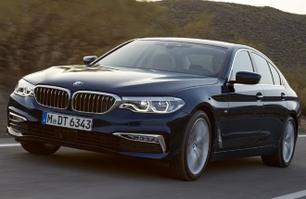
But what if it didn't have to be that way? Behold the BMW 530e iPerformance.
Seemingly tired of waiting for the Australian Government to introduce any sort of meaningful subsidy for green cars, BMW has made the choice simple: you can have a petrol-powered 530i for $108,900, or opt for the plug-in hybrid 530e for... $108,900. This is truly revelatory thinking.
There's no specification penalty, either, and the hybrid will power to 100km/h in an identical 6.2 seconds, so you're not even any slower. But you are sipping less fuel, emitting less C02 and basking in the general smugness, and sweet silence, that comes with feeling like you're saving the world.
So what's the catch?
Over 44 years BMW has produced more than 15 million examples of the 3 Series. That's roughly one every minute and a half... for over four decades.
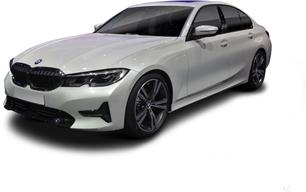
And the latest, seventh-generation version of what the famous German maker defines as the "heart and soul" of its brand has landed in Australia.
The new '3' is longer and wider. It's also claimed to be slicker aerodynamically, up to 55 kilos lighter, more fuel efficient, and faster.
And it'll need every advantage it can muster to take a chunk out of its arch rival, the all-conquering Mercedes-Benz C-Class.
Not all superheroes wear capes, and we're proud to report the 530e does its bit for green motoring without feeling the need to shout about it. And with no price or specification penalty, it's easier being green than ever before, and the pricing of this BMW really puts the cat amongst the canaries.
Despite BMW's wholehearted embrace of the SUV its 3 Series is still a critically important model for the brand in Australia. And this new version certainly has the spec and tech to take the fight up to Merc's C-Class. And if you're in the happy position of making that choice, it's now a whole lot harder. For our money the 330i marks the sweet spot with extra performance, safety tech and standard features for only a fraction more than $3k over the 320d entry-point.
Crucially, there's nothing weird about the way the 530e looks. While some green cars look like they've been designed by one of the kids from 3rd Rock from the Sun, the 530e looks much the same as the rest of the range, save a few tiny but telltale giveaways - like the e-drive badging outside, and what looks like a bonus fuel flap tucked in behind a front wheel that houses the whole plug-in bit.
And we really, really like it. It's elegant and statesman-like from every angle, and looked especially important in the deep-blue colour of our test vehicle. It's not over-designed, with body creases used sparingly, and the occasional glint of polished silver that rings the windows and the grille adds a final sense of shininess to an understated design.
Inside, there's more going on than you might normally find in a BMW. The hugely complicated digital display screen now includes everything from battery charge, power usage to the usual assortment of speedometers and petrol readouts.
It doesn't feel overdone or crazily festooned, but there's more at play here than in your usual BMW.
The dash is busy, too, with a wide screen emerging from a centre stack that also houses a CD player and a digital aircon setup, which in turn sits above a complex centre console from which you can alter driving settings, control the multimedia or cycle through electric modes. It doesn't feel overdone or crazily festooned, but there's more at play here than in your usual BMW.
Elsewhere inside, the seats are beautifully designed, with a quilted leather highlight through the middle, while the gloss-black strip that lines the dash hides a dual strip of ambient interior lights that also runs across all four doors.
At just over 4.7m nose-to-tail the new 3 Series has crept 76mm in overall length but that dimension is still more than 200mm shy of its next-size-up 5 Series sibling.
Changes to the exterior design are more evolutionary than revolutionary. You're never going to mistake this car for anything other than a BMW 3 Series.
But even if the face is familiar, aerodynamic efficiency is outstanding. BMW admits its claimed Cd of 0.23 was achieved with a base model running on 17-inch wheels (not offered here), but even if bigger rims knock a few fractions off that number it's still an amazing result for a conventional four door sedan.
Big contributors are a full width front spoiler, 'air curtains' managing flow around each corner of the nose, almost complete sealing of the largest areas underneath the car, and a functional rear diffuser section.
The signature kidney grille has grown and is delivered as a single piece, with active shutters incorporated to manage cooling air flow through to the engine. Twin adaptive LED headlights (standard on all models) feature a sharp notch on their lower edge, a big clue for new model spotters.
Broad, carefully managed surfaces characterise the bonnet and flanks of the car, with a distinct character line just above door handle height enhancing its confident stance.
The slightly smoked L-shaped LED tail-lights sit proud of the body, and 18-inch alloys are standard on the 320d, stepping up to 19s on the 330i.
The interior has been redesigned with revised controls and new materials, including slick 'aluminium teragon' finish on the console and dash in the M Sport.
As you can see in our interior images, it's been tidied up and simplified considerably, although it will still be instantly recognised by current BMW drivers.
Highlights are a 12.3-inch configurable digital 'Live Cockpit Professional' instrument display (lifted directly from the X5), a new 10.25-inch media touchscreen and a standard (larger) head-up display.
As the world's motoring tastes shrink faster than a lap-banded Clive Palmer, it's easy to forget the joys of the full-size sedan, but the space for passengers and luggage in the 5 Series will have you questioning your downsizing ways.
Upfront, there's plenty of room between front-seat riders, who will also share two smallish cup holders, along with room in each front door for bottles. There's also a dedicated wireless charge pad (which, because of its tight design, is crazy difficult to actually remove your phone from), but you'll also get two USB points and a power outlet that's hidden in the sizeable centre storage bin as standard fit.
Backseat riders get heaps of space, both in width and in leg room behind the front seats. And there's twin air-con temp controls and twin power outlets, too. But middle-seat passengers will be forced to sit with their legs on either side of the raised tunnel, which will definitely impact on comfort.
The boot's still sizeable, despite shrinking slightly to house the battery/fuel tank setup
Best to ditch the fifth passenger, then, and deploy the pull-down seat divider, which also houses two cup holders. Finally, there are three ISOFIX attachment points, one for each seat in the back.
The boot's still sizeable, despite shrinking slightly to house the battery/fuel tank setup (the tank has been moved further back to accomodate the batteries), and can be adjusted to be a flat load area if you'd like, offering up to 410 litres with the rear seats in place.
A longer wheelbase (+41mm) has helped increase overall cabin space and rear room specifically.
There's plenty of storage provided with a large lidded box between the front seats as well as two large size cupholders in a recessed section in front of the gear shift (which can be closed off with a roll-top style cover).
The glove box is large and there are big bins in the doors with separate holders for full-size bottles.
Rear legroom is generous. At 183cm, sitting behind my own driving position, there was plenty of fresh air between knees and seatback, with lots of foot room to boot.
Headroom was more marginal with a straight back leading to a bonce/roof interface. But there are adjustable rear vents, twin cupholders in a fold-down centre armrest, and big bottle holders in the doors. Multiple USB ports (Type A and Type C) and a 12-volt power outlet are provided front and rear.
The boot space offers up a 480-litre luggage capacity with a 40/20/40 split-folding rear seat increasing cargo flexibility. Local towing capacity is yet to be confirmed, but indicative (European) ratings for both models are 750kg for an unbraked trailer and 1600kg braked.
Standard rubber is run-flat so there's no spare of any description.
The 530e commands a 530i-equalling $108,900 price tag, which is genuinely impressive when you consider all the extra bits and pieces that go into make a plug-in hybrid. That money buys you a well-equipped car, and only those allergic to money need reach for the options list.
As standard, you'll find leather-wrapped - and heated in the front - sports seats, 19-inch alloy wheels and a 10.25-inch touchscreen that pairs with a really very good 16-speaker Haman Kardon stereo. Wireless Apple CarPlay is available, but it'll cost you an extra $500. To be honest, though, we didn't miss it.
You'll also find adaptive LED headlights, a huge head-up display (so big, in fact, that it impedes vision when climbing steep hills), dynamic dampers, an auto opening/closing boot and a self-parking system, along with BMW's suite of self-driving tech - but we'll come back to that under the Safety sub-heading.
Pricing for the two-model launch line-up starts at just under $67,900 before on-road costs for the 320d, rising to $70,990 for the 330i.
That means it remains head-to-head with comparable Merc C-Class models, and other premium mid-size competitors like the Audi A4, Jaguar XE and Lexus IS.
Given many previous Australia-bound 3 Series models have been built in South Africa it's fair to ask where is the BMW 3 Series built, and the answer this time around is Germany.
And the standard features list is long, including 'Adaptive LED headlights' (with 'High-Beam Assistant'), LED fog lights and tail-lights, electrically adjustable and heated exterior mirrors (with electric fold-in function), rain-sensing wipers, three-zone climate control, electrically-adjustable sports front seats (with memory function for driver and front passenger), wireless smartphone charging, 'Aluminium Tetragon' interior trim finishers, 12.3-inch 'BMW Live Cockpit Professional' digital instrument display, 'Navigation System Professional' with 10.25-inch digital touchscreen display also managing a 10-speaker, 205-watt sound system, including a 20GB hard drive and DAB+ digital radio. Apple CarPlay is included.
Also included are 'BMW TeleServices' taking in 'ConnectedDrive'(free use of vehicle apps via 'BMW Online'), real-time traffic info and 'Concierge Services'. The 'BMW Intelligent Personal Assistant' responds to a "Hey BMW' voice command with a range of hands-free functions like nav, calls and texts. We had mixed success in challenging this friendly PA.
The default M Sport trim includes 18-inch 'M Double-spoke' light alloy wheels, BMW Individual high-gloss 'Shadow Line' black treatment on the window frame and air breather surround, the 'M Aerodynamics package' (aero front and rear bumper trims, and side sills), Alcantara/Sensatec (vinyl) upholstery (black with contrast blue stitching), Anthracite BMW Individual headliner, and an M leather steering wheel (with multifunction buttons).
The no-cost 'Luxury Line' treatment swaps in 'Vernasca' leather seats, ash grey-brown interior wood trim, a sport leather steering wheel, the instrument panel trimmed in Sensatec and standard level sport seats for the driver and front passenger.
Step up to the 330i and you can add 19-inch alloys, 'Vernasca' leather upholstery, 'Comfort Access' (keyless entry to all doors), adaptive suspension, M Sport brakes, 'Driving Assistant Professional' (active cruise control with 'Stop&Go' function, front and rear cross-traffic warning, steering and lane control assist, lane keeping assistant with side collision warning, crossroads warning and 'Evasion Aid'), and 'Parking Assistant Plus' ('Parking Assistant' with 'Active Park Distance Control' rear, 'Reversing Assistant', 'Surround View', 'Panorama View', and '3D View').
In terms of colours, 'Alpine White' and black are no-cost, wihle metallic shades - 'Black Saphire', 'Melbourne Red', 'Glacier Silver', 'Mineral White', 'Mineral Grey', 'Mediterranean Blue', 'Sunset Orange', 'Velmont Bronze' (brown), and 'Portimao Blue' add $2000 (rrp). And the 'BMW Individual' metallic shade of 'Dravit Grey' adds $2350.
Lots and lots of fruit without any change to the price. Clearly BMW is determined to bring the 3 Series back to prominence.
Drift around in pure EV mode and you'll be relying on the 530e's 83kW and 250Nm electric motor, which will provide what BMW refers to as "between 28 and 32 real-world kilometres".
Run out of range, or simply use too much throttle, and the 2.0-litre petrol engine comes into play, adding 135kW and 320Nm to the mix. All up, that's 185kW and 420Nm - respectable numbers by any measure, and enough to match the petrol-powered 530i's zero to 100km/h sprint of 6.2 seconds.
That power is fed through an eight-speed automatic transmission before being sent exclusively to the rear wheels, where it belongs.
The 320d is powered by a 2.0-litre four-cylinder twin-turbo-diesel, featuring common-rail direct-injection and variable inlet timing. It produces 140kW at 4000rpm and 400Nm between 1750-2500rpm.
The turbo's multi-stage design incorporates a small, high-pressure, fixed-vane turbocharger as well as a larger, low-pressure, variable-vane turbo to maximise response, performance and efficiency.
A 2.0-litre single turbo-petrol four-cylinder engine sits under the 330i's bonnet incorporating direct-injection, as well as variable valve and cam timing. Peak outputs are 190kW from 5000-6500rpm and 400Nm between 1550-4400rpm.
Mark the date because this is the first time the BMW 3 Series has been offered in Australia without a manual gearbox option. Both launch models send drive to the rear wheels via an eight-speed automatic (with wheel-mounted shift paddles) only.
Like a Facebook relationship status, it's complicated. The 530e will sip a claimed combined 2.3 litres per hundred kilometres on the claimed/combined cycle, which is amazing for a car this size. Better still, it seems genuinely achievable - at the vehicle's launch, our own Richard Berry recorded a stunning 2.0 litres per hundred kilometres on a short test route.
But that's with a full load of battery charge on board. For our week with the 530e we were unable to actually plug it in (living in Sydney, I can't afford a garage), so once the initial battery charge had been used we were back to mostly petrol power. Unlike some other plug-in hybrids we've driven, we found it very difficult to recharge the battery to any meaningful level using regenerative braking, so once we were flat we stayed flat. If we had plugged it in, it would have been a two-hour recharge using a specialised wall unit, or about four hours using a normal plug.
As a result, though, our fuel use was closer to 7.0 litres per hundred kilometres after some considerable real-world testing.
Despite each car's performance potential claimed fuel economy for the combined (ADR 81/02 - urban, extra-urban) cycle is commendably low.
BMW says the 320d delivers excellent diesel fuel economy, consuming a miserly 4.5L/100km, emitting 119g/km of CO2 in the process, with the 330i's fuel consumption figure coming in at 6.4L/100km and 147g/km.
You'll need minimum 95 RON premium unleaded in the 330i, with both petrol and diesel requiring 59 litres to fill the tank to full capacity.
There's so much to like about the way the 530e sets about saving the world, and that's mostly because it doesn't shout about it, either to the driver or the outside world.
It's very much an underpants inside its pants superhero, which makes us like it even more. Set off in EV mode, and the 530e will drift silently away from the curb, burning battery power over fuel for as many as 30(ish) kilometres. But equally important, the shift from green to gas is largely imperceptible, with the petrol engine joining in willingly when you ask it to - usual via a prod of your right foot.
It is so effortlessly smooth that you need to really pay attention to notice the eight-speed 'box changing gears at city speeds, and it's commendably quiet, whichever drive mode you're in.
Downsides? Well, it doesn't feel quite as sharp as it's conventional-engined siblings. The batteries add around 230kg in weight, which never helps, and it all feels a little softer and a little less dynamic, even with Sport mode engaged. BMW assures us the adaptive suspension setup and tune is identical, but the 530e feels noticeably softer when you tackle a twisting back road. And that encourages you to use your right foot a little more, which in turn negates the whole electric thing in the first place.
One of the great joys of BMWs has always been their ability to transform from cosseting comfort to rear-drive rocket when you want them to, and you can't help but notice the 530e isn't quite up to that challenge. But if your intentions are mostly city- and freeway-based, then this plug-in BMW is almost indiscernible from its petrol-powered sibling.
First, the performance figures. BMW claims the 320d will accelerate from 0-100km/h in 6.8sec, which is agreeably quick, while the 330i knocks that down to 5.8sec, which is properly fast.
Both engines deliver the same 400Nm of maximum torque at low rpm; 1750-2500rpm for the 320d, and a broader 1550-4400rpm spread for the 330i. Mid-range acceleration is strong and satisfyingly linear in each, the 330i that bit more urgent at the top end.
The eight-speed auto is velvety smooth, with the wheel-mounted shift paddles on hand for rapid 'manual' changes. Engine noise is muted at low revs but nice and rorty under pressure.
A stated aim in the development of this 3 Series was "dynamic engagement", and the standard strut front, multi-link rear suspension has been tuned to reinforce the driving part of the brand's long-standing 'ultimate driving machine' promise.
The standard suspension includes tricky two-stage dampers front and rear, but with all cars at the local launch fitted with the optional active damper system we'll have to wait to report on its quality (or otherwise).
This car's centre-of-gravity is 10mm lower than the model it replaces, which may not sound like much, but in engineering terms, absolutely is. In concert with a perfect 50:50 front-to-rear weight distribution, and wider tracks front and rear, it helps deliver an overall planted feel and predictable cornering balance.
The electro-mechanically assisted steering is accurate and linear with good road feel, which is not always the case in recent Beamers.
The launch fleet was also rolling on 19-inch rims (standard on 330i, optional on 320d) shod with Bridgestone Turanza run-flat rubber (225/40f - 255/35r) and despite that type of tyre's reputation for harsh characteristics and a moderate level of road noise, ride comfort on the typically coarse rural roads we covered in the Victorian high country was impressive.
Braking on both models is by ventilated disc front and rear, and even in spirited cornering maintained their power and efficiency. The M Sport brake package fitted to the 330i dials things up with four-piston alloy calipers (sourced from Brembo) up front.
The standard sports steering wheel is fat and grippy, the sports front seats combine firm location with long-distance comfort and overall noise levels are low. Overall, this is a super-impressive touring car.
You'll want for little here, with front, front-side and full curtain airbags joining parking sensors, a surround-view camera and a self-parking system.
You can also expect active cruise control, lane control assist with lane keep assist (so it will stay between the lane markings for you), AEB and cross-traffic warning. And all of that means that, technically, the 530e can drive for you. That is, of course, if you don't mind driving like a dick - in full-autonomous mode it will swerve from lane marking to lane marking like it's playing bumper bowling.
The new 3's active safety package is exactly where it needs to be, with all the 'cost-of-entry' items like ASC, DSC, ABS, 'Braking Assist', and traction control included. But additional tech includes everything from all-speed AEB, 'Lane Departure Warning', 'Lane Change Warning', head-up display and 'Front Collision Warning' (with brake intervention), to 'Cornering Brake Control', 'Rear Cross-Traffic Warning', 'Rear Collision Prevention', 'Speed Limit Information', 'Parking Assist' (with 'Reversing Assistant') and 'Dynamic Braking Lights'.
Step up to the 330i and you can add 'Steering and Lane Control Assist', 'Emergency Stop Assistant', 'Auto Speed Limit Assist', 'Lane Keeping Assist', 'Front Cross-Traffic Warning', 'Evasion Aid', 'Crossroads Warning' (with 'City Braking' function), 'Wrong Way Warning', as well as 'Parking Assistant Plus' (with 'Surround View Camera' and 'Remote 3D View').
On the passive side, the airbag count runs to eight (front and side airbags for driver and front passenger, and head airbags for all four outer seats). 'Intelligent Emergency Call' is also included.
There three top tether anchors for child seats/baby restraints across the back seat, with ISOFIX anchors on the two outer positions.
This seventh-generation 3 Series is yet to be assessed by ANCAP or EuroNCAP, but it's a safe bet it will pick up a maximum five-star safety rating.
Like the rest of the 5 Series range, the 530e falls under BMW's three-year, unlimited-kilometre warranty. There are no set service intervals, either, with BMW using what it calls 'condition-based' servicing. In other words, the car will tell you when it requires a trip to the service centre.
The batteries are covered by a separate warranty covering six years or 100,000km.
BMW offers a three year/unlimited km warranty, which is drifting off the pace now with the majority of mainstream brands stepping up to five-year cover, with some at seven.
On the upside, bodywork is covered for 12 years, the paint for three, and 24-hour roadside assistance is complimentary for three years.
Servicing is condition based, so the car tells you when maintenance is required, and BMW offers a range of service packages in 'Basic' and 'Plus' grades up to 10 years/200,000km.