What's the difference?
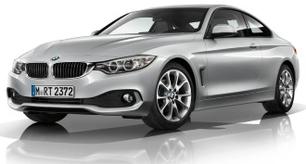
Tim Robson road tests and reviews the BMW 4 Series with specs, fuel consumption and verdict at its Australian launch.
Following on from the mid-life tweaks to BMW's mainstay 3 Series in December 2015, the spin-off 4 Series line has now been updated along the same powertrain and equipment lines.
Based on the same mechanicals as the 3 Series, the three-year-old 4 Series was ostensibly formed to give BMW's nomenclature some sense of logic by designating its two-door machines as 'evens' (2 Series, 4 Series and 6 Series) and its four-door cars as 'odds'.
Three variants currently make up the 4 Series range, including a two-door Coupe, a two-door Convertible and – oddly, given the naming regime – a four-door Gran Coupe that also sports a hatch-like tailgate.
Subaru struck gold when it first launched the BRZ in 2011.
It, alongside the related Toyota 86 (now GR86), has been the standard for budget two-door sports cars for 15 years now. Nothing besides the MX-5 convertible is in the same class.
However, buyer’s preferences have changed dramatically over the years and sports cars are at risk of becoming more mundane and vanilla to please the general public. It’s great that Subaru continues to offer the BRZ, importantly with the availability of a manual gearbox. Hallelujah.
Last year Subaru made some slight tweaks to the BRZ, including adding active safety tech and a ‘Sport’ mode to the manual trims, plus a full-size spare wheel on the top-spec tS grade.
Speaking of, we’ve got the BRZ tS manual on test here, so let’s see how it fares in 2026.
The 4 Series line offers three distinct points of difference from the more traditional 3 Series, each with their own attraction. The sharpening of the sticker prices and the additional spec helps their cause as well, with the 430i Coupe probably our pick of the range. The 440i is the firecracker of the group, while the 420d is also worth a look, thanks to its value and prodigious torque output.
The Subaru BRZ is a classic modern-day sports car that is a driver’s car through and through. This top-spec tS tester with the litany of accessories is a great example of what’s possible straight from the dealer, but it’s definitely not the best bang for your buck.
Thankfully you still get virtually every benefit the BRZ offers in the entry-level model. You’ll save thousands of dollars which you can use to pay for fuel on a road trip or modify your car exactly how you’d like.
No external changes to the 4 Series' bodywork have been affected for this midlife refresh, but there have been plenty of tweaks to the standard equipment offerings right across the board.
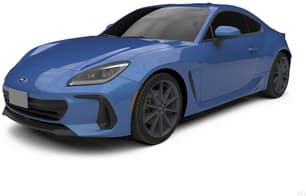
The Subaru BRZ has a timeless exterior design that screams dynamic sports car from every angle.
Even though the second-generation BRZ is around halfway through its lifecycle now, the design is aging like fine wine. It’s also a lovely evolution of the original which dates back to 2011.
The BRZ is low slung, has an aggressive front fascia plus the rear has prominent exhaust pipes. All of this stacks up to make a tough-looking car.
Thankfully this test example is also finished in 'WR Blue' exterior paint, which in my books is still the best colour for a Subaru performance car.
Adding all the genuine accessory goodies onto this car not only amplifies its street appeal, but also harnesses its racing intent. The carbon rear wing in particular has a swan neck design much like the Porsche 911 GT3. Many interested car-spotters craned their necks to get a good look.
Despite this, all the accessories are too flashy for my taste, especially for a car likely to be driven daily. I’d go for the stock look to retain resale, or something subtle like a small rear lip spoiler.
Inside the BRZ has all of the hallmarks of a sports car, as well. These include a steering wheel with minimal buttons, a prominent rev counter and contoured seats.
The manual gear shifter in this car is prominent and nice to hold. It’s great to still see manual options as they’re slowly but surely falling out of favour with buyers.
The manual handbrake is also a nice touch from a design perspective, but it limits overall interior practicality. More on that in a bit.
You can tell the interior is getting a little dated due to the older central multimedia system. But at the end of the day sports cars are more about the driving experience than the flashy tech.
Two-doors are never the most practical devices, but the 4 Series Coupe and Convertible duo make a decent fist of it for front-seat passengers. There are bottle holders in both doors and a pair of cupholders in the centre console, along with a large lockable glovebox.
The centre bin is, however, quite shallow, and houses the car's single USB port inside it. There is covered storage under the dash for smaller items, and a small rubber-lined tray that the current crop of phones has outgrown.
The rear seating in the Coupe is reduced to almost a formality, especially if the front seat passengers are tall and the front seats are set back, while the sloping roofline reduces head space quite considerably. A centre armrest contains a pair of cupholders, and there are small side pockets.
Rainy conditions precluded us from trying the Convertible's metal folding roof, but the rear seat space restrictions also apply here. Its 370 litres of boot space is roomy enough for a drop-top, while a clever lifting function raises the folding roof structure up by about 300mm to allow luggage to be stowed under the panels when the roof is down. Capacity drops, though, to just 230 litres.
The Gran Coupe, on the other hand, is the most practical car in the entire 3 and 4 Series line-up outside of the 3 Series Touring wagon. With a large, flat load area, and a hatch-like tailgate, the Gran Coupe can swallow 480 litres of gear with the seats up and an impressive 1300 litres with the seats lowered.
Face-level rear vents, more head and backseat legroom – not to mention the fact you don't have to squeeze into the rear past the front seat – makes the Gran Coupe a most useful device, and it's little wonder it's the most popular variant of the three.
Hopping into the BRZ you’re immediately aware you’re getting into a sports car. It’s low-slung and the driving position feels like you’re almost sitting on the road. Perfect for this kind of machine.
The front seats are beautifully contoured and lock you in for when you’re driving through the twisties. Thankfully, the bolstering isn’t too aggressive and it’s still comfortable for everyday driving.
Ahead of the driver, the leather-wrapped steering wheel has a thin rim and is lovely to hold and turn. There aren’t many buttons but the few that remain are purposeful and have a lovely tactile click.
Behind this there is a 7.0-inch digital instrument cluster that permanently displays the rev counter in the middle. It’s a cool set-up that almost has a retro look to it, plus you’re able to configure the content that is displayed on the left-hand side.
Moving across, the central touchscreen multimedia system is classic Subaru. Nothing revolutionary, but I appreciate the physical shortcut buttons and dials on both sides of the screen.
It’s very easy to navigate around the screen, though as the photos show it is prone to glare, especially in bright scenarios.
Disappointingly there is only wired Apple CarPlay and Android Auto, with no wireless versions offered. You need to plug your phone in with a USB-A cable in a slot under the split-fold centre armrest.
While this means your phone will reliably charge, rather than having your phone overheat on a wireless charger, there’s no nice spot to put your phone given the physical handbrake takes up so much valuable centre armrest space.
You can put your phone in one of the cupholder spots, but when you do you don’t get a centre armrest. It’s too compromised for my liking.
While I’m on the topic of storage, there isn’t a great deal of it. There’s a small glove box and if you want, you can technically use the backseat area as they’re way too compromised for adults to fit into.
The rear seats are so small I didn’t even bother trying to fit as in my default driving position there is zero legroom. Even kids would struggle.
In terms of boot space, there is 201L available with the rear seats upright. It’s a fine space, though it’s impeded by the full-size spare wheel poking above the load floor. As a result you need to pack around the wheel.
Folding the rear seats makes the boot space more usable, though the envelope to slot things into the boot is narrow.
While the full-size spare wheel impedes the boot area, I’m glad it’s there because it’s much more usable than a dinky space-saver spare wheel or nothing at all. It gives you peace of mind in the event you have a puncture in the middle of nowhere.
Entry into the 4 Series world now stands at $68,900 plus on-roads for the petrol 420i Coupe and Gran Coupe, and tops out at almost $118,000 for the 440i Convertible.
Both the 420i and 420d have been boosted by the addition of adaptive M dampers, a heads-up display, powered folding rear-view mirrors, lane-change warning, driving assistant and BMW's surround view camera with top and side views.
BMW claims the extra kit is worth just over $8000. Leather seats, sat nav, BMW's ConnectedDrive Emergency call system, bi-Xenon headlights and reversing camera are also featured. An eight-speed automatic transmission is offered as stock, but a six-speed manual can be optioned at no cost.
The diesel version costs an additional $2200 over the petrol powerplant.
Stepping into the 430i, the M Sport Package is offered as standard, with the Luxury line, which includes a leather-trimmed dash, a no-cost option.
Additional standard equipment over the outgoing 428i includes 19-inch M rims, heads-up display, lane change warning, driving assistant and surround view camera. The 430i also gains electric lumbar support for driver and front passenger seats and a nine-speaker stereo system over the base 420i.
Finally, the range-topping 440i scores a heads-up display, lane change warning, driving assistant, surround view camera, adaptive LED headlights, leather dash, front seat heating, high beam assist, active cruise control with stop and go function and parking assistant over the outgoing 435i.
Over the 430i, the 440i also gets variable sport steering, a Harman/Kardon surround sound system with 16 speakers, a leather instrument panel (with M Sport Package), ConnectedDrive internet and concierge service, and air collar neck-warming ducts for the 440i Convertible.
The 2026 Subaru BRZ line-up starts at $47,890, before on-road costs, for the entry-level model regardless of whether you opt for the manual or automatic.
On test here, however, is the flagship tS trim which starts from $52,790, before on-roads. That's $4100 more expensive than it was when it first launched in 2024.
It’s worth noting this is overlooking the limited-edition tS Kiiro ($53,590, before on-roads) with its bright yellow paint.
As a base, the BRZ comes with a solid amount of kit. This includes 18-inch alloy wheels, LED headlights, power-folding side mirrors, an 8.0-inch touchscreen multimedia system with wired Apple CarPlay and Android Auto plus dual-zone climate control.
One of the few things missing is wireless Apple CarPlay and Android Auto. This is becoming commonplace in many cars and while it can be a hassle to plug into a USB port, it also means your phone will reliably charge.
You need to step up to the S trim if you want features like leather-accented upholstery and heated front seats. The top-spec tS in particular gains STI-tuned suspension, Brembo front and rear brakes, black door mirror covers and tS badging.
Adding to this, our particular tester comes equipped with a wealth of optional accessories. These include an STI body kit, STI alloy wheels and an STI carbon boot spoiler, totalling just over $14,500 fitted… Goodness me. For reference, the carbon rear wing is almost half of that.
Altogether, this kitted-up BRZ tS tester costs around $67,300, before on-road costs. While this is much more than the top-spec Toyota GR86 and Mazda MX-5, it’s still less than an entry-level Ford Mustang Ecoboost or BMW 2 Series.
There are two new petrol engines, two new badges and prices cuts of up to $10,000 right across the board for the line-up, along with additional standard equipment that improves the value equation even further.
The line kicks off with the 420, which can be had in either diesel or petrol guise. The 420i gains BMW's new B48 2.0-litre four-cylinder turbo petrol engine, which gains 5kW over the old motor to produce 135kW and 270Nm.
It also benefits from slightly improved fuel economy, with a drop of 0.3 litres per 100km for the Coupe and 0.5 for the Gran Coupe to 5.8L/100km, and a fall of 0.2L for the Convertible to 6.2L/100km.
The 420d retains its 140kW, 400Nm 2.0-litre four-cylinder turbo diesel engine, which returns 4.3L/100km in the fixed roof cars and 4.7L/100km for the Convertible.
The 430i – formerly known as the 428i – also receives the new 2.0-litre petrol engine, albeit in a 185kW/350Nm tune. Its fuel economy drops a healthy 0.6L for the Coupe and Gran Coupe and 0.4L for the Convertible, posting figures of 5.8 and 6.3L/100km respectively.
The top-spec 435i has been transformed into the 440i with the addition of BMW's new Twinpower 3.0-litre straight six petrol motor. Its output jumps 15kW to 240kW and by 50Nm to 450Nm, and its consumption falls by more than half a litre to 6.8 litres per 100km for the closed-roof pair and 7.2L/100km for the Convertible.
All cars come standard with a 'traditional' ZF eight-speed torque converter automatic transmission with steering wheel paddles as standard fitment, while a six-speed manual gearbox is a no-cost option across the line.
Our brief test loop on a rainy, blustery Melbourne winter's day in all three model types (but no diesel) netted varying fuel consumption readings across the line; we recorded 8.4L/100km in a 420i sedan against a claimed figure of 5.8, 9.8L/100km for the 430i Gran Coupe against a claimed figure of 5.8L/100km, and 8.4L/100km against the 440i Gran Coupe's 6.8L/100km.
Subaru claims the BRZ manual consumes an average of 9.5L/100km on the (ADR 81/02) combined (urban/extra-urban) cycle.
We almost matched this during our largely urban-based testing, achieving an average of 9.7L/100km. There’s a 50L fuel tank which means there’s a total theoretical range of 515km using our as-tested fuel consumption.
A minimum of 98 RON premium unleaded petrol is required which isn’t uncommon for sports cars, but it still hurts your hip pocket nerve.
BMW introduced a raft of tweaks to the 3 Series platform late last year, which have translated over to the 4 Series. The key addition across the line is BMW's two-stage adaptive dampers that feature a Sport and a Comfort circuit, fitted as part of the M Sport pack that comes standard on the 430 and 440, and is a $2600 option on the 420.
Larger 19-inch rims are fitted to the 430i and 440i cars, while the 420 gets 18s out of the box. It's possible to fit 18s on the more expensive cars, as part of the no-cost Luxury option pack that supplants the standard M Sport pack.
While our test was brief and held in less than ideal road conditions, the large-wheeled 4 Series really didn't enamour themselves to this author. There's a distinct lack of communication from the tyres and chassis through the steering wheel and your backside, while the combination of firm Sport shocks and large 19-inch wheels with narrow-section tyres made for an uncomfortable ride over country roads.
Sampling a 420i with the Luxury 18-inch rims, however, improved things immensely, with much better feedback and comfort that didn't come at the expense of handling.
One of BMW's strong points should be its steering, given all the 3 and 4 Series cars are still rear-wheel-drive… but it's not, unfortunately. The electrically assisted set up is far from perfectly calibrated, feeling too dull and digital underhand, no matter what the setting.
The pick of the bunch performance wise is – logically – the six-cylinder 440i. The turbo powerplant is potent from right down the rev range, with a muted yet still pleasing engine note permeating the cabin. The self-shifting mode on the eight-speed auto does a good job of keeping up as well.
The updated 2.0-litre four is a sprightly performer, too.
This is where the BRZ has always excelled and this kitted-out tS manual is no exception.
Firing up with a cold engine, you’re immediately aware this is powered by a horizontally-opposed 'boxer' engine. It has that classic high idle that eventually simmers down once the engine has warmed up a bit.
Setting off you need to acquaint yourself with how this manual gearbox works. Every manual is a little different, however this BRZ is easy to pick up and understand quickly.
I particularly like the notchy and direct gear throw. It makes changing gears easy, fun and engaging.
If I am to be critical, the clutch bite point is a little high and there is a touch too much rev hang when changing gears, especially in the ‘Sport’ drive mode, but you get used to it eventually.
In everyday driving scenarios there is enough power available. Some more wouldn’t go astray due to the lack of a turbocharger, but this constraint makes the car more fun to drive as you have to work harder with the gears.
Speaking of, the gearing is short, which means you will be shifting gears quickly. At 60km/h, for example, the car can be driven around in sixth gear, which is clearly focused on maximising efficiency.
Once you’ve reached your set speed there’s enough torque to maintain it without having to dive back through the gears. This is nice because you don’t have to shuffle through the gears to keep up with traffic.
Out on the open road is where the BRZ comes into its own. The steering in particular highlights how balanced and poised the car feels. It’s so fun to chuck around on twisty bends and feel the weight transfer.
The STI-tuned suspension in this particular trim also highlights how sporty and dialled-in this car is. It can feel a little rough and taut on pimpled urban roads, though you need to remind yourself this is a sports car, not a comfort-oriented SUV.
In a similar vein, at higher speeds there is a lot of road and tyre noise that transfers into the cabin. This is made worse when the rear seats are folded. While more sound insulation would likely fix this, I like it being left out in the name of lighter weight (kerb weight is only 1.3 tonnes).
six airbags, lane departure warning, pre-collision safety pack, parking sensors, active cruise control with collision warning, AEB and pedestrian warning, along with reversing camera and surround-view cameras across the line.
The current-generation Subaru BRZ hasn’t been crash-tested by ANCAP and is therefore unrated.
In 2025, the manual BRZ joined the auto version when it gained Subaru’s 'EyeSight' camera system, which brings autonomous emergency braking (AEB), lane departure warning and even adaptive cruise control. It’s rare for manual-equipped vehicles to feature the latter.
This is above and beyond the seven airbags, blind-spot monitoring, rear cross-traffic alert, lane change assist, reverse camera and tyre pressure monitoring.
It’s worth noting manual versions of the BRZ do not have any parking sensors, front or rear, as standard. Automatic versions gain rear parking sensors and a rear AEB system.
There are two ISOFIX anchors and two top-tether points for child seats in the second row, though space is rather limited.
BMW offers a Service Inclusive program at the time of purchase, which for $1340 covers everything – including items like spark plugs, brake fluids and other fluids - for five years or 80,000 km scheduled. The cars are also covered by a three-year free roadside servicing program, in addition to BMW's two year, unlimited kilometre warranty.
Subaru BRZ owners are covered by a five-year, 100,000km warranty which is now commonplace in the mainstream segment. Many carmakers are now extending their coverage out to seven years and beyond.
Logbook servicing is required every 12 months or 15,000km, whichever comes first. The first five services cost a total of $2595.51, which averages out to around $519 per service. For the performance car space this isn’t cheap but not as exorbitant as more premium offerings.
Subaru has a total of 128 dealers around Australia, with a spread across metro, rural and regional areas.