What's the difference?
Tim Robson road tests and reviews the BMW 4 Series with specs, fuel consumption and verdict at its Australian launch.
Following on from the mid-life tweaks to BMW's mainstay 3 Series in December 2015, the spin-off 4 Series line has now been updated along the same powertrain and equipment lines.
Based on the same mechanicals as the 3 Series, the three-year-old 4 Series was ostensibly formed to give BMW's nomenclature some sense of logic by designating its two-door machines as 'evens' (2 Series, 4 Series and 6 Series) and its four-door cars as 'odds'.
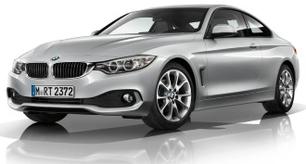
Three variants currently make up the 4 Series range, including a two-door Coupe, a two-door Convertible and – oddly, given the naming regime – a four-door Gran Coupe that also sports a hatch-like tailgate.
Hybrid campers tread the line between caravan comfort and camper trailer-manoeuvrability and are touted as somewhat of a new thing; almost an evolution of comfort as more people look for a perfect camping experience.
But camper-trailers like the Cub Longreach LE prove that the concept has been around for decades.
It hasn't always been called the Longreach, but this high-walled, super-sized, off-road camper-trailer was one of the first to offer caravan-like comfort and space in a product that'll go anywhere off-road*. (* In terms of reasonable use and having obviously scrutinised your camper's warranty conditions before setting off to make sure you're covered for that sort of usage.)
The 2019 LE takes the comfort levels even further, so we grabbed one for a night to check it out.
The 4 Series line offers three distinct points of difference from the more traditional 3 Series, each with their own attraction. The sharpening of the sticker prices and the additional spec helps their cause as well, with the 430i Coupe probably our pick of the range. The 440i is the firecracker of the group, while the 420d is also worth a look, thanks to its value and prodigious torque output.
This isn’t the camper for everyone – my guess is that plenty of people look at this and find it too sparse, too basic. I kinda get it.
But there are very few campers which offer the same amount of open, internal space, or that are as easy to set up.
That the Longreach, albeit with a few different names, has lasted so long on the Cub Campers' product roster is a testament to its versatility and ability to accommodate a small family on off-road camper trips.
It's arguably one of the forerunners of the hybrid camper scene, and it's now starting to evolve with campers' desires for more comfort.
Two-doors are never the most practical devices, but the 4 Series Coupe and Convertible duo make a decent fist of it for front-seat passengers. There are bottle holders in both doors and a pair of cupholders in the centre console, along with a large lockable glovebox.
The centre bin is, however, quite shallow, and houses the car's single USB port inside it. There is covered storage under the dash for smaller items, and a small rubber-lined tray that the current crop of phones has outgrown.
The rear seating in the Coupe is reduced to almost a formality, especially if the front seat passengers are tall and the front seats are set back, while the sloping roofline reduces head space quite considerably. A centre armrest contains a pair of cupholders, and there are small side pockets.
Rainy conditions precluded us from trying the Convertible's metal folding roof, but the rear seat space restrictions also apply here. Its 370 litres of boot space is roomy enough for a drop-top, while a clever lifting function raises the folding roof structure up by about 300mm to allow luggage to be stowed under the panels when the roof is down. Capacity drops, though, to just 230 litres.
The Gran Coupe, on the other hand, is the most practical car in the entire 3 and 4 Series line-up outside of the 3 Series Touring wagon. With a large, flat load area, and a hatch-like tailgate, the Gran Coupe can swallow 480 litres of gear with the seats up and an impressive 1300 litres with the seats lowered.
Face-level rear vents, more head and backseat legroom – not to mention the fact you don't have to squeeze into the rear past the front seat – makes the Gran Coupe a most useful device, and it's little wonder it's the most popular variant of the three.
For a rear-fold camper-trailer, the space inside couldn't be more practical. The long body and high sides mean that when the camper is open and set up, it has a lot more space than most. Behind the bed, for instance, there is enough space for Cub to have fit a small dinette.
The dinette has cushioned benches for two and a swivel table that can also become a counter over the rear floor area.
The camper's length also means that the rear floor area is massive. It is easily big enough to lie a couple of kids on, or if your nest is empty, to set up some camp chairs and a table to enjoy a covered living area.
It is still a rear-fold camper-trailer, though so, despite the fact it has nearly twice the space of other hybrid-style campers, it's very sparsely furnished. There's no internal kitchenette or anything like that.
BMW introduced a raft of tweaks to the 3 Series platform late last year, which have translated over to the 4 Series. The key addition across the line is BMW's two-stage adaptive dampers that feature a Sport and a Comfort circuit, fitted as part of the M Sport pack that comes standard on the 430 and 440, and is a $2600 option on the 420.
Larger 19-inch rims are fitted to the 430i and 440i cars, while the 420 gets 18s out of the box. It's possible to fit 18s on the more expensive cars, as part of the no-cost Luxury option pack that supplants the standard M Sport pack.
While our test was brief and held in less than ideal road conditions, the large-wheeled 4 Series really didn't enamour themselves to this author. There's a distinct lack of communication from the tyres and chassis through the steering wheel and your backside, while the combination of firm Sport shocks and large 19-inch wheels with narrow-section tyres made for an uncomfortable ride over country roads.
Sampling a 420i with the Luxury 18-inch rims, however, improved things immensely, with much better feedback and comfort that didn't come at the expense of handling.
One of BMW's strong points should be its steering, given all the 3 and 4 Series cars are still rear-wheel-drive… but it's not, unfortunately. The electrically assisted set up is far from perfectly calibrated, feeling too dull and digital underhand, no matter what the setting.
The pick of the bunch performance wise is – logically – the six-cylinder 440i. The turbo powerplant is potent from right down the rev range, with a muted yet still pleasing engine note permeating the cabin. The self-shifting mode on the eight-speed auto does a good job of keeping up as well.
The updated 2.0-litre four is a sprightly performer, too.
Cub Campers are famously good to tow, and even the largest of them lives up to the reputation.
As big as it is, the Longreach LE is quite light thanks to the effort Cub puts into engineering. As a result, it's not a strain, even for older dual-cabs like the D22 Navara.
And because it isn't any higher or wider than a modern SUV, there was very little wind-drag or buffeting as we cruised along the highway.
Cub developed the camper's Australian-made and -designed independent, coil-spring suspension and the set-up yields excellent ride in any conditions.
For the LE, Cub has added an extra shock-absorber each side to improve its performance even on the most corrugated roads.
An AL-KO off-road ball hitch is standard but can be upgraded to the Click-Lock version if you'd prefer that or need a more low-profile hitch.
In reverse, the long drawbar makes it an easy camper to manoeuvre around a campsite, plus it has enough size that the tow-vehicle driver never really loses sight of it while positioning it.