What's the difference?
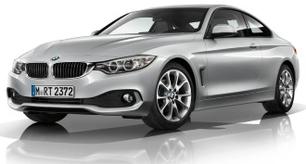
Tim Robson road tests and reviews the BMW 4 Series with specs, fuel consumption and verdict at its Australian launch.
Following on from the mid-life tweaks to BMW's mainstay 3 Series in December 2015, the spin-off 4 Series line has now been updated along the same powertrain and equipment lines.
Based on the same mechanicals as the 3 Series, the three-year-old 4 Series was ostensibly formed to give BMW's nomenclature some sense of logic by designating its two-door machines as 'evens' (2 Series, 4 Series and 6 Series) and its four-door cars as 'odds'.
Three variants currently make up the 4 Series range, including a two-door Coupe, a two-door Convertible and – oddly, given the naming regime – a four-door Gran Coupe that also sports a hatch-like tailgate.
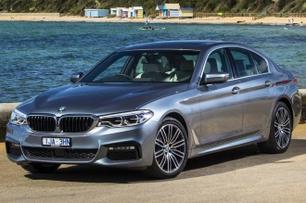
Andrew Chesterton road tests and reviews the new BMW 5 Series 520d, 530i, 530d and 540i sedans with specs, fuel consumption and verdict at its Australian launch in Victoria.
When we're all living under the cruel rule of our robot overlords, the few remaining human historians will track the genesis of our downfall to the technology explosion that occurred in 2017's new-car market.
Never before have car companies focused so hard on producing cars that can't just be driven, but that can drive themselves, negotiating corners, unexpected obstacles and changing traffic conditions without ever needing to consult the human actually sitting behind the steering wheel.
And BMW's all-new 5 Series sedan takes yet another a step forward, eliminating the need for said human to even be sitting in the car. Owners can instead move their 5 Series in and out of tight parking spaces simply by pressing a button on their key.
The Active Key function is admittedly a $1,600 cost option, but it proves the techno-focus applied to the seventh-generation of BMW's executive express, which will land in Australian dealerships this month. Every car is also fitted with what the German brand calls its personal co-pilot; a series of nifty cameras and radars that allow the car to be driven completely autonomously for spells of 30 seconds.
But the question is, has all this new technology come at the cost of regular, old-school driver enjoyment?
The 4 Series line offers three distinct points of difference from the more traditional 3 Series, each with their own attraction. The sharpening of the sticker prices and the additional spec helps their cause as well, with the 430i Coupe probably our pick of the range. The 440i is the firecracker of the group, while the 420d is also worth a look, thanks to its value and prodigious torque output.
Sleek and attractive in the city, engaging on a country back road and with plenty of clever technology, the 5 Series sedan ticks all the right boxes as an executive express. If you can stomach the price hike, the six-cylinder 540i is our pick of the bunch.
No external changes to the 4 Series' bodywork have been affected for this midlife refresh, but there have been plenty of tweaks to the standard equipment offerings right across the board.
Hardly a revolution, the 5 Series has instead undergone a few nips and tucks. But if it ain't broke and all that. It might not be the most head-turning offering, but the 5 Series sedan remains sleek, powerful and understated, and it is undeniably handsome on the road.
Its 8mm wider, 28mm longer and 2mm taller than the car it replaces, but it's also around 95kg lighter, thanks to its aluminium doors and boot and a clever magnesium frame for the instrument panel that saved another two kilograms. There's some other clever design elements, too. The kidney grille has active air flaps that open when extra cooling is required, closing when it isn't, reducing drag and helping accleration.
Inside, the 5 Series offers a beautifully crafted yet joyously understated cabin, with quality materials joining modern technology in a seamless way.
Two-doors are never the most practical devices, but the 4 Series Coupe and Convertible duo make a decent fist of it for front-seat passengers. There are bottle holders in both doors and a pair of cupholders in the centre console, along with a large lockable glovebox.
The centre bin is, however, quite shallow, and houses the car's single USB port inside it. There is covered storage under the dash for smaller items, and a small rubber-lined tray that the current crop of phones has outgrown.
The rear seating in the Coupe is reduced to almost a formality, especially if the front seat passengers are tall and the front seats are set back, while the sloping roofline reduces head space quite considerably. A centre armrest contains a pair of cupholders, and there are small side pockets.
Rainy conditions precluded us from trying the Convertible's metal folding roof, but the rear seat space restrictions also apply here. Its 370 litres of boot space is roomy enough for a drop-top, while a clever lifting function raises the folding roof structure up by about 300mm to allow luggage to be stowed under the panels when the roof is down. Capacity drops, though, to just 230 litres.
The Gran Coupe, on the other hand, is the most practical car in the entire 3 and 4 Series line-up outside of the 3 Series Touring wagon. With a large, flat load area, and a hatch-like tailgate, the Gran Coupe can swallow 480 litres of gear with the seats up and an impressive 1300 litres with the seats lowered.
Face-level rear vents, more head and backseat legroom – not to mention the fact you don't have to squeeze into the rear past the front seat – makes the Gran Coupe a most useful device, and it's little wonder it's the most popular variant of the three.
This is a full-size sedan, and every seat feels spacious and airy. The sloping, slightly coupe-style roofline does cut into headroom in the back, but human-sized people will have little trouble, even sitting behind a tall driver.
Each trim offers two cupholders in the front, with another two housed in a pull-down divider that seperates the rear seat. And there's two ISOFIX attachment points, one in each window seat in the back.
The 5 Series' boot opens to rival a surprisingly sizeable storage space, offering 530 litres with the 40:20:40 rear seats in place.
Entry into the 4 Series world now stands at $68,900 plus on-roads for the petrol 420i Coupe and Gran Coupe, and tops out at almost $118,000 for the 440i Convertible.
Both the 420i and 420d have been boosted by the addition of adaptive M dampers, a heads-up display, powered folding rear-view mirrors, lane-change warning, driving assistant and BMW's surround view camera with top and side views.
BMW claims the extra kit is worth just over $8000. Leather seats, sat nav, BMW's ConnectedDrive Emergency call system, bi-Xenon headlights and reversing camera are also featured. An eight-speed automatic transmission is offered as stock, but a six-speed manual can be optioned at no cost.
The diesel version costs an additional $2200 over the petrol powerplant.
Stepping into the 430i, the M Sport Package is offered as standard, with the Luxury line, which includes a leather-trimmed dash, a no-cost option.
Additional standard equipment over the outgoing 428i includes 19-inch M rims, heads-up display, lane change warning, driving assistant and surround view camera. The 430i also gains electric lumbar support for driver and front passenger seats and a nine-speaker stereo system over the base 420i.
Finally, the range-topping 440i scores a heads-up display, lane change warning, driving assistant, surround view camera, adaptive LED headlights, leather dash, front seat heating, high beam assist, active cruise control with stop and go function and parking assistant over the outgoing 435i.
Over the 430i, the 440i also gets variable sport steering, a Harman/Kardon surround sound system with 16 speakers, a leather instrument panel (with M Sport Package), ConnectedDrive internet and concierge service, and air collar neck-warming ducts for the 440i Convertible.
BMW's venerable 5 Series is now 45 years old, and this all-new model arrives in four distinct flavours, with a fifth - an incoming M5 performance sedan - still some way off.
For now, though, the range kicks off with the 520d, before stepping up what BMW hopes to be the big seller of the range, the 530i (replacing the outgoing 528i). Next up is biggest diesel, the 530d (replacing the the 535d), before the current range tops out with the petrol-powered 540i (replacing the old 535i).
Be warned though, there's been some pretty serious price increases right across the line up, ranging from $9,145 to a whopping $19,245. In fact, only the 530d has seen its price come down, now $3,755 cheaper than the outgoing 535d. BMW justifies the hikes by pointing to an increase in standard inclusions across the range.
It might not be the most head-turning offering, but the 5 Series sedan remains sleek, powerful and understated.
The 520d kicks off from $93,900, and arrives predictably well equipped for your money. Expect 18-inch alloys, leather trim, dual-zone climate control and a 12-speaker stereo. You'll also get a technology overhaul, with a bigger and upgraded Head Up display (it can now read street signs and beam that info onto the screen), a 10.25-inch touchscreen and a wireless (insert link to chi charger story) charging pad.
Step up to the 530i ($108,900) or 530d ($119,900) and you'll add 19-inch alloys, adaptive dampers with dynamic mode (that reads both driver input and navigation data and tweak suspension, gear and steering settings automatically) a 16-speaker Harman Kardon stereo and a crystal-clear 12.3 high-resolution digital display in the driver's binnacle. You'll also find heated front seats, a powered boot and sports seats in the front.
Finally, spring for the 540i ($136,900) and you'll get 20-inch alloys, a sunroof and electric blinds for the rear windows. You'll also find better Nappa leather on the seats, which now also offer a cooling function. Under the skin, you'll get an active anti-roll bar at each axle designed to keep the car from rolling side-to-side on the twisty stuff.
One quirk, however, is the fact that BMW's very cool wireless Apple CarPlay is a cost option on every trim level, and one that will set you back $479.
There are two new petrol engines, two new badges and prices cuts of up to $10,000 right across the board for the line-up, along with additional standard equipment that improves the value equation even further.
The line kicks off with the 420, which can be had in either diesel or petrol guise. The 420i gains BMW's new B48 2.0-litre four-cylinder turbo petrol engine, which gains 5kW over the old motor to produce 135kW and 270Nm.
It also benefits from slightly improved fuel economy, with a drop of 0.3 litres per 100km for the Coupe and 0.5 for the Gran Coupe to 5.8L/100km, and a fall of 0.2L for the Convertible to 6.2L/100km.
The 420d retains its 140kW, 400Nm 2.0-litre four-cylinder turbo diesel engine, which returns 4.3L/100km in the fixed roof cars and 4.7L/100km for the Convertible.
The 430i – formerly known as the 428i – also receives the new 2.0-litre petrol engine, albeit in a 185kW/350Nm tune. Its fuel economy drops a healthy 0.6L for the Coupe and Gran Coupe and 0.4L for the Convertible, posting figures of 5.8 and 6.3L/100km respectively.
The top-spec 435i has been transformed into the 440i with the addition of BMW's new Twinpower 3.0-litre straight six petrol motor. Its output jumps 15kW to 240kW and by 50Nm to 450Nm, and its consumption falls by more than half a litre to 6.8 litres per 100km for the closed-roof pair and 7.2L/100km for the Convertible.
All cars come standard with a 'traditional' ZF eight-speed torque converter automatic transmission with steering wheel paddles as standard fitment, while a six-speed manual gearbox is a no-cost option across the line.
The hunt for efficiency sees all but the most expensive 5 Series models equipped with four-cylinder engines, including the entry-level 520d, which is fitted with a 2.0-litre diesel unit that will produce 140kW at 4,000rpm and 400Nm from 1,750rpm. That's enough to push the cheapest 5 Series to 100km/h in a not particularly inspiring 7.5 seconds, topping out at 235km/h.
The cheapest petrol, the 530i, arrives with a turbocharged 2.0-litre engine good for 185kW at 5,200rpm and 350Nm from 1,450rpm. That will see you clip 100km/h in 6.2 seconds and push on to a limited top speed of 250km/h.
The turbocharged six-cylinder feels right at home in a car this size, with acceleration effortless and freeway overtaking manoeuvres an absolute breeze.
The 530d introduces the first six-cylinder engine, a 3.0-litre unit that will produce 195kW at 4,000rpm and an impressive 620Nm from 2,000rpm. That's enough to knock off the sprint in in 5.7 seconds and offers a top speed limited to 250km/h.
Finally, the top-spec petrol, the 540i, will produce 250kW at 5,500rpm and 450Nm from 1,380rpm from its 3.0-litre turbocharged straight-six engine. Those are healthy numbers, and enough to welcome 100km/h in a sprightly 5.1 seconds before topping out a limited 250km/h.
Every model is paired with an eight-speed torque converter automatic transmission.
Our brief test loop on a rainy, blustery Melbourne winter's day in all three model types (but no diesel) netted varying fuel consumption readings across the line; we recorded 8.4L/100km in a 420i sedan against a claimed figure of 5.8, 9.8L/100km for the 430i Gran Coupe against a claimed figure of 5.8L/100km, and 8.4L/100km against the 440i Gran Coupe's 6.8L/100km.
BMW quotes a combined 4.3 litres per hundred kilometres from the 520d, which will also spit out 114g per kilometre of C02. The 530d lifts that number to 4.7 litres per hundred kilometres (which seems a small price to pay for all that extra torque), with C02 pegged at 124g per kilometre. Both diesels get a slightly smaller tank, at 66 litres.
The 530i will sip a claimed/combined 5.8 litres per hundred kilometres, with C02 emissions a claimed 132g per kilometre, while the big 540i requires 6.7 litres per hundred kilometres, with C02 pegged at 154g per kilometre. Both petrol models get a 68-litre tank and require 95RON fuel.
BMW introduced a raft of tweaks to the 3 Series platform late last year, which have translated over to the 4 Series. The key addition across the line is BMW's two-stage adaptive dampers that feature a Sport and a Comfort circuit, fitted as part of the M Sport pack that comes standard on the 430 and 440, and is a $2600 option on the 420.
Larger 19-inch rims are fitted to the 430i and 440i cars, while the 420 gets 18s out of the box. It's possible to fit 18s on the more expensive cars, as part of the no-cost Luxury option pack that supplants the standard M Sport pack.
While our test was brief and held in less than ideal road conditions, the large-wheeled 4 Series really didn't enamour themselves to this author. There's a distinct lack of communication from the tyres and chassis through the steering wheel and your backside, while the combination of firm Sport shocks and large 19-inch wheels with narrow-section tyres made for an uncomfortable ride over country roads.
Sampling a 420i with the Luxury 18-inch rims, however, improved things immensely, with much better feedback and comfort that didn't come at the expense of handling.
One of BMW's strong points should be its steering, given all the 3 and 4 Series cars are still rear-wheel-drive… but it's not, unfortunately. The electrically assisted set up is far from perfectly calibrated, feeling too dull and digital underhand, no matter what the setting.
The pick of the bunch performance wise is – logically – the six-cylinder 440i. The turbo powerplant is potent from right down the rev range, with a muted yet still pleasing engine note permeating the cabin. The self-shifting mode on the eight-speed auto does a good job of keeping up as well.
The updated 2.0-litre four is a sprightly performer, too.
BMW's pre-drive briefing was so technology focused we half expected the black turtle neck and dad jean-wearing ghost of Steve Jobs to emerge from behind a curtain clutching an iPad. Only a minuscule portion was dedicated to the cars' drivetrains, with BMW instead hammering home autonomy functions, technology upgrades and the fact that its car was a preview to "the future".
But once we'd slipped behind the wheel of the all-new 5 Series, it all started to make more sense. Having briefly sampled three models (the 530i, 530d and 540i), we can safely report there's nothing particularly revolutionary about their on-road behaviour. That's not necessarily a bad thing - they do everything you could ask of a car in this bracket. They're mostly smooth and always quiet, the new chassis has done nothing to dampen engagement when you start to ask a little more of it, and it's generally a luxurious experience. But then so was the old car.
But what's new is the technology poured into the 5 Series. Every car gets what BMW is calling its personal co-pilot, for example, which is a set of tricky systems (there's six cameras, five radar sensors and 12 ultrasonic sensors scattered around the car) that work with the active cruise control and allow the car to be driven completely autonomous for 30-second intervals. Now, it's not quite as advanced as some of its competitor's systems - it can't change lanes for example - but if you're out on a country road or on a highway, it will stay within its lane, turn around corners and keep up with the traffic, even if they stop in front of you.
This is a full-size sedan, and every seat feels spacious and airy.
While the cheapest diesel model has historically been the best seller, BMW is hoping the new 530i will prove the most popular this time around. And while you couldn't describe it as fast, the power from its four-cylinder engine is ample for all that will likely be asked of it, and it feels sorted and composed on more challenging roads. It's a smooth and comfortable ride, too, even with the optional 20-inch alloys fitted, though that's undoubtedly thanks to the adaptive dampers and ever-changing dynamic ride function, both of which are fitted as standard. In fact, we're yet to drive a car without those options fitted, so we're forced to reserve judgement on the as-standard ride quality of the cheaper models.
Be warned though, none in the 5 Series range offer the disconnected and perfectly smooth conveyance you might find in some true luxury offerings, and you'll still know when you're diving into deep pockmarks in the road. But the trade off is a an engaging ride and steering set up that always feels planted, with enough feedback to ensure you feel connected to what's happening beneath the tyres. And that's a trade we're more than willing to make.
Step up to the 540i and things take a much sportier turn. The turbocharged six-cylinder feels right at home in a car this size, with acceleration effortless and freeway overtaking manoeuvres an absolute breeze. And while we didn't find roads quite brutal enough to really test the active anti-roll bars housed at each axle, there's a wonderful and stable flatness to the way the biggest petrol handles corners.
It's not cheap, but thanks to the bigger engine and sorted dynamics, the 540i feels most like a 5 Series probably should.
six airbags, lane departure warning, pre-collision safety pack, parking sensors, active cruise control with collision warning, AEB and pedestrian warning, along with reversing camera and surround-view cameras across the line.
Expect plenty of clever safety gear, with every 5 Series sedan arriving with six airbags (dual front and full-length side airbags, along with head protection bags for front passengers). You'll also find a surround-view reversing camera and parking sensors.
But the high-tech stuff arrives courtesy of active cruise control, cross-traffic alert, lane keep assist and cross-road alerts.
BMW offers a Service Inclusive program at the time of purchase, which for $1340 covers everything – including items like spark plugs, brake fluids and other fluids - for five years or 80,000 km scheduled. The cars are also covered by a three-year free roadside servicing program, in addition to BMW's two year, unlimited kilometre warranty.
The BMW 5 Series is covered by a three year, unlimited-kilometre warranty, and requires condition-based servicing (rather than a pre-defined service interval).
You can also prepay your maintenance costs for five years/80,000kms, with prices ranging from $1,640 for the basic package, and climbing to $4,600 for the all-inclusive option.