What's the difference?
If one is good, two must be better, right? Or twice as good. The question is whether that simple equation adds up for BMW's upgraded 1 and 2 Series siblings – the former, a range of five-door hatches, the latter, a line-up of cabriolets and coupes, with a major addition in the shape of the full-house, performance-focused M2.
Prices are up, and changes are mostly under the skin, so you're not getting big visual bang for your extra bucks. But the new and improved 2 has plenty to offer when it comes to added spec and tech.
BMW invited us to the new car's Australian launch program along Tasmania's wet and wild west coast.
Nearly every car brand has jumped well and truly onto the SUV bandwagon in 2021, offering models in small, medium and large varieties for buyers of all budgets and lifestyles.
Honda Australia is a notable exception here however, and while it has the HR-V and CR-V to satisfy small- and medium-crossover buyers, there is nothing for those after a large SUV that seats seven.
To try and fill that gap, Honda has updated its Odyssey people mover with fresh looks, more safety and new tech to not only compete against the Kia Carnival and Toyota Prius V, but also the likes of the Toyota Kluger, Mazda CX-8 and Hyundai Santa Fe.
Can Honda’s Odyssey still cut it in a world that has gone SUV crazy? Let’s find out.
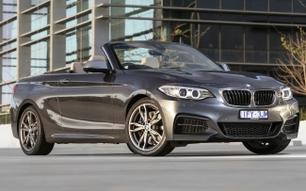
The BMW 2 Series coupes and convertibles combine understated good looks with great dynamics and top-shelf quality. Extra equipment, especially the iDrive6 multimedia system, has brought it up to speed in terms of tech and value, while the M240i sets the compact performance benchmark. And if you really want to push the envelope, the M2 is right there at the top of the under $100k performance pyramid.
The Honda Odyssey isn’t a bad choice for those looking to ferry around a large gaggle of people, but its far from the best option.
The first two rows are great and are supremely comfortable for those four occupants, but third-row usage will depend on how much those passengers are susceptible to motion sickness.
However, the Odyssey’s biggest weakness might be its sluggish engine and mundane CVT, with rivals like the new Kia Carnival and even Toyota Prius V offering better performance and better economy, respectively.
Still, the Honda Odyssey, and people movers in general, remain a solid option for those that don’t want another SUV or value the practicality and space afforded.
The biggest visual clue to the revised 2 Series is the circular design bi-LED headlights, now standard on the 2 Series entry 220i, and mid-range 230i models, while hexagonal adaptive LEDs are standard on the top-shelf M240i.
But BMW couldn't leave those little light-emitting diodes alone, with LED front fog lights joining one-piece L-shaped LED tail-lights across the range.
Luxury Line-equipped cars feature a subtly revised nose treatment with larger intakes and a reshaped 'kidney' grille. There are also four new alloy wheel designs – a 17-inch alloy fitted standard to the 220i Luxury Line, and three optional M alloys for M Sport models (all no-cost options on the M240i).
The 230i M Sport features black, high-gloss bars in its kidney grille, as well as a black chrome finish for the exhaust finishers.
On the inside, there's the addition of a 'Black Panel' digital instrument cluster, which remains matt with the ignition off, and lights up with sharp graphics, configurable across conventional speed and rev readouts, as well as gear position, engine-efficiency data, vehicle settings and nav guidance.
There are also high-gloss finishes across the centre stack and front console, and even greater attention to detail around panel joins, trim stitching and switchgear.
But the hero is the latest iDrive6 multimedia system, run through an 8.8-inch colour touchscreen (6.5-inch on 220i), providing access to live content, radio and audio, navigation and maps, phone functionality, and vehicle settings through a simple and customisable app-style interface. The iPhone really as inspired car companies.
The M2 boasts M-specific instrument display content and a go-fast red needle on the tachometer.
Gone are the days where people movers could be considered daggy or uncool. No, please, don’t click away, we’re serious!
The 2021 Honda Odyssey features a new front grille, bumper and headlights that combine for a much more imposing and aggressive front fascia.
The chrome highlights look especially good against the 'Obsidian Blue' paintwork of our test car, at least to our eyes, and between this and the new Kia Carnival, people movers might just be cool again.
In profile, the 17-inch wheels do look a little small next to the massive doors and huge panels, but they do feature a funky two-tone look.
The chrome touches also follow along the Odyssey’s flanks and are found in the door handles and window surrounds to break things up a bit.
From the rear, the Odyssey’s large dimensions are hard to hide, but Honda has tried to jazz things up with a roof-mounted rear spoiler and more chrome around the tail-lights and rear fog light surrounds.
Overall, the Odyssey looks handsome and confident without straying into the ‘trying too hard’ or ‘over the top’ territory, and if anything, at least it’s not another high-riding SUV, which are quickly overtaking streets and car parks the world over.
Step inside and the Odyssey’s layout is nothing special, but gets the job done.
The first- and second-row seats are plush and comfortable, while the dashboard also features woodgrain touches to lift the interior ambience.
The 8.0-inch multimedia screen sit proudly in the centre stack, while the shifter is on the dashboard to maximum interior space.
Surprisingly, at a little over 4.4 metres long, the 2 Series (Coupe) is around 10cm longer than its 1 Series hatch stablemate (M240i +15cm), but aligns with its just under 1.8m width, and 1.4m height.
It seats four, with plenty of room up front and multiple storage options, including two cupholders in the console with an oddments tray behind, a 12-volt outlet, a lidded storage box between the seats with USB connection, a reasonably sized glove box, and segmented bins in the doors big enough for large water bottles.
While it was coupes only on the launch drive, we know the convertible has a pair of cupholders in the back, but not so in the coupe, and while headroom in the soft-top is okay (especially with the roof down) it's a squeeze in the hardtop.
More a 2+2 than a full four-seater, getting into the rear is an athletic exercise, and once installed, leg and headroom for this 183cm tester is tight. That said, kids up to teenager-size would be fine.
Boot volume is 390 litres (a 3 Series Coupe is 480 litres), with run-flat tyres on the 220i and 230i meaning there's no spare (or repair kit) under the floor, but the performance-focused M240i and M2, pack a 'BMW Mobility Kit' (compressor and tyre sealant to cover minor damage) in line with their high-performance (non-run-flat rubber).
A 60/40 split-folding rear backrest liberates extra load space, and a 'Through Loading System' with luggage compartment dividing net, and 40/20/40 split-folding rear seat is optionally available (220i & M2 Pure - $350 / 230i - $385 / M240i & M2 - $500).
And if you're keen on towing the 220i can pull 680kg of unbraked trailer, and 1500kg braked, with the minimum number stepping up to 715kg for the 230i. The M240i and M2 are no-tow zones.
Measuring 4855mm long, 1820mm wide, 1710mm tall and with a 2900mm wheelbase, the Honda Odyssey is not just an imposing behemoth on the outside, but also a spacious and practical people mover on the inside.
Up front, occupants are treated to plush and comfortable seats with electronic adjustment and individual fold-down armrests.
Storage options abound, with deep door pockets, a dual-chamber glove box, and a tricked-out centre storage console that can retract into the centre stack and features two hidden cupholders.
Because of the compact engine and transmission package, and the fact the centre console tucks away, there is actually just empty space between the two front occupants, which is a missed opportunity.
Maybe Honda could have put another storage bin there, or even a cooled box for chilled drinks on long road trips. Either way it’s a notable, unexploited cavity.
The second-row seats are probably the place to be in the Odyssey, though, with its two captain’s chairs offering supreme comfort.
Adjustability is also plentiful, with forward/backwards, recline and even left/right positioning available.
However, while there are cupholders and roof-mounted climate controls present, there really isn’t much else to keep second-row occupants, well, occupied.
Would be nice to see some charging ports or even entertainment screens to keep kids and adults placated on long journeys, but at least the head, shoulder, and legroom is generous.
In the third row, it’s a tighter squeeze, but I managed to get my 183cm (6'0") frame comfortable.
The three-row bench is the least comfy place to be, but there is a charging outlet and cupholders back there.
Those with child seats also take note, the second-row captain’s chairs top-tether anchor point is very low down on the seat back, meaning you might have to max out the strap length to get it there.
Also, because of the captain’s chairs, the top tether strap can be knocked off quite easily, as the inner shoulders of the seats are smooth offering nothing for the strap to catch onto if pushed towards the middle of the car.
And you can’t even install the car seat in the third row because the bench seat doesn’t feature any ISOFIX points.
With all seats in place, the boot will happily swallow 322 litres (VDA) of volume, more than enough for groceries, school bags or even the stroller.
With the third-row folded, though, that cavity is filled in and the Odyssey features a completely flat floor then able to take on 1725L of volume.
Honda has even found a place for the space saver spare wheel, though it’s not underneath the car or tucked into the boot floor as you'd expect.
The spare is under the two front seats, and requires the removal of some interior carpets and trim to access.
It’s not in the most convenient of places, but props to Honda for getting one in there when other seven-seaters just opt for a puncture repair kit.
The 2 Series coupe and convertible line-up ranges across four-cylinder, turbo-petrol models, in 220i Luxury Line, and 230i M Sport grades, with the six-cylinder M240i sitting at the top of the main line-up. Then for the more single-minded enthusiast, there's the hardcore M2; after a year on-sale it's now BMW Australia's best-selling M car (and it's easy to see why; it's fantastic).
Depending on the model, prices have risen by between $1100 and $1900 across the main range, largely because of the extra equipment, especially the tricky iDrive6 multimedia system.
At $52,990 for the coupe and $59,900 for the convertible version, the 220i Luxury Line is the entry-point to the 2 Series range. Equipment highlights include 17-inch light-alloy wheels, the previously mentioned LED headlights and fog lights, 'Driving Assistant' functionality (combines camera-based 'Lane Departure Warning and Approach' and 'Pedestrian Warning with the City Brake Activation'), digital radio, 'Navigation System Business' with 'iDrive6' accessed via a 6.5-inch display, dual-zone climate control air, reversing camera, a leather sports steering wheel, sports front seats, 'Dakota' leather upholstery, plus front and rear parking sensors.
Next rung on the 2 Series ladder is the 230i M Sport in Coupe ($63,000) and Convertible ($73,000) form, which adds M Sport suspension, aero, and brakes, 'Variable Sport Steering', 18-inch alloy rims, high-gloss 'Shadow line' exterior trim, a BMW Individual anthracite roofliner, a leather-wrapped M Sport steering wheel, cloth/Alcantara upholstery in the coupe, 'Dakota' leather and front seat heating in the convertible, electric (front) seat adjustment, plus 'Navigation System Professional' with iDrive6 and a customisable 8.8-inch touchscreen.
As its name implies, the M2 Pure ($93,300) makes spec sacrifices in the name of light weight.
Opt for the M240i as a Coupe ($76,800) or Convertible ($85,800), and you're getting more than extra performance from the 3.0-litre turbo six. On top of the lengthy equipment list detailed above, you'll also pick up 18-inch alloys in 'Bicolour Jet Black', 12-speaker, 360W harman/kardon surround sound audio, 'Adaptive M Suspension', 'Adaptive LED Headlights', the Dakota leather trim, and front-seat heating.
As its name implies, the M2 Pure ($93,300) makes spec sacrifices in the name of light weight, including manual seat adjustment and a base (yet, still seven-speaker) audio package, but one of the biggest pay-offs is a standard six-speed manual gearbox. Save the manuals!
It also features 19-inch BMW M light alloy wheels, an M rear spoiler, quad exhaust pipes in high-gloss chrome, bi-LED headlights (with variable light distribution, including cornering lights), 'Dakota' leather upholstery, carbon fibre trim finishers, an M leather multi-function steering wheel, cruise control (with braking function), 'Driving Assistant', 'Rear Park Distance Control', and a reversing camera.
The full-fat M2 Coupe ($99,900) reinstates electric seat adjustment, plugs in the 12-speaker, 360W harman/kardon sound system, and adds 'Comfort access' (keyless entry and start), 'Adaptive LED Headlights' (with variable light distribution), and 'Selective Beam with anti-glare High-Beam Assistant'.
A vast array of individual options and packages covers everything from steering-wheel heating to a smoker's kit (naughty), and (amazingly, given it's standard on the Hyundai Accent) Apple CarPlay (220i & M2 Pure - $436 / 230i - $479 / M240i & M2 - $623).
The 2021 Honda Odyssey range kicks off at $44,250, before on-road costs for the base Vi L7, and extends to $51,150 for the top-spec Vi LX7, which we have here.
Compared with the likes of the Kia Carnival (from $46,880) and van-based Toyota Granvia (from $64,090), the Honda Odyssey is more affordable, but doesn’t skimp on equipment to bring its price down.
As standard, the 2021 Odyssey is fitted with 17-inch alloys, keyless entry, push-button start, second- and third-row air vents, and a powered rear passenger door, while new for this year’s update is a 7.0-inch customisable tachometer, fresh leather-wrapped steering wheel and LED headlights.
Handling multimedia duties is a new 8.0-inch touchscreen with Apple CarPlay and Android Auto functionality, as well as Bluetooth connectivity and a USB input.
Stepping up to the top-spec Vi LX7 nets buyers tri-zone climate control with second-row controls, powered tailgate, gesture controls to open/close both rear doors, heated front seats, a sunroof and satellite navigation.
It’s a good list of equipment, but there are some notable omissions such as a wireless smartphone charger and rain-sensing wipers, while the handbrake is one of those old-school foot-operated ones, which is a shame to see in 2021.
Nevertheless, even the top-spec Vi LX7 we have on test here is still relative affordable compared to rivals, and offers plenty of space for the price.
The 220i is powered by a 2.0-litre 'TwinScroll' turbo-petrol four, featuring 'Valvetronic' variable valve control and 'Double-VANOS' variable camshaft control, and developing 135kW at 5000rpm, and 270Nm between 1350-4600rpm.
Using a retuned version of the same engine (lower compression ratio, more turbo boost), the 230i pumps out a solid 185kW at 5200rpm, and a grunty 350Nm from just 1450-4800rpm.
The same (8HP50) eight-speed auto transmission is used across the board, pushing drive to the rear wheels only.
Then, the M240i is powered by a 3.0-litre, six-cylinder, turbo-petrol, pushing out no less than 250kW at 5500rpm, and a thumping 500Nm between 1520-4500rpm.
The same (8HP50) eight-speed auto transmission is used across the board, pushing drive to the rear wheels only, and happily, a six-speed manual gearbox is a no-cost option on the M240i.
The full-house M2's 3.0-litre turbo six produces 272kW at 6500rpm, and 465Nm from just 1400-5650rpm (500Nm from 1450-4750rpm on overboost), driving the rear wheels through a seven-speed dual-clutch auto, although a six speed-manual is a no-cost option (and standard on the M2 Pure).
All 2021 Honda Odysseys are powered by a 129kW/225Nm 2.4-litre ‘K24W’ four-cylinder petrol engine, which drives the front wheels via a continuously variable automatic transmission (CVT).
Peak power is available at 6200rpm, while maximum torque is on stream from 4000rpm.
Honda diehards might note the K24 engine designation and be reminded of the rev-hungry 2.4-litre unit of the Accord Euro from the early 2000s, but this Odyssey’s powerplant is built for efficiency rather than performance.
Compared to the likes of the Kia Carnival (which is available with a 216kW/355Nm 3.5-litre V6 or 148kW/440Nm 2.2-litre turbo-diesel) the Odyssey is noticeably down on power.
The Australian Odyssey also doesn’t feature any form of electrification, such as the Toyota Prius V, which would excuse the lower outputs and push the Honda people mover more into green territory.
Claimed fuel consumption for the 220i Coupe, on the combined (ADR 81/02 - urban, extra-urban) cycle, is 5.9L/100km, emitting 135g/km of C02 in the process. The 220i Convertible rates 6.1L/100km (140g/km).
The 230i Coupe is line-ball with that at 5.9L/100km (134g/km), and the the 230i Convertible at 6.2L/100km (142g/km).
The price of performance starts to bite with the M240i consuming 7.1L/100km (163g/km) in coupe form, and 7.4L/100km (169g/km) as a convertible.
Then, as you might expect, the M2 is thirstiest of all, the dual-clutch auto consuming 7.9L/100km (185g/km), while the six-speed manual version slurps 8.5L/100km (199g/km).
Auto start-stop is standard, fuel tank capacity is 52 litres across the board, and although technically these engines can run on anything from 91-98RON unleaded, BMW recommends 95RON premium as a minimum.
The 2021 Honda Odyssey, regardless of grade, will return a fuel consumption figure of 8.0 litres per 100km, according to official figures.
This betters the fuel economy of the petrol-powered Kia Carnival (9.6L/100km), as well as the Mazda CX-8 (8.1L/100km) and soon-to-be-replaced Toyota Kluger (9.1-9.5L/100km).
In our week with the Odyssey Vi LX7, we managed an average of 9.4L/100km in a mix of inner-city and freeway driving, which isn’t too far off the official figure.
Though the fuel consumption isn’t too bad for a naturally aspirated petrol engine, those who want to save costs at the bowser should look to the petrol-electric Toyota Prius V hybrid, which sips just 4.4L/100km.
Four 2 Series variants were offered for the launch drive program, a 230i Coupe (which BMW nominates as the most popular model in the range), M240i Coupe, M2, and M2 Pure.
Claimed 0-100km/h acceleration of 5.6sec for the 230i M Sport Coupe is quick, with the convertible stopping the clocks three tenths later.
Peak torque of 350Nm is plenty, and with that number available from 1450-4800rpm the mid-spec 2 Series is an entertaining drive.
It's M Sport (strut front, five-link rear) suspension keeps the body well buttoned down in quick going, while the beefier M brakes provide strong and progressive stopping power.
Even a firm squeeze of the throttle can't side-step some hesitation as the turbo spools up before right foot pressure translates into forward momentum, but despite the sporty tune, ride quality is good (even riding on notoriously harsh 18-inch run-flat rubber), while response and road feel from the variable-ratio steering are excellent.
The eight-speed auto is beautifully slick, with manual changes, via wheel-mounted paddles, sharp and positive.
Add the grippy leather sports wheel, snug sports front seats, and racy cloth/Alcantara trim (leather in the convertible), and you have a comfortable, nicely balanced and fun-to-drive package.
Accelerating from 0-100km/h in 4.6sec (convertible 4.7sec), the M240i effortlessly achieves 'genuinely rapid' status. Yes, it's fast, but never furious, in the sense that even under the pressure of enthusiastic peddling it remains civilised and composed.
Maximum torque of 500Nm is not to be sneezed at, and when you realise that mountainous maximum is actually a flat-top plateau stretching from only 1520rpm up to 4500rpm, satisfying urge is never far away. And the flexible 3.0-litre turbo-six is an aural treat as it howls its way towards a 7000rpm rev ceiling.
The standard 'Adaptive M Suspension' offers settings from 'Comfort' through to 'Sport+', but even in the most forgiving mode the car remains taut and communicative.
The 18-inch rims, shod with Michelin Pilot Super Sport rubber (225/40 front / 245/35 rear) don't upset the ride as much as you'd expect, although coarse-chip surfaces send rumble through to the cabin.
In terms of ergonomics and general function, the new iDrive6 system is simple and intuitive to use, the current BMW dash and console layout is a model of efficiency, but the two-stage (depress small button on stubby lever, then shift) process to select drive or reverse can be a frustratingly hit-and-miss affair if you need to get going quickly.
Then, the M2 is all business, with a properly focused feel, and the ability to accelerate from 0-100km/h in a claimed 4.5sec for the six-speed manual, and just 4.3sec for the seven-speed dual-clutch. Try not to smile as that g-force shoves you back in your seat. You won't succeed.
Although peak power arrives at a relatively high 6500rpm, maximum torque of 465Nm (500Nm for limited periods on overboost) is ready for action across a broad spread from 1400-5650rpm, so the M2 has adrenalin flowing through its veins at all times.
An electronically controlled 'Active M Differential' manages torque distribution across the rear axle to optimise power down, with the ability to send anywhere from zero to 100 percent of drive to either back wheel.
The 'M Servotronic' steering, switchable through comfort and sport modes, is feelsome and linear in its response, the mega 'M Compound Brake' package (borrowed from big-brother M4) is professional grade, and while the seven-speed dual-clutch may shift faster, snicking up and down the manual's six ratios is a rare pleasure.
Rolling on 19-inch, ultra-high-performance Michelin semi-slick rubber (255/35 front / 275/35 rear) the M2 is never going to waft like a limousine, but if you're signing on for this kind of performance and dynamic ability, some ride harshness over less than perfect surfaces goes with the territory.
Though the Honda Odyssey looks like a bus on the outside, it doesn’t feel like one behind the wheel.
The Odyssey drives differently to an SUV, which is a good thing, feeling more hunkered down and connected to the road compared to the wallowy and bouncy nature of some high-riders.
Don’t get me wrong, this isn’t Honda’s best handling model, but there is certainly enough feedback in the steering wheel to know exactly what’s happening underneath, and the Odyssey always feels predictable, regardless of road condition.
And because visibility is excellent all around, the Honda Odyssey is just an easy, no-fuss car to drive.
The second-row is also great while on the move, and might actually be the better place to be.
The seats do a great job at soaking up little bumps and road imperfections, and there is plenty of room to stretch out and relax while someone else handles driving duties.
It’s a shame, then, that there isn’t more going on in the second row to keep passengers happy.
The third-row seats, though, are nowhere near as comfortable.
Maybe it’s the fact they are positioned right over the rear axle, or it’s the thick and vision-obscuring C- and D-pillars – or a combination of both – but time in seats five, six and seven, aren't ideal for those prone to motion sickness.
Maybe kids, or those with stronger stomachs can get comfortable in the third row, but for us, it was not a pleasant experience.
Across the mainstream 2 Series line-up (220i to M240i) driver-assistance tech including AEB, forward-collision warning, pedestrian-detection and lane-departure warning is standard.
There are also 'Approach Control Warning', 'Attentiveness Assistant', and 'Pedestrian warning' systems, plus 'Dynamic braking lights, DSC, ABS, 'Braking Assistant', 'Cornering Brake Control' (CBC), 'Dynamic Traction Control' (DTC), cruise control with braking function, a reversing camera, 'Park Distance Control' (PDC) rear (front and rear on 120i and up), and run-flat safety tyres (including a run-flat indicator) for the 220i and 230i. Tyre pressure monitoring is standard on the M240i and M2.
There are two child restraint top tethers across the back seat, with ISOFIX anchor points in each position.
On the passive safety side, all 2 Series models feature airbags for the front, side and head, as well as 'Intelligent Emergency Call' assistance.
The current BMW 2 Series Coupe/Convertible hasn't been tested by ANCAP or EuroNCAP.
The 2021 Honda Odyssey wears a maximum five-star ANCAP safety rating from its test in 2014, as the current model is a heavily revised version of the fifth-generation car that launched seven years ago.
While back then the Odyssey did not come with advanced safety features, a key part the model’s 2021 update is the inclusion of Honda’s 'Sensing Suite' comprising, forward collision warning, autonomous emergency braking, lane-departure warning, lane-keep assist and adaptive cruise control.
On top of that, the Odyssey also comes standard with blind-spot monitoring, hill-start assist, a reversing camera and rear cross-traffic alert.
The long list of safety is a huge boon for the Odyssey, and with it featuring a third-row of seats, also comes with curtain airbags that extend to seats in the rear.
There are some omissions to the safety list though, with a surround-view monitor not available and the third-row seats missing out on ISOFIX anchoring points.
BMW uses 'condition-based' servicing, with the car effectively telling you when it's time to visit the workshop, but the 'BMW Service Inclusive' program offers distance and time options to fix maintenance costs (on a 'Basic' or 'Plus' plan) for up to 10 years/200,00km.
For example, a five year/80,000km service package for the 2 Series costs $1340 for the Basic option (oil service/top-up, annual vehicle check, microfilter, air filter, fuel filter, brake fluid, spark plugs), and $3550 for the Plus pack (adds brake pads and discs, wipers rubbers, and clutch disc and plate).
The standard BMW warranty covers three years/unlimited km.
Like all new Hondas sold in 2021, the Odyssey comes with a five-year/unlimited kilometre warranty, with six-years of rust protection assurance.
Scheduled service intervals are every six months or 10,000km, whichever occurs first, but this is much sooner than the industry standard of 12 months/15,000km.
According to Honda’s 'Tailored Service' price guide, the first five years of ownership will cost buyers $3351 in servicing fees, averaging out to around $670 per year.
The Kia Carnival petrol meanwhile, is about $2435 to service over five years, averaging out to be about $487 per year.
The Toyota Prius V also needs to be serviced every six months/10,000km, but the cost of the first five years of ownership totals just $2314.71 – more than $1000 less than the Odyssey.