BMW Alpina B5 vs Rolls-Royce Cullinan

What's the difference?

VS
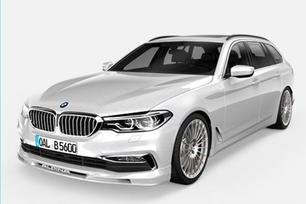
BMW Alpina B5
BMW Alpina B5

2020 price

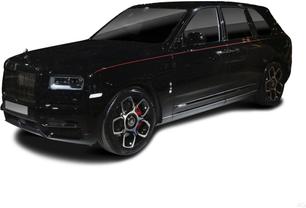
Rolls-Royce Cullinan

2025 price

Summary

2020 BMW Alpina B5
2025 Rolls-Royce Cullinan
Safety Rating

Engine Type
Twin Turbo V8, 4.4L

Turbo V12, 6.7L
Fuel Type
Premium Unleaded Petrol

Premium Unleaded Petrol
Fuel Efficiency
10.9L/100km (combined)

15.1L/100km (combined)
Seating
5

5
Dislikes
  • Cleaning the wheels
  • Room and storage space could be better
  • Not the most engaging car to drive

  • Price
  • Still a bit difficult to look at
  • Ride can be floaty
2020 BMW Alpina B5 Summary

The BMW Alpina B5 Bi-Turbo is not actually a BMW. Not according to the German Federal Motor Transport Authority, at least.

Nope, the modifications applied by tuning house Alpina to the 5 Series are deemed so significant that if you open the bonnet and look inside the engine bay, you'll see that the BMW VIN has been struck through twice and an Alpina vehicle number stamped underneath it. 

The B5 is not the first model to be recognised in this way, either; the German government has recognised Alpina as a seperate car manufacturer since 1983.

The B5 has other ‘B' siblings, too. There's the B3 S Bi-Turbo, which is based on the BMW 3 Series, the B4 S Bi-Turbo (the BMW 4 Series) and the B7 Bi-Turbo (I don't need to tell you what this is based on, right?) which I've reviewed, too.

So just what has Alpina done to this unsuspecting BMW 5 Series? Is it really worth the extra money? How does the B5 compare to an M5? Could it actually be superior? And did they really take the speed limiter off to let it warp-speed to beyond 300km/h?

View full pricing & specs
2025 Rolls-Royce Cullinan Summary

The truly great thing about great wealth - I mean like, drop $1 million on a new Rolls-Royce with a casual yawn and a mouse click wealth - would be how great it is not having to do anything for yourself.

Personally, I would hire a chef, so I’d never have to cook again, and a pilot to fly my private jet, so I’d never have to catch pneumonia while flying 34 hours to Ibiza with strangers to do my weird job (oh, and if I was rich I wouldn’t have to work anyway), and in theory I might even hire a chauffeur for those odd times when I didn’t want to drive myself in one of my fleet of beautiful cars. 

All right, so I can’t even imagine that last one, but the most interesting fact I gleaned while in Spain, tirelessly testing the new Rolls-Royce Cullinan Series II, is that even the ridiculously rich are falling out of love with not driving these days.

Perhaps, being tech-savvy types, they can see the end of driving and the rise of autonomy coming and they want to make the most of it while they still can. But according to Rolls, the percentage of its buyers who sit in the back rather than in the driver’s seat has flipped entirely over the past 15 years.

Back in the day, 80 per cent of Rolls owners were back-seat passengers, blowing cigar smoke at the back of a chauffeur’s head, while 20 per cent actually drove their expensive motors.

Today, the number who drive themselves has soared to 80 per cent, and apparently that’s not just because it would feel weird being chauffeured around in what is now the most popular Rolls-Royce by far - the Cullinan SUV.

The other big change, apparently, is that the average age of a Rolls-Royce buyer has also dropped, from 56 to the low 40s. And that means more buyers with kids, and gold-plated prams and other associated dross, which means they need bigger Rolls-Royces, family-sized SUV ones, which again helps to explain why the Cullinan now makes up as much as half of all the brand’s sales in some markets.

And why the arrival of this, the facelifted, tweaked and twirled Series II version of a car that was greeted cynically by many in the media when it arrived (“one group was not sceptical, and that was our clients,” as a Rolls spokeswoman delightedly pointed out) is such a big deal.

View full pricing & specs

Deep dive comparison

2020 BMW Alpina B5 2025 Rolls-Royce Cullinan

Change vehicle