What's the difference?
Close your eyes for me and try to picture a two-door vehicle with a thumping V8 engine, 575kW and a whopping 1000Nm on tap, a 0-100km/h burst of 3.2 seconds and a top speed of 335km/h. Does it look like a Ferrari in your head? Something else Italian, or German perhaps?
Well, what if I tell you it also weighs 2.5 tonnes. Are you imagining a luxe SUV with the rear doors removed, perhaps? Think again, because what we’re discussing here is arguably the very best of Britain (albeit German-owned), the all new and highly impressive Bentley Continental GT Speed.
Gone is the famous and fabulous W12 engine, never to return (Bentley was long the world’s biggest maker of 12-cylinder engines, henceforth it will make exactly none), to be replaced by the one and only power plant the company will now offer, in various tunes, in all of its ICE cars (yes, a Bentley EV is coming, of course).
All that torque isn’t just from the big 4.0-litre V8, it’s also an 'Ultra Performance Hybrid', which will allow you to drive up to 81km in fully silent electric mode, should you be so boring.
We flew to a posh and very private members-only race track in Japan to find it out if this really is, as Bentley suggests, the everyday supercar.
In an era where internal combustion power appears to be rapidly disappearing into the rear-view mirrors along comes Audi, casually wheeling out a new RS5.
But the pride of Ingolstadt hasn’t completely sidelined its e-tron-style electrification, because while a fire-breathing 2.9-litre twin-turbo-petrol V6 sits under this newcomer’s bonnet, it’s now supported by a grunty electric motor in its eight-speed auto transmission and another on the rear axle to manage torque vectoring.
The result is mega-power and massive torque with all-wheel-drive quattro grip offered in four-door sedan and Avant wagon form.
And CarsGuide was invited to a launch drive program on Tasmania’s east coast, home to some of the best driving roads in the country, with a quick fang around the Symmons Plains race circuit included.
Time to see what this new, plug-in hybrid, 630hp beast has to offer.
Any fears Bentley was heading in the wrong direction by abandoning 12 cylinders for hybridisation (not that it had a lot of choice) should be totally salved by the Continental GT Speed. It is a hugely capable, fabulously luxurious and beautiful to behold grand tourer that deserves extra points for not being an SUV. It might just be the supercar you could drive every day, with no complaints.
Note: CarsGuide attended this event as a guest of the manufacturer, with travel, accommodation and meals provided.
Audi says this car’s shift to a plug-in hybrid powertrain represents a “defining moment” for Audi Sport enhancing the RS5’s character and performance.
After this first drive we can only agree. Its power, driving dynamics, refinement and quality apply a fierce blowtorch to the belly of its European hot rod rivals.
Note: CarsGuide attended this event as a guest of the manufacturer with travel, accommodation and meals provided.
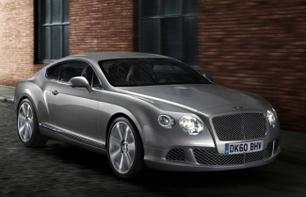
I don’t think I’ve ever heard so much interesting waffle about the design of any car, ever, but before we get to the wild, and wildlife, justifications for how it looks, just feast your eyes on it.
Now, not everyone might love it, but it’s hard to imagine a huge, super coupe looking any better than this thing does. It’s no Ferrari, sure, but realistically it doesn’t have to compete with that, because it’s a cruiser as well as a bruiser, a supercar you can be quiet and comfortable in. A Rolls-Royce with rocket engines, even.
The most obvious change, of course, is that Bentleys have had four headlights, or four eyes if you like, for so long that seeing this new one with two is a major shock, a big shift, but somehow it works.
The proportions, the elegance, the bold 'be big and bold and give no damns what anyone thinks', it’s just impressive, and the interior reflects that same, luxury ethos.
Apparently the new-look Continental is built on three design principles, the first of which is, amusingly, 'Resting Beast'. This is supposed to reflect how the Bentley looks from side on; like a tiger, stalking its prey, or perhaps resting and thinking about its prey. It’s all muscles and strength and power, but also elegance. And who doesn’t imagine tigers walking red carpets in ball gowns?
Principle two is 'Upright Elegance', and here you’re supposed to see, in the car, the strong vertical line one finds in the chest of a thoroughbred horse when it’s standing in particularly powerful way. Great. Love it.
And finally, there is the 'Endless Bonnet', which is a horizontal line that goes from the front of the car - via the bonnet obviously - and all the way to there rear, via cat-like haunches, providing an impression of “speed, even when standing still”.
Those are the bold strokes, but it’s all the little details that make it sing, like the beautiful jewellery-like look of the headlights, which are meant to resemble a tiger’s eyes. So many cats, is it any wonder I started thinking of the Bentley as a very, very flashy Jaguar?
It’s important to note that while it looks very new - and 68 per cent of the Continental’s parts are new - the body panels are carried over, while the front and rear are all new. This is one very effective mid-life facelift, with a heart transplant, then.
The new RS5 sedan and Avant wagon are beautifully proportioned, with big rims and rubber, pumped guards and a visual balance that matches a close to 50/50 front to rear mechanical weight distribution.
Instantly recognisable as an Audi, big ticket elements include a huge 3D honeycomb grille, front wheel-arch exit vents, a rear spoiler on both versions and RS-specific OLED tail-lights with a chequered flag signature.
Beauty is always in the eye of the beholder but I think this car exudes equal parts sophistication and menace.
Inside, the RS5 is all business, from the configurable multi-screen displays (including a lap analysis tool) to the flat bottom and top steering wheel as well as the beautifully sculpted seats and obvious attention to detail.
The driver’s the main event here and the interior treatment extends the exterior’s intense personality perfectly.
So a two-door, '2+2' grand tourer isn’t entirely built with the term 'practicality' in mind and it could be argued the existence of this Bentley Continental, the fourth generation, is something of a surprise, when you consider most people just buy SUVs and Bentley has done quite well with its Bentayga (which will, in future, share the same engine used here).
But for what it is, a two-seat car with occasional seating in the rear for emergencies, or very small children, it feels entirely fit for purpose.
An actual human can sit in the back, but it does feel a bit claustrophobic, and you’d be so jealous of how comfortable the people are in the front.
The 20-way adjustable front pews feel like grand armchairs for grand touring, fabulously comfortable - although you can slide across them a bit when driving on a race track, not a common problem - and plush to the touch.
They now come with a 'Wellness Facility' that brings postural, massage and climate functions to help with fatigue on long journeys - and epic blasts across multiple European countries is clearly what this thing is designed for.
In general, the cabin is just lovely, Bentley claims it does the best car interiors in the world and while Rolls might argue, it’s a pretty fair statement.
The spinning central 12.3-inch display remains the highlight, offering you a modern touchscreen, which can disappear to reveal either three classic analogue dials or a plain piece of dashboard, if you prefer a 'digital detox'.
In terms of space and practicality, in the front, at 183cm tall I’ve got plenty of breathing space.
And for storage, there are pockets in the doors big enough to hold large bottles as well as a couple of cupholders in the centre console.
A tray ahead of the gearshifter is for wireless charging but if your phone isn’t in there it doubles as an oddments tray and there are two USB-C ports and a 12-volt socket inside it.
There’s a fairly shallow lidded storage box between the seats which doubles as an armrest between driver and passenger and there’s a medium-size glove box.
In the back, I’ve got plenty of foot and legroom although without too much effort I can touch my head on the roof lining, so I’d call that marginal.
For storage, there are decent bins in the doors, big enough for bottles. There’s a pull-down armrest in the centre, again with a pair of cupholders.
There are netted pockets on the front seatbacks, adjustable air vents with temperature control as well as another pair of USB-C outlets to keep everyone happy and charged up in the back seat.
Boot space is passable for a car of this size, with the sedan offering 331 litres VDA with five seats up and the Avant wagon at 361L in the same configuration.
Both feature a 40/20/40 split-folding rear seat for extra flexibility and space - 1170L with the second row folded in the sedan and 1302L in the wagon.
There are tie-down anchors, bag hooks as well as numerous extra storage spaces and braked trailer towing capacity is a handy 2.1 tonnes.
But there’s no spare wheel of any kind. A repair/inflator kit is your only option, which in this market, isn’t good enough.
As always, value becomes a nebulous term once the price of a car surges into the multiple hundreds of thousands. The Bentley Continental GT Speed will set Australian buyers back a whopping $581,900, before on-road costs.
Yes, you really can buy Ferraris and Lamborghinis for that kind of money, but Bentley assures us its buyers have already owned such fearsome machines, grown tired of their compromises and want something that’s just as fast, but 1000 times more comfortable, and easier to drive every day, and everywhere.
So that’s where the value proposition sits, basically. You’re buying a supercar that’s also a kind of Rolls-Royce adjacent luxury cruiser. Two cars for one price. Bargain. Kind of. It also weight 2.5 tonnes, if you’d like to think of it in dollars per kilogram.
Oh, and it’s hand made, too, and genuinely feels like it.
For that money you get an incredibly posh and plush cabin, excellent seats, and everything you touch, and smell, seems expensive and refined.
The newly facelifted, and butt-lifted, Continental also looks simply stunning, from every angle, outside. Particularly in its new 'Tourmaline Green' paint (there are 18 standard colours to choose from, or you can have bespoke paint made for you on request). And 15 standard leather hide colours as well.
It comes with all the apps and connectivity you could wish for, including a Bentley App Studio.
Before we get behind the wheel, it’s prudent to check in on cost-of-entry.
Sitting at $179,827, before on-road costs for the sedan and $182,827, BOC for the Avant, this third-generation RS5 is a relatively modest, roughly seven per cent step up in price from the second-gen Coupe and Sportback models it replaces.
Obvious rivals include fellow Bavarian, the BMW M3 (from $169,600) as well as the Mercedes-AMG C63 S E Performance ($193,100) with the Alfa Romeo Giulia Quadrifoglio (from $174,200) lurking in the shadows.
Aside from the performance and safety tech we’ll get to shortly, standard equipment highlights include:
Suffice it to say this machine meets the market when it comes to included features.
There is some sadness that the world’s biggest producer and promoter of 12-cylinder engines has cut production of them altogether - the epic W12 is no more - and this does feel, on a smaller scale, like Porsche ditching flat-six engines forever.
Previous hybrid efforts from Bentley, including a V6-based one that the company now admits was a bit limp wristed, might cause some concern when you hear that Bentley will, henceforth, make just one engine for all its cars, and that it is a hybrid, albeit one attached to a 4.0-litre twin-turbo V8.
But then they point out the version in this Continental GT Speed’s is “the most powerful Bentley engine ever” and that sounds pretty good.
The engine alone makes 441kW and 800Nm, which almost sounds ample, but the addition of the electric E-motor is good for another 140kW and 450Nm, with the aid of a 29.5kWh battery, which somehow adds up to a combined output of 575kW and a nice, round, and impressive 1000Nm of torque.
All that power does have to move 2.5 tonnes of precious metal, which sounds like an ask, but is effortless in practice - hurling the Speed to 100km/h in a properly supercar-like 3.2 seconds on its way to a top speed of 335km/h.
Yes, vitally, it sounds pretty damn impressive when all the power sources are going at once, it even barks and pops on the overrun, a bit like the Porsche Panamera with which it shares the hybrid set-up, only a bit bossier, and perhaps classier.
The point of the hybrid feels like it’s mostly about performance and excitement, but it has a practical side, too, because in EV-only mode this giant Bentley can drive for up to 81km in pure, and slightly inappropriate-feeling, silence (at speeds of up to 140km/h).
Handy if you live in global cities with zero-emission zones, or if you want your neighbours to think you care about the climate.
One brilliant thing about this plug-in hybrid is it’s set up to use the engine to regen the battery, hard, in 'Sport' mode, so the more fun you have, the quicker the battery charges. So much so that, realistically, you might never need to plug it in at all (Bentley recently ran the car at a race track for two weeks and never needed to top it up via cable once).
It is an impressive, sonorous and enjoyable power plant, and you’d expect nothing less from Porsche, although Bentley says it’s done lots of work on the donor engine to make it uniquely more wonderful.
The RS5 is powered by an updated version of the previous model’s all-alloy 2.9-litre, twin-turbo petrol V6 engine which produces 375kW/600Nm all on its own.
It features direct-injection and variable geometry turbos as well as variable intake and exhaust cam timing. And now it’s supported by an electric motor integrated into the eight-speed auto transmission that tips in 130kW/460Nm.
A mighty combination with overall outputs of 470kW/825Nm. Enough to propel either version of this car from 0-100km/h in a blistering 3.6 seconds.
While the top-line figures for performance hybrids like this always sound impressive, it’s hard to believe anyone will ever get near them in the real world, because the temptation to drive a car like this hard and fast, as its makers clearly intended, will mean chewing fuel in a very non-efficient way indeed.
On paper, though, where it matters in terms of being allowed to sell your giant luxury grand tourer in Europe, the Bentley Continental GT Speed produces just 29 grams of CO2 per kilometre.
Fuel economy is a claimed 10.3 litres per 100km, which is optimistic, but still a lot lower than the equally unlikely 14L/100km figure for the old (12-cylinders and no hybrid) car. As in, neither car would ever achieve the theoretical figure, but at least the new one is clearly a lot better.
Claimed combined cycle (urban/extra-urban) fuel economy is a miserly 4.2L/100km for the sedan and 4.4L for the Avant, which is amazing for a car with this much performance potential.
But it’s worth noting that number rises to (a still impressive) 10L/100km when the battery’s depleted.
On an enthusiastic section of the launch drive we saw an average of 17L/100km which dropped to 7.0L on a cruisier section.
What’s more, thanks to a 25.9kWh lithium-ion battery, it can cover 78km in EV-only mode at up to 140km/h if you’re game.
Charging capacity is 11kW AC, for a full top-up in two and a half hours and minimum fuel requirement is 98 RON premium unleaded.
With the battery fully charged you can expect a combined cycle range of around 1200km, which is more than useful.
In an ideal world, one would take the Bentley Continental GT Speed for an appropriate drive from the top of Germany to the bottom of Italy or France, but instead we were asked to drive the big beast around a tight and slightly terrifying private members race track outside Tokyo called the Magarigawa Club.
Members here pay US$1 million a year for access to this circuit, carved out of several mountain tops, which features two long and fun straights attached to what feels like a hill climb circuit with a bit of Laguna Seca’s Corkscrew and a touch of Mt Panorama’s undulations.
This track, with its daunting lack of run-off, should have been an intimidating and possibly inappropriate place to try the Continental GT Speed, but it is a credit to the car’s “everyday supercar” personality that it soaked up the pressure, and pace with ease.
On our first lap we were encouraged to drive in EV mode, which was predictably a bit dull, quiet and not-quite boring, because if you went past 75 per cent of throttle, or 140km/h, the engine would kick in and things would instantly get interesting.
It was a good chance to note just how lushly comfortable the cabin and seats are, however, and just how supple the suspension can be.
The Bentley’s “secret weapon”, according to its engineers, is a new twin-valve damper the allows the chassis to behave like a sports car when you want it to - probably about 3.0 per cent of the time for actual owners - and an absolute luxury pleasure palace for cruising around the rest of the time.
The split personality thing really is on offer with this car, as we found out once we engaged the Sport setting.
The Speed’s all-wheel drive, all-wheel steering, torque vectoring and electronic LSD were all on display over the later laps, in which we were allowed to blast past 200km/h and find out just how good the brakes are at pulling up 2.5 tonnes of high-speed luxo-barge.
You do your steering via a lovely wheel with a leather front and Alcantara wheel, and it feels effortless, even in full track attack mode. A bit more feedback might be nice, but I guess Bentley owners have other cars for that kind of thing.
Aside from the rushing, roaring speed, what is most impressive is how little body roll there is from the Continental. It feels planted, poised, happy to change direction and is rarely upset or flustered, despite some squeals of complaints from the tyres.
Getting too wide on to the ripple strips caused a shudder and a skip sideways now and then, but perhaps I shouldn’t have been so far off the racing line.
Overall, the Continental GT delivers on its name, with Speed, and lots of it, all delivered in a properly swanky environment.
This RS5 has 40 per cent more power and 40 per cent more torque than the model it replaces, which was no slouch. It is properly fast.
We gave it a red-hot go on the circuit and the car remained predictable, balanced and sharp.
The drivetrain, including the quattro all-wheel-drive system, centre diff and torque-vectoring across the rear axle keeps everything in hand and quietly turns you into a superhero.
The eight-speed auto transmission is a conventional torque converter type, and it’s quick on the up-change but it’s half a beat slower to pick up a ratio on the down-shift relative to a dual-clutch. Not much in it, but it’s there.
So, we’ve established this car’s fast; capable of accelerating from 0-100km/h in 3.6 seconds. But if you want full weapons-grade in an instant while cruising, try pressing the bright red Boost button on the steering wheel. Everything immediately goes to maximum and for 10 seconds you’ve got it all.
The RS Sport exhaust is an active, variable system, tuned specifically for the RS5, constantly adjusting according to your driving style.
Cruise along and it remains quietly civilised, but pin the throttle and all of a sudden you’re hearing that wonderful growl from the V6 engine.
Suspension is by multi-links at the front and the rear and there are dual-valve adaptive dampers all around. The car rides very nicely with three set-up choices - Sport, Balanced and Comfort.
We were in Balanced most of the launch drive program on fairly coarse B-roads as well as some main highways and we were surprised by the (285/30) Pirelli P Zero R tyres and how quiet they are. Exceptionally grippy on the circuit but very quiet on the open road.
And wind noise is minimal. So, as a GT this car is very comfortable, quiet and refined.
The steering is progressive rate and speed-dependent and it is just beautiful. Accurate and feelsome, you’ve got a great connection with the front wheels without any undue feedback coming up to your hands.
You can feel this car’s roughly 2.4-tonne weight, but it always feels buttoned-down, agile and responsive.
The Dynamic Torque Control system complies with the classic swan on the lake syndrome. Serene and calm on the surface but furiously doing its thing underneath. It keeps everything on track, almost magically.
It delivers 8.0kW and 40Nm, acting as a high‐voltage actuator within the rear transaxle, redistributing torque differences between the rear wheels within milliseconds.
And the quattro system features a redesigned centre diff with integrated preload function for continuous torque distribution, delivering sharper response during rapid throttle transitions.
When it comes to slowing, the brakes are professional grade. You’ve got dinner plate-size ventilated rotors (420mm fr - 400mm rr) and 10-piston callipers up the front.
You can stand the car on its nose as it washes off speed rapidly and progressively with fantastic pedal feel.
Under the heading of miscellaneous observations, the sports front seats look and feel fantastic. Comfortable after hours behind the wheel. But also, when you’re pushing on the open road, or really having a go on the circuit, their side bolsters are just right, providing enough support without pinching you or proving uncomfortable.
All the money and you only get four airbags; front and side for driver and passenger. And none in the back, so don't sit there. Bentley also has its own 'Safeguard' suite of technologies including 'Advanced Emergency Braking', 'Swerve Assist' and 'Turn Assist'.
Other tech includes 'Predictive Adaptive Cruise Assist with Lane Guidance', 'Lane Departure Warning', 'Emergency Assist', 'Remote Park Assist' and '3D Surround View'.
The RS5 has not been assessed by ANCAP, but all the expected safety boxes are ticked, including but not limited to:
There are eight airbags, sadly not including a front centre bag. But for child seats there are three top tethers across the second row with ISOFIX lower anchors on both outboard positions.
The numerous advanced driver assistance systems (ADAS) are effective without being overly intrusive. Not always an easy balancing act to achieve.
The Bentley Continental GT Speed comes with a five-year, all-inclusive servicing plan as standard.
That sounds good, but stunningly, Bentley still only offers a three-year manufacturer warranty, albeit one with no mileage limitations. That's way below industry standard these days.
The battery that forms part of the hybrid system is, however, warrantied for eight years, or 160,000km.
The RS5 is covered by Audi’s five-year, unlimited km warranty, which lags the mainstream market but is still par for the course at the top end.
The traction battery is covered for eight years/160,000km and there’s a 12-year corrosion warranty.
Service interval is 12 months/15,000km and a five-year service plan is $3650 which isn’t outrageous for this kind of car in this part of the market.
Audi has more than 50 dealerships across Australia covering every state and territory as well as key regional and rural centres.